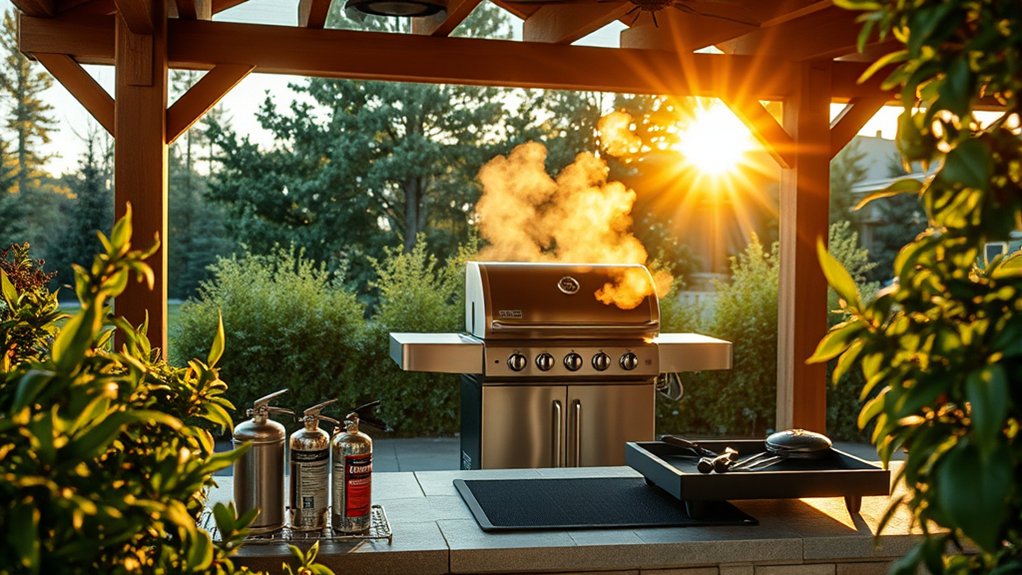
10 Tips to Grill Safely Under Your Covered Patio
To grill safely under your covered patio, it’s essential to follow key safety tips for grilling in semi-enclosed spaces. Choose a grill specifically designed for such areas and position it at least 10 feet away from walls or overhead structures to reduce fire risks.
Using a fire-resistant mat beneath the grill adds an extra layer of protection.
Keep all flammable items well away from the cooking area. Never leave your grill unattended while in use, and always store propane tanks in a safe, ventilated location.
Having a fire extinguisher nearby is crucial for quick response in case of emergencies.
Ensure your covered patio has proper ventilation to prevent the buildup of harmful gases. Good lighting is also important for safe grilling during nighttime.
Following these tips helps prevent fires and keeps your space safe—discover ways to protect your patio even further.
Key Takeaways
- Position the grill at least 10 feet from walls, overhead structures, and combustible materials for proper ventilation and fire safety.
- Use grills designed for covered spaces, such as electric or propane models with safety features, and avoid charcoal grills.
- Place fire-resistant mats under the grill to catch embers and prevent grease fires on the patio surface.
- Keep a fire extinguisher, heat-resistant gloves, and fire blanket nearby, and never leave the grill unattended while in use.
- Regularly clean grease buildup, empty grease trays, and inspect gas lines to prevent flare-ups and maintain safe operation.
Understand the Unique Risks of Grilling Under a Covered Patio
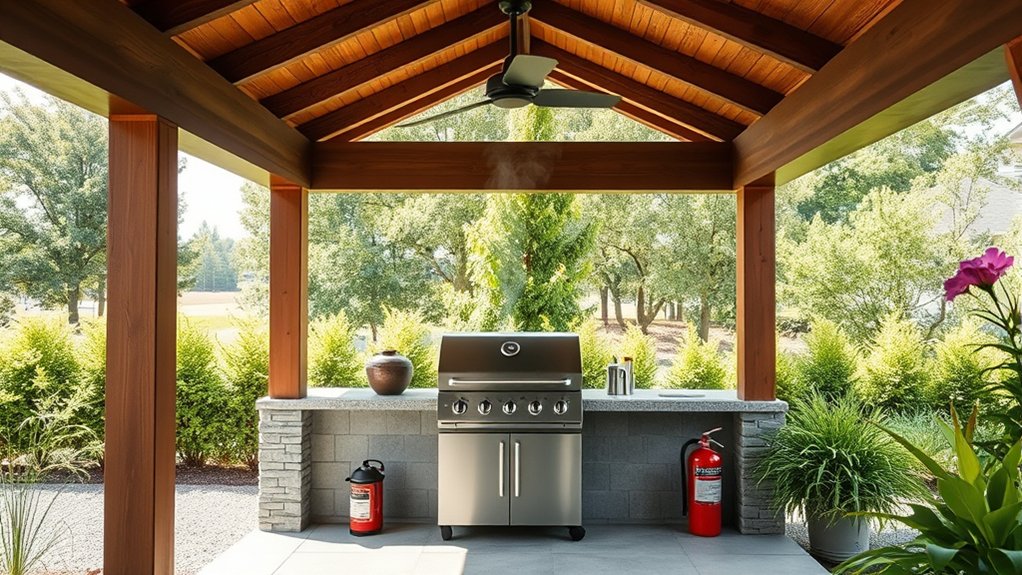
Although grilling under your covered patio offers convenience and shelter, it also introduces unique safety risks you need to recognize. You might think your patio’s roof protects you, but it can trap smoke and heat, creating a fire hazard. Grease buildup on surfaces is another risk, as it can ignite if not cleaned regularly.
You’ll also want to be cautious about the materials around your grill; combustible items near your cooking area increase the chance of accidents. Ventilation is essential—without it, carbon monoxide can build up, posing serious health dangers. You should never ignore these risks just because you’re outdoors but covered.
Being aware of these challenges helps you take steps to grill safely and enjoy your patio without worry.
Choose the Right Grill for Safe Covered Patio Use
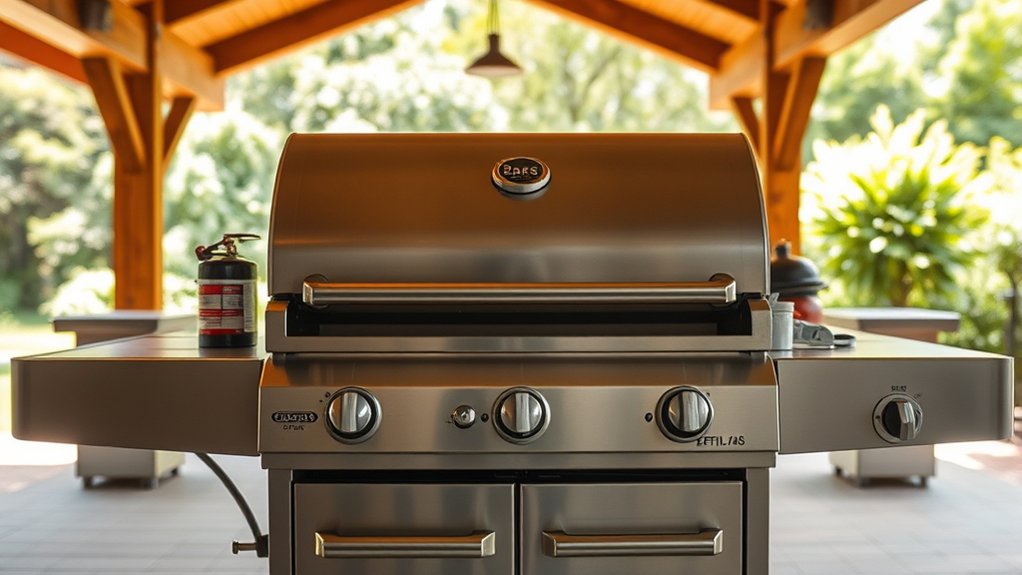
Because grilling under a covered patio requires extra caution, choosing the right grill is essential for your safety. Opt for a grill designed specifically for covered or semi-enclosed spaces, like electric grills or propane gas grills with safety features. Avoid charcoal grills, as they produce more smoke and carbon monoxide, increasing health risks in confined areas.
Look for grills with automatic shut-off functions to prevent accidents if you forget to turn them off. Select a model with sturdy construction and stable legs to reduce the chance of tipping. Also, consider the grill’s size to ensure it fits comfortably without crowding your patio.
Set up Your Grill With Proper Ventilation and Placement
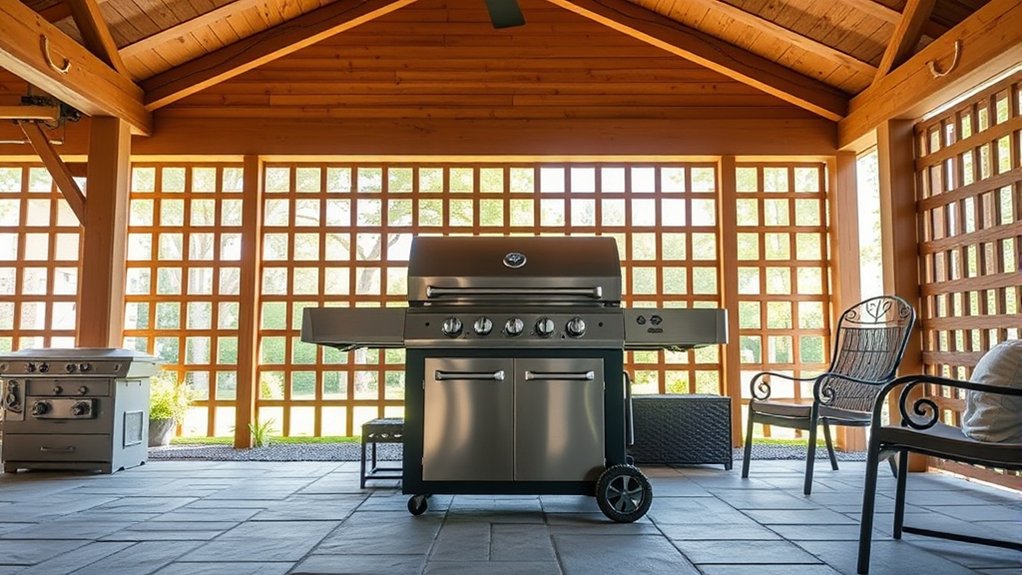
When setting up your grill under a covered patio, make certain you position it where fresh air can flow freely to prevent smoke buildup and reduce fire risks. Place the grill at least 10 feet away from walls or any overhead structures to guarantee proper ventilation. Avoid corners or enclosed spaces where air circulation is limited.
Position the grill on a stable, flat surface to prevent tipping. If your patio has a roof, make sure it’s high enough to allow smoke to rise and dissipate easily. Keep the grill away from low-hanging eaves or beams.
Proper placement not only improves safety but also enhances your grilling experience by keeping smoke out of your seating area. Always double-check that vents on the grill are unobstructed for maximum airflow.
Keep Flammable Materials Away to Prevent Fires
To prevent fires, keep all flammable materials well away from your grill and surrounding area. This means storing items like paper towels, lighter fluid, and cleaning rags at a safe distance. Don’t place cushions, wooden furniture, or decorations too close—they can easily catch fire from stray sparks or heat.
Be mindful of overhanging branches or fabric awnings near your grill, as these can ignite quickly. Also, avoid using or storing propane tanks and other fuel sources near open flames or hot surfaces. By creating a clear, clutter-free zone around your grill, you reduce the risk of accidental fires.
Always double-check your setup before grilling, and stay alert while cooking to keep your patio safe and enjoyable.
Use a Fire-Resistant Mat to Protect Your Patio Floor
Although grilling under a covered patio offers convenience, you need to protect your floor from heat and sparks. A fire-resistant mat acts as a vital barrier, preventing damage to your patio surface and reducing fire risks.
Choose a mat made from durable, non-flammable materials designed for grilling.
Here’s a quick comparison of common fire-resistant mat options:
| Material | Heat Resistance | Ease of Cleaning |
|---|---|---|
| Fiberglass | High | Moderate |
| Aluminum-coated | High | Easy |
| Silicone-based | Moderate | Easy |
Place the mat directly under your grill to catch hot embers and grease. This simple step safeguards your patio and guarantees your grilling area stays safe and clean.
Clean and Maintain Your Grill Regularly for Safety
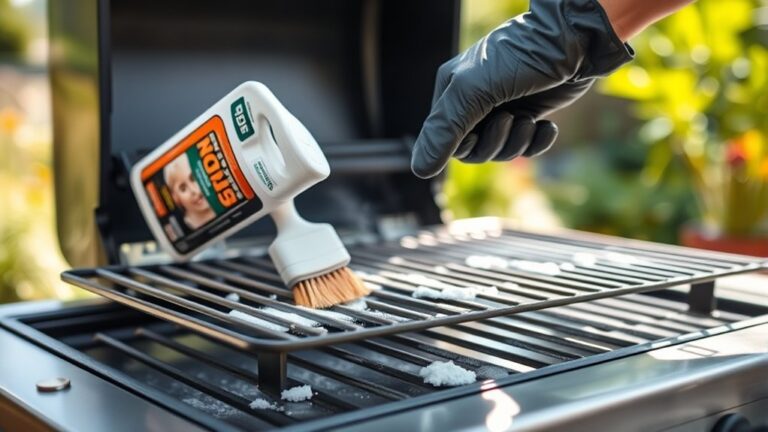
Since grease buildup and food residue can cause flare-ups or uneven heating, you should clean your grill regularly to keep it safe and efficient. After each use, scrape the grates with a grill brush to remove stuck-on food particles. Empty the grease tray frequently to prevent dangerous grease fires.
Periodically, deep clean your grill by dismantling removable parts and soaking them in warm, soapy water. Check your burners and gas lines for blockages or leaks to avoid unexpected hazards. Keeping your grill covered when not in use also protects it from the elements, reducing rust and wear.
Regular maintenance not only guarantees your grill operates safely but also extends its lifespan, giving you peace of mind every time you fire it up under your covered patio.
Never Leave Your Grill Unattended While Cooking
When you’re grilling under your covered patio, never walk away from your grill while it’s on. Leaving your grill unattended increases the risk of flare-ups or fires that can quickly get out of control. Stay close to monitor the cooking process and manage any unexpected flames immediately.
Keeping an eye on your food also helps prevent overcooking or burning, ensuring a safe and tasty meal. If you must step away briefly, turn off the grill first. Always keep a fire extinguisher or spray bottle nearby to handle minor flare-ups promptly.
Store Propane Tanks and Fuel Safely Away From Heat
You should always place propane tanks in a well-ventilated area away from direct heat sources. Keep fuel containers stored securely, avoiding spots that get hot or are exposed to flames. This helps prevent accidents and keeps your grilling safe under your covered patio.
Proper Propane Tank Placement
Although propane tanks are essential for grilling, improper placement can lead to dangerous situations. You should always place your propane tank upright on a firm, flat surface to prevent tipping or leaks. Keep the tank at least 10 feet away from your grill when not in use to reduce heat exposure.
Never store the tank inside your covered patio or enclosed spaces, as gas buildup poses serious risks. Make certain the tank valve is tightly closed when disconnected. Position the tank so the hose isn’t kinked or stretched, which can cause damage or leaks.
Regularly inspect the tank for rust, dents, or corrosion. By following these simple placement tips, you’ll ensure a safer grilling experience under your covered patio.
Safe Fuel Storage Practices
Since propane tanks and other fuels can ignite easily, storing them away from heat sources is essential for your safety. Keep tanks in a well-ventilated area, never inside your home, garage, or near open flames. Avoid storing fuel near heaters, electrical equipment, or direct sunlight, as heat increases pressure inside tanks, raising the risk of leaks or explosions.
Always place tanks upright on a stable surface to prevent tipping. Check for leaks regularly and replace damaged tanks promptly. Store fuel containers tightly sealed and in original containers to prevent spills and fumes.
Make Sure Your Patio Is Well-Lit for Safe Night Grilling
When grilling at night under your covered patio, proper lighting plays a crucial role in preventing accidents and ensuring you cook food evenly. Without enough light, you risk burns, undercooked food, or dropping utensils.
To keep your grilling area well-lit, consider these tips:
- Install bright overhead lights that cover the entire patio.
- Use adjustable task lighting focused directly on the grill.
- Add motion-sensor lights for added safety when moving around.
- Place solar or LED string lights to brighten walkways and seating areas.
- Keep extra batteries or bulbs handy to avoid unexpected outages.
Keep a Fire Extinguisher and Safety Tools Within Reach
To handle unexpected flare-ups quickly, keep a fire extinguisher and safety tools within easy reach while grilling under your covered patio. Having these items close by lets you act fast, preventing small fires from turning dangerous. Make sure your extinguisher is rated for grease fires and check it regularly.
Besides the extinguisher, keep heat-resistant gloves, a fire blanket, long-handled tongs, and a metal lid nearby to smother flames if needed.
| Safety Tool | Purpose |
|---|---|
| Fire Extinguisher | Extinguish grease or gas fires |
| Heat-Resistant Gloves | Protect hands from heat |
| Fire Blanket | Smother flames |
| Long-Handled Tongs | Handle hot food safely |
| Metal Lid | Cut off oxygen to small flames |
Being prepared keeps your grilling safe and stress-free.
Frequently Asked Questions
Can I Use a Charcoal Grill Under a Covered Patio?
You shouldn’t use a charcoal grill under a covered patio because it produces dangerous carbon monoxide. Instead, grill in a well-ventilated, open space to keep yourself and others safe from harmful fumes and fire hazards.
What Type of Fire Extinguisher Is Best for Grill Fires?
You’ll want a Class B or multipurpose (ABC) fire extinguisher for grill fires. These handle flammable liquids and grease, making them ideal. Keep it nearby and know how to use it before you start grilling.
How Often Should I Inspect My Propane Tanks?
Check your propane tanks every time you grill—inspect for leaks, rust, or dents. Like a heartbeat keeps you alive, this quick routine keeps your grill safe and your patio worry-free.
Don’t skip it!
Are Electric Grills Safer for Covered Patios?
Yes, electric grills are generally safer for covered patios since they don’t produce open flames or gas fumes. You can use them more confidently, but always guarantee proper ventilation to avoid overheating and follow the manufacturer’s safety guidelines.
Can I Grill During Windy or Rainy Weather Under a Patio?
You shouldn’t grill during windy or rainy weather under a patio because flames can spread, and rain can cause flare-ups or damage.
Instead, wait for calm, dry conditions to keep grilling safe and enjoyable.
Conclusion
Grilling safely under your covered patio means understanding the risks, choosing the right grill, and setting it up with care. It means keeping flammable materials away, using fire-resistant mats, and never leaving your grill unattended. It means storing fuel safely, ensuring proper lighting, and keeping safety tools within reach.
By following these steps, you’ll protect your home, enjoy delicious meals, and create lasting memories—all with confidence and peace of mind. Safe grilling practices, proper setup, and careful monitoring are key to avoiding accidents. Embracing these tips ensures a secure and enjoyable grilling experience under your covered patio.