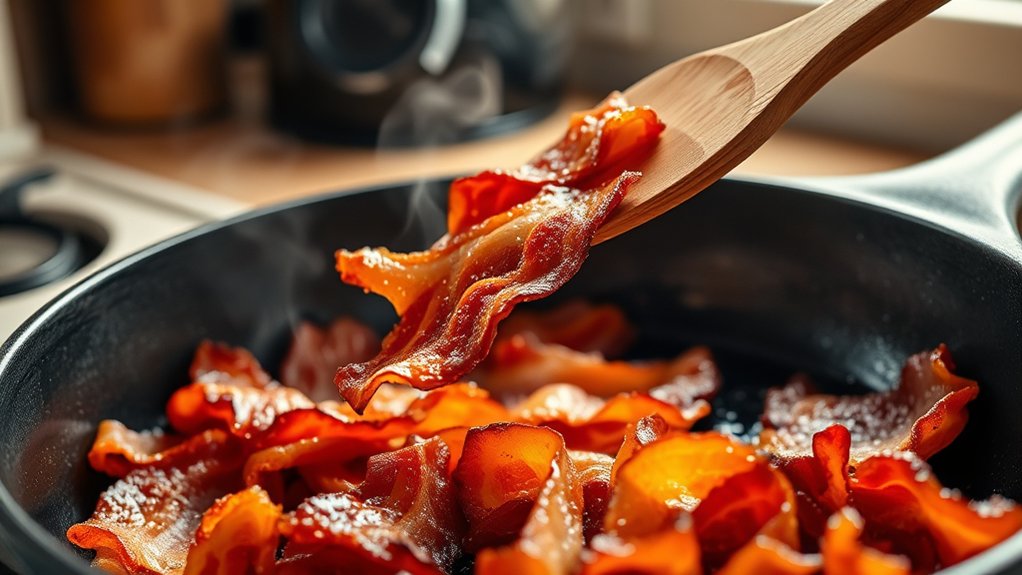
How Long to Pan Fry Bacon in 7 Simple Steps
To pan fry bacon perfectly, start by choosing slices with a good balance of meat and fat, ideally thick-cut for chewy bites or thin for crispiness.
Pan frying bacon allows you to control the texture and flavor, making it a preferred method for many bacon lovers.
Preheat a large, heavy skillet over medium-low heat to ensure even cooking.
Lay the bacon flat in the skillet without overlapping the slices.
Cook for 6 to 12 minutes, flipping every 2–3 minutes to achieve even browning on both sides.
Adjust the cooking time based on the thickness of the bacon and your desired crispiness level.
Once cooked, drain the bacon on paper towels before serving to remove excess grease.
Keep going to discover tips for perfect texture and safe handling.
Key Takeaways
- Preheat a heavy-bottomed skillet over medium-low heat for 2–3 minutes before adding bacon strips in a single layer.
- Cook thin bacon slices for 5–7 minutes, flipping every 2–3 minutes to ensure even crispiness.
- For thick-cut bacon, cook 10–15 minutes, adjusting heat to prevent burning while achieving desired doneness.
- Flip bacon once bubbles form around edges, continuing to turn regularly for uniform browning and texture.
- Drain cooked bacon on paper towels or a wire rack, then serve immediately for best flavor and crispiness.
How to Choose the Right Bacon for Pan Frying
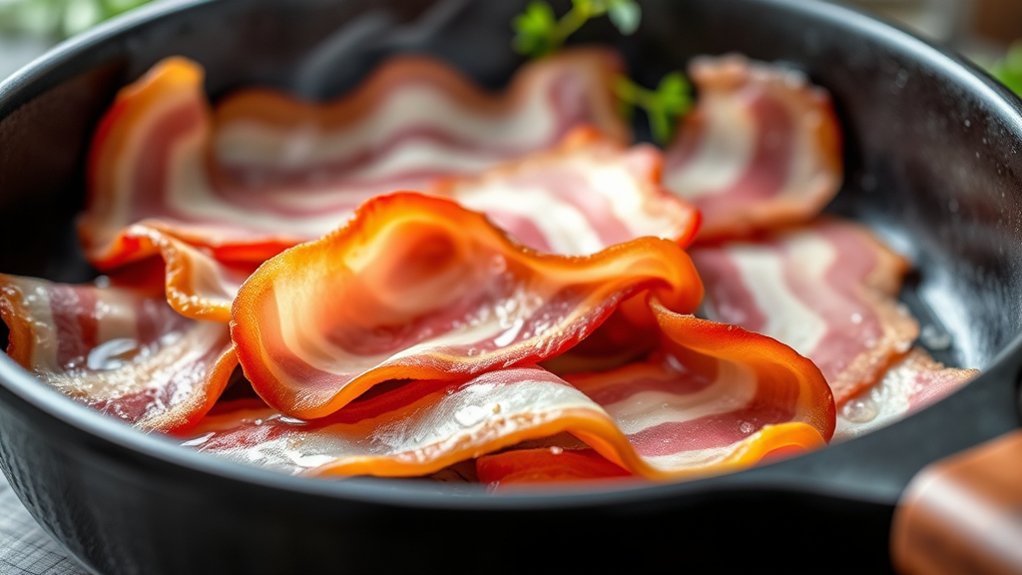
Although any bacon can technically be pan-fried, choosing the right cut makes a big difference in flavor and texture. You’ll want to pick bacon with a good balance of meat and fat. Too much fat can cause excessive splattering, while leaner cuts might dry out quickly.
Thick-cut bacon offers a chewy, hearty bite and holds up well during frying, giving you crispy edges without burning. On the other hand, thin slices cook faster and crisp up nicely but need more attention to avoid overcooking. Check for fresh, pinkish-red meat with white fat; avoid bacon that looks gray or slimy.
Also, consider smoked versus unsmoked based on your taste preference. Picking the right bacon sets you up for perfect pan-fried results every time.
How to Prep Your Pan and Bacon for Pan Frying
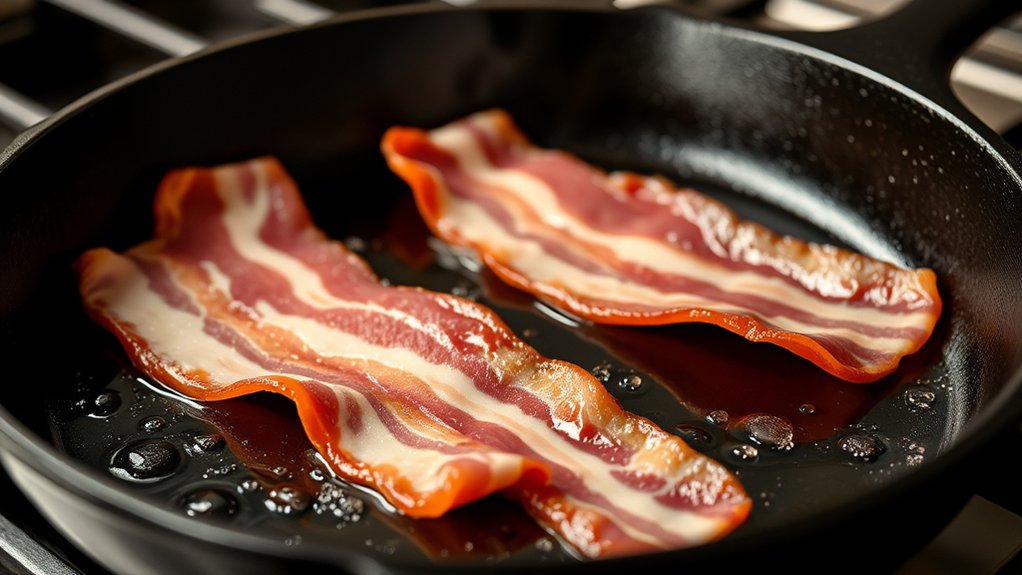
To get started, pick a pan that heats evenly, like a cast iron or nonstick skillet. Lay out your bacon strips so they cook evenly without overlapping. Don’t forget to preheat the pan over medium heat before adding the bacon for the best results.
Choosing The Right Pan
When you start pan frying bacon, picking the right pan makes a big difference in how evenly it cooks and how crispy it gets. Choose a heavy-bottomed skillet, like cast iron or stainless steel, because they distribute heat evenly and maintain steady temperatures. Nonstick pans can work, but they often don’t give bacon that perfect sear.
Make sure your pan is large enough to hold the strips without crowding them—crowding causes uneven cooking and soggy bacon. Avoid using pans with warped bottoms since they don’t sit flat and lead to hot spots. Before frying, you don’t need to add oil or butter; bacon has enough fat to cook in its own grease.
Selecting the right pan sets the foundation for perfectly cooked, crispy bacon every time.
Preparing Bacon Strips
Once you’ve chosen the right pan, the next step is getting your bacon strips ready for cooking. Start by separating the strips gently to avoid tearing. If they’re too long for your pan, cut them in half.
For even cooking, lay the strips flat and avoid overlapping. Pat the bacon dry with paper towels if it’s too moist—this helps achieve crispiness.
Here’s a quick guide for prepping bacon:
| Step | Tip |
|---|---|
| Separate strips | Avoid tearing |
| Cut if needed | Fit pan size |
| Lay flat | No overlapping |
| Pat dry | Remove excess moisture |
| Room temp (optional) | Helps cook evenly |
Following these steps ensures your bacon cooks uniformly and crisps up perfectly.
Preheating The Skillet
Although preheating might seem like a small step, it’s vital for getting your bacon perfectly crispy. Starting with a cold pan will cause uneven cooking and sticking. To prep your skillet and bacon for pan frying, follow these steps:
- Place your skillet on the stove and set the heat to medium-low. This gradual heating prevents burning and helps render the fat slowly.
- Let the skillet warm for about 2–3 minutes until it’s hot but not smoking. You can test the heat by flicking a few drops of water—if they sizzle and evaporate quickly, you’re ready.
- Lay the bacon strips flat in a single layer without overlapping. This ensures each strip cooks evenly and crisps up nicely.
Preheating your skillet properly makes all the difference in achieving that perfect bacon texture.
How Long to Pan Fry Bacon for Your Preferred Crispiness
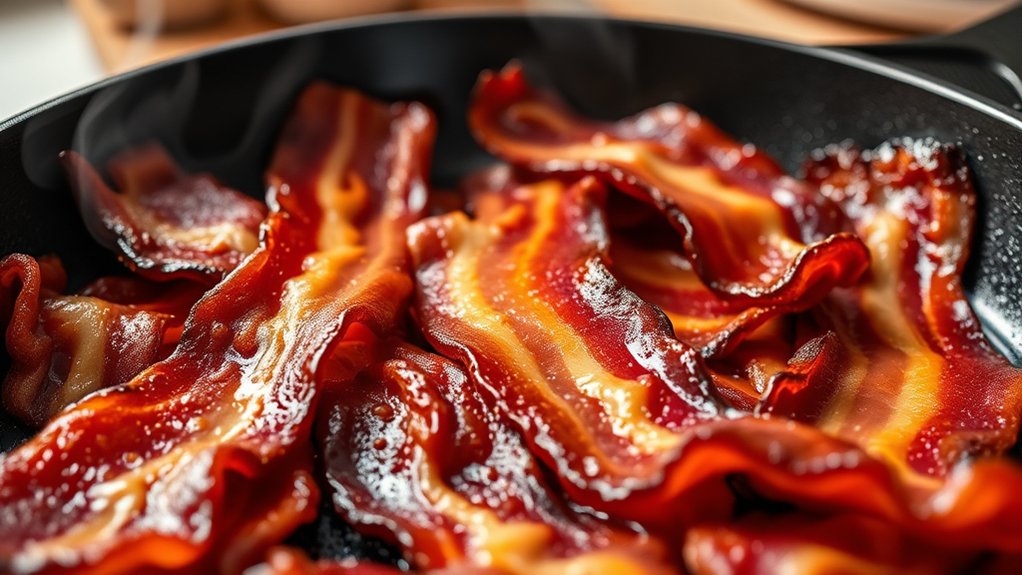
If you want perfectly crispy bacon, you’ll need to adjust your cooking time based on how crunchy you like it. For slightly chewy bacon, cook it for about 6 to 8 minutes on medium heat.
If you prefer your bacon medium-crisp, aim for 8 to 10 minutes. For that classic crispy texture, cook it for 10 to 12 minutes, keeping a close eye to prevent burning.
How to Flip Bacon for Even Pan Frying and Browning
Achieving your preferred bacon crispiness also depends on how you flip the slices during cooking. Flipping ensures even heat distribution and browning on both sides. Here’s how to do it right:
Proper flipping is key to evenly cooked, perfectly crispy bacon every time.
- Wait for bubbles: Flip the bacon once you see bubbles forming around the edges, signaling the first side is cooking evenly.
- Use tongs: Gently lift each slice with tongs to avoid tearing and flip it over carefully to maintain shape.
- Flip regularly: For consistent crispiness, flip every 2-3 minutes, preventing one side from burning while the other remains undercooked.
Adjust Pan Frying Time by Bacon Thickness
Because bacon thickness varies widely, you’ll need to adjust your pan frying time to get the perfect crispiness. Thin slices cook quickly, often in just 5 to 7 minutes, while thicker cuts can take 10 to 15 minutes or more. If your bacon is extra thick, expect to cook it longer over medium heat to allow the fat to render without burning the meat.
Keep a close eye and flip regularly to guarantee even cooking. If you notice the bacon browning too fast but still tough inside, lower the heat slightly and extend the cooking time. By paying attention to the thickness and adjusting your timing accordingly, you’ll avoid undercooked or overly crispy bacon, achieving the ideal texture every time.
How to Tell When Pan-Fried Bacon Is Perfectly Cooked
While cooking bacon, you’ll know it’s perfectly done when it strikes a balance between crisp edges and tender meat. To tell if your pan-fried bacon has reached this ideal state, pay close attention to a few key indicators.
Perfectly cooked bacon balances crisp edges with tender, juicy meat—watch for key signs to know when it’s ready.
- Visual cues: Look for golden-brown edges with a slightly darker, crispy finish. The center should still appear moist but firm.
- Texture test: Use tongs to gently lift a strip. It should bend slightly without snapping, showing it’s cooked through yet still juicy.
- Sizzle sound: The bacon’s sizzling will slow down as the moisture cooks off, signaling it’s nearly done and ready to remove from heat.
How to Drain and Serve Pan-Fried Bacon Safely
Once your bacon is cooked to perfection, you’ll want to drain the grease properly to keep it crispy and safe to handle. Use a paper towel-lined plate or a wire rack to catch excess fat without making a mess.
When serving, make sure to avoid touching hot grease and use utensils to keep things safe and clean.
Proper Grease Drainage
After pan-frying your bacon to crispy perfection, you’ll want to drain the grease properly to keep it safe and delicious. Handling bacon grease carefully not only prevents burns but also avoids messy spills. Here’s how to do it right:
- Use a slotted spatula or tongs to lift the bacon from the pan, letting excess grease drip back.
- Place the bacon on a plate lined with paper towels to absorb remaining grease without sogginess.
- Pour the leftover grease into a heatproof container—never down the sink—to avoid clogging pipes and allow safe disposal or reuse.
Safe Serving Techniques
To serve pan-fried bacon safely, you need to handle it carefully to avoid burns and guarantee it stays crisp. First, use tongs to lift the bacon from the hot pan—never your fingers. Immediately place the strips on a plate lined with several layers of paper towels to absorb excess grease.
Let the bacon drain for a minute or two; this prevents sogginess and reduces the risk of hot grease splattering. Once drained, transfer the bacon to a serving dish using clean tongs, keeping in mind that the bacon may still be hot. Always serve on a heat-resistant plate to avoid accidents.
Following these steps keeps both you and your guests safe while ensuring the bacon remains deliciously crispy.
Frequently Asked Questions
Can I Pan Fry Turkey Bacon the Same Way as Pork Bacon?
Yes, you can pan fry turkey bacon like pork bacon, but it cooks faster and can burn easily. Keep the heat medium, watch closely, and flip often to guarantee it crisps without drying out or burning.
What Type of Pan Is Best for Pan Frying Bacon?
You’ll want a heavy skillet, like cast iron, because it evenly distributes heat and crisps bacon perfectly. Nonstick pans work too, but cast iron gives you that ideal, golden-brown texture without hotspots or sticking.
How Do I Store Leftover Cooked Bacon Safely?
You should let cooked bacon cool completely, then wrap it tightly in aluminum foil or place it in an airtight container.
Store it in the fridge, and use it within 4-5 days for best freshness and safety.
Is It Better to Pan Fry Bacon on High or Low Heat?
You’ll get better results cooking bacon on low to medium heat. It cooks evenly, crisps nicely, and reduces burning risk.
High heat can burn it quickly and leave some parts undercooked, so keep the temperature moderate.
Can I Reuse Bacon Grease for Cooking Other Foods?
Yes, you can reuse bacon grease for cooking other foods. You’ll add flavor, save money, and reduce waste.
Just strain it, store it in a clean container, and use it within a month for best results.
Conclusion
Now that you know exactly how long to pan fry bacon, you’ll never face a soggy or burnt disaster again! With the right prep, flipping, and timing, your bacon will be so perfectly crispy it might just make angels sing.
Remember, thickness matters, so adjust accordingly. Drain it well, serve it hot, and enjoy every savory bite. Bacon mastery is just a few sizzling minutes away—your taste buds will thank you endlessly!
By following these simple steps, you can achieve the perfect pan-fried bacon every time. Master the art of bacon cooking with proper timing and technique for crispy, delicious results. Your journey to pan frying bacon success starts here!