How Long to Cook Chicken Thighs on a George Foreman Grill
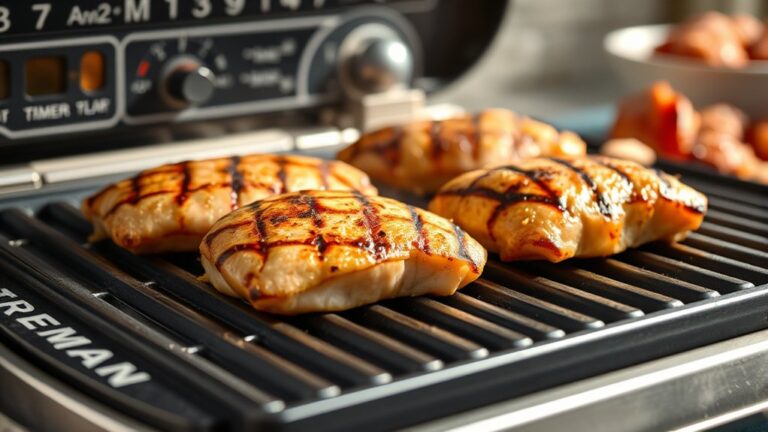
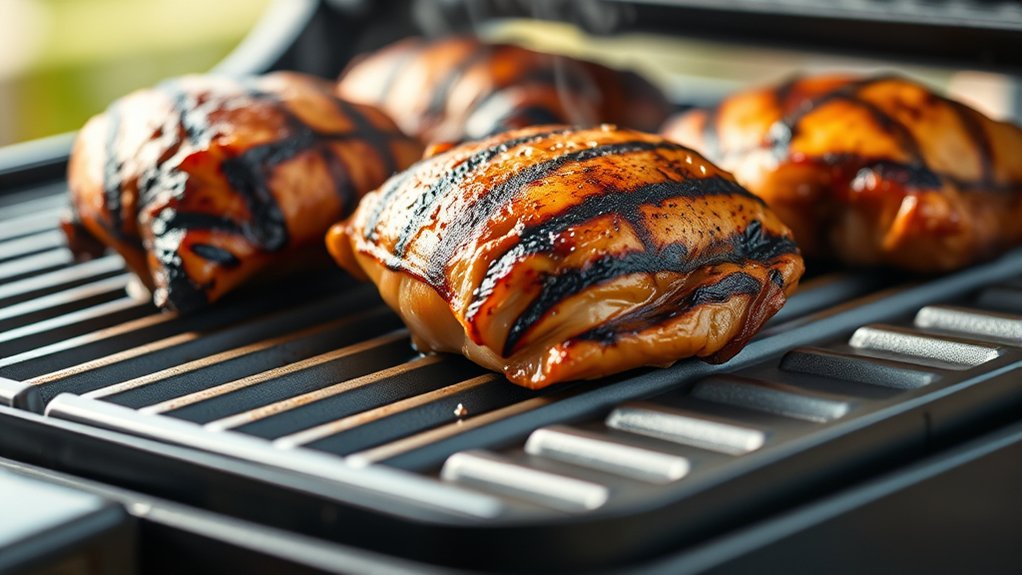
You’ll cook chicken thighs on a George Foreman Grill in about 6 to 8 minutes, depending on thickness and whether they have bones. This quick and efficient grilling method makes it easy to enjoy juicy, flavorful chicken without the hassle of traditional grilling.
Thicker or bone-in pieces need more time, so check the thickest part.
Preheat your grill, season or marinate the thighs, and use a meat thermometer to verify they reach 165°F for safety.
Let them rest briefly after cooking for juicier results.
Keep exploring for tips on prep, grilling techniques, and care for your grill.
Key Takeaways
- Cook boneless chicken thighs for about 6 minutes and bone-in thighs for 8 to 12 minutes on a preheated George Foreman Grill.
- Ensure even doneness by flattening thighs to uniform thickness and cooking thicker pieces longer near the grill’s hottest area.
- Use a meat thermometer to confirm an internal temperature of 165°F for safe consumption.
- Preheat the grill fully and avoid overcrowding to promote proper searing and faster cooking.
- Let chicken rest briefly after grilling to redistribute juices for moist, flavorful thighs.
How Long to Cook Chicken Thighs on a George Foreman Grill
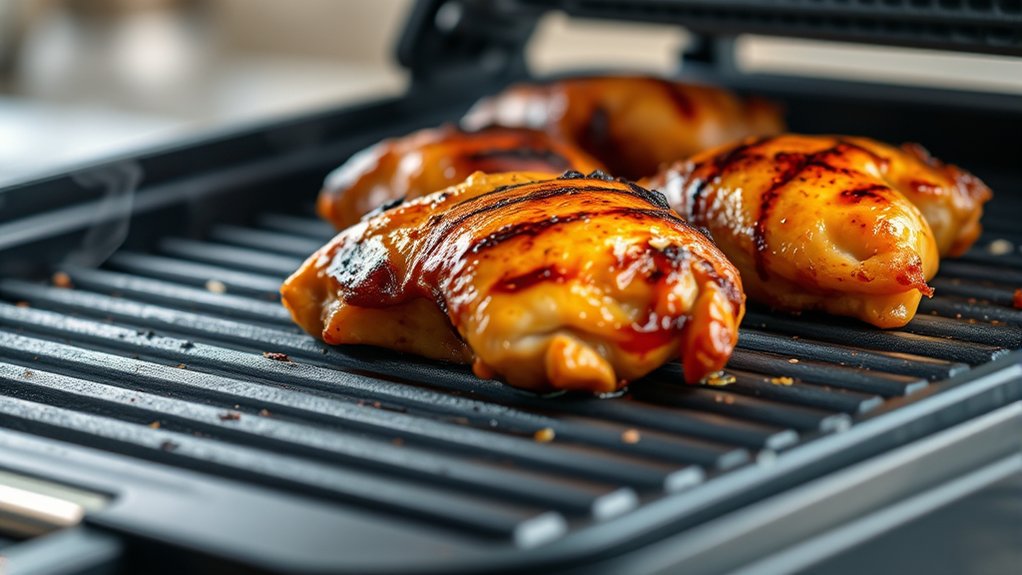
When you grill chicken thighs on a George Foreman Grill, it usually takes about 6 to 8 minutes to cook them thoroughly. You’ll want to preheat the grill first for even cooking. Place the thighs on the grill and close the lid to guarantee both sides cook simultaneously.
Check for an internal temperature of 165°F to ensure they’re safe to eat. Avoid opening the lid too often, as it lets heat escape and extends cooking time. If you’re using boneless, skinless thighs, they’ll cook faster, closer to 6 minutes.
Bone-in thighs might need the full 8 minutes or a bit longer. Remember to let the chicken rest briefly after grilling to allow juices to redistribute, keeping your thighs juicy and flavorful.
How Thickness Affects Chicken Thigh Cooking Time on the Grill
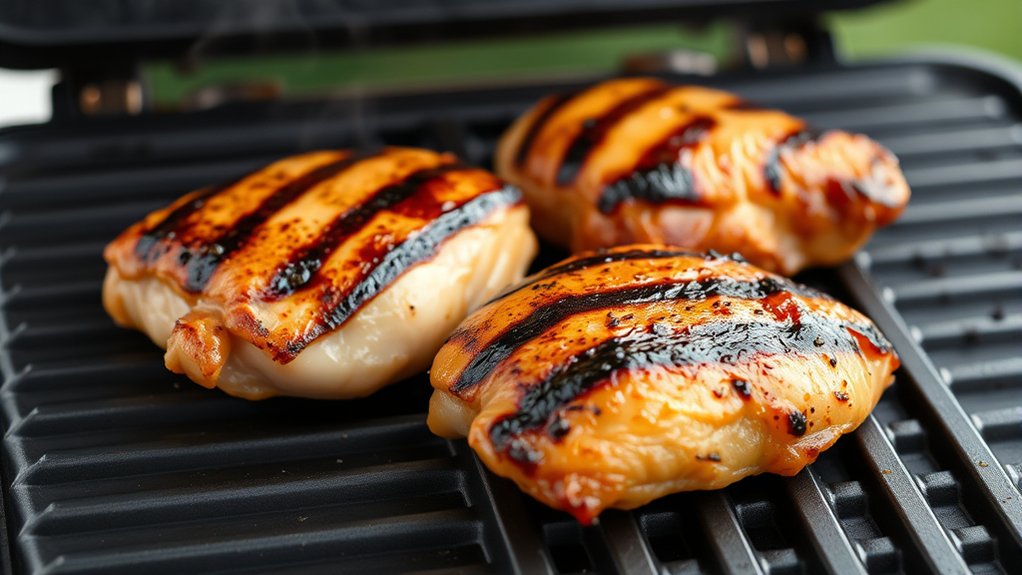
You’ll want to measure the thickness of your chicken thighs before grilling, as thicker pieces will take longer to cook. Cooking times can vary considerably depending on this thickness, so adjusting accordingly is key.
To guarantee even cooking, consider flattening the thighs or cutting them into uniform sizes.
Measuring Chicken Thigh Thickness
Although grilling times can vary, the thickness of your chicken thighs plays the biggest role in determining how long they need on a George Foreman Grill. To get it right, measure the thickest part of each thigh with a ruler or kitchen scale.
Thicker pieces take longer to cook through, while thinner ones grill quickly.
Here’s a quick reference to help you visualize thickness:
| Thickness (inches) | Cooking Consideration |
|---|---|
| 0.5 – 1.0 | Cooks fast, watch closely |
| 1.0 – 1.5 | Average time, standard grill |
| 1.5+ | Longer cook, check doneness |
Measuring accurately guarantees your chicken cooks evenly, avoiding undercooked or dry results.
Cooking Time Variations
Measuring the thickness of your chicken thighs gives you a clear idea of how long they’ll need on the George Foreman Grill. Thicker pieces naturally require more time to cook through, while thinner ones finish faster. For chicken thighs about 1 inch thick, expect around 6 to 8 minutes.
If they’re closer to 1.5 inches, plan for 10 to 12 minutes. Keep in mind that uneven thickness can lead to inconsistent cooking, so adjusting time based on the thickest part helps ensure juiciness and safety. Since George Foreman grills cook both sides simultaneously, these times are shorter than traditional grilling.
Always check internal temperature to confirm doneness rather than relying solely on time, especially when thickness varies.
Tips for Even Cooking
Since chicken thighs vary in thickness, ensuring even cooking on your George Foreman Grill requires some careful preparation. Thicker pieces take longer to cook, so you need to adjust your approach to avoid undercooked centers or overdone edges. Here are some tips to help you get it right every time:
- Pound thicker thighs to an even thickness before grilling.
- Preheat the grill fully to promote consistent cooking.
- Place thicker pieces near the center where heat is strongest.
- Use a meat thermometer to check for an internal temperature of 165°F.
Prepping Chicken Thighs: Skin Removal, Seasoning, and Marinades
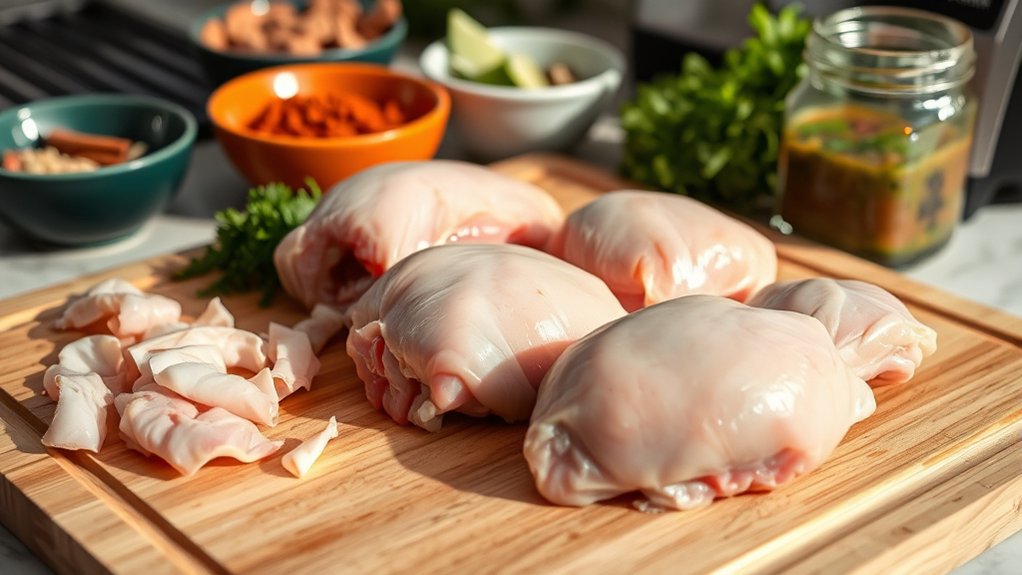
Before you fire up your George Foreman Grill, decide if you want to remove the skin for a leaner meal or keep it for extra crispiness.
Seasoning your chicken thighs with a mix of spices or marinating them can boost flavor and tenderness.
Let’s explore simple skin removal tips, popular seasoning blends, and marinade tricks to get the best results.
Skin Removal Techniques
When you decide to remove the skin from chicken thighs, you’ll find it’s a simple step that can reduce fat and help your seasoning penetrate better. Start by placing the thigh skin-side up on a clean surface. Gently loosen the edges with your fingers or a small knife, being careful not to tear the meat.
Once you have a good grip on the skin, pull it away slowly. If it resists, use the knife to separate it further. Here’s a quick checklist to guide you:
- Use a sharp knife or kitchen scissors for precision.
- Work slowly to avoid damaging the meat.
- Keep the skin cold for easier removal.
- Save the skin for crispy snacks if you like.
This technique preps your thighs perfectly for grilling.
Popular Seasoning Options
Although skin removal enhances flavor absorption, choosing the right seasoning is key to making your chicken thighs truly delicious. Start with a simple blend of salt, black pepper, garlic powder, and paprika for a classic taste that complements the grill’s smoky finish. If you want a bit of heat, add cayenne pepper or chili powder.
For a fresh twist, try lemon zest and dried herbs like thyme or rosemary. Don’t forget to coat both sides evenly to guarantee every bite bursts with flavor. You can also experiment with spice mixes like Cajun or Italian seasoning for variety.
Keep your seasonings balanced to avoid overpowering the chicken’s natural juiciness. This way, your grilled thighs will come out tender, flavorful, and ready to impress.
Best Marinade Practices
Since seasoning sets the foundation, marinating your chicken thighs takes flavor to the next level by tenderizing the meat and infusing it deeply. To get the best results, start with a balanced marinade that combines acid, oil, herbs, and spices.
Make certain to:
- Use ingredients like lemon juice or vinegar for tenderizing
- Include olive oil to keep the chicken moist
- Add garlic, herbs, or chili flakes for bold flavors
Marinate for at least 30 minutes, but no longer than 8 hours to avoid mushiness. Always marinate in the fridge and use a non-reactive container like glass or food-safe plastic.
When ready, pat the thighs dry before grilling to ensure a perfect sear on your George Foreman Grill. This prep step will boost both taste and texture.
Using Marinades and Sauces on a George Foreman Grill
If you want to boost flavor and keep your chicken thighs juicy, using marinades and sauces on a George Foreman Grill is a smart move. Start by marinating your chicken for at least 30 minutes to let the flavors soak in. When it’s time to grill, lightly oil the grill plates to prevent sticking and place the marinated thighs on the preheated grill.
You can baste the chicken with additional sauce during the last few minutes of cooking, but avoid applying sugary sauces too early, as they can burn quickly. After grilling, let the chicken rest briefly before serving, then drizzle with your favorite sauce for extra flavor. This approach guarantees juicy, flavorful chicken without compromising the grill’s performance.
Internal Temperature for Perfectly Cooked Chicken Thighs
Adding marinades and sauces enhances flavor, but making sure your chicken thighs reach the right internal temperature guarantees they’re safe and perfectly cooked. You’ll want to use a reliable meat thermometer to check this accurately. Insert it into the thickest part of the thigh without touching bone.
Enhance flavor with marinades, but always check chicken thighs’ internal temperature for safety and perfect cooking.
Here’s what to aim for:
- 165°F (74°C): The USDA recommended safe temperature.
- 170°F (77°C): Ideal for tender, juicy thighs.
- Avoid under 165°F: Risk of harmful bacteria.
- Don’t rely on cooking time alone: Temperature ensures doneness.
Tips to Keep Chicken Thighs Juicy and Avoid Overcooking
While cooking chicken thighs on your George Foreman grill, you’ll want to watch the timing closely to keep them juicy and prevent drying out. Start by pounding the thighs to an even thickness for uniform cooking. Marinate or season them beforehand to lock in moisture and enhance flavor.
Avoid pressing down on the grill lid, as it squeezes out juices. Use a meat thermometer to pull them off right at 165°F, then let them rest for a few minutes; this helps redistribute the juices inside. Also, consider lightly oiling the grill plates or the chicken to reduce sticking and promote even browning.
Following these tips ensures your chicken thighs stay tender, moist, and packed with flavor every time.
Avoiding Common Mistakes When Cooking Chicken Thighs on the Grill
Even experienced grillers can fall into common traps when cooking chicken thighs on a George Foreman grill. To avoid these pitfalls, pay close attention to the details that impact flavor and texture. Don’t rush the process or forget to prep properly.
Here are key mistakes to watch out for:
- Skipping preheating: Always let the grill reach the right temperature before cooking.
- Overcrowding the grill: Give thighs enough space to cook evenly.
- Ignoring marinade or seasoning: Proper flavoring is essential for juicy, tasty chicken.
- Flipping too often: Let the grill do its work without constant interference.
Watch these points, and you’ll get perfectly cooked chicken thighs every time.
How to Tell When Chicken Thighs Are Safe to Eat
Although chicken thighs can look cooked on the outside, you need to check their internal temperature to guarantee they’re safe to eat. Use a meat thermometer to measure the thickest part of the thigh without touching bone. The USDA recommends a safe internal temperature of 165°F (74°C).
Besides temperature, check that the juices run clear and the meat isn’t pink.
| Indicator | Safe Range | Notes |
|---|---|---|
| Internal Temp | 165°F (74°C) | Use a digital meat thermometer |
| Juice Color | Clear | Pink or red juice means undercooked |
| Meat Color | White to light brown | Avoid pink or translucent areas |
| Texture | Firm | Soft meat may indicate undercooked |
Always rely on these signs to ensure your chicken thighs are safe before serving.
Cleaning and Maintaining Your George Foreman Grill After Cooking
Since you’ve just finished cooking, cleaning your George Foreman grill promptly keeps it in great condition and guarantees better performance next time. First, unplug the grill and let it cool slightly but not completely, as warm plates are easier to clean.
Then, follow these steps to maintain your grill:
- Use a damp cloth or sponge to wipe away grease and food residue.
- Avoid abrasive scrubbers that can damage the non-stick surface.
- Remove and clean the drip tray with warm, soapy water.
- Occasionally, apply a light coat of cooking oil to the plates to preserve the non-stick coating.
Regular care like this assures your grill stays efficient and lasts longer, making every cooking session a breeze.
Frequently Asked Questions
Can I Cook Frozen Chicken Thighs on a George Foreman Grill?
You shouldn’t cook frozen chicken thighs on a George Foreman grill because they won’t cook evenly. It’s best to thaw them first to guarantee they cook thoroughly and safely, avoiding any risk of undercooked meat.
What Is the Best Side Dish to Serve With Grilled Chicken Thighs?
Like pairing Gatsby’s jazz with a classic cocktail, you’ll want roasted veggies or a fresh salad to complement your grilled chicken thighs. They balance flavors and textures perfectly, making your meal unforgettable and delightfully satisfying.
How Do I Store Leftover Grilled Chicken Thighs Safely?
You should let the grilled chicken thighs cool, then store them in an airtight container. Keep them in the fridge and eat within 3-4 days.
For longer storage, freeze them and use within 2-3 months.
Can I Use the George Foreman Grill for Other Meats Besides Chicken?
Just like a versatile actor on stage, your George Foreman grill can handle more than chicken—it’s perfect for steaks, burgers, fish, and veggies. You’ll get quick, even cooking and delicious grill marks every time.
Is It Necessary to Preheat the George Foreman Grill Before Cooking?
Yes, you should preheat your George Foreman grill for about 5 minutes before cooking. This guarantees even heat distribution and better cooking results, helping your food cook thoroughly and develop a nice sear.
Preheating ensures that the grill surface is hot enough to start cooking immediately, which can prevent sticking and uneven cooking. It also helps maintain the right cooking temperature throughout the process.
Conclusion
When you fire up your George Foreman grill, cooking chicken thighs is like painting a masterpiece—each sizzle and sear adds flavor and color. Just as a brushstroke’s pressure changes a painting, thickness and seasoning shape your cooking time and taste.
Keep an eye on that internal temp, and you’ll nail juicy, safe-to-eat thighs every time. With a little care, your grill and chicken will both be ready for the next masterpiece, perfectly clean and primed.
To achieve the best results, remember that cooking chicken thighs on a George Foreman grill typically takes about 6 to 8 minutes, depending on thickness. Monitoring the temperature ensures your chicken is both flavorful and safe. Proper cooking time and temperature are key to mastering how long to cook chicken thighs on a George Foreman grill.