How to Know What Temp Chicken Is Done on the Grill
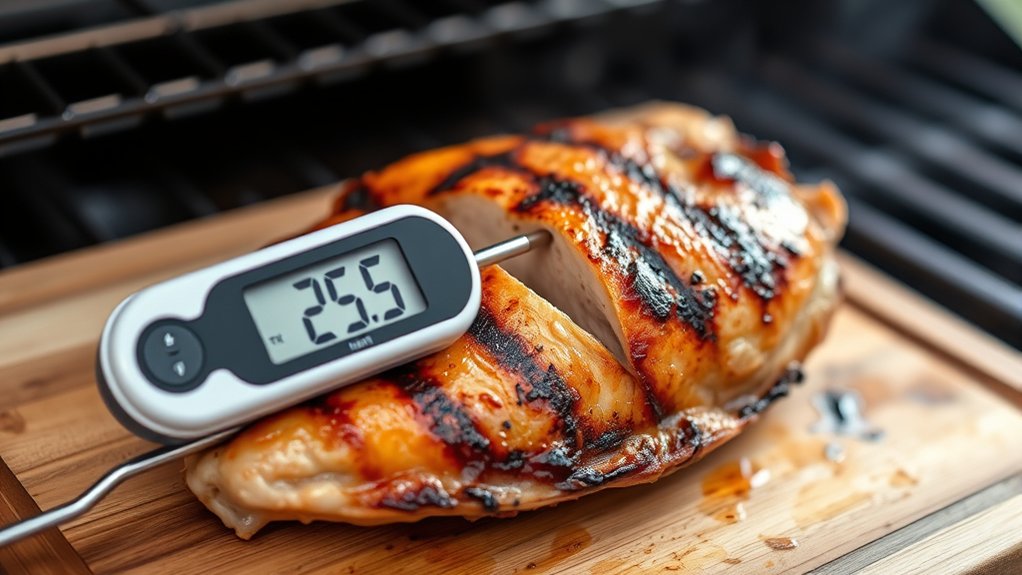
You’ll know your grilled chicken is done when its internal temperature reaches 165°F (74°C) for breasts, wings, or whole chicken, and 175°F (79°C) for dark meat like thighs. Using a meat thermometer is the most reliable way to check doneness on the grill.
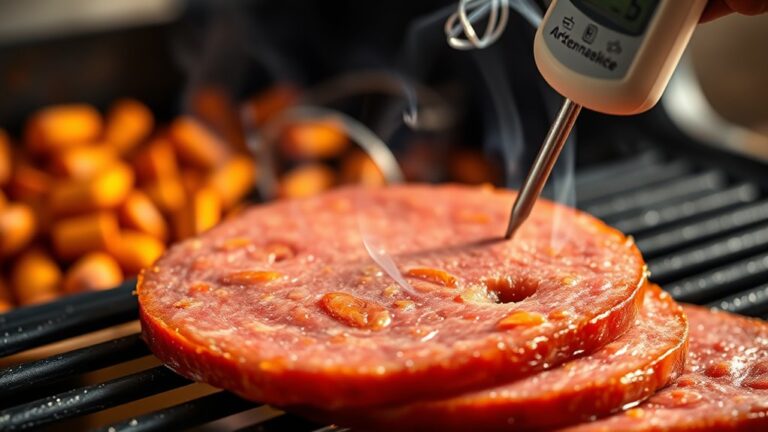
Insert it into the thickest part of the chicken, avoiding the bone, and wait for a steady reading.
If you don’t have a thermometer, look for clear juices running from the chicken and firm, springy meat as signs it’s fully cooked.
Mastering these basics guarantees juicy, safe chicken every time.
There’s more to perfecting your grill skills ahead, so keep practicing and enjoy delicious grilled chicken!
Key Takeaways
- Use a meat thermometer to check the thickest part of the chicken, aiming for 165°F (74°C) for safety and juiciness.
- For dark meat like thighs and drumsticks, target 175°F (79°C) to ensure tenderness without dryness.
- Confirm doneness by checking clear juices, firm texture, and no pink inside if a thermometer is unavailable.
- Avoid touching bone with the thermometer probe to prevent inaccurate temperature readings.
- Let the chicken rest after grilling to redistribute juices and stabilize internal temperature for optimal flavor and moisture.
What Is the Safe Temperature for Different Chicken Cuts?
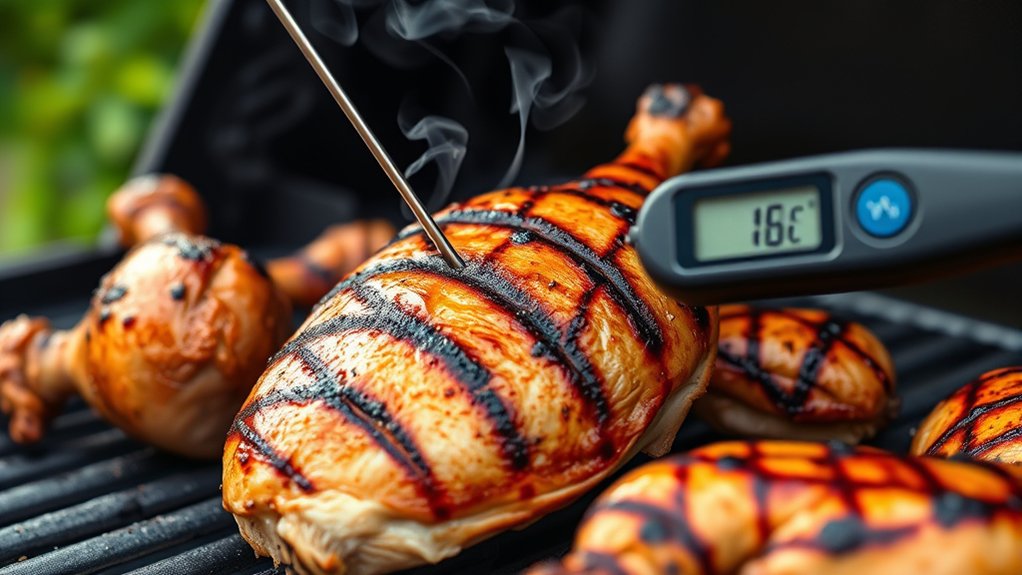
Although it might seem straightforward, knowing the safe temperature for different chicken cuts is essential to avoid undercooking or drying out your meat. For whole chickens, aim for an internal temperature of 165°F (74°C) to guarantee safety without sacrificing juiciness. Chicken breasts, which can dry out easily, also need to reach 165°F but benefit from careful monitoring to avoid overcooking.
Dark meat cuts like thighs and drumsticks are a bit more forgiving; they remain tender and juicy at 175°F (79°C). Wings, often smaller and thinner, should hit 165°F as well. Using these target temperatures helps you cook each cut perfectly, keeping your grilled chicken safe and delicious every time.
How to Use a Meat Thermometer for Grilled Chicken
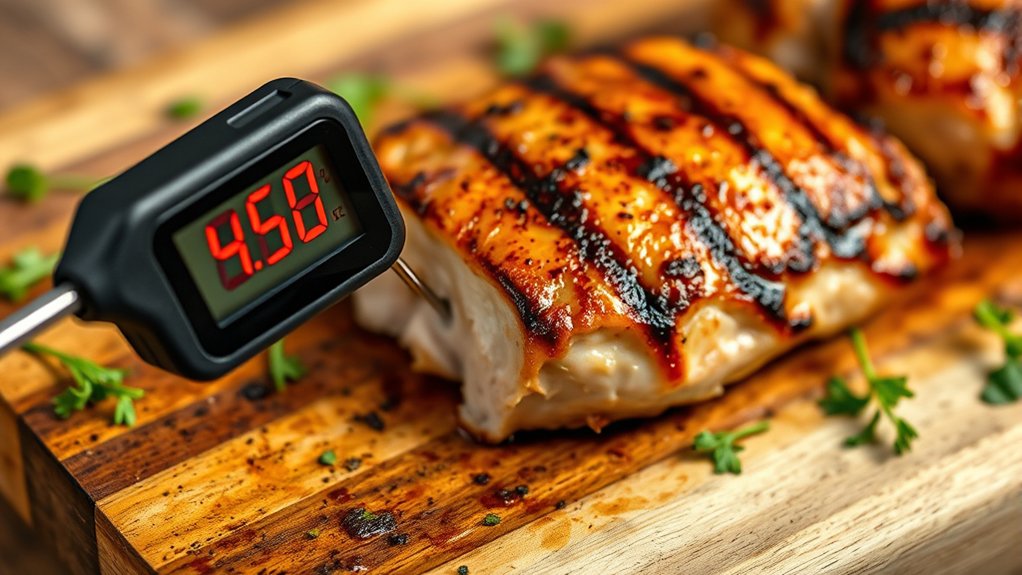
When grilling chicken, using a meat thermometer guarantees you hit the perfect internal temperature every time. First, insert the thermometer into the thickest part of the chicken, avoiding bone since it can give a false reading. For breasts, this is usually the center; for thighs or drumsticks, go deep into the meatiest area.
Wait a few seconds for the thermometer to stabilize to get an accurate reading. Aim for an internal temperature of 165°F (74°C) to assure safety and juiciness. Once the thermometer shows this, remove the chicken from the grill and let it rest.
Using a thermometer takes the guesswork out of grilling and helps you serve perfectly cooked chicken every time.
Common Thermometer Mistakes That Lead to Wrong Readings
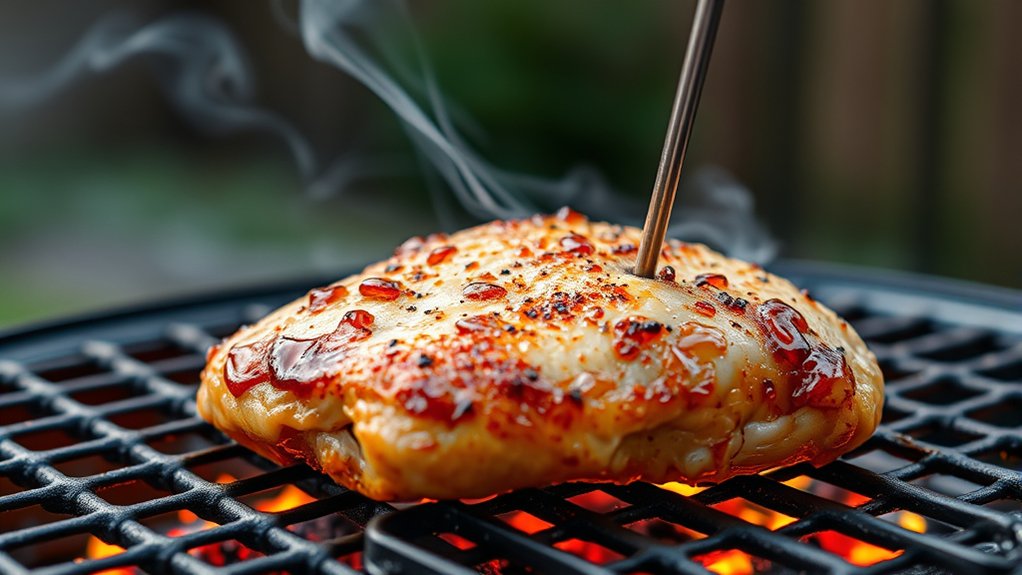
If you want accurate temperature readings, you need to avoid common mistakes that many people make with meat thermometers. Otherwise, you risk undercooking or overcooking your chicken. Here are some pitfalls to watch out for:
- Not inserting the thermometer deep enough: Check the thickest part of the chicken, avoiding bones.
- Touching the bone: Bones conduct heat differently and give false high readings.
- Using a dirty or greasy probe: This can affect accuracy; clean your thermometer before use.
- Checking temperature too soon: Give the thermometer time to stabilize for a true reading.
- Not calibrating your thermometer: Regular calibration ensures reliable measurements.
How to Check Chicken Doneness Without a Thermometer
If you don’t have a thermometer, you can still tell when chicken is done by watching its color and texture. Press the meat to check if it feels firm, not squishy, and look for clear juices running out when you cut into it.
These simple tests help guarantee your chicken is cooked safely and perfectly.
Visual Cues To Watch
Although using a meat thermometer takes the guesswork out of cooking chicken, you can still rely on visual cues to determine doneness. Paying attention to these signs helps make certain your chicken is safe and tasty.
Here’s what to watch for:
- Juices run clear when you cut into the thickest part
- Meat color changes from pink to white or light tan
- Skin turns golden brown and crisp on the grill
- No visible blood near the bone or in the meat
- Meat fibers separate easily when you gently pull them apart
Texture And Firmness Test
Visual cues give you a good starting point, but feeling the texture and firmness of the chicken can provide additional confirmation that it’s cooked through. When you press the thickest part of the chicken with your finger or tongs, it should feel firm yet springy, not soft or jiggly. Raw chicken is noticeably spongy and gives easily to pressure, while overcooked chicken feels very tough and dry.
Aim for a balance—firm but with a slight bounce. You can also compare it to the fleshy area at the base of your thumb when you touch your thumb and middle finger together; that’s the right firmness. This tactile method is especially handy if you don’t have a thermometer, helping you avoid undercooking or drying out your chicken.
Juices Color Inspection
How can you tell if chicken is fully cooked without a thermometer? One reliable method is to inspect the color of the juices. When you pierce the thickest part of the chicken with a fork or knife, the liquid that runs out can tell you a lot about doneness.
Look for these signs when checking the juices:
- Clear or slightly yellow juices mean the chicken is cooked through.
- Pink or red juices indicate it needs more time.
- Thick, sticky juices can signal undercooking.
- Avoid cloudy or milky juices as they may suggest overcooking.
- Always test multiple spots since some parts cook faster than others.
Why Resting Chicken Makes It Juicy
When you let chicken rest after cooking, the juices have time to redistribute evenly throughout the meat. This also helps the temperature stabilize, preventing overcooking.
As a result, the texture becomes more tender and juicy when you finally cut into it.
Juice Redistribution Benefits
Although it’s tempting to dig in right away, letting your chicken rest after cooking is essential for juicy results. When you rest the meat, the juices that have been pushed toward the center during grilling get a chance to redistribute evenly throughout the chicken. This process guarantees every bite stays moist and flavorful.
Here’s why juice redistribution benefits your chicken:
- Prevents juice loss when cutting
- Enhances overall tenderness
- Balances moisture throughout the meat
- Improves flavor consistency
- Helps retain natural juices inside the chicken
Temperature Stabilization Effect
Why does resting chicken make it juicier? When you take chicken off the grill, its temperature is uneven—hotter on the outside, cooler inside. Resting lets that heat spread evenly throughout the meat, a process called temperature stabilization.
As the chicken cools slightly on the surface and the internal temperature evens out, juices that were pushed toward the center during cooking redistribute more uniformly. This prevents them from spilling out when you cut into the meat. If you slice too soon, the temperature difference causes those flavorful juices to gush out, leaving your chicken dry.
Texture Improvement Mechanism
Because muscle fibers contract and tighten during cooking, resting chicken allows those fibers to relax and reabsorb moisture. When you let your grilled chicken rest, the juices redistribute evenly instead of spilling out when cut. This process enhances texture, making each bite tender and juicy.
Here’s why resting works:
- Muscle fibers loosen, reducing toughness
- Juices soak back into the meat
- Temperature evens out, finishing gentle cooking
- Surface moisture stabilizes, preventing dryness
- Flavor molecules settle, intensifying taste
How Your Grill and Heat Change Grilled Chicken Cooking Time
When you grill chicken, the type of grill and the heat level you use directly affect how long it takes to cook. Gas grills heat up quickly and offer consistent temperature control, so your chicken often cooks faster and more evenly.
Charcoal grills, on the other hand, can create hotter spots and fluctuating heat, which might require you to monitor your chicken more closely to avoid burning or undercooking. Higher heat speeds up cooking but increases the risk of charring the outside before the inside is done.
Lower heat cooks chicken more gently but takes longer. Knowing your grill’s heat characteristics helps you adjust your cooking approach, ensuring your chicken reaches the safe internal temperature without sacrificing juiciness or flavor.
Adjusting Grilling Time for Chicken Size and Thickness
Grill temperature isn’t the only factor that affects how long your chicken needs to cook. The size and thickness of the pieces play a big role in cooking time. Thicker cuts take longer to reach the safe internal temperature of 165°F, while thinner pieces cook faster but can dry out if left too long.
Chicken thickness influences cooking time—thicker pieces take longer to reach 165°F, while thinner ones cook faster but risk drying out.
To adjust your grilling time, consider the following:
- Thicker breasts or thighs need more time, often 20-30 minutes.
- Smaller wings or drumsticks usually cook in 15-20 minutes.
- Bone-in pieces take longer than boneless.
- Flattened or butterflied chicken cooks more evenly and quickly.
- Always use a meat thermometer to check internal temperature regardless of size.
Essential Tips to Avoid Undercooked or Dry Grilled Chicken
To prevent undercooked or dry grilled chicken, you need to monitor both temperature and cooking time closely. Always use a reliable meat thermometer to check the internal temperature, aiming for 165°F (74°C) to ensure safety without overcooking. Avoid guessing by appearance alone, as color can be misleading.
Let your chicken rest for a few minutes after grilling; this helps juices redistribute, keeping it moist. Marinate or brine chicken beforehand to add moisture and flavor. Cook over medium heat to prevent the outside from burning before the inside cooks through.
Flip the chicken only once or twice during grilling to maintain juiciness. Following these tips ensures your grilled chicken is perfectly cooked, juicy, and safe to eat every time.
Frequently Asked Questions
Can Marinating Chicken Affect How It Cooks on the Grill?
Yes, marinating chicken can affect cooking time because acidic ingredients tenderize the meat and may speed up cooking. You’ll notice it cooks faster or more evenly, so keep an eye on the temperature to avoid overcooking.
Marinated chicken can become more tender, which influences how heat penetrates the meat during grilling. Adjusting your cooking time slightly can help achieve the best texture and flavor. Always monitor the grill to ensure the chicken remains juicy and safe to eat.
What Type of Wood Chips Add the Best Flavor to Grilled Chicken?
You’ll get the best flavor using fruitwoods like apple or cherry—they add a sweet, mild smoke that complements chicken perfectly. Hickory works too if you want a stronger, bacon-like smoky taste. Don’t overdo it!
How Do Weather Conditions Impact Grilling Chicken Temperature?
You’ll find that cold or windy weather can lower your grill’s temperature by up to 20%, so you’ll need to adjust cooking times and monitor your chicken’s internal temp closely.
This helps guarantee it cooks thoroughly and safely.
Is It Safe to Grill Frozen Chicken Directly Without Thawing?
You can grill frozen chicken directly, but it takes longer and cooks unevenly. To stay safe, use a meat thermometer to guarantee it reaches 165°F throughout.
Thawing first helps cook it more evenly and quickly.
What Are the Best Side Dishes to Serve With Grilled Chicken?
When Sarah grilled chicken for her family, she paired it with a fresh corn salad. You’ll love serving grilled veggies, garlic mashed potatoes, or a tangy coleslaw—they complement smoky chicken perfectly and boost your meal’s flavor and texture.
Conclusion
So, unless you enjoy playing Russian roulette with your dinner, grab that meat thermometer and actually use it. Don’t just poke the chicken like you’re testing a magic trick—get the temp right!
Remember, resting the chicken isn’t optional; it’s like letting your phone charge—necessary for peak performance. Adjust your grill time based on size, or risk chewing on dry, regret-filled chicken.
Trust me, your taste buds will thank you! Knowing what temp chicken is done on the grill is key to juicy, safe, and delicious results every time.