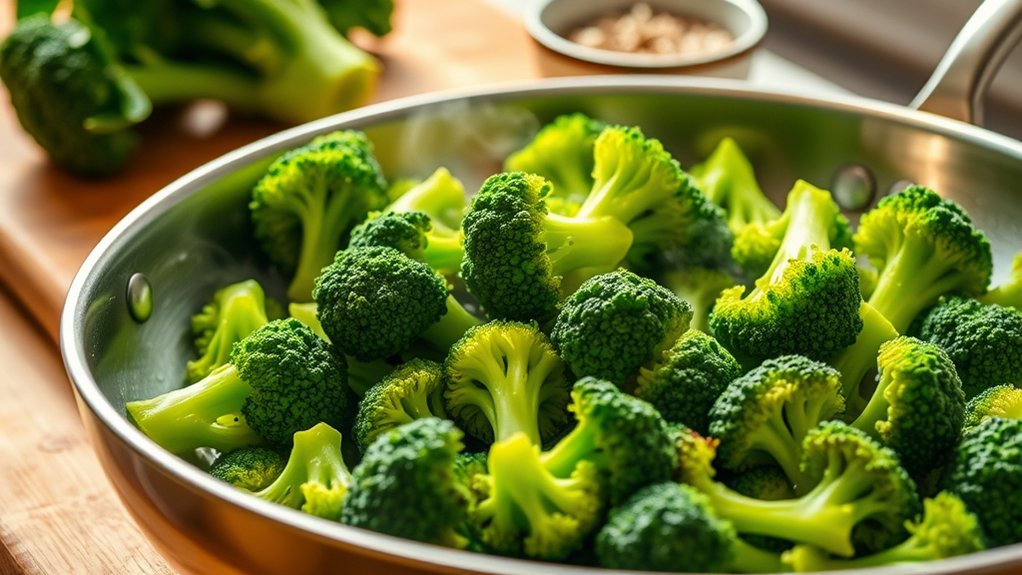
7 Tips for the Perfect Temp to Pan Fry Broccoli
To pan-fry broccoli perfectly, start by preheating your pan on medium heat until water droplets sizzle. Achieving the perfect temp to pan fry broccoli is essential for crisp, tender results.
Using the right heat ensures your broccoli cooks evenly without becoming soggy or burnt. Use medium-high heat to get a slight char without burning.
Add high smoke-point oil like avocado or canola once the pan is hot, ensuring it sizzles but doesn’t smoke. Adjust heat as needed to avoid soggy or burnt florets.
Mastering these steps will give you crisp, tender broccoli—and there’s more to explore for that perfect finish. Following these tips will help you elevate your pan-fried broccoli every time.
Key Takeaways
- Preheat the pan on medium heat for 2-3 minutes until water droplets sizzle and evaporate quickly.
- Set stove to medium-high for even cooking and slight char without burning or sogginess.
- Add high smoke point oil (avocado, canola) after pan is hot but before broccoli goes in.
- Test pan temperature by flicking water droplets; they should sizzle immediately without smoking.
- Adjust heat if excessive smoke appears or if broccoli lacks browning to maintain ideal texture.
How to Choose the Ideal Heat Level for Pan-Frying Broccoli
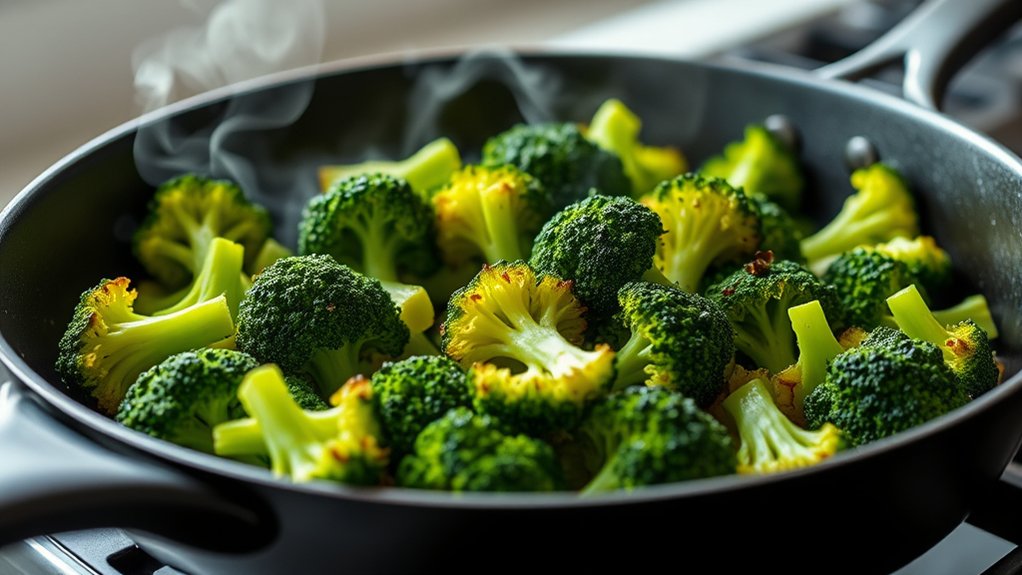
Although it might seem straightforward, choosing the right heat level is essential for pan-frying broccoli to get that perfect balance of tenderness and crispiness. You want to set your stove to medium-high heat. Too high, and the broccoli will burn on the outside while staying raw inside.
Too low, and you’ll end up with soggy, mushy florets. Medium-high heat allows the broccoli to cook evenly, getting that slight char without losing its crunch. Remember, broccoli cooks quickly, so keep an eye on it to prevent overcooking.
Adjust the heat slightly if you notice excessive smoke or if the broccoli isn’t browning. Mastering this heat control guarantees your broccoli is flavorful, vibrant, and has that ideal texture every time you pan-fry.
How to Preheat Your Pan for Even Cooking
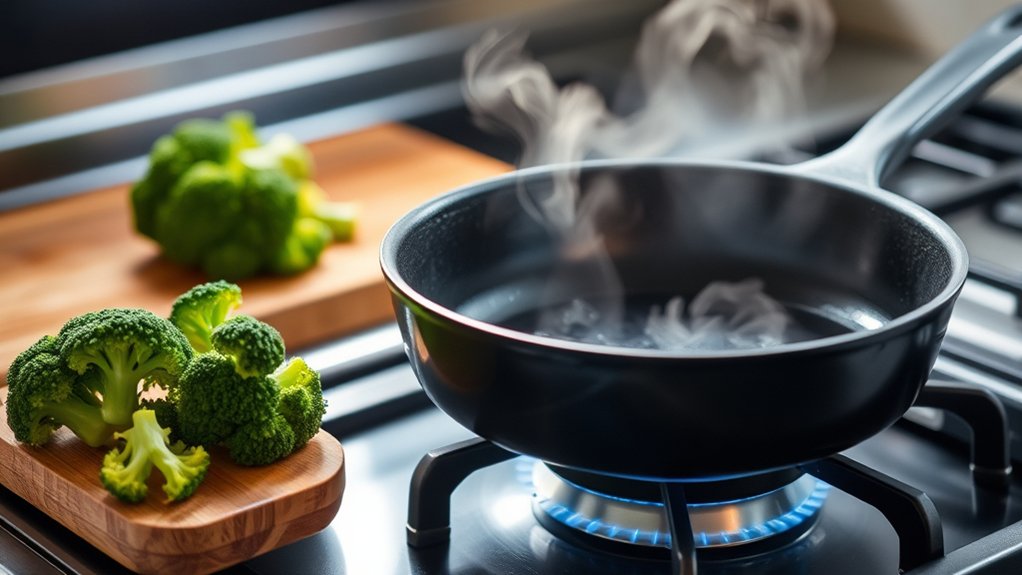
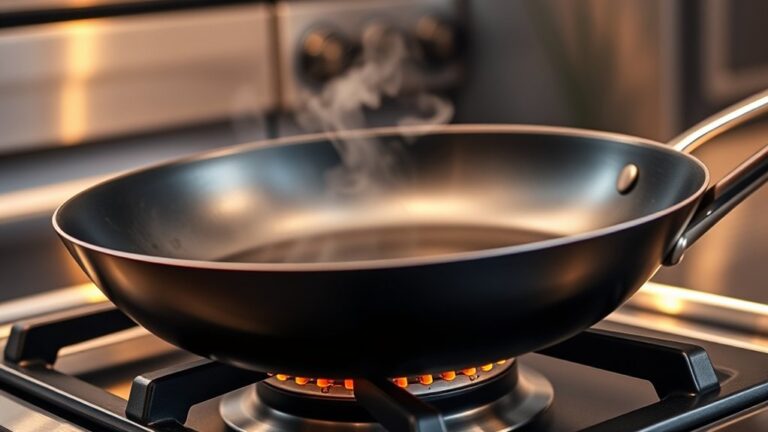
Before adding your broccoli, you need to preheat your pan properly to guarantee even cooking and prevent sticking. Place your pan on medium heat and let it warm up for about 2 to 3 minutes. You’ll know it’s ready when you flick a few drops of water onto the surface—they should sizzle and evaporate quickly.
Avoid overheating, as this can cause uneven cooking or burn your broccoli. If you’re using a stainless steel or cast iron pan, preheating is especially important to create a natural non-stick surface. Keep the pan steady on the burner and resist the urge to move it around too much during preheating.
Once the pan reaches the right temperature, you’re set to add your broccoli for a perfectly cooked, evenly browned result.
When to Add Oil and Which Oil to Use for Broccoli
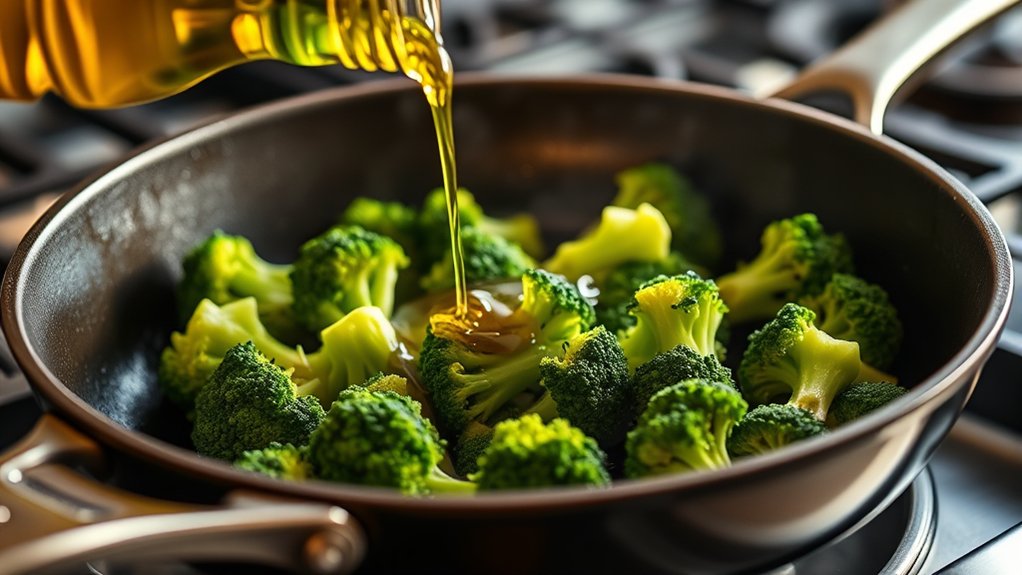
You’ll want to add oil once your pan is hot but before the broccoli goes in to guarantee even coating and prevent sticking. Choosing the right oil—like avocado, canola, or light olive oil—matters because of their high smoke points.
Use just enough to lightly coat the pan, so the broccoli crisps up without becoming greasy.
Best Oils For Frying
Choosing the right oil and knowing when to add it can make all the difference in pan frying broccoli to perfection. For best results, pick oils with a high smoke point like avocado oil, canola oil, or refined olive oil. These oils handle the heat without burning, preserving flavor and nutrients.
Avoid extra virgin olive oil or butter at high temperatures since they can smoke quickly and impart bitterness. Neutral oils also allow the broccoli’s natural taste to shine. When you add oil, make sure it’s hot enough to sizzle but not smoking.
This ensures a crisp, evenly cooked texture. Using the right oil sets the stage for delicious, perfectly pan-fried broccoli every time.
Timing Oil Addition
Although selecting the right oil matters, knowing exactly when to add it is just as crucial for achieving perfectly pan-fried broccoli. Add oil once your pan is hot but not smoking; this prevents burning and ensures even cooking. Adding oil too early can lead to excess smoking, while adding too late may cause uneven coating.
Here’s a quick guide:
| Oil Type | When to Add | Smoke Point (°F) |
|---|---|---|
| Olive Oil | Medium heat | 375 |
| Avocado Oil | Preheat pan | 520 |
| Canola Oil | Preheat pan | 400 |
| Sesame Oil | After broccoli | 410 |
| Coconut Oil | Preheat pan | 350 |
Timing matters—match oil and heat for crisp, tasty broccoli.
Oil Quantity Tips
When pan-frying broccoli, using the right amount of oil is just as important as selecting the right type. You want enough oil to coat the pan evenly without pooling, usually about 1 to 2 tablespoons for a medium skillet. Too little oil can cause sticking and uneven cooking, while too much makes the broccoli greasy.
Choose oils with high smoke points like avocado, grapeseed, or refined olive oil to handle the heat without burning. Avoid extra virgin olive oil, as it smokes quickly and imparts a bitter flavor. Add the oil after heating the pan to the desired temperature, ensuring it’s hot enough to sizzle when the broccoli hits.
This approach locks in flavor and texture perfectly every time.
How to Know When Your Pan Is Hot Enough for Pan-Frying Broccoli
Before you start pan-frying broccoli, you’ll want to make certain your pan is hot enough to achieve that perfect crisp without burning. To test this, heat your pan over medium-high heat for a few minutes. Sprinkle a few drops of water onto the surface—if they sizzle and evaporate immediately, your pan is ready.
Another way is to tilt the pan slightly; the oil should shimmer and flow smoothly but not smoke. If you see wisps of smoke, the pan is too hot. Avoid adding broccoli before the pan reaches this stage, or it might stick or cook unevenly.
Getting this step right ensures your broccoli fries quickly, locking in flavor and texture just right.
How to Adjust Heat to Prevent Burnt or Soggy Broccoli
To keep your broccoli from burning or turning soggy, you need to adjust the heat carefully as it cooks. Start on medium-high heat to get a quick sear, then lower it to medium or medium-low once the broccoli begins to soften. If you notice dark spots forming too quickly or the smell of burning, reduce the heat immediately.
On the other hand, if the broccoli is steaming and looks limp, turn the heat up slightly to evaporate excess moisture and maintain a firm texture. Keep stirring or tossing the broccoli to promote even cooking and prevent sticking. Adjusting the heat in response to what you see and smell is key—this balance ensures your broccoli cooks through without burning or becoming soggy.
How to Get Crispy, Caramelized Broccoli Edges
Although pan frying broccoli is quick, you can still achieve those crispy, caramelized edges that add amazing texture and flavor. Start by cutting the broccoli into evenly sized florets, ensuring more surface area touches the pan. Preheat your pan over medium-high heat and add enough oil to coat the bottom—this promotes browning.
Once the oil shimmers, add the broccoli in a single layer without crowding to encourage crispiness. Resist stirring too frequently; let the broccoli sit undisturbed for a few minutes to develop those golden edges. When you see the florets turning a deep, rich brown on one side, flip them to crisp the other sides.
This technique locks in flavor and creates a satisfying crunch that elevates your dish.
How to Finish Cooking While Keeping Broccoli Tender and Green
Once you’ve achieved those crispy, caramelized edges, the next step is to cook the broccoli through without losing its bright green color or tender texture. Lower the heat to medium-low and add a splash of water or broth to the pan. Cover it with a lid to create steam, which helps cook the broccoli evenly while preserving moisture and vibrancy.
Check frequently to avoid overcooking. Steaming for 2-3 minutes usually does the trick, but adjust based on the size of your florets. Remove the lid, let any excess liquid evaporate, and give the broccoli a quick toss to re-crisp the edges.
This method guarantees you get tender, flavorful broccoli that’s still visually appealing and ready to enjoy.
Frequently Asked Questions
Can I Pan-Fry Other Vegetables Using the Same Temperature Tips?
Yes, you can pan-fry other vegetables using the same temperature tips. Just adjust cooking times based on their density and moisture, and you’ll get a delicious, crispy texture without burning or undercooking your veggies.
How Long Does Pan-Frying Broccoli Typically Take?
Pan-frying broccoli typically takes about 6 to 8 minutes. You’ll want to cook it until it’s tender-crisp and slightly charred. Just keep stirring occasionally to guarantee even cooking and avoid burning.
Is It Necessary to Wash Broccoli Before Pan-Frying?
Yes, you should always wash broccoli before pan-frying. It removes dirt, pesticides, and bugs, ensuring your food is clean and safe.
Rinse it under cold water and dry thoroughly to avoid extra moisture in the pan.
Can I Use Frozen Broccoli for Pan-Frying?
Yes, you can use frozen broccoli for pan-frying. Just make sure to thaw and drain it well to avoid excess moisture, which can cause splattering.
Then, cook on medium-high heat for a crispy texture.
What Seasoning Pairs Best With Pan-Fried Broccoli?
You’ll love garlic, lemon zest, and red pepper flakes with pan-fried broccoli. Add salt, black pepper, and a sprinkle of Parmesan for extra flavor. These seasonings bring out its natural crunch and vibrant taste perfectly.
Conclusion
With these tips, you’ll master the art of coaxing out broccoli’s best side—crispy on the edges, tender inside, and glowing with vibrant green charm. By gently guiding your pan’s heat and timing, you’ll avoid any unwelcome surprises and create a dish that feels like a warm, golden embrace on your plate.
So, trust your instincts, and soon your broccoli will dance with flavor, inviting smiles at every bite. Perfect temp to pan fry broccoli ensures the ideal balance of texture and taste. Embrace these techniques for a deliciously crispy, tender, and beautifully green result every time.