How to Measure a BBQ Grill Cover in 7 Easy Steps
Start by cleaning and cooling your grill, removing any debris and detachable parts.
Measuring a BBQ grill cover correctly is essential to ensure a snug and protective fit.
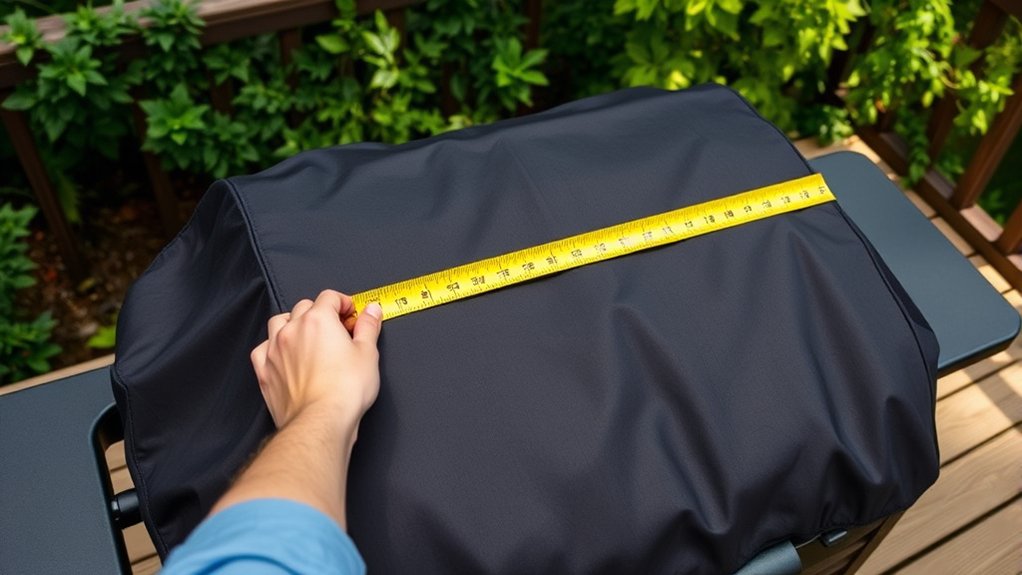
Measure the width at the widest points, including side shelves and handles.
Then get the depth from front to back, including protrusions.
Measure the height to the tallest point, lid included.
Don’t forget vents, wheels, and accessories.
Add a couple of inches for fit and ventilation, then double-check every measurement.
Keeping these steps in mind will help you guarantee a perfect, protective fit for your grill cover.
Key Takeaways
- Clean and cool the grill, removing all debris and detachable parts for accurate measurements.
- Measure width, depth, and height including side shelves, handles, knobs, vents, and wheels.
- Include all protruding accessories and adjustable features to capture full dimensions.
- Add 1-2 inches to each measurement for ventilation and ease of fit.
- Double-check and record all measurements, comparing them to size charts for a snug, protective cover.
Prepare Your Grill for Measuring
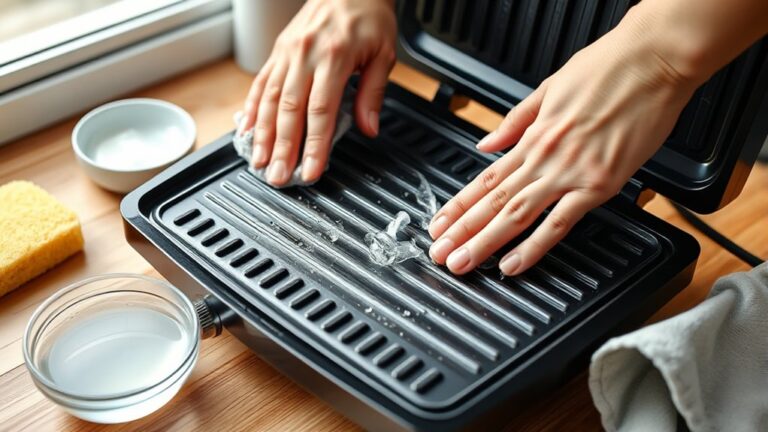
Before you measure your grill, make sure it’s clean and cool to the touch. You don’t want to risk burns or inaccurate measurements caused by debris. Start by removing any leftover food, grease, or ashes from the grill grates and surrounding areas.
Wipe down the surfaces with a damp cloth and mild detergent if needed, then let it dry completely. Check for any attachments or side shelves that might affect the shape or size of the cover you’ll need. If your grill has removable parts, detach them to get precise measurements later.
Taking these steps guarantees you get accurate dimensions and prevents damage to both your grill and the cover. Once your grill is prepped, you’ll be ready to measure confidently.
Measure Your Grill’s Width
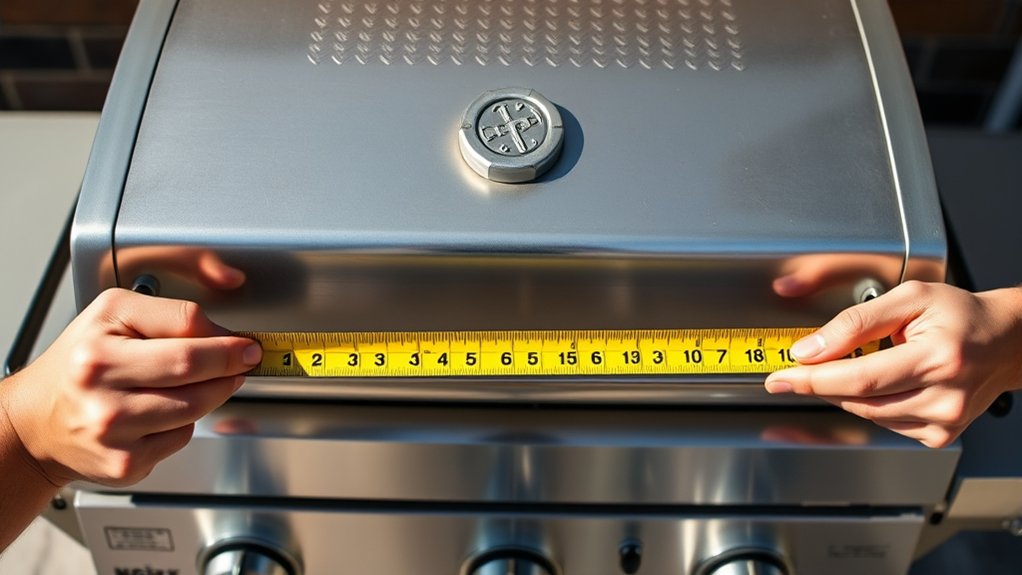
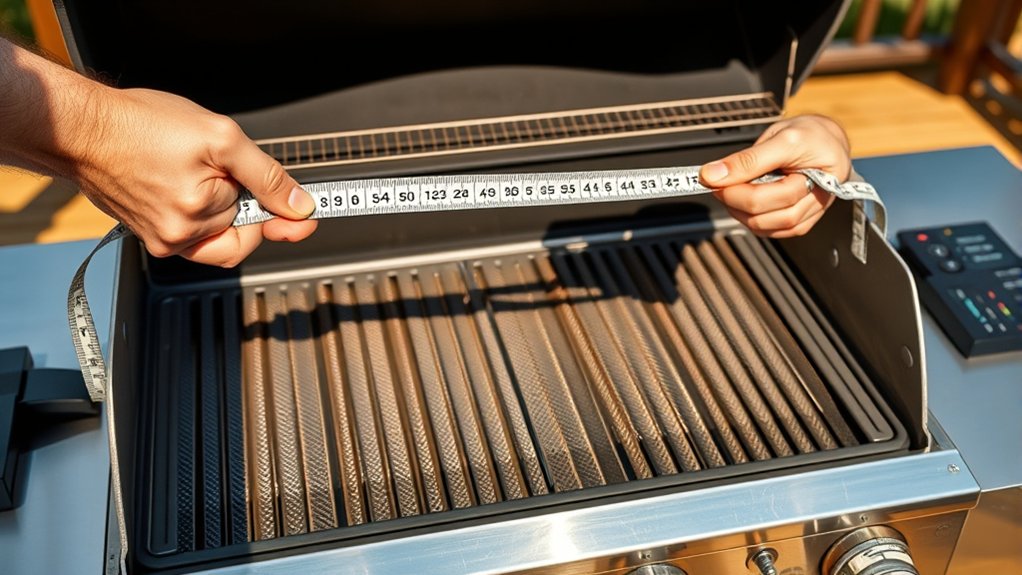
When you measure your grill’s width, start by locating its widest points, including any side shelves or attachments that won’t be removed. Use a tape measure to get an accurate reading from one outer edge to the other. Make sure the tape stays straight and level for precision.
Measure your grill’s widest points accurately, including permanent side shelves or attachments, for the best fit.
Here’s what to take into account:
- Include side shelves, side burners, or tool hooks
- Measure from the furthest left to the furthest right point
- Avoid measuring removable parts unless they’re always attached
- Record the measurement in inches or centimeters, depending on the cover’s specs
- Double-check your measurement to prevent buying a cover that’s too tight or loose
Measure the Depth Accurately
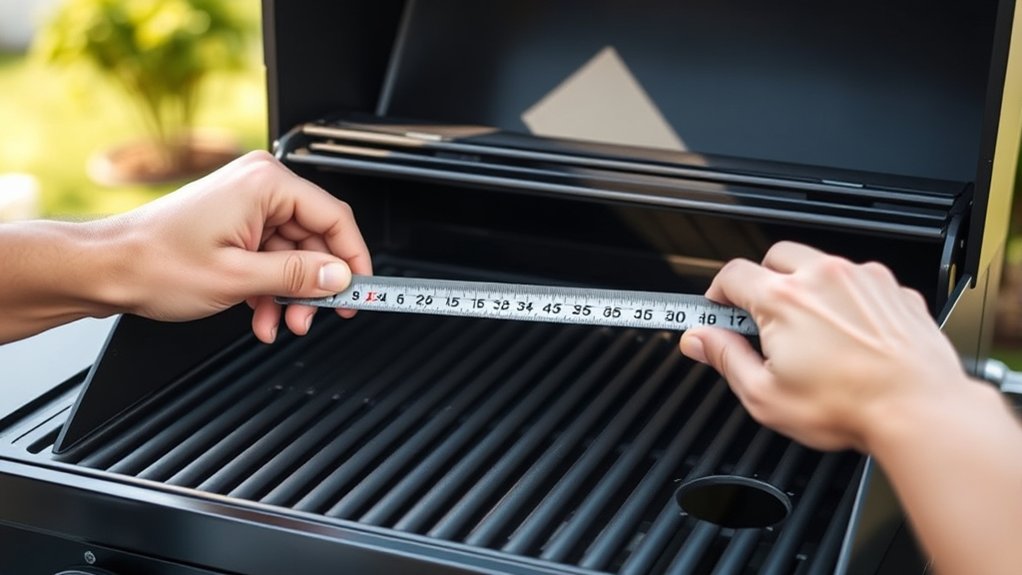
Since the depth determines how well the cover fits from front to back, you’ll want to measure this dimension carefully. Start by placing your tape measure at the very front edge of the grill, where the lid or cooking surface begins. Extend the tape straight back to the rear edge, including any side shelves or handles that stick out.
Make sure the tape stays level and doesn’t sag for an accurate reading. If your grill has irregular shapes or attachments, measure the furthest points to guarantee full coverage. Jot down this number precisely, as an incorrect depth measurement can cause the cover to be too tight or too loose, compromising protection.
Taking your time here will help you find a cover that fits snugly and keeps your grill safe from the elements.
Measure the Height Properly
Although measuring the height might seem straightforward, getting it right guarantees your grill cover fits perfectly without dragging on the ground or leaving gaps. Start by standing your grill upright and use a tape measure to record the distance from the bottom to the highest point. Remember, grill lids, knobs, or side shelves can affect the total height.
To verify accuracy:
- Measure from the ground to the topmost part of the grill
- Include any raised handles or vents
- Take note of uneven surfaces the grill might sit on
- Double-check measurements with the grill lid open and closed
- Add a small allowance for ease of fitting and movement
Don’t Forget Extra Features and Accessories
Don’t forget to measure any extra features like side shelves, wheels, and handles when sizing your grill cover. You’ll also want to take into account ventilation options to keep your grill protected without trapping moisture.
Taking these into consideration ensures your cover fits perfectly and works effectively.
Consider Ventilation Options
When choosing a BBQ grill cover, you’ll want to take ventilation options carefully to prevent moisture buildup and mold growth. Proper airflow keeps your grill dry and extends its life.
Look for covers with vents or breathable fabrics that balance protection and air circulation. Here are key ventilation features to evaluate:
- Mesh vents positioned on the sides or top
- Breathable, water-resistant materials like polyester or PVC
- Adjustable vent flaps for customized airflow
- Double-stitched seams to prevent water entry while allowing air exchange
- Airflow channels designed to reduce condensation
Account For Side Shelves
Proper ventilation keeps moisture at bay, but you’ll also need to factor in your grill’s side shelves and any extra features when measuring for a cover. Side shelves can vary widely in size and shape, so measure their width and depth carefully. Include any foldable or removable parts in your measurements, as they still need protection.
Don’t forget to account for accessories like utensil hooks, side burners, or warming racks that extend beyond the main grill body. Measuring from the widest points guarantees your cover fits comfortably without being too tight or too loose. Taking these extra features into account will help you choose a cover that offers full protection and maintains the grill’s functionality.
Always measure twice to avoid errors and ensure a perfect fit.
Include Wheels And Handles
Since wheels and handles often stick out from the main body of your grill, you’ll want to measure their full dimensions carefully. Overlooking these features can lead to a cover that’s too tight or doesn’t fit properly. To get accurate measurements, include the following steps:
- Measure the width from the outer edge of one handle to the other.
- Check the height, including wheels, from the ground to the highest point.
- Note the depth, accounting for any protruding handles or controls.
- Measure the diameter or width of wheels if they extend beyond the grill base.
- Consider removable accessories that might affect the overall size.
Choose the Right BBQ Grill Cover Size
To choose the right BBQ grill cover size, start by measuring your grill’s length, width, and height accurately. Remember to account for any extra features like side shelves or handles that add to the dimensions.
Picking a cover that fits well guarantees better protection and a snug fit.
Measuring Grill Dimensions
When you measure your grill accurately, you guarantee the cover fits snugly and protects it from the elements. Start by gathering a tape measure and a notepad to jot down the dimensions. Measure your grill’s:
- Width: from the widest points side to side
- Depth: from front to back, including handles if they protrude
- Height: from the ground to the highest part, such as a lid or thermometer
- Extra features: side shelves or attachments that need coverage
- Shape: note if it’s rectangular, rounded, or irregular
Record these measurements carefully to compare with cover sizes. Remember, a well-fitted cover prevents wind damage and keeps your grill clean. Taking precise dimensions now saves you from replacing the cover too soon.
Considering Cover Features
Although measuring your grill is essential, you also need to take into account specific cover features to guarantee you pick the right size and functionality. Look for weather resistance, ventilation, and ease of use to keep your grill protected and extend its life. Features like adjustable straps or handles add convenience.
Here’s a quick guide to key cover features:
| Feature | Benefit | What to Check |
|---|---|---|
| Weather Resistance | Protects from rain, snow | Waterproof material |
| Ventilation | Prevents mold and rust | Air vents or mesh panels |
| Fit Adjustability | Keeps cover secure | Adjustable straps or drawstrings |
| Durability | Long-lasting protection | Heavy-duty, tear-resistant fabric |
Considering these features alongside size guarantees your cover fits well and functions perfectly.
Check and Adjust Your Measurements for a Perfect Fit
Since even small measurement errors can cause your BBQ grill cover to fit poorly, you’ll want to double-check each dimension before making a purchase. Take a moment to review your length, width, height, and any extra features like side shelves. Don’t forget to account for handles or knobs that stick out.
Modify your numbers if needed to ensure a snug but not too tight fit.
Here’s a quick checklist to help you perfect your measurements:
- Measure your grill at its widest and tallest points
- Include any protruding parts in your dimensions
- Add 1-2 inches for ease of fitting and ventilation
- Re-measure if you’ve repositioned your grill recently
- Compare your adjusted measurements with product size charts
This careful approach guarantees a cover that protects your grill well.
Frequently Asked Questions
What Materials Are Best for BBQ Grill Covers?
You’ll want grill covers made from heavy-duty, waterproof materials like vinyl or polyester with a UV-resistant coating. These protect against rain, sun, and rust, keeping your BBQ grill safe and durable in all weather conditions.
How Do I Clean and Maintain a BBQ Grill Cover?
Simply spray soapy water, scrub softly, and rinse thoroughly to keep your BBQ grill cover clean.
Store it safely, spot-treat stains swiftly, and check seams regularly to maintain its moisture-resistant magic and prolong its protective power.
Can a BBQ Grill Cover Protect Against Extreme Weather?
Yes, a BBQ grill cover can protect your grill against extreme weather if it’s made from heavy-duty, waterproof materials with UV resistance. You’ll want one that’s durable enough to shield against rain, snow, wind, and sun damage.
Choosing a cover with reinforced seams and secure fastenings will help it stay in place during strong winds. Additionally, proper ventilation in the cover can prevent moisture buildup, reducing the risk of rust.
Are Custom-Sized BBQ Grill Covers Worth the Cost?
Custom-sized BBQ grill covers are worth it because they fit perfectly, offering better protection. You might think they’re pricey, but investing now saves you money later by preventing damage and extending your grill’s life.
How Often Should I Replace My BBQ Grill Cover?
You should replace your BBQ grill cover every 1 to 3 years, depending on wear and weather exposure.
Check for tears, fading, or mold, and swap it out when it no longer protects your grill effectively.
Conclusion
Now that you’ve measured your grill’s width, depth, and height, plus accounted for shelves or handles, you’re set to pick the perfect cover. Imagine you’ve got a classic Weber with side tables—measuring those extra inches means your cover won’t leave gaps or sag.
Taking these simple steps guarantees your cover fits snugly, protecting your grill from rain, dust, and sun. A well-fitted cover keeps your BBQ ready for every cookout!
By following these easy steps to measure your BBQ grill cover, you ensure a secure fit that shields your grill from the elements. Proper measurement is key to choosing the best grill cover, helping extend your grill’s life and performance.