How Do You Pan Fry Walleye in 7 Simple Steps?
To pan fry walleye in 7 simple steps, start by selecting fresh, clean walleye fillets to ensure the best flavor and texture. Pat the fillets dry to remove excess moisture, which helps achieve a crispy crust when cooking. Lightly season with salt, pepper, and your favorite spices for enhanced taste.
Next, coat the fillets evenly with flour or cornmeal to create a golden, crunchy exterior.
Heat a cast iron or stainless steel pan with a high smoke point oil over medium heat to prevent sticking and burning. Fry the fillets for about 3-4 minutes per side until they turn golden and flaky.
Finally, let the walleye rest briefly before serving to allow the juices to redistribute.
Keep reading to uncover tips for perfect texture and flavor that will make your pan-fried walleye irresistible.
Key Takeaways
- Pat fresh walleye fillets dry, trim skin or bones, and season lightly with salt, pepper, and optional spices.
- Coat fillets evenly in flour, cornmeal, or a combination for a crispy texture.
- Preheat a cast iron or stainless steel pan with high smoke point oil over medium-high heat.
- Fry fillets undisturbed for 3-4 minutes per side until golden brown and cooked through.
- Remove fillets, let rest briefly, and serve with lemon, parsley, or preferred side dishes.
Why Pan Fry Walleye? Benefits and Basics
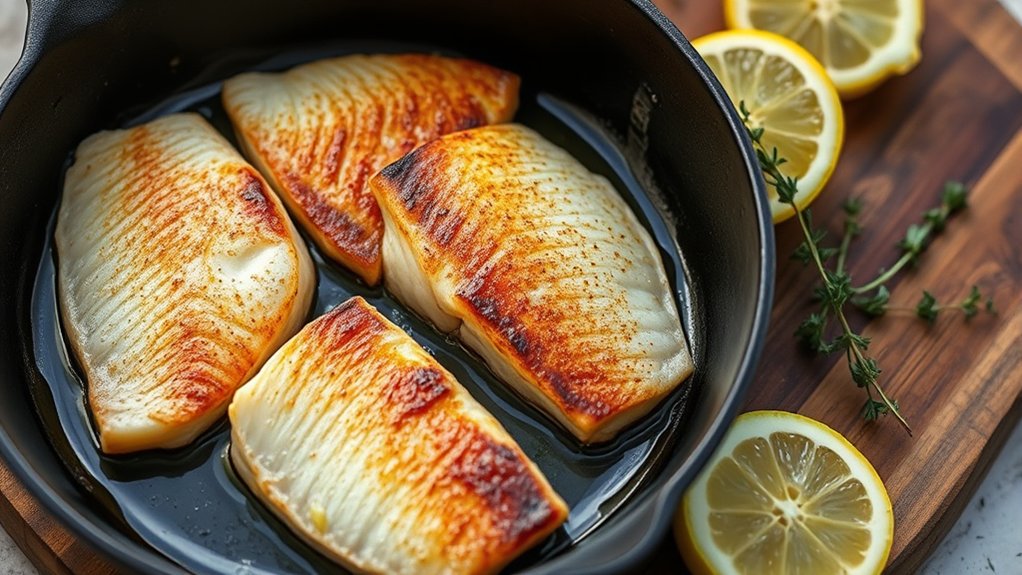
Although there are many ways to cook walleye, pan frying stands out because it’s quick, easy, and locks in the fish’s delicate flavor. When you pan fry walleye, you get a crispy, golden exterior while keeping the inside moist and tender. This method requires minimal prep and cooks fast, making it perfect for busy weeknights.
Plus, pan frying lets you control the seasoning and oil, so you can customize the taste exactly how you like it. It also helps preserve the nutrients found in walleye, like omega-3 fatty acids and protein. Overall, pan frying gives you a flavorful, satisfying meal without much fuss or time in the kitchen.
It’s a smart way to enjoy walleye’s natural qualities to the fullest.
Gather Fresh Walleye and Key Ingredients
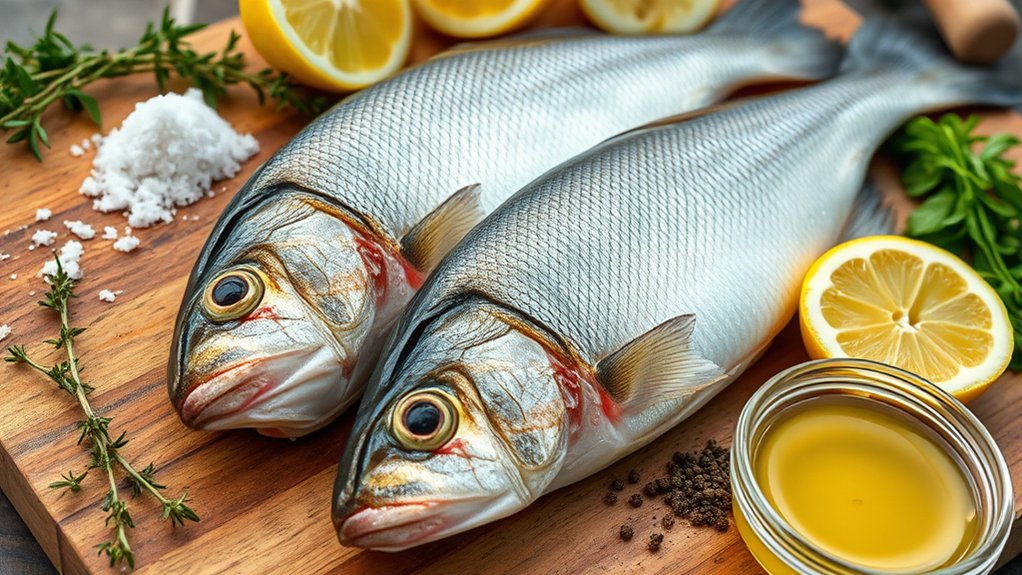
Before you start cooking, make sure you have fresh walleye and all the essential ingredients on hand. Freshness makes a huge difference in flavor and texture, so aim for fillets that smell clean and look moist.
Along with walleye, gather basic ingredients that enhance its delicate taste without overpowering it.
| Ingredient | Purpose |
|---|---|
| Fresh walleye | Main protein, mild flavor |
| Flour | Creates a crispy crust |
| Salt & pepper | Basic seasoning |
| Butter or oil | For frying and flavor |
Having these ready ensures a smooth cooking process and delicious results. Once everything’s set, you’re ready to move on to prepping the fillets for perfect pan frying.
Prepare Walleye Fillets for Perfect Cooking
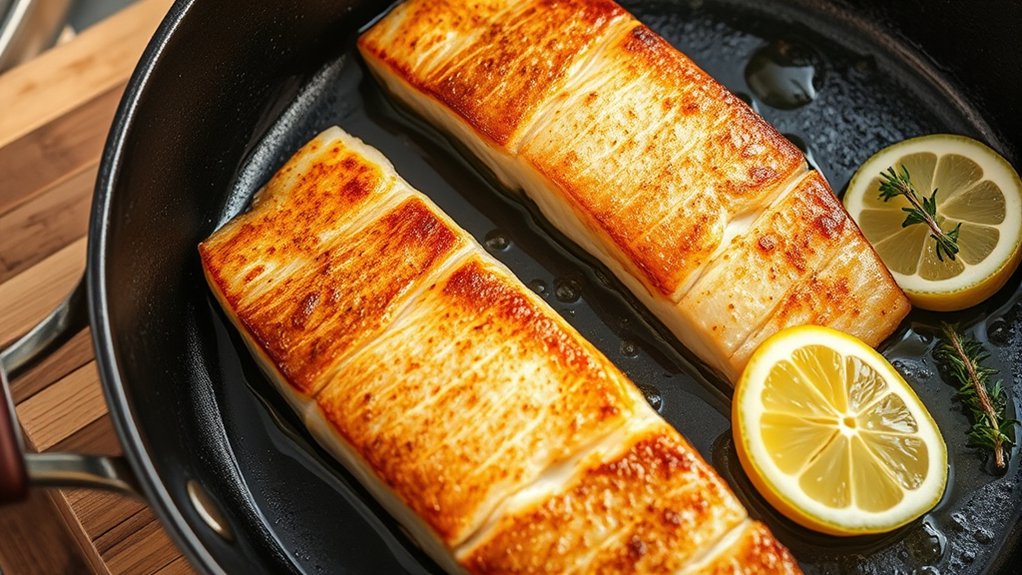
You’ll want to start by selecting fresh, firm walleye fillets with a mild scent. Next, gently pat them dry and trim any excess skin or bones for even cooking.
Taking these simple prep steps guarantees your fillets cook perfectly every time.
Choosing Fresh Walleye Fillets
How can you tell if walleye fillets are fresh and ready for cooking? First, look for fillets that are moist but not slimy. The flesh should be firm and spring back when pressed gently.
Fresh walleye has a mild, clean smell—avoid any fillets with a strong fishy or sour odor. Check the color: it should be creamy white to pale pink, without any brown or yellow discoloration. If you’re buying whole walleye, their eyes should be clear, not cloudy, and the skin should be shiny.
When selecting fillets, choose those that feel cool to the touch and are stored properly on ice or refrigerated. Picking fresh fillets guarantees your pan-fried walleye will taste its best and cook evenly.
Prepping Fillets for Cooking
Once you have fresh walleye fillets, it’s important to prepare them properly to guarantee even cooking and the best flavor. Start by patting the fillets dry with paper towels to remove excess moisture, which helps achieve a crispy crust. Check for any remaining bones and remove them with tweezers to ensure a pleasant eating experience.
Season both sides lightly with salt and pepper or your favorite seasoning blend. If you prefer, lightly coat the fillets with flour or cornmeal, which adds texture and helps lock in moisture. Let the fillets rest at room temperature for about 10 minutes before cooking; this promotes even cooking throughout.
With these simple steps, you’ll set the stage for perfectly pan-fried walleye every time.
Season and Coat the Walleye for Crispy Texture
Before frying, season the walleye thoroughly to enhance its natural flavor and guarantee every bite is delicious. Start with salt and pepper, then add your choice of herbs or spices like paprika or garlic powder for extra taste.
After seasoning, coat the fillets to achieve that sought-after crispy texture.
A simple coating method involves dredging the fillets in flour or cornmeal. This layer helps seal in moisture and creates a golden crust when fried. Here’s a quick guide:
| Coating Option | Effect on Texture |
|---|---|
| Flour | Light, crisp crust |
| Cornmeal | Crunchier, grainy bite |
| Combination | Balanced crispiness |
Choosing the right coating will make your walleye both flavorful and satisfyingly crispy.
Pick the Best Pan and Heat Settings for Frying
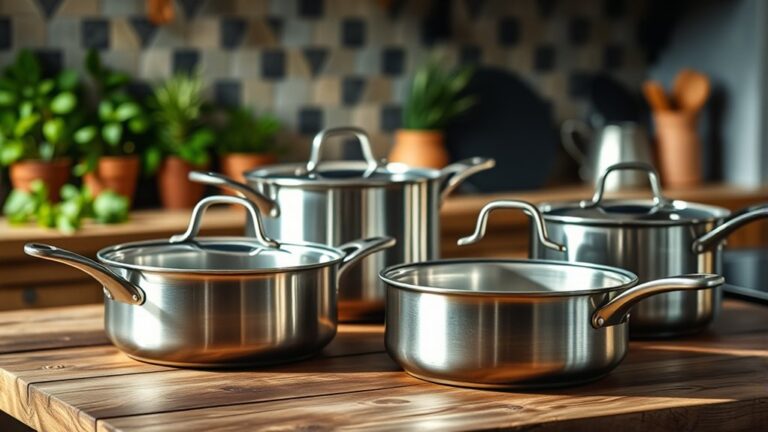
You’ll want to choose a pan that heats evenly, like cast iron or stainless steel, to get the best crust on your walleye. Keep your heat at medium to medium-high to avoid burning the coating while ensuring the fish cooks through.
Finding the right balance will help you achieve that perfect golden finish every time.
Ideal Pan Materials
Although many pans can cook walleye, choosing the right material makes a big difference in heat control and preventing sticking. You want a pan that heats evenly and holds temperature well without causing your delicate fish to tear or stick. Non-stick pans offer easy release but can’t handle very high heat.
Cast iron provides excellent heat retention but requires seasoning and care. Stainless steel is durable and great for browning but might need more oil.
| Pan Type | Heat Control | Sticking Risk |
|---|---|---|
| Non-stick | Moderate | Low |
| Cast Iron | Excellent | Low (if seasoned) |
| Stainless Steel | Good | Moderate |
| Aluminum | Fair | Moderate |
| Ceramic | Moderate | Low |
Pick the one that fits your style and kitchen care routine.
Optimal Heat Levels
When frying walleye, controlling your pan’s heat is essential to achieving a crispy, golden crust without overcooking the delicate flesh. Start by preheating your pan over medium to medium-high heat. This range guarantees the oil is hot enough to sear the fish quickly, locking in moisture.
Avoid using excessively high heat—this can burn the coating before the fish cooks through. If your pan smokes heavily right away, lower the heat slightly. Use a cooking oil with a high smoke point, like canola or peanut oil, to maintain stable heat.
Adjust the temperature as you fry multiple fillets; you want a steady sizzle, not a roar. Mastering these heat levels guarantees perfect pan-fried walleye every time.
Pan Fry Walleye to Golden Perfection
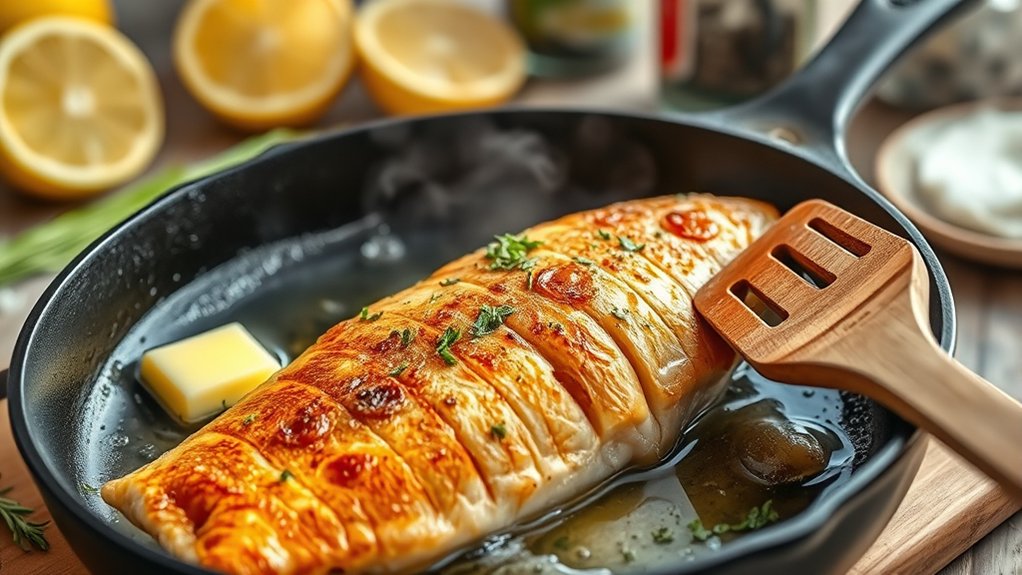
How can you achieve that perfect golden crust on your walleye every time? Start by coating the fillets evenly with your chosen breading or seasoning mix. Make sure your pan is hot enough—medium to medium-high heat—before adding oil, so the fish sizzles on contact.
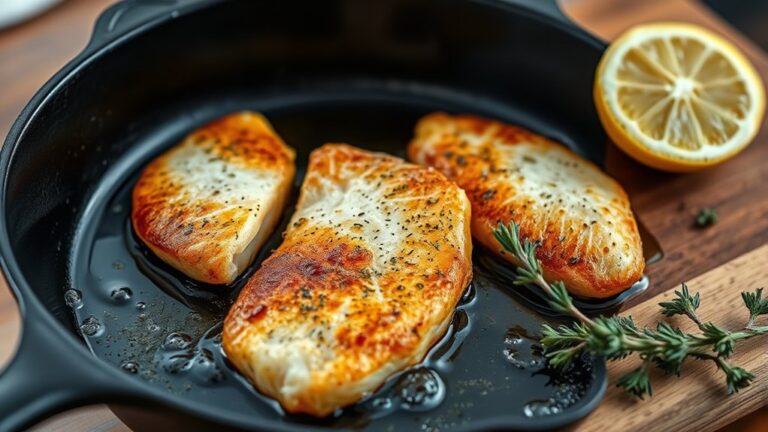
Place the fillets skin-side down if they have skin, pressing gently to ensure even contact with the pan. Resist the urge to move them around; let them cook undisturbed for about 3-4 minutes. This allows the crust to develop properly.
When the edges turn golden and lift easily, flip the fillets carefully. Cook the other side for another 2-3 minutes until it matches the golden color. This technique locks in moisture while delivering that irresistible crispy exterior you want.
Know When It’s Done and How to Serve It
Once the walleye fillets have that perfect golden crust, you’ll want to guarantee they’re cooked just right—opaque and flaking easily with a fork is your best indicator. Overcooking makes the fish dry, so watch closely. When ready, remove them from the pan and let them rest briefly.
Serving your walleye properly enhances the experience.
Try pairing your walleye with:
- A squeeze of fresh lemon to brighten the flavors and add zest.
- A sprinkle of chopped parsley for a fresh, vibrant touch.
- Warm, buttery mashed potatoes or a crisp green salad to complement the fish’s delicate texture.
These simple touches’ll turn your pan-fried walleye into a memorable meal you’ll want to make again and again.
Frequently Asked Questions
Can You Pan Fry Walleye Without Breading?
Yes, you can pan fry walleye without breading. Just season the fillets with salt and pepper, heat oil or butter in a pan, and cook the fish until golden and flaky, flipping carefully once.
What Oil Is Best for Pan Frying Walleye?
Choosing the best oil for pan-frying walleye is like picking the perfect dance partner—it should handle heat well and add no overpowering taste.
You’ll want oils like canola, grapeseed, or peanut for their high smoke points.
How Do You Store Leftover Pan-Fried Walleye?
You should let the walleye cool, then store it in an airtight container. Keep it in the refrigerator and eat within 2-3 days.
For longer storage, freeze it tightly wrapped to maintain freshness and flavor.
Can Frozen Walleye Be Pan Fried Directly?
You can pan fry frozen walleye directly, but it’s better to thaw it first. Studies show thawed fish cooks 30% more evenly, helping you avoid a soggy inside and crispy outside imbalance when frying frozen fillets.
What Side Dishes Pair Well With Pan-Fried Walleye?
You’ll love pairing pan-fried walleye with roasted asparagus, garlic mashed potatoes, or a fresh garden salad. Steamed green beans or lemon butter rice also complement its mild flavor perfectly, making your meal balanced and delicious.
Conclusion
Now that you’ve mastered the art of pan-frying walleye, you’re ready to enjoy a dish that’s simply irresistible. With each golden, crispy bite, you’re treating yourself to a little culinary magic that’s both satisfying and elegant.
Keep this simple ritual in your recipe arsenal, and you’ll always have a delicious way to turn ordinary moments into something truly special. Pan frying walleye brings out the best flavors and textures, making it a perfect choice for any meal.
Your taste buds will thank you, and so will anyone lucky enough to share your table. Remember, pan frying walleye is not only easy but also a fantastic way to enjoy fresh, flaky fish every time.