Why Use Cast Iron Cookware?
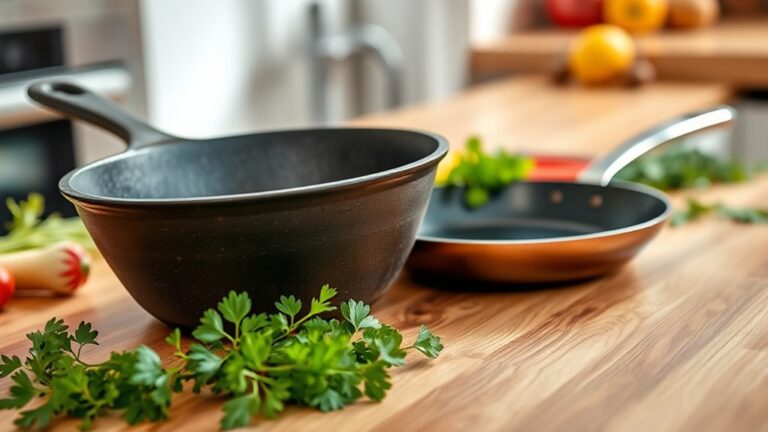
You’ll love using cast iron cookware because it’s incredibly durable and offers even heat distribution, so your food cooks perfectly every time. Cast iron pans and skillets are essential kitchen tools that enhance your cooking experience.
They naturally become nonstick with use, enhancing flavors and locking in juices.
Plus, cast iron supports healthier meals by allowing you to cook with less oil and adds iron to your diet. Its longevity means it can last for generations, making it an eco-friendly choice for sustainable living.
Keep exploring to discover how cast iron cookware adapts and improves with every use.
Key Takeaways
- Cast iron cookware offers unmatched durability and improves nonstick properties with use through seasoning and patina development.
- It provides even heat distribution and superior cooking control, ensuring uniform cooking and perfect sears.
- Cast iron enhances food flavor by locking in juices and developing rich, caramelized crusts over time.
- It is easy to maintain with simple cleaning, regular seasoning, and resists damage from high heat or metal utensils.
- Cast iron is eco-friendly, supports healthier cooking with less oil, and becomes more efficient and reliable with age.
Key Features That Make Cast Iron Cookware Stand Out
Although cast iron cookware has been around for centuries, it still stands out because of its unmatched durability and heat retention. When you use cast iron, you’re investing in a pan that can last a lifetime, resisting warping and damage that other materials might suffer. You’ll also appreciate how naturally non-stick it becomes with proper seasoning, making cooking and cleanup easier.
Plus, cast iron is incredibly versatile—you can use it on the stovetop, in the oven, or even over an open flame. Its heavy construction means it holds heat well, so your food cooks evenly without sudden temperature drops. If you take care of it, your cast iron will improve over time, developing a rich patina that enhances flavor and performance.
How Cast Iron Distributes Heat Evenly
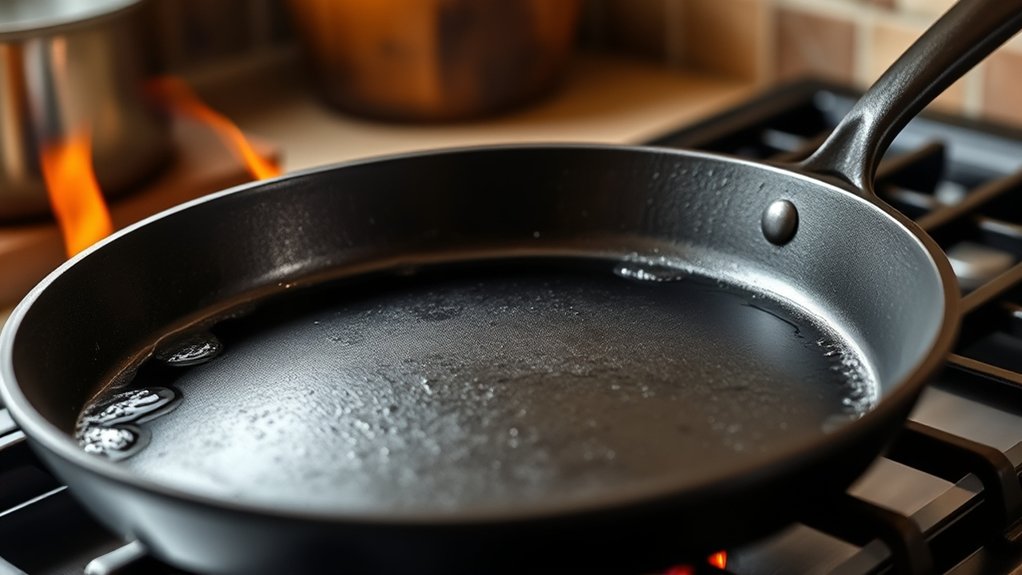
One of the reasons cast iron cookware holds heat so well is its unique way of distributing that heat evenly across the cooking surface. When you use cast iron, you’ll notice fewer hot spots, which means your food cooks uniformly. This happens because cast iron is dense and thick, allowing it to absorb and spread heat slowly but consistently.
Whether you’re searing steaks or simmering sauces, this even heat distribution gives you better control over cooking temperatures.
| Benefit | Explanation |
|---|---|
| Heat retention | Holds heat for a long time |
| Even cooking surface | Minimizes hot and cold spots |
| Consistent temperature | Maintains steady heat during cooking |
| Energy efficient | Uses heat effectively |
| Versatile use | Suitable for various cooking methods |
Why Cast Iron Adds Flavor to Your Food
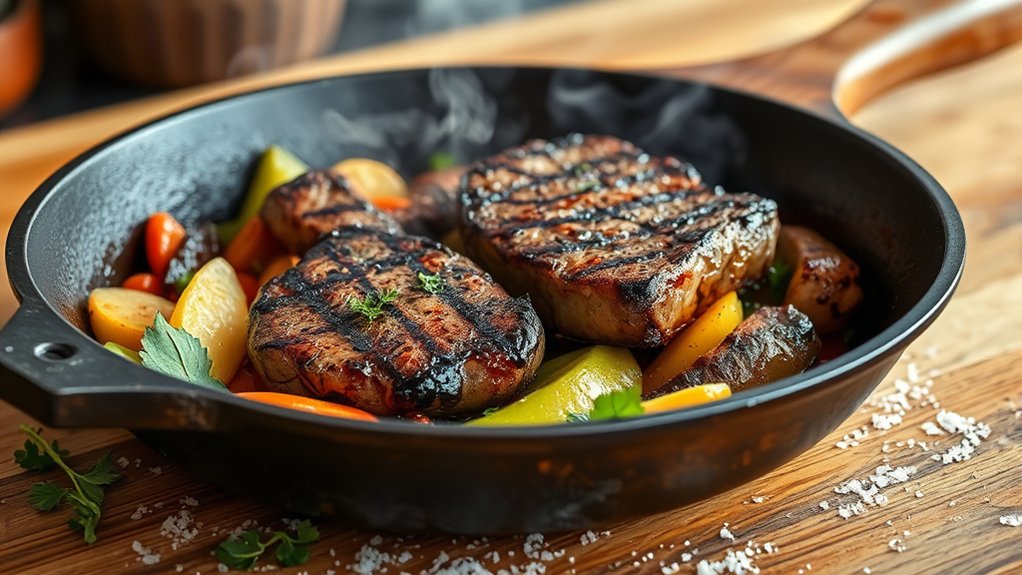
How does cooking with cast iron enhance the flavor of your dishes? When you use cast iron, it retains heat evenly, creating a perfect sear on meats and vegetables. This searing locks in juices and develops a rich, caramelized crust that boosts flavor.
Over time, your cast iron cookware builds a natural non-stick coating called seasoning. This seasoning absorbs and intensifies the taste of your food, adding subtle depth with every meal. Plus, cast iron reacts with certain foods, like tomatoes, enriching their flavor profile.
As you continue to cook with it, your cast iron becomes more seasoned and flavorful, subtly transferring those savory notes to each dish. Using cast iron means you’re not just cooking; you’re enhancing every bite with delicious, complex flavors.
Is Cast Iron More Durable Than Other Cookware?
You’ll find cast iron often outlasts other cookware thanks to its exceptional longevity and resistance to wear. However, how well you maintain it plays a big role in keeping it durable.
Let’s look at how cast iron compares to alternatives and what care it needs.
Longevity Compared To Alternatives
Although other cookware materials offer convenience, cast iron stands out for its unmatched durability. When you invest in cast iron, you’re choosing a piece that can last decades, even generations, with proper care.
Compared to alternatives, here’s why cast iron’s longevity impresses:
- It resists warping and cracking, unlike thin aluminum or non-stick pans.
- You can restore worn cast iron by re-seasoning, extending its life.
- It handles high heat and metal utensils without damage.
- Its heavy-duty construction withstands drops and rough handling better than glass or ceramic cookware.
Resistance To Wear
Cast iron’s impressive longevity comes largely from its resistance to wear, which sets it apart from other cookware materials. When you use cast iron, you’re working with a material that can handle heavy use without warping, scratching, or degrading. Unlike nonstick pans that lose their coating over time, cast iron actually becomes more seasoned and durable the more you cook with it.
You don’t have to worry about the surface wearing down under metal utensils or abrasive scrubbing. Even if you accidentally drop it, cast iron tends to withstand impact better than glass or ceramic cookware. This durability means you get consistent performance and value, making cast iron a smart choice if you want cookware that stands the test of time.
Maintenance And Care Impact
While durability is a key factor in choosing cookware, how you maintain and care for cast iron greatly influences its lifespan. Cast iron can outlast many other materials, but only if you treat it right. Neglecting proper care can lead to rust and damage, reducing its durability.
To keep your cast iron cookware in top shape, follow these steps:
- Clean it promptly after use with warm water and a brush—avoid soap or harsh detergents.
- Dry it thoroughly to prevent rust; you can heat it briefly on the stove.
- Season it regularly by applying a thin layer of oil and heating to maintain its non-stick surface.
- Store it in a dry place, ideally with a paper towel inside to absorb moisture.
Proper care guarantees cast iron stays durable longer than many other cookware types.
Why Cast Iron Cookware Works Great on Stovetops and Ovens
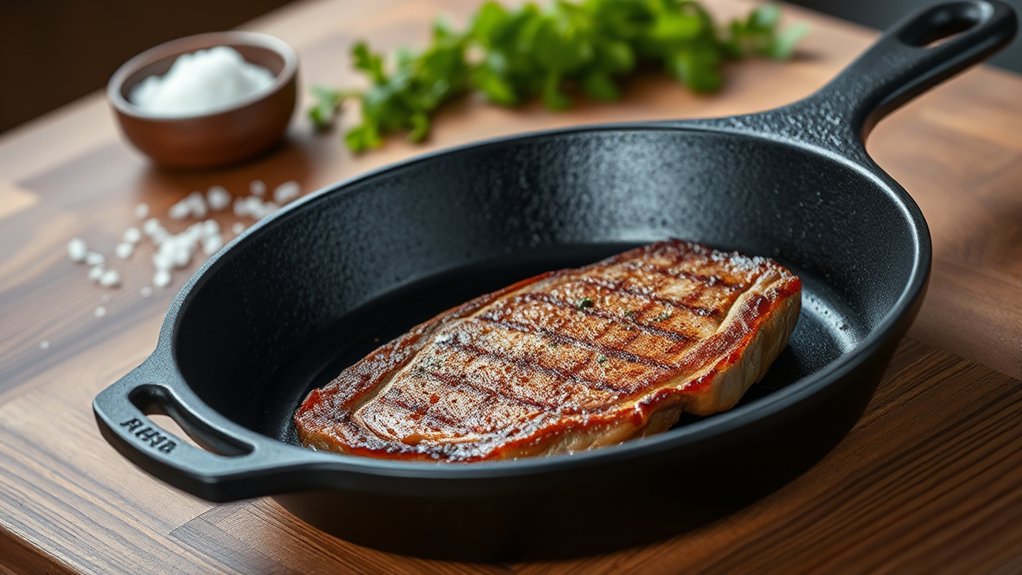
Because it distributes heat evenly and retains it for a long time, cast iron cookware excels on both stovetops and in ovens. When you cook on a stovetop, cast iron guarantees your food heats uniformly, preventing hot spots that can burn or undercook dishes. On the stovetop, you can sear meats perfectly, thanks to the steady, high heat cast iron maintains.
In the oven, cast iron holds temperature well, allowing your food to bake or roast consistently. This versatility means you can start cooking on the stove and finish in the oven without changing pans. Plus, cast iron’s durability lets it withstand oven temperatures that might damage other cookware.
When you use cast iron, you get reliable, consistent results every time you cook.
How Cast Iron Adapts to Various Cooking Styles
Whether you’re frying, baking, or slow-cooking, you’ll find cast iron adapts effortlessly to your cooking style. Its versatility lets you switch between methods without changing cookware.
Here’s how cast iron works with various techniques:
- Frying: Cast iron heats evenly and retains heat, giving you perfect sears and crispy crusts.
- Baking: Use it for cornbread, pies, or even cakes; it distributes heat uniformly for even browning.
- Slow-cooking: Its heat retention ensures steady temperatures, ideal for stews and braises.
- Grilling: You can place it on a grill to mimic open-fire cooking, adding smoky flavors.
With cast iron, you get a single pan that handles multiple cooking styles, saving space and boosting your kitchen’s efficiency.
How Cast Iron Gets Naturally Nonstick Over Time
As you use your cast iron cookware for frying, baking, or slow-cooking, it gradually develops a naturally nonstick surface. This happens because oils and fats bond to the iron through a process called polymerization, creating a smooth, protective layer.
Over time, this seasoning builds up, improving release and flavor. The more you cook, the better it gets.
| Usage Frequency | Surface Texture | Nonstick Quality |
|---|---|---|
| Rarely | Rough | Low |
| Occasionally | Slightly Smooth | Moderate |
| Regularly | Smooth | High |
| Often | Very Smooth | Very High |
| Daily | Polished Finish | Excellent |
With consistent use, your cast iron becomes a reliable, naturally nonstick tool that enhances every meal.
How to Care for and Season Cast Iron Cookware
To keep your cast iron in great shape, you’ll want to follow simple cleaning tips that avoid harsh soaps and scrubbing. Seasoning your cookware regularly builds up that natural nonstick layer and protects against rust.
Let’s look at easy ways to clean and season your cast iron for lasting performance.
Cleaning Tips
Although cast iron cookware is incredibly durable, it requires proper cleaning to maintain its non-stick surface and prevent rust. You shouldn’t use soap or harsh detergents because they can strip the seasoning.
Instead, clean your pan while it’s still warm with these steps:
- Rinse with hot water and use a stiff brush or sponge to remove stuck-on food.
- For stubborn bits, scrub gently with coarse salt as an abrasive.
- Dry the pan thoroughly with a towel immediately after washing.
- Apply a light coat of oil to the surface while it’s still warm to protect it from moisture.
Following these steps helps keep your cast iron in top shape without damaging its seasoning or causing rust.
Seasoning Techniques
When you want your cast iron cookware to perform its best and last for generations, you need to season it properly. Start by cleaning the pan thoroughly, then dry it completely to avoid rust.
Next, apply a thin, even layer of vegetable oil or melted shortening to the entire surface, inside and out. Place the cookware upside down in a preheated oven at 375°F (190°C) with a baking sheet or foil underneath to catch drips.
Bake it for about an hour, then turn off the oven and let the pan cool inside. Repeat this process several times to build a strong, non-stick coating.
Regular seasoning protects your cookware and enhances cooking performance, so don’t skip this essential step.
What Types of Cast Iron Cookware Should You Know About?
If you want to get the most out of cast iron cookware, you’ll need to understand the different types available. Each serves a unique purpose, so picking the right one enhances your cooking experience.
Mastering cast iron means knowing its types, each tailored to elevate your cooking experience.
Here are four essential types you should know about:
- Skillets/Frying Pans – Perfect for searing, sautéing, and frying.
- Dutch Ovens – Great for slow-cooking, braising, and baking.
- Griddles – Ideal for pancakes, grilled sandwiches, and flatbreads.
- Grill Pans – Designed with ridges for grilling indoors, giving food those classic char marks.
Knowing these types helps you choose cookware that fits your cooking style and recipes. Cast iron’s versatility shines through these forms, making it a kitchen must-have.
How Cast Iron Supports Healthier Cooking
Why choose cast iron when aiming for healthier cooking? Cast iron cookware heats evenly and retains heat well, so you can cook with less oil or fat. This helps reduce unnecessary calories and supports heart health.
Plus, cast iron naturally adds small amounts of iron to your food, which can boost your dietary intake, especially if you’re prone to anemia. Unlike some non-stick pans, cast iron doesn’t release harmful chemicals when scratched or overheated, making it a safer option for your meals.
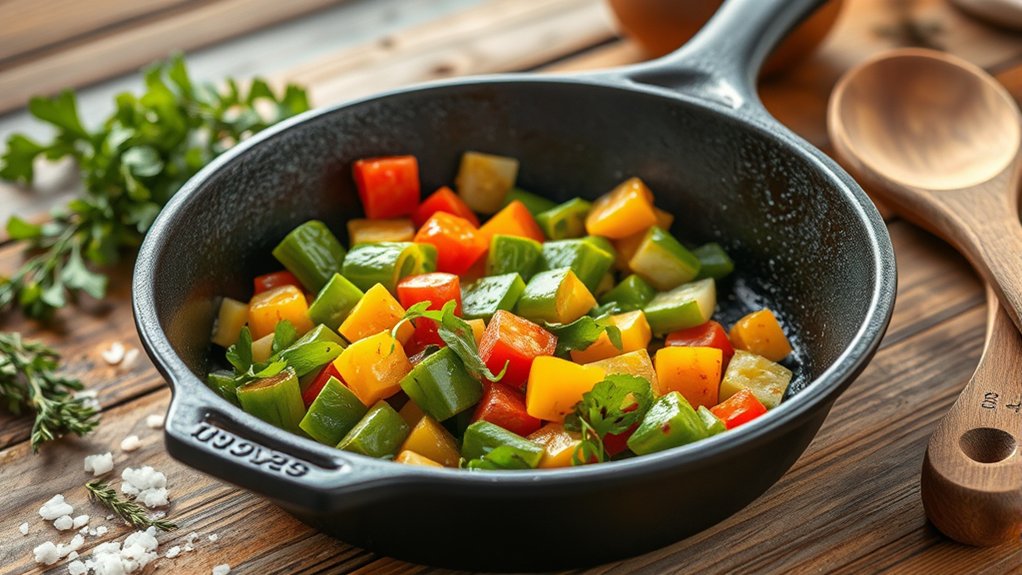
Also, it allows you to prepare a wide range of dishes—from sautéed vegetables to seared meats—without compromising nutritional value. By using cast iron, you’re making a simple choice that promotes healthier, more wholesome cooking every day.
Why Cast Iron Is an Eco-Friendly Cooking Choice
Although many cookware options flood the market, cast iron stands out as an eco-friendly choice you can feel good about. When you choose cast iron, you’re investing in durability and sustainability.
Cast iron cookware offers a durable, sustainable choice amidst countless kitchen options.
Here’s why it’s better for the planet:
- Cast iron lasts for decades, reducing waste and the need for replacements.
- It’s made from abundant natural materials and is often recyclable.
- You don’t need disposable non-stick coatings, which can release harmful chemicals.
- Its excellent heat retention means you use less energy while cooking.
How to Choose the Right Cast Iron Piece for Your Kitchen
Choosing the right cast iron piece can enhance your cooking experience and make the most of its eco-friendly benefits. First, consider what you cook most often. A versatile skillet works well for searing, frying, and baking, while a Dutch oven suits slow-cooking and braising.
Next, think about size—choose one that fits your stovetop and storage space without being too heavy to handle comfortably. Look for pre-seasoned options for convenience or raw pieces if you prefer to season yourself. Check for smooth surfaces and sturdy handles to guarantee safety and durability.
Finally, consider your budget; quality cast iron lasts forever, so investing in a reputable brand pays off. By selecting the right piece, you’ll enjoy efficient, sustainable cooking every day.
Why Cast Iron Improves With Age
You’ll notice your cast iron gets better with time because its surface becomes more nonstick as you season and use it. It also holds heat more evenly, making cooking more efficient.
Let’s explore how these changes happen and why they matter.
Enhanced Nonstick Surface
How does cast iron cookware get better the more you use it? The secret lies in the enhanced nonstick surface that develops over time. As you cook and season your pan, layers of polymerized oil build up, creating a natural, durable coating.
This seasoning improves with each use, making food release easier and cleaning simpler. Here’s why your cast iron becomes more nonstick:
- Repeated seasoning fills the pan’s microscopic pores.
- Cooking oils bake into the surface, creating a slick layer.
- The coating strengthens with consistent heating and cooling cycles.
- Proper maintenance preserves and enhances this natural barrier.
Increased Heat Retention
As cast iron cookware ages, it holds heat more effectively, making your cooking experience smoother and more consistent. With each use, the seasoning layers build up, creating a dense, heat-retentive surface. This means once your pan heats, it stays hot longer, allowing you to cook food evenly without sudden temperature drops.
You won’t have to keep adjusting the heat, which helps you achieve perfect sears and consistent simmering. This reliability is especially useful for dishes requiring steady heat over time. Plus, the improved heat retention reduces cooking time and energy use, making your kitchen more efficient.
Over time, your cast iron pan becomes a dependable tool that responds to your cooking style, improving with every meal you prepare.
Frequently Asked Questions
Can Cast Iron Cookware Be Used on Induction Cooktops?
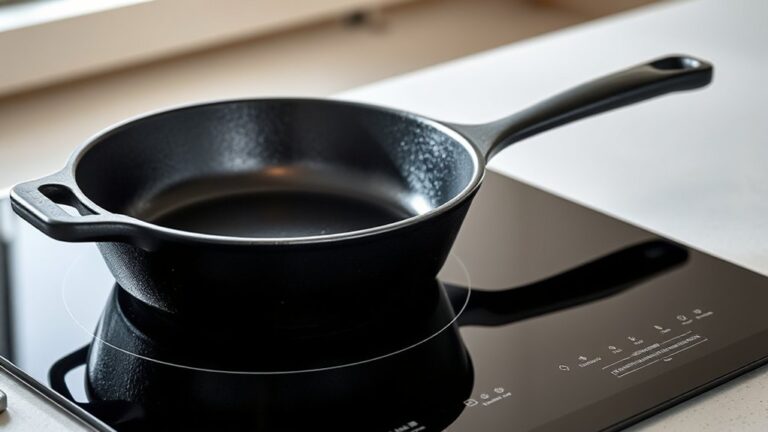
Yes, you can use cast iron cookware on induction cooktops. Its magnetic properties make it perfect for induction, so you’ll get even heating and great cooking performance.
Just be careful not to scratch the cooktop surface.
Is Cast Iron Safe for Cooking Acidic Foods Like Tomatoes?
Yes, you can cook acidic foods like tomatoes in cast iron, but you should avoid doing it for long periods. The acidity may react with the seasoning, causing a metallic taste and potentially damaging the pan’s coating.
To maintain your pan’s quality, it’s best to limit the time acidic foods stay in contact with the cast iron. Using well-seasoned or enameled cast iron can also help reduce these effects.
How Heavy Is Cast Iron Compared to Other Cookware Materials?
Cast iron’s weight surprises many—it’s much heavier than aluminum or stainless steel. You’ll notice its heft right away, but that weight means exceptional heat retention and durability.
This makes your cooking experience uniquely satisfying and reliable every time.
Can Cast Iron Cookware Be Used for Baking Desserts?
Yes, you can definitely use cast iron cookware for baking desserts. It distributes heat evenly, creating a perfect crust and moist interior.
Just preheat it well and grease it properly to prevent sticking and enjoy delicious results.
Are There Any Health Risks Associated With Using Cast Iron Cookware?
You won’t face major health risks using cast iron, but too much iron intake can be harmful.
Just avoid cooking acidic foods for long periods, and your cookware will stay safe and beneficial for you.
Conclusion
When you hold a cast iron skillet, you’re grasping more than just cookware—you’re embracing a timeless kitchen companion. Imagine the sizzle as heat spreads evenly, locking in flavors that dance on your tongue. Each meal you create adds a layer of seasoning, making your pan uniquely yours.
Durable, eco-friendly, and health-conscious, cast iron transforms cooking into an art you’ll cherish. It ages gracefully alongside every delicious memory you make. Choosing cast iron cookware means investing in quality, sustainability, and enhanced cooking performance.