How Long to Grill Steak at 500°F for Perfect Doneness
Grilling steak at 500°F is a popular method to achieve the perfect doneness, balancing a flavorful sear with a juicy interior. Knowing how long to grill steak at 500°F is essential for consistent results, whether you prefer medium-rare or a different level of doneness.
This guide will help you master the timing and technique for grilling steaks to perfection.
Grill a 1-inch steak at 500°F for about 4-5 minutes per side to reach medium-rare, adjusting slightly for thicker cuts or preferred doneness.
For a 1.5-inch steak, aim for 6-7 minutes per side. Use direct high heat for searing, then indirect for even cooking.
Always rest your steak 5-10 minutes to keep it juicy.
Mastering these basics guarantees a flavorful, tender steak—keep exploring to perfect your technique and timing.
Key Takeaways
- Grill a 1-inch steak for 4-5 minutes per side at 500°F for balanced searing and doneness.
- For a 1.5-inch steak, cook approximately 6-7 minutes per side over direct heat.
- Use a meat thermometer and target 130-135°F internal temperature for medium-rare doneness.
- After searing, move thicker steaks to indirect heat to finish cooking evenly.
- Rest the steak for 5-10 minutes post-grill to retain juices and enhance flavor.
Choosing the Right Steak Thickness for Grilling
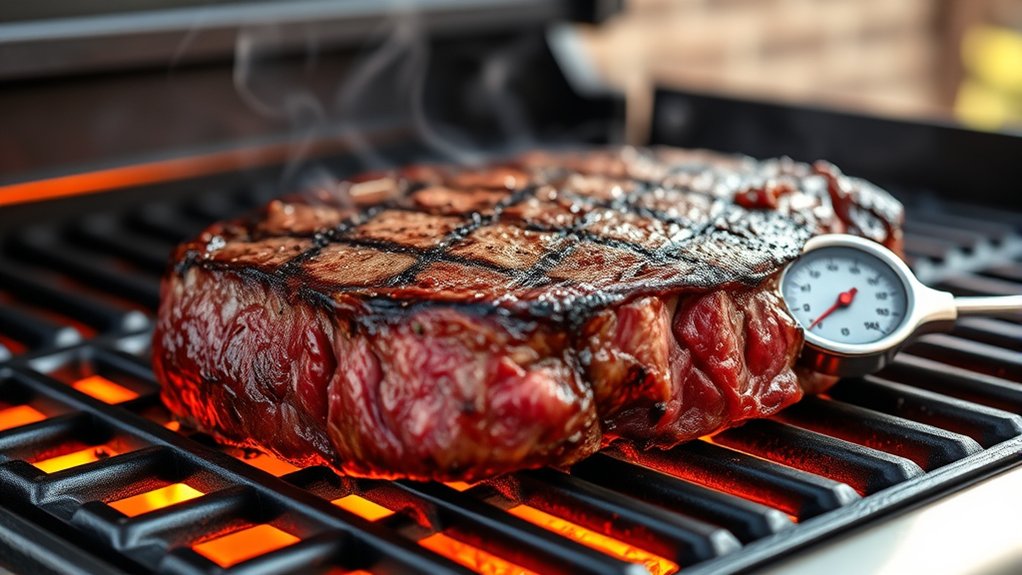
When you grill steak at 500°F, choosing the right thickness is essential to achieving the perfect balance between a seared crust and a juicy interior. Ideally, you want steaks that are about 1 to 1.5 inches thick. Thinner cuts cook too quickly, risking dryness before you get that flavorful crust.
Thicker steaks, on the other hand, require more careful timing to ensure they cook evenly without burning the outside. If your steak is thicker than 1.5 inches, plan to use indirect heat after searing. This thickness range lets you control doneness precisely while maximizing flavor and texture.
Why High Heat (500°F) Makes a Difference When Grilling Steak

Although grilling steak at 500°F may seem intense, this high heat is key to locking in juices and creating a flavorful crust. When you grill at this temperature, you’ll notice a few important benefits that elevate your steak:
- Maillard Reaction – The intense heat triggers a chemical reaction that browns the meat, adding complex flavors and an appetizing crust.
- Juice Retention – High heat sears the outside quickly, sealing in moisture so your steak stays tender and juicy.
- Faster Cooking – You spend less time over the fire, reducing the chance of overcooking the interior.
- Visual Appeal – Searing at 500°F creates beautiful grill marks that make your steak look as good as it tastes.
Using this heat level transforms your steak from ordinary to extraordinary.
How Long to Grill Steak at 500°F: A Quick Guide
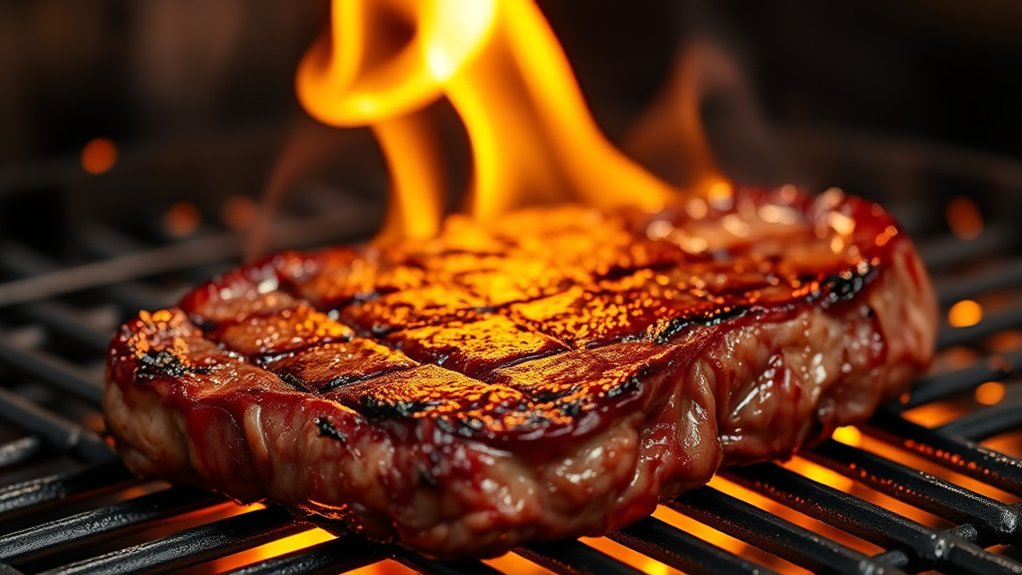
Grilling steak at 500°F requires careful timing to achieve the perfect doneness without overcooking. For a 1-inch thick steak, start by grilling each side for about 4 to 5 minutes. Thicker cuts, around 1.5 inches, need roughly 6 to 7 minutes per side.
Keep in mind, these times can vary based on your grill’s heat consistency and the steak’s thickness. Use direct heat for searing, then move the steak to a cooler part of the grill if it needs more time. Always let the steak rest for 5 minutes after grilling to allow juices to redistribute.
This quick guide helps you balance speed and precision, ensuring a flavorful, juicy steak every time you grill at 500°F.
Grill Times for Rare and Medium-Rare Steak
If you want a rare or medium-rare steak, you’ll need to grill it for a shorter time at 500°F to lock in the juices and keep the center tender and pink. Timing is crucial to avoid overcooking. Here’s a quick guide:
- Grill rare steak for about 2 minutes per side, reaching an internal temperature of 120-125°F.
- For medium-rare, aim for 3-4 minutes per side, targeting 130-135°F internally.
- Use a meat thermometer to check doneness without cutting into the steak.
- Let your steak rest for 5 minutes after grilling to allow juices to redistribute.
Following these steps ensures your steak stays juicy and flavorful with the perfect rare or medium-rare finish.
Grill Times for Medium to Well-Done Steak
When you want a steak cooked to medium or beyond, you’ll need to increase the grilling time at 500°F to guarantee it’s cooked through without drying out. For a medium steak, grill each side for about 5 to 6 minutes. This will give you a warm pink center.
If you prefer medium-well, aim for 6 to 7 minutes per side. For well-done, grill the steak for 8 minutes or more on each side, but keep a close eye to avoid toughness. Remember, thicker cuts require slightly longer times.
To keep your steak juicy, consider resting it for 5 minutes after grilling. This helps redistribute the juices, ensuring your medium to well-done steak stays flavorful and tender.
Using a Meat Thermometer to Check Steak Doneness
Although you can estimate doneness by time and appearance, using a meat thermometer takes the guesswork out of cooking steak perfectly. It assures your steak reaches the ideal internal temperature for your preferred doneness, avoiding undercooking or overcooking.
Here’s how to use one effectively:
1. Insert the thermometer into the thickest part of the steak, avoiding bone or fat. 2. Check the temperature early to prevent overcooking, especially when grilling at 500°F. 3. Know the target temperatures: 125°F for rare, 135°F for medium-rare, 145°F for medium, 155°F for medium-well, and 160°F for well-done.
4. Remove the steak from the grill a few degrees below your target to allow carryover cooking.
Using a thermometer guarantees a perfectly grilled steak every time.
Prepping Your Steak for High-Heat Grilling
Using a meat thermometer helps you nail steak doneness, but getting there starts long before the steak hits the grill. First, bring your steak to room temperature by letting it sit out for 30-60 minutes. This guarantees even cooking throughout.
Next, pat the steak dry with paper towels—moisture on the surface creates steam, which hinders that perfect sear. Season generously with salt and pepper just before grilling; salt helps form a flavorful crust. If you like, lightly brush the steak with oil that has a high smoke point, like avocado or grapeseed oil, to prevent sticking and enhance browning.
Finally, make certain your grill is preheated to 500°F to achieve that intense heat needed for a beautiful sear and juicy interior.
Resting Your Steak: The Secret to Juiciness
You’ve grilled your steak perfectly, but don’t cut into it just yet—resting is essential. Letting your steak sit allows the juices to redistribute, making every bite more flavorful and tender.
Skipping this step means losing those delicious juices right on the plate.
Importance Of Resting
Why does resting your steak after grilling make such a difference in juiciness? When you take your steak off the grill, it’s not done yet. Resting lets the meat relax and reabsorb its natural juices, making every bite tender and flavorful.
Skipping this step means those precious juices spill out the moment you cut into the steak.
Here’s why resting is essential:
- It allows heat to redistribute evenly throughout the steak.
- Muscle fibers relax, preventing the juice from running out.
- The steak finishes cooking gently, improving texture.
- Juices settle, making your steak moist and rich in flavor.
How Rest Enhances Juiciness
Although it’s tempting to dig in right away, letting your steak rest after grilling locks in the juices that make each bite succulent and flavorful. When you remove the steak from the heat, the muscle fibers, which have tightened during cooking, begin to relax. This relaxation allows the juices that were driven to the center to redistribute evenly throughout the meat.
If you cut into your steak too soon, those precious juices will spill out, leaving your steak dry. By resting your steak for about 5 to 10 minutes, you give it time to reabsorb the moisture, ensuring every bite is tender and juicy. So, be patient—resting is the secret step that transforms your grilled steak from good to unforgettable.
Common Mistakes When Grilling Steak at 500°F
When grilling steak at 500°F, it’s easy to overcook your meat if you’re not careful with timing. You also can’t skip the resting period, or you’ll lose those juicy flavors.
Let’s look at how these common mistakes can affect your steak.
Overcooking Due To High Heat
Grilling steak at 500°F demands careful attention because the intense heat can quickly push your steak from perfectly seared to overcooked. To avoid this, you need to manage timing and technique precisely.
Here are four common reasons you might overcook your steak at high heat:
- Leaving the steak on the grill too long without checking doneness.
- Not flipping the steak at the right intervals to prevent uneven cooking.
- Using thick cuts without adjusting grill time accordingly.
- Ignoring the steak’s thickness and initial temperature, which affect cooking speed.
Ignoring Resting Time
Why do so many people skip resting their steak after grilling at 500°F? You might be excited to dig in right away, but skipping this step is a mistake. Resting allows the juices to redistribute throughout the meat, making your steak juicier and more flavorful.
If you cut into your steak immediately, all the flavorful juices will spill out, leaving you with a dry, less satisfying bite. After pulling your steak from the grill, let it rest for about 5 to 10 minutes, tented loosely with foil. This short pause ensures the heat evens out and the fibers relax, locking in moisture.
Ignoring resting time negates all your hard work grilling at 500°F and compromises your perfect doneness. Don’t rush it—your steak deserves this final step.
Tips for Perfecting Your Steak Every Time
Although reaching 500°F is essential, you’ll only get a perfect steak by mastering a few key techniques. First, always start with a dry steak; pat it with paper towels to remove moisture. Second, season generously with salt and pepper just before grilling to enhance flavor without drawing out juices.
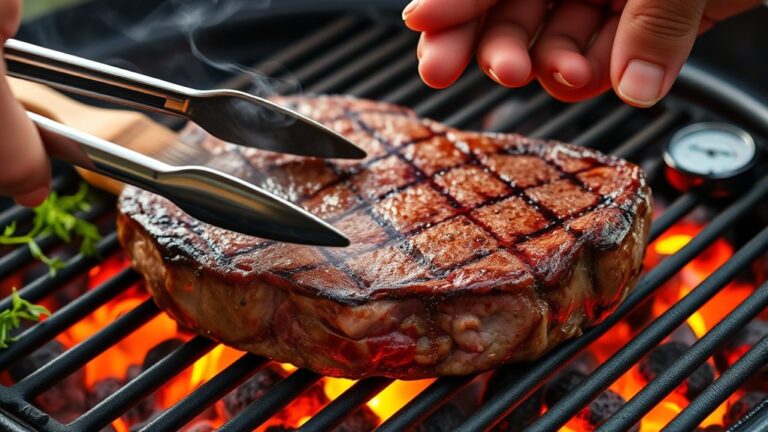
Third, use tongs to flip your steak only once—this helps develop a beautiful crust. Fourth, don’t skip resting your steak after grilling; let it sit for 5-10 minutes so juices redistribute evenly. Follow these steps to lock in flavor and texture, ensuring every bite is juicy and tender.
With these tips, you’ll consistently grill steaks that impress, no matter your skill level.
Frequently Asked Questions
Can I Grill Steak at 500°F Using a Gas Grill or Charcoal?
Yes, you can grill steak at 500°F using either a gas or charcoal grill. Just make sure to preheat properly, monitor the temperature closely, and adjust your cooking time to achieve the perfect doneness you want.
What Side Dishes Pair Best With High-Heat Grilled Steak?
You’ll love pairing your high-heat grilled steak with garlic mashed potatoes, grilled asparagus, or a fresh Caesar salad. Don’t forget some roasted vegetables or a tangy chimichurri sauce to balance the bold flavors perfectly.
How Do Marinades Affect Grilling Time at 500°F?
Marinades can slightly reduce grilling time because acids tenderize meat, breaking down proteins. When you grill at 500°F, keep an eye—marinated steaks may brown faster, so adjust cooking time to avoid overcooking.
This means you might need to shorten the grilling duration slightly. Always monitor the meat’s internal temperature for the best results.
Is It Safe to Grill Frozen Steak at 500°F?
You can grill frozen steak at 500°F, but it’s safer to thaw it first for even cooking. Grilling frozen steak risks uneven doneness and longer cook times, so plan accordingly to avoid food safety issues.
Thawing helps the steak cook more evenly and reduces the risk of undercooked areas. If grilling frozen, be prepared for adjustments in timing and temperature. Always use a meat thermometer to ensure safe internal temperatures.
Can I Use Wood Chips for Smoking While Grilling at 500°F?
You can use wood chips at 500°F, but they’ll burn quickly, producing intense smoke. To avoid bitterness, soak them first and add in small amounts.
This keeps your steak flavorful without overwhelming it.
Conclusion
Grilling steak at 500°F is your ticket to steak perfection—you’ll nail that juicy, flavorful bite every time. Just remember to pick the right thickness, prep it well, and keep an eye on the clock. Resting your steak afterward is like giving it a mini-vacation, locking in all those mouthwatering juices.
Avoid common pitfalls, and you’ll be grilling steaks so good, they’ll make your taste buds throw a party you won’t forget! Perfect doneness at 500°F comes down to timing, temperature, and technique. Master these, and your grilling game will reach new heights every time.