7 Easy Steps to Make Beef Jerky on a Pellet Grill
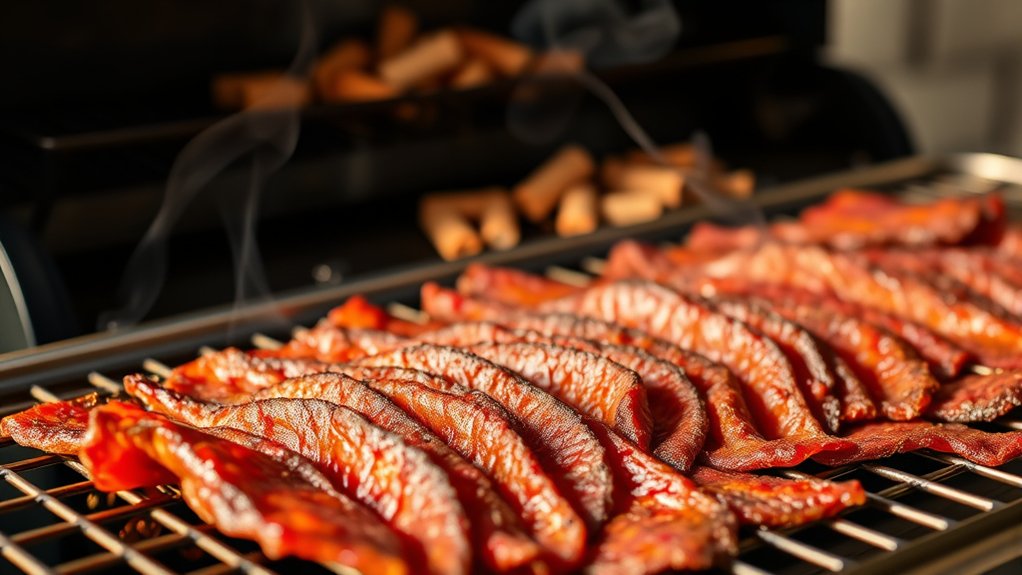
To make beef jerky on your pellet grill, start by choosing lean, uniform cuts like top round. Using a pellet grill for beef jerky is ideal because it provides consistent heat and infuses smoky flavor with your favorite wood pellets.
Trim any fat and slice the meat thinly against the grain for the best texture.
Next, marinate the strips in a rich mixture of soy sauce, garlic, and spices for at least six hours. This step is crucial to impart deep flavor and tenderize the meat.
Set your pellet grill to 160-180°F and smoke the beef until it’s dry but still flexible.
Cooling the jerky before storing it airtight helps keep it fresh and flavorful. Keep going to discover tips for perfect texture and flavor.
Key Takeaways
- Select lean, uniform beef cuts and slice 1/4 inch thick against the grain for consistent drying and tenderness.
- Marinate beef strips with soy sauce, Worcestershire, honey, garlic, and spices for at least 6 hours or overnight.
- Preheat pellet grill to 160-180°F using wood pellets like hickory or mesquite for slow, flavorful drying.
- Smoke beef strips evenly until jerky is leathery, slightly cracks when bent, and has lost 50-60% of its weight.
- Cool jerky fully, then store airtight in a cool, dry place or refrigerate to maintain freshness and prevent spoilage.
How To Make Beef Jerky On A Pellet Grill: Quick Overview
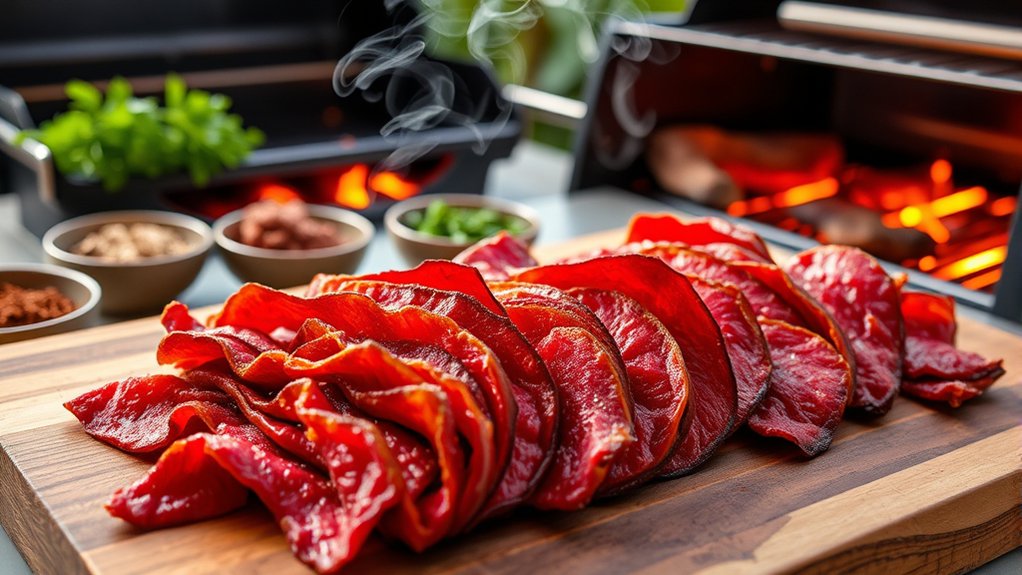
Although making beef jerky on a pellet grill might seem complicated, you can easily master it by following a few simple steps. First, you’ll set your pellet grill to a low temperature, typically around 160-180°F, perfect for slow drying the meat.
Next, you’ll slice your beef thinly and marinate it to infuse flavor. After marinating, place the strips directly on the grill grates or use a drying rack for even airflow. Keep the grill lid closed and let the jerky slowly dehydrate for several hours, usually 4 to 6, depending on thickness and moisture.
Once dried, you’ll check the texture to ensure it’s firm but still flexible. Finally, store your jerky properly to keep it fresh and tasty.
Pick And Prepare The Best Beef Cuts For Jerky
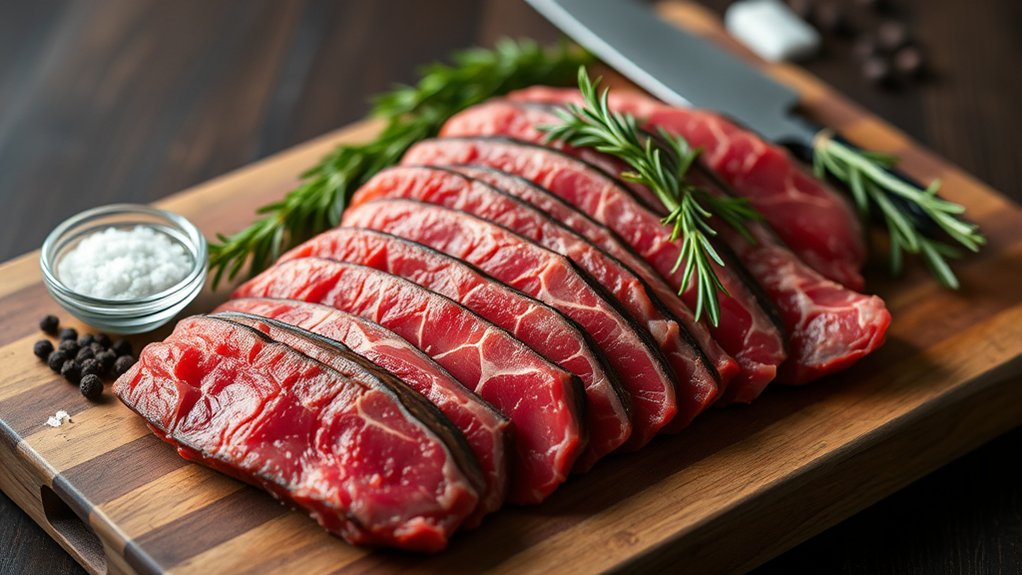
When choosing beef for jerky, selecting lean cuts is essential because excess fat can spoil the drying process and reduce shelf life. You want cuts that are easy to slice thin and have minimal marbling.
Look for muscles that are dense and uniform in texture for consistent drying.
Here’s a quick guide to some top choices:
| Cut | Description |
|---|---|
| Top Round | Lean, affordable, easy to slice |
| Bottom Round | Slightly tougher, very lean |
| Eye of Round | Very lean, uniform texture |
| Sirloin Tip | Lean with good flavor |
| Flank Steak | Lean but a bit grainy, flavorful |
Trim off any visible fat before slicing to ensure your jerky dries evenly and lasts longer.
Make And Marinate Beef For Jerky Flavor
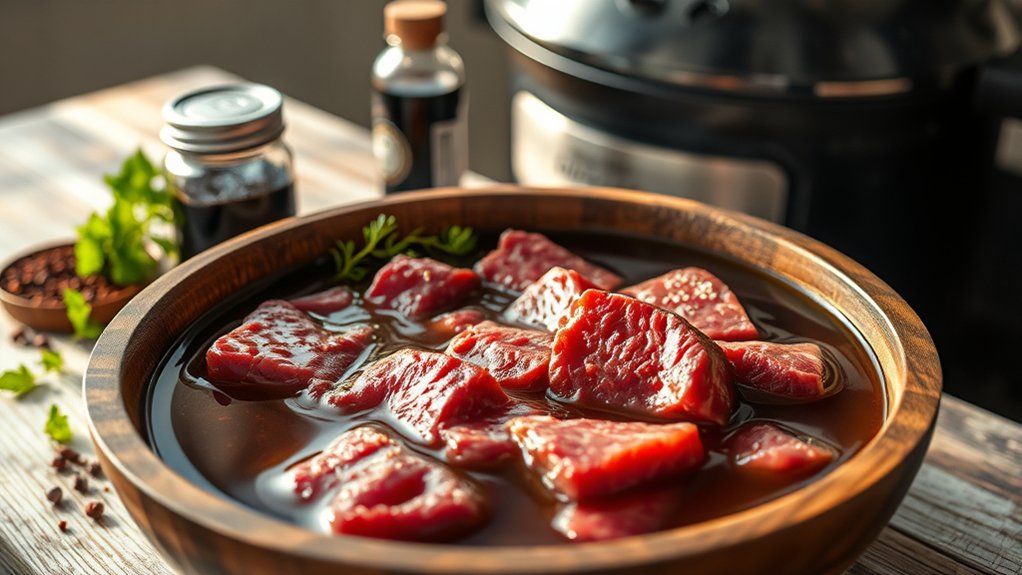
Since flavor is key to great beef jerky, you’ll want to prepare a marinade that enhances the meat without overpowering it. Begin by slicing your beef into thin strips, about 1/4 inch thick, cutting against the grain for tenderness.
Then, mix your marinade with a balance of salty, sweet, and savory notes. Here’s a simple approach:
- Combine soy sauce, Worcestershire sauce, and a touch of honey for a rich base.
- Add minced garlic, black pepper, and smoked paprika to deepen the flavor.
- Let the beef soak in the marinade for at least 6 hours, preferably overnight, to absorb all the goodness.
This method guarantees your jerky will have a well-rounded taste that’s ready for the grill.
Set Your Pellet Grill For Jerky Smoking
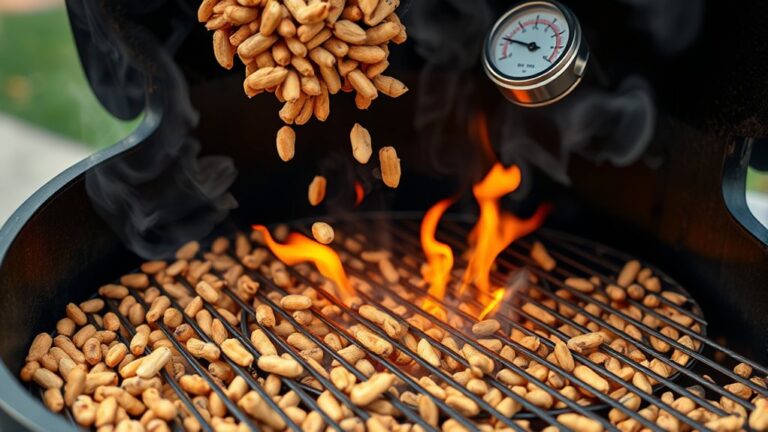
After marinating your beef to perfection, the next step is to prepare your pellet grill for smoking the jerky. Start by cleaning the grill grates to prevent old residue from affecting flavor. Next, fill the hopper with your preferred wood pellets—hickory, mesquite, or apple work great for jerky.
Set your pellet grill to a low temperature, ideally between 160°F and 180°F, to guarantee slow, even drying without cooking the meat. Preheat the grill with the lid closed, allowing it to reach the target temperature. Position the grill racks or trays to provide good airflow around the beef strips.
Finally, check that the smoke output is steady but not overwhelming, as too much smoke can create a bitter taste. Your pellet grill is now ready for smoking your jerky.
Smoke The Jerky Until Perfectly Dry And Check Doneness
You’ll want to watch for the jerky’s ideal dryness by checking its color and texture regularly. It should feel firm but still bend without breaking.
Keep an eye on the timing and temperature to make sure it’s perfectly dried without overcooking.
Ideal Dryness Indicators
Knowing when your beef jerky is perfectly dry can make or break your final product. You want it dry enough to store well but still tender enough to enjoy.
To check doneness, follow these ideal dryness indicators:
- Bend Test: Pick up a strip and bend it gently. It should crack slightly but not break in half.
- Surface Texture: The jerky’s surface should look dry and leathery without any visible moisture or stickiness.
- Weight Loss: Properly dried jerky loses about 50-60% of its original weight, indicating moisture has evaporated sufficiently.
Use these signs to know when to pull your jerky off the pellet grill—perfect dryness means better flavor and longer shelf life.
Visual And Textural Cues
While smoking your beef jerky, pay close attention to its visual and textural changes to determine when it’s perfectly dry. The meat should darken evenly without any raw, shiny spots. Look for a deep, rich color that signals moisture has evaporated.
When you touch the jerky, it should feel firm but still slightly flexible—you don’t want it brittle or crumbly. Bend a piece gently; it should crack slightly but not break in half. If it snaps too easily, it’s over-dried.
Also, check the edges for dryness—they should be consistent with the center. These cues help you avoid under- or over-smoking. By focusing on these visual and textural signs, you’ll know exactly when your jerky reaches that ideal, chewy perfection.
Timing And Temperature Checks
Although visual and textural cues give good guidance, timing and temperature checks are essential to guarantee your beef jerky is perfectly dry. You want to avoid under- or over-smoking, which can ruin texture and flavor. Use a reliable digital thermometer to monitor internal temperature consistently.
Here’s how to nail it:
- Check the smoker’s temperature every hour to maintain a steady 160°F to 180°F.
- After about 4 hours, start testing jerky strips for dryness—bend them; they should crack but not break.
- Use the thermometer to confirm the internal jerky temperature reaches at least 160°F, ensuring safety and proper drying.
Store Beef Jerky To Keep It Fresh
How can you keep your homemade beef jerky fresh and flavorful for as long as possible? Start by letting the jerky cool completely before storing it. Use airtight containers or resealable plastic bags to prevent moisture and air from getting in.
For short-term storage, keep your jerky in a cool, dry place like a pantry. If you want it to last longer, store it in the refrigerator, which slows down any potential spoilage. For extended preservation, freezing jerky works well and won’t compromise texture or taste.
Remember to label your packages with the date so you can keep track. Avoid leaving jerky out in humid or warm environments, as this encourages mold growth and staleness. Proper storage is key to enjoying your jerky at its best.
Enjoy Your Homemade Beef Jerky
Ready to savor the fruits of your labor? Your homemade beef jerky is now ready to enjoy, packed with smoky flavor and perfect chewiness.
Here’s how to make the most of it:
- Snack Anywhere: Toss some jerky into your backpack for a protein-packed hike or road trip snack.
- Elevate Meals: Chop it up and add it to salads, soups, or scrambled eggs for an extra savory punch.
- Share the Joy: Offer samples to friends and family—they’ll love tasting your homemade treat.
Frequently Asked Questions
Can I Use Other Types of Wood Pellets for Different Flavors?
Yes, you can use different wood pellets to add unique flavors to your beef jerky. Experiment with hickory, mesquite, apple, or cherry pellets to find the taste you love.
Just keep the heat consistent for best results.
How Long Does Homemade Beef Jerky Last Without Refrigeration?
Without refrigeration, your homemade beef jerky lasts about one to two weeks. Keep it dry, store it airtight, and check for mold.
Use it quickly, enjoy it fresh, and always trust your senses.
Is It Safe to Eat Jerky Made From Frozen Beef?
Yes, you can safely make jerky from frozen beef if you thaw it properly first. Avoid refreezing raw meat after thawing to prevent bacteria growth. Always handle and cook it thoroughly for safe consumption.
Can I Add Sugar Substitutes to the Marinade?
Yes, you can add sugar substitutes to the marinade. Just make sure they dissolve well and complement the flavor. Some substitutes might alter the texture or sweetness, so experiment to find what works best for your jerky.
What Is the Best Way to Clean My Pellet Grill After Smoking Jerky?
Don’t worry about the mess—it’s easier than you think! After smoking jerky, scrape grates, empty ash, and wipe surfaces with warm soapy water.
Run a burn-off cycle to clear residue, keeping your pellet grill ready for next time.
Conclusion
By following these seven easy steps, you’ll create beef jerky so irresistibly tasty, your friends will swear you’ve discovered a secret grilling superpower. Forget store-bought—your pellet grill jerky will be the stuff of legends, bursting with flavor and perfectly dried every time.
Once you taste your homemade masterpiece, you’ll wonder how you ever lived without it. Get ready to become the ultimate jerky hero in your circle! With these simple techniques, your beef jerky on a pellet grill will consistently impress and satisfy every craving.