7 Easy Steps to Clean a George Foreman Grill Without Removable Plates
First, unplug your George Foreman grill and let it cool completely. Cleaning a George Foreman grill without removable plates can be simple if you follow the right steps and use the proper techniques.
By maintaining your grill regularly, you can ensure it stays in excellent condition and lasts longer.
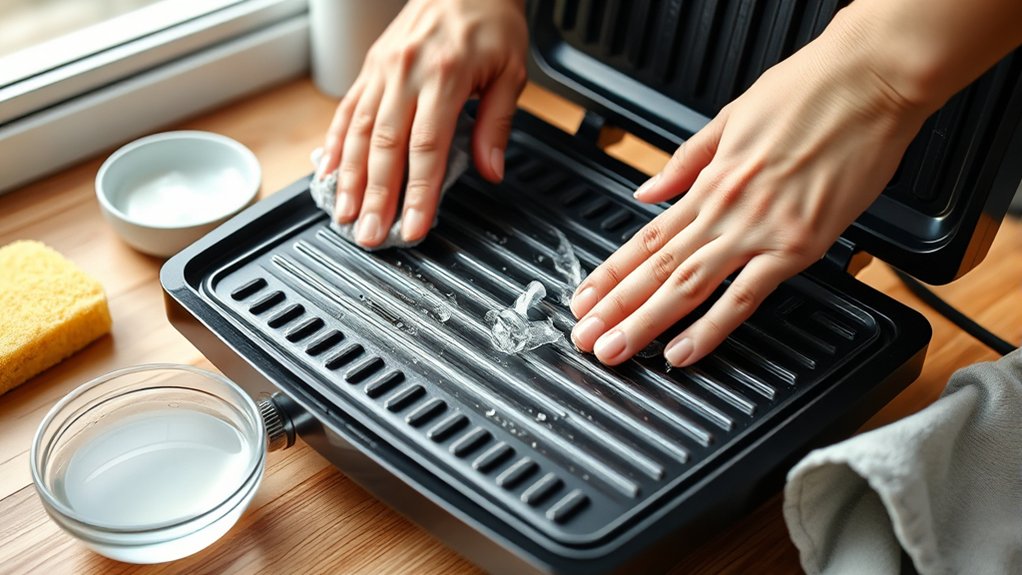
Use paper towels to soak up excess grease, then wipe the plates gently with a soft cloth and warm, soapy water.
For stubborn spots, apply baking soda paste and scrub gently with a non-abrasive sponge.
Rinse carefully with a damp cloth, avoiding electrical parts, and dry thoroughly to prevent rust.
Clean the drip tray regularly and maintain this routine after every use to keep your grill in top shape.
Keep going to discover easy tips that make this even simpler.
Key Takeaways
- Unplug and let the grill cool completely (20-30 minutes) before cleaning to ensure safety and protect the non-stick surface.
- Use paper towels to soak and remove excess grease, changing towels frequently to avoid spreading residue.
- Clean grill plates with warm soapy water and a soft cloth, using circular motions to avoid scratching the non-stick coating.
- Apply baking soda paste for stubborn spots, let sit 10-15 minutes, then gently scrub with a non-abrasive sponge or brush.
- Rinse carefully with lukewarm water, dry thoroughly with a towel, and leave the grill open to allow natural evaporation.
Gather Cleaning Supplies for Your George Foreman Grill
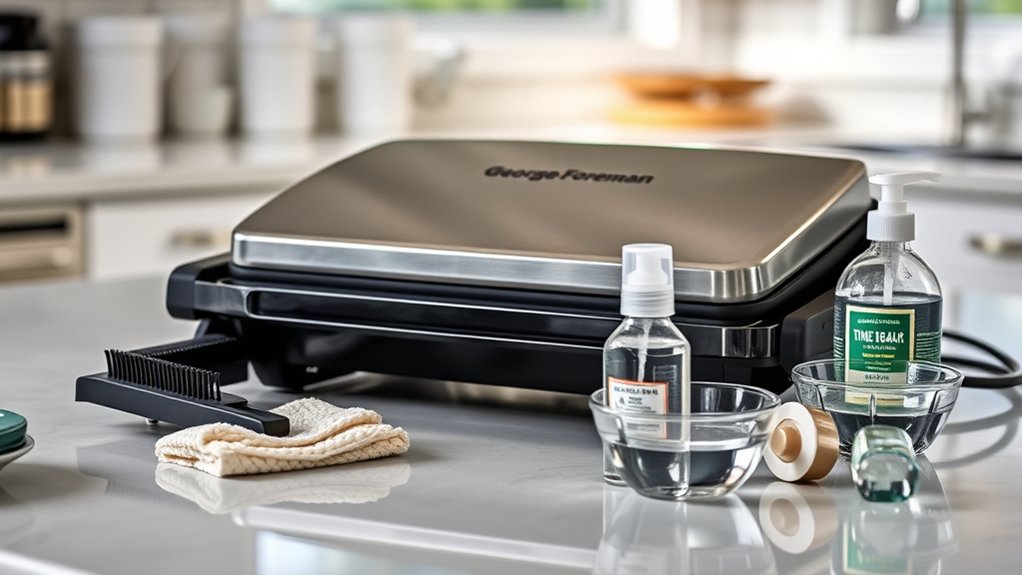
Before you begin cleaning your George Foreman Grill, gather all the necessary supplies to make the process smooth and efficient. You’ll need a soft sponge or cloth to avoid scratching the grill’s surface. Grab a plastic or silicone scraper to gently remove stuck-on food without damaging the non-stick coating.
Have a bowl of warm, soapy water ready to help break down grease and residue. Keep paper towels or a clean dish towel nearby for drying. You might also want a small brush or old toothbrush to reach tight spots.
Avoid harsh abrasives or metal utensils, as they can ruin the grill. By assembling everything upfront, you’ll save time and guarantee a thorough, safe cleaning process for your George Foreman Grill.
Unplug and Let Your George Foreman Grill Cool Completely
Once you’ve finished cooking, always unplug your George Foreman Grill and let it cool completely before cleaning. This step guarantees your safety and prevents damage to the grill’s surface. Touching it while hot can cause burns or warp the plates.
Cooling also allows grease to solidify, making it easier to manage later.
Here’s a quick guide to what happens during cooling:
| Time Passed | Grill Temperature | Safety Tip |
|---|---|---|
| 0-5 mins | Very hot | Avoid touching |
| 5-10 mins | Hot | Keep unplugged |
| 10-20 mins | Warm | Prepare cleaning tools |
| 20-30 mins | Cool | Ready for cleaning |
| 30+ mins | Room temperature | Safe to handle fully |
Patience now makes cleaning easier and safer!
Wipe off Excess Grease With Paper Towels
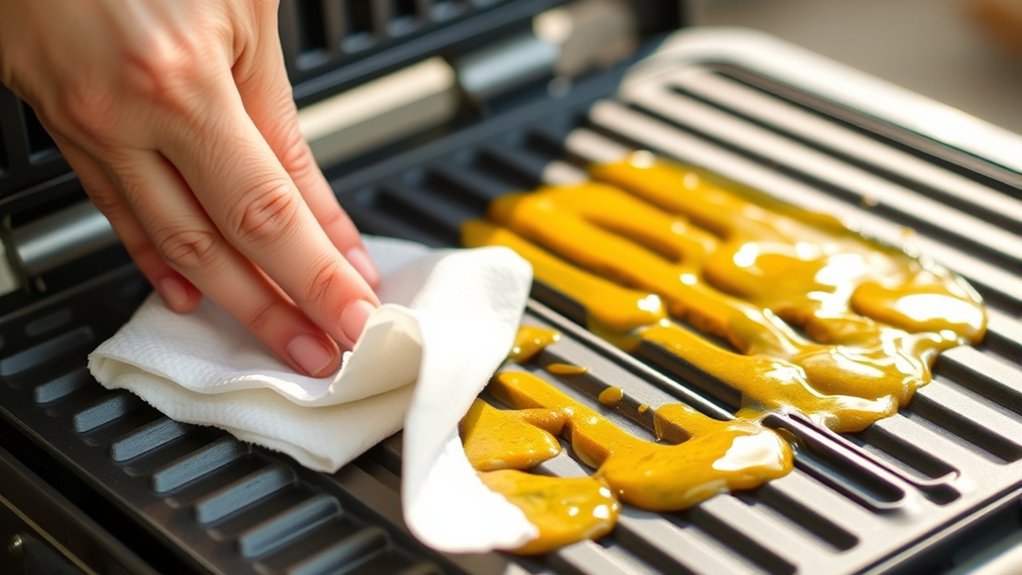
Grab some absorbent paper towels and focus on wiping the areas with the most grease buildup. You’ll want to press gently to soak up the excess without spreading it around.
Once you’re done, make sure to dispose of the greasy towels properly to keep things tidy.
Use Absorbent Paper Towels
Several absorbent paper towels can quickly soak up the excess grease left on your George Foreman grill plates. Start by folding a few sheets to create a thick pad. Press the towels firmly against the warm grill surface, allowing them to absorb as much grease as possible.
Change to fresh towels as they become saturated to avoid spreading grease around. Using absorbent paper towels helps prevent mess and makes the next cleaning steps easier. Be careful not to burn yourself; wait a few minutes after cooking so the grill is warm, not hot.
This simple step reduces grease buildup and keeps your grill cleaner without scrubbing. It’s an efficient way to maintain your grill’s condition before moving on to deeper cleaning.
Target Grease Buildup Areas
Although you’ve already soaked up much of the grease, you should now focus on wiping off the buildup in hard-to-reach areas with fresh paper towels. Pay close attention to the grooves and corners where grease tends to accumulate. Use folded towels to apply firm pressure, making sure to lift away stubborn residue.
Don’t forget the edges near the hinge and the drip tray area, as these spots often trap excess oil. Changing to new paper towels as they become saturated helps prevent spreading the grease around. By targeting these specific buildup zones, you’ll make the next cleaning steps easier and more effective.
Taking a thorough approach now saves you time and effort later, ensuring your grill stays in great shape for your next cookout.
Dispose Towels Properly
How should you handle the greasy paper towels after wiping down your grill? First, avoid flushing them or tossing them loosely in the trash, as they can create fire hazards or clog drains.
Instead, fold the towels carefully to contain the grease. Then, place them in a sealed plastic bag before disposing of them in your regular garbage. This prevents leaks and keeps your trash area clean.
Here’s a quick guide:
| Step | Why It Matters |
|---|---|
| Fold towel neatly | Contains grease, reduces mess |
| Seal in plastic bag | Prevents leakage and odor |
| Dispose in trash | Safe and environmentally sound |
Following these steps keeps your cleanup safe and tidy.
Wipe the Grill Plates With Mild Soap and Water
Before the grill plates dry, grab a soft cloth or sponge and dampen it with warm water mixed with a small amount of mild soap. Gently wipe the entire surface, focusing on areas where grease and food particles tend to stick. Make sure you don’t use abrasive materials that could damage the non-stick coating.
Move in circular motions to lift away grime without scratching. After wiping, rinse your cloth or sponge thoroughly and go over the plates again with clean water to remove any soap residue. This step helps keep your grill hygienic and prevents soap from affecting the taste of future meals.
Once done, use a dry towel to wipe off any remaining moisture, preparing the grill for the next use or further cleaning.
Scrub Stubborn Residue on Your George Foreman Grill Plates
When grease and food particles refuse to come off with a simple wipe, you’ll need to scrub the grill plates more thoroughly. Start by applying a paste made from baking soda and a little water directly onto the stubborn spots. Let it sit for 10 to 15 minutes to loosen the residue.
Then, use a non-abrasive sponge or a soft nylon brush to scrub gently but firmly, focusing on the crevices between the ridges. Avoid metal scrubbers to prevent scratching the non-stick surface. If needed, dip your sponge in warm, soapy water frequently to help lift the grime.
Keep scrubbing until the residue loosens and lifts away. This method tackles tough buildup without damaging your grill, making cleanup more effective and preserving your grill’s lifespan.
Rinse and Dry Your George Foreman Grill Plates Carefully
After scrubbing, rinse your George Foreman grill plates with lukewarm water to remove any leftover residue. Be careful not to let too much water seep into the electrical parts.
Finally, pat the plates dry thoroughly to prevent moisture damage before storing or using the grill again.
Use Lukewarm Water
Since your George Foreman grill plates aren’t removable, you’ll need to be extra careful when rinsing them with lukewarm water to avoid damaging the electrical components. Lukewarm water helps loosen food residue without causing thermal shock, which can happen with hot or cold water. Use a soft cloth or sponge dampened with lukewarm water to gently wipe the plates.
Avoid pouring water directly onto the grill. After wiping, immediately dry the plates with a clean, dry cloth to prevent moisture from seeping into sensitive areas. Taking these steps guarantees your grill stays clean and functional without risking damage.
Using lukewarm water strikes the perfect balance between effective cleaning and protecting your appliance.
Avoid Excessive Moisture
Keeping moisture to a minimum is essential to protect your George Foreman grill’s electrical components. When you rinse the plates, use just enough water to clean off residue without soaking the grill. Avoid pouring water directly onto the grill’s surface, as it can seep into the electrical parts.
Instead, dampen a soft cloth or sponge with water and gently wipe the plates. After rinsing, immediately remove excess water by carefully wiping the plates with a slightly damp cloth. This approach prevents water from pooling.
Be cautious around the grill’s edges and seams to prevent water from slipping inside. By controlling the amount of moisture during cleaning, you’ll prolong your grill’s lifespan and maintain its performance without risking damage.
Pat Plates Dry
Controlling moisture during cleaning sets you up for the next step: drying your grill plates carefully. After rinsing, you want to remove as much water as possible to prevent rust and maintain your grill’s performance.
Here’s how to pat your George Foreman grill plates dry effectively:
- Use a clean, absorbent cloth or paper towels to gently press onto the grill plates, soaking up residual water without rubbing aggressively.
- Pay special attention to the grooves and edges, where water tends to pool and cause damage over time.
- Leave the grill open for a few minutes after patting dry to let any remaining moisture evaporate naturally.
Clean Your George Foreman Grill After Every Use to Maintain It
Although it might seem easier to skip cleaning after each use, you’ll extend the life of your George Foreman grill by wiping it down immediately. Waiting lets food residue harden, making it tougher to clean later and potentially damaging the non-stick surface.
Right after grilling, unplug the device and let it cool slightly but stay warm enough to loosen grease. Use a damp cloth or sponge with mild soap to wipe the plates thoroughly. Avoid abrasive tools that could scratch the surface.
Don’t forget to clean the drip tray as well, since grease buildup can cause odors or spills. By making this a habit, you’ll keep your grill performing well and looking great for every meal you prepare.
Frequently Asked Questions
Can I Use a Dishwasher to Clean My George Foreman Grill Plates?
You shouldn’t use a dishwasher to clean your George Foreman grill plates because it can damage the electrical components and non-stick coating.
Instead, wipe them with a damp cloth or sponge right after cooking to keep them clean.
How Often Should I Deep Clean My George Foreman Grill?
You should deep clean your George Foreman grill every 4 to 6 uses, or whenever food buildup becomes noticeable. This keeps it functioning well and guarantees your food tastes fresh and cooks evenly every time.
Is It Safe to Use Abrasive Cleaners on My Grill Plates?
You shouldn’t use abrasive cleaners on your grill plates because they can damage the non-stick coating.
Instead, stick to gentle scrubbing with a soft sponge and mild soap to keep your grill safe and working well.
Can I Cook on the Grill While It Still Has Some Residue?
You shouldn’t cook on the grill with residue left because it can affect the taste and cause flare-ups. Always clean it thoroughly before cooking to guarantee food safety and better flavor in every meal you prepare.
What Should I Do if My Grill Stops Heating Properly?
If your grill stops heating properly, unplug it first, then check the power source and cord for damage. Clean any residue, let it cool, and try again.
If it still won’t heat, contact customer support.
Conclusion
Now that you know the simple steps to clean your George Foreman grill without removable plates, imagine the difference a spotless grill will make. Picture the next juicy, perfectly cooked meal—free from old grease and residue.
Don’t let buildup sneak up on you, ruining your food and your grill. Stay ahead by cleaning thoroughly every time. Your grill—and your taste buds—will thank you.
Ready to make cleaning effortless and keep that delicious flavor alive? Follow these easy George Foreman grill cleaning tips regularly to maintain your grill’s performance and enjoy tasty meals every time.