How to Pan Fry Halloumi in 7 Simple Steps
To pan fry halloumi, start by selecting a firm, fresh block of halloumi cheese. Slice it evenly about ¼ to ½ inch thick to ensure even cooking. Pat the slices dry with a paper towel to prevent oil splatters during frying.
Heat a non-stick or cast iron pan over medium heat, then add a high smoke point oil like avocado or olive oil.
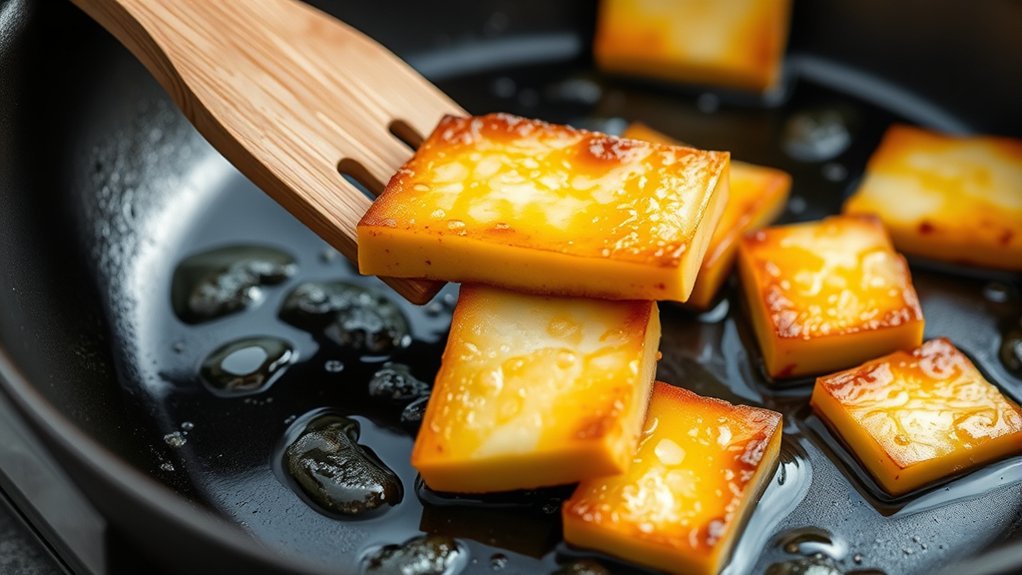
Place the halloumi slices in the hot pan and fry for 2-3 minutes on each side. Cook until the cheese turns golden brown and crispy on the outside.
Keep the seasoning simple by adding just salt and pepper to enhance the natural flavor.
With these basic steps, you’ll achieve halloumi’s perfect crunch and delicious taste.
Plus, discover easy tips on how to serve and store your fried halloumi for the best experience.
Key Takeaways
- Drain and pat halloumi slices ¼ to ½ inch thick to remove excess moisture before frying.
- Preheat a non-stick or cast iron pan over medium heat for even cooking.
- Add a high smoke point oil like avocado or sunflower oil after the pan is hot.
- Fry halloumi slices for 2-3 minutes per side until golden brown and crispy.
- Flip once crust forms, ensuring halloumi remains springy and holds its shape.
Why Pan Fry Halloumi?
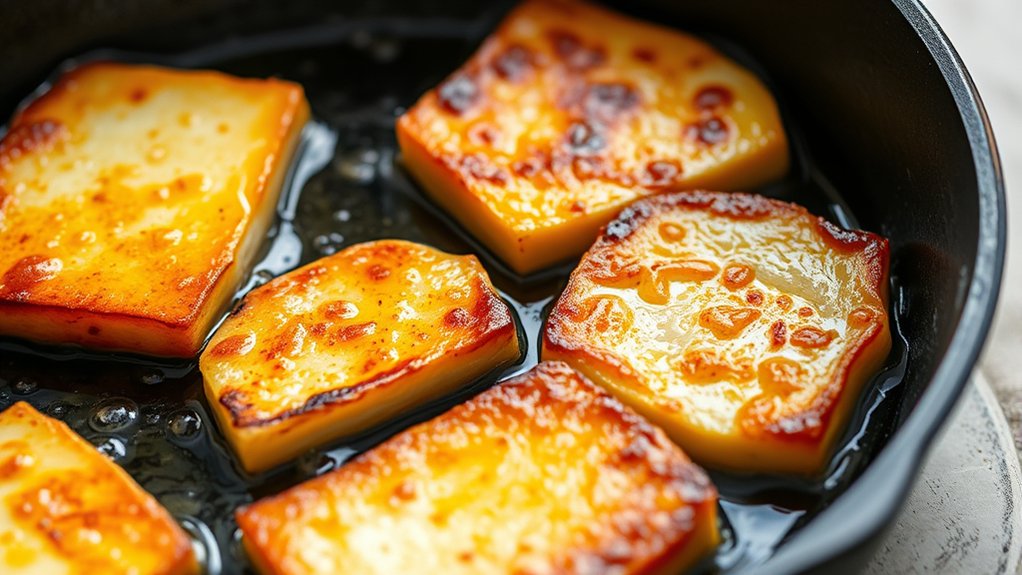
Although you can enjoy halloumi in various ways, pan frying brings out its unique texture and flavor like nothing else. When you pan fry halloumi, the outside crisps up to a beautiful golden brown, creating a satisfying crunch that contrasts perfectly with the soft, squeaky interior. This method enhances the cheese’s natural saltiness and nutty undertones, making every bite more flavorful.
You’ll also appreciate how quickly it cooks; just a few minutes on each side is enough to achieve that ideal texture without melting the cheese. Plus, pan frying is versatile—you can add spices or herbs to the pan to infuse extra flavor. It’s a simple, quick way to elevate halloumi, turning it into a delicious addition to salads, sandwiches, or as a standalone snack.
Choosing the Right Halloumi for Pan Frying
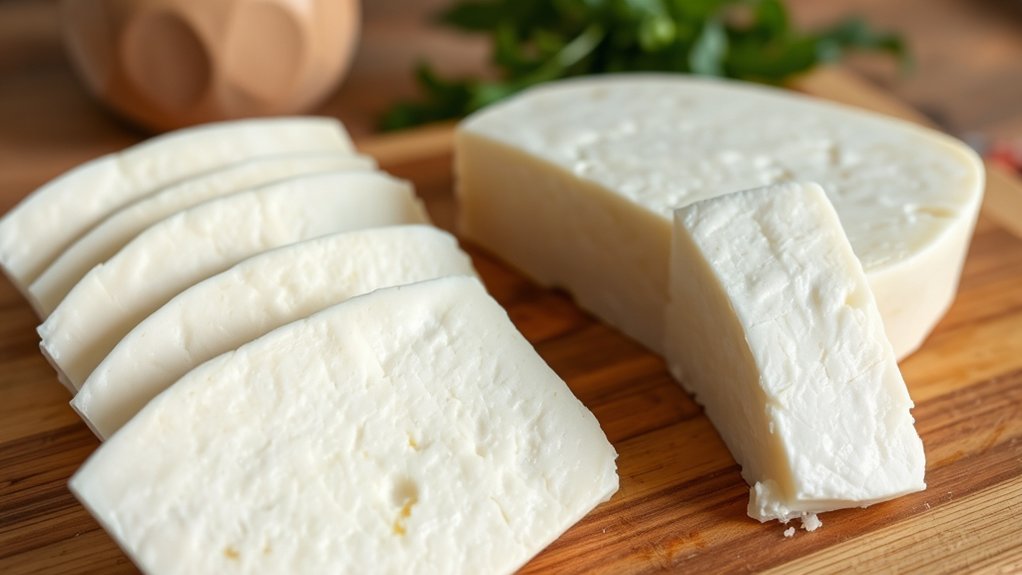
When selecting halloumi for pan frying, you want to choose a block that holds its shape well and has a firm texture. Fresh halloumi with a slightly salty taste works best because it crisps nicely without melting. Avoid crumbly or overly soft varieties—they won’t pan fry evenly.
Look for halloumi with minimal preservatives and a clean, fresh smell.
Here’s a quick guide:
| Feature | What to Look For |
|---|---|
| Texture | Firm, dense, slightly springy |
| Freshness | Recently packaged, no sour smell |
| Saltiness | Balanced, not overpowering |
| Packaging | Vacuum-sealed or brine-packed |
| Brand Quality | Trusted brands or artisanal |
Choosing the right halloumi sets you up for perfect golden slices every time.
How to Prepare Halloumi for Pan Frying
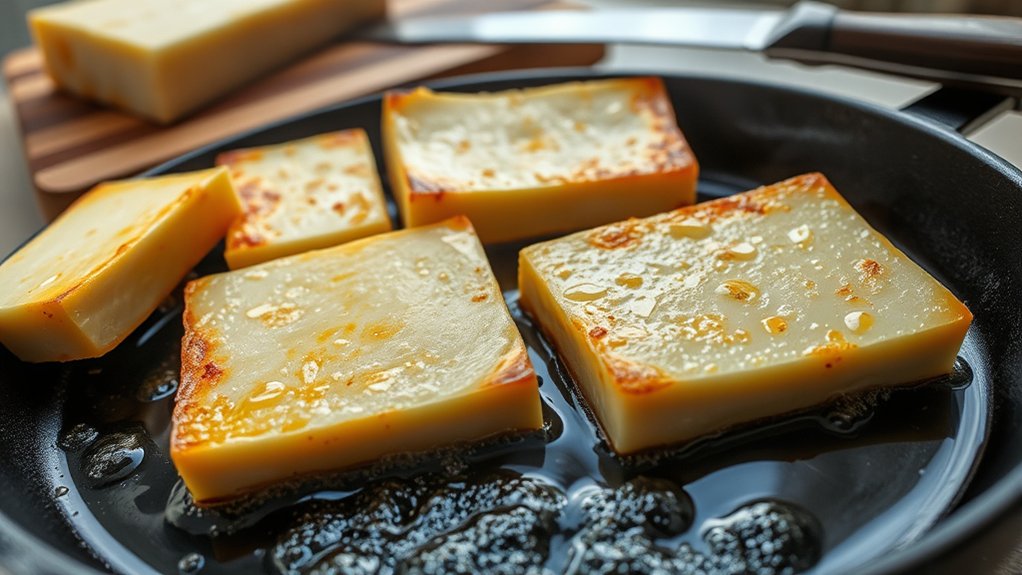
Before you start pan frying, make sure to drain and pat your halloumi dry to remove excess moisture. This step is essential because excess water can cause splattering and prevent the cheese from crisping properly.
Next, slice the halloumi into even pieces, about ¼ to ½ inch thick. Thinner slices cook faster but can become too soft, while thicker slices hold their shape better. Avoid cutting the cheese too thin or unevenly to ensure consistent cooking.
You can also choose to cut it into cubes or sticks if you prefer bite-sized pieces. Once sliced, you’re ready to move on to seasoning or adding any herbs or spices before frying, but keep in mind simple salt and pepper often suffice since halloumi is naturally flavorful.
Best Pans, Oils, and How to Pan Fry Halloumi to a Golden Crust
Choosing the right pan and oil plays a vital role in achieving that perfect golden crust on your halloumi. Use a non-stick or cast iron pan for even heat and easy flipping. Light oils with high smoke points like sunflower or avocado oil prevent burning and keep flavors clean.
Heat the pan before adding oil, then lay your halloumi slices carefully to avoid sticking.
| Pan Type | Why You’ll Love It |
|---|---|
| Non-stick | Easy flipping, less cleanup |
| Cast Iron | Retains heat, crispy edges |
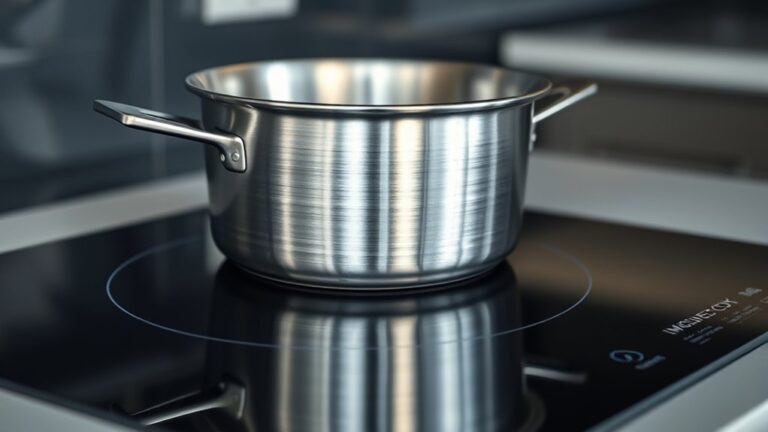
| Stainless Steel | Durable, great for searing |
| Oil Type | Benefit |
| Avocado Oil | High smoke point, neutral taste |
| Sunflower Oil | Light, lets halloumi shine |
| Olive Oil | Adds flavor, but watch heat |
How Long Should You Fry Halloumi on Each Side?
You’ll want to fry halloumi for about 2-3 minutes on each side until it develops a golden crust. Look for a crispy, browned surface as a sign it’s ready to flip.
If your slices are thicker, just add a bit more time to make certain it’s heated through.
Ideal Frying Time
When frying halloumi, timing is key to achieving the perfect golden crust without melting the cheese inside. You should fry each side for about 2 to 3 minutes over medium heat. This short cooking time lets the cheese brown nicely while keeping its firm texture intact.
If you cook it longer, the halloumi might become overly soft or start to melt, losing its signature bite. Keep an eye on it so you can flip it as soon as it develops a crispy, golden surface.
Signs Halloumi Is Ready
Although frying halloumi only takes a few minutes per side, knowing the exact signs that it’s ready helps you avoid overcooking or undercooking.
You’ll notice the cheese develop a golden-brown crust—it should be crisp but not burnt. When you lift the edge with a spatula, the halloumi will hold its shape firmly without sticking to the pan.
The texture will feel slightly springy, indicating it’s heated through. If it’s still pale or feels soft and floppy, give it more time. Typically, 2 to 3 minutes per side works well, but rely on these visual and tactile cues to be sure.
Once both sides are beautifully browned and firm, your halloumi is ready to serve.
Adjusting Time For Thickness
Since halloumi comes in different thicknesses, adjusting the frying time is key to achieving the perfect golden crust without overcooking the inside. You want that satisfying crunch outside and a soft, slightly melted center.
Here’s how to time it right:
- For thin slices (about 1/4 inch), fry for 1-2 minutes per side.
- Medium slices (around 1/2 inch) need 2-3 minutes each side.
- Thick slices (3/4 inch or more) require 3-4 minutes per side.
- Always keep the heat medium to prevent burning before the inside warms.
Pay close attention as you fry; halloumi cooks quickly, and small adjustments make a big difference. This way, you’ll enjoy every bite perfectly crispy and delicious.
How to Serve and Flavor Pan Fried Halloumi
How can you elevate the flavor of pan fried halloumi to make it truly unforgettable? Start by sprinkling freshly ground black pepper or a pinch of smoked paprika right after frying to add depth. Drizzle lemon juice or a splash of balsamic vinegar for a bright, tangy contrast that cuts through the cheese’s richness.
Fresh herbs like mint, parsley, or oregano also complement halloumi beautifully, so scatter some chopped leaves on top. Serve it alongside juicy tomatoes, cucumber slices, or a crisp salad to balance the salty, crispy cheese. For a touch of sweetness, pair halloumi with a drizzle of honey or fig jam.
These simple touches transform pan fried halloumi into a flavorful, satisfying dish that’s easy to customize to your taste.
Storing and Reheating Leftover Pan Fried Halloumi
When you have leftover pan fried halloumi, storing it properly is key to maintaining its texture and flavor. First, let the cheese cool completely to avoid sogginess. Then, place it in an airtight container to keep it fresh.
Refrigerate and aim to consume within 2-3 days for the best taste. When you’re ready to reheat, follow these steps:
- Avoid microwaving, which can make it rubbery.
- Heat a non-stick pan over medium heat.
- Add the halloumi slices and cook for 1-2 minutes on each side until warm.
- Serve immediately to enjoy that crispy, golden exterior and soft center.
Proper storage and reheating keep your halloumi delicious every time!
Frequently Asked Questions
Can Halloumi Be Frozen Before Pan Frying?
Yes, you can freeze halloumi before pan frying. Just slice it first, then freeze in an airtight container or bag.
When you’re ready, thaw it in the fridge to keep its texture before cooking.
Is Halloumi Suitable for a Low-Sodium Diet?
Salt and pepper, like yin and yang, balance flavor. Halloumi’s naturally high salt content means it’s not ideal for a low-sodium diet,
so you’ll want to enjoy it sparingly or seek lower-sodium alternatives instead.
Can I Pan Fry Halloumi Without Oil?
Yes, you can pan fry halloumi without oil by using a non-stick pan on medium heat. It might stick a little, so keep an eye on it and gently flip to get that golden crust.
Make sure the pan is properly heated before adding the halloumi to help prevent sticking.
Using a spatula to carefully lift and turn the cheese will help maintain its shape. Enjoy your crispy, golden halloumi!
What Is the Calorie Count of Pan Fried Halloumi?
You’ll find that pan-fried halloumi has about 300 calories per 100 grams. Keep in mind, using oil adds more calories, so the total depends on how much oil you use when frying it.
Can Halloumi Be Grilled Instead of Pan Fried?
Yes, you can grill halloumi instead of pan frying it. Just slice it thick, preheat your grill, and cook for a few minutes each side until golden and crispy.
It’s perfect for a smoky flavor!
Conclusion
Pan frying halloumi isn’t just cooking—it’s creating a golden moment where simple cheese transforms into a crispy, savory delight. With the right halloumi, a hot pan, and a little patience, you’ll master that perfect crust every time. Remember, the sizzle is the song of success.
So, jump in, savor the process, and let each bite remind you that sometimes, the simplest steps lead to the most delicious rewards. By following these easy steps, you can enjoy the best pan-fried halloumi at home. Perfectly crispy, golden, and bursting with flavor—this is how to pan fry halloumi in 7 simple steps.