How to Grill Sockeye Salmon in 7 Simple Steps
Start by choosing fresh, wild-caught sockeye salmon with skin on for grilling. This type of salmon is prized for its rich flavor and firm texture, making it ideal for the grill.
Rinse the salmon, pat it dry, and carefully remove any pin bones to ensure a pleasant eating experience.
Season the salmon generously with salt, pepper, olive oil, and your favorite herbs to enhance its natural taste.
Preheat your grill to 375-400°F and oil the grates thoroughly to prevent sticking.
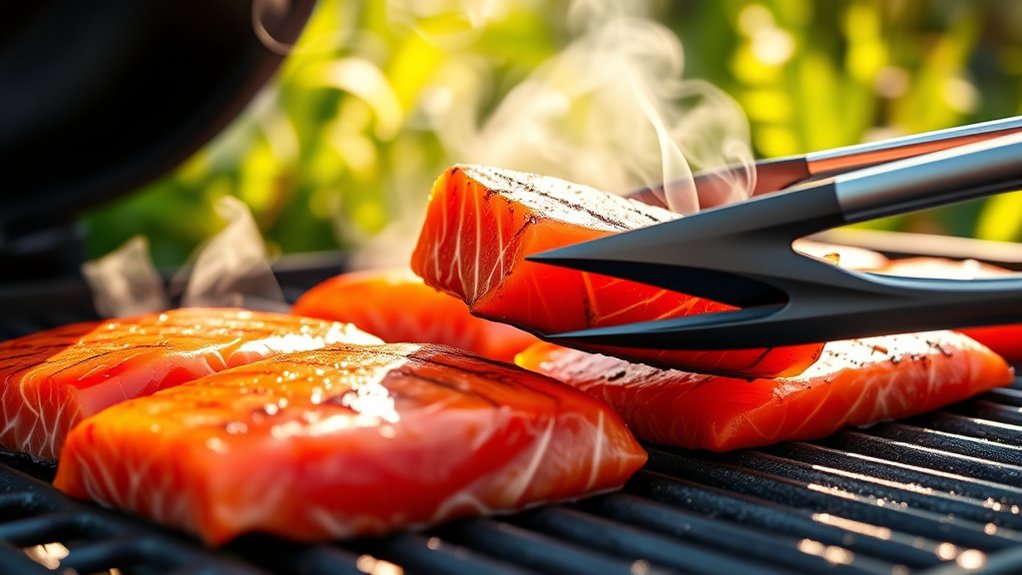
Place the salmon on the grill skin-side down and cook until the edges start to turn opaque.
Flip the salmon gently and grill for an additional 4-6 minutes per side.
Check for doneness by observing the color and flaking texture.
Once cooked, let the salmon rest briefly before serving.
Follow these simple steps, and you’ll master the art of perfectly grilled sockeye salmon every time.
Key Takeaways
- Preheat grill to 375-400°F, clean and oil grates to prevent sticking.
- Season fresh or thawed sockeye salmon fillets with skin on using salt, pepper, olive oil, and herbs.
- Grill salmon skin-side down for 4-6 minutes per side with lid closed, flipping when edges turn opaque and fish releases easily.
- Use a thermometer to check doneness: 125°F for medium-rare or 140°F for fully cooked salmon.
- Let grilled salmon rest briefly before serving to retain moisture and enhance flavor.
Choose the Best Sockeye Salmon for Grilling
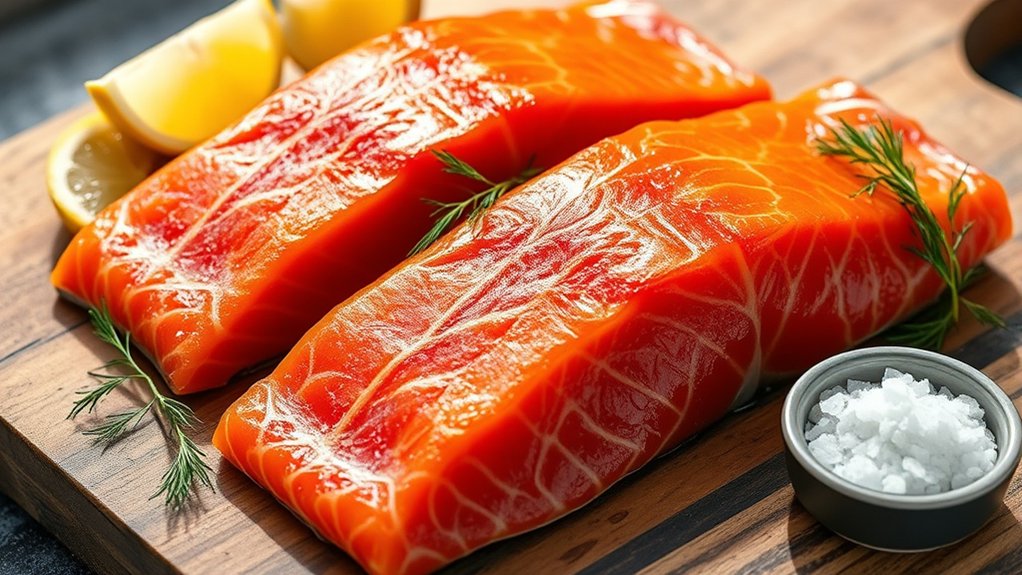
Where can you find the best sockeye salmon for grilling? Start by visiting your local fish market or trusted grocery store that offers fresh, wild-caught options. Wild sockeye salmon boasts a richer flavor and firmer texture, perfect for grilling.
Look for fillets with vibrant, deep red flesh and moist, shiny skin. Avoid fish with dull color or a strong fishy odor, as these indicate less freshness. If possible, choose fillets with the skin on to help hold the fish together on the grill.
Frozen sockeye salmon can work in a pinch, but make sure it’s properly thawed and doesn’t have freezer burn. By selecting high-quality, fresh sockeye salmon, you’re setting yourself up for a delicious grilled meal every time.
Prepare Your Sockeye Salmon for the Grill
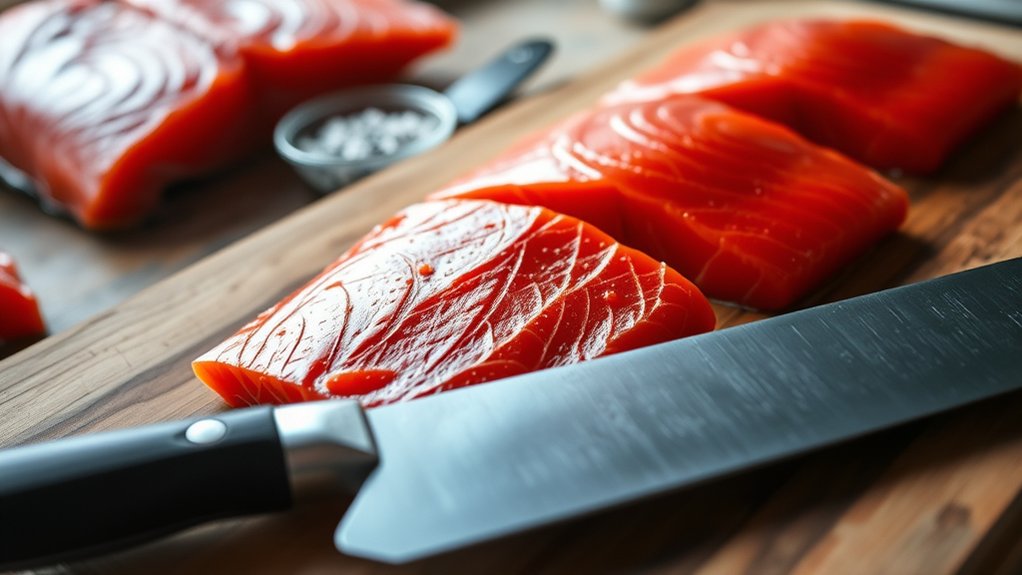
Once you’ve selected the best sockeye salmon, it’s time to get it ready for the grill. Start by rinsing the fillets under cold water to remove any surface residue, then pat them dry thoroughly with paper towels. Check for any pin bones by running your fingers along the flesh and use clean tweezers to pull them out carefully.
If your fillets have skin, leave it on—it helps hold the fish together and crisps nicely on the grill. Next, trim any ragged edges to guarantee even cooking. Finally, let the fillets sit at room temperature for about 15 minutes before grilling; this helps them cook evenly.
Now your sockeye salmon is perfectly prepped and ready to be seasoned and grilled.
Season the Sockeye Salmon to Boost Flavor
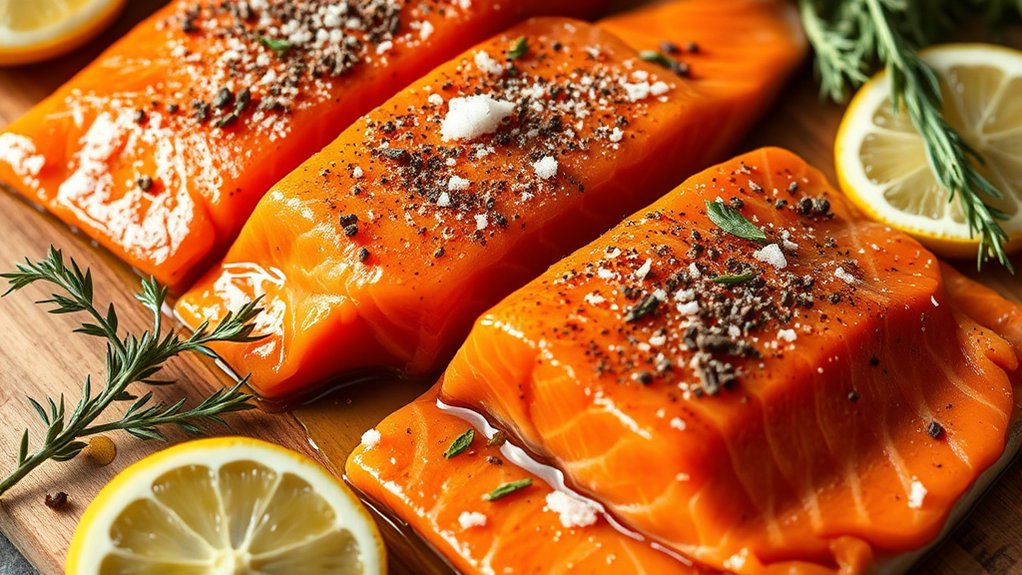
Although sockeye salmon has a rich, natural flavor, seasoning it properly can elevate your grilling experience. You want to enhance, not overpower, the fish’s vibrant taste. Start by adding a simple sprinkle of sea salt and freshly ground black pepper to bring out its natural flavors.
Next, consider these options to boost taste and aroma:
- Drizzle with olive oil and lemon juice for brightness and moisture.
- Rub in garlic powder and smoked paprika for subtle smoky warmth.
- Sprinkle fresh herbs like dill or thyme for a fragrant finish.
Apply your chosen seasonings evenly, ensuring every bite bursts with flavor. Let the salmon rest a few minutes after seasoning so the flavors meld before it hits the grill. This step sets the stage for an unforgettable grilled sockeye salmon.
Preheat and Clean Your Grill
Before you start grilling, make certain to preheat your grill to a medium-high temperature, around 375-400°F. Use a grill brush or scraper to clean off any leftover residue from previous cooking sessions.
A clean, hot grill ensures your sockeye salmon cooks evenly and prevents sticking.
Ideal Grill Temperature
To achieve the perfect sear on your sockeye salmon, you’ll want to preheat your grill to a medium-high temperature, around 375 to 400 degrees Fahrenheit. This range helps lock in moisture while creating those desirable grill marks. Avoid temperatures that are too high, as they can char the outside before the inside cooks through.
Keep these tips in mind for ideal grilling temperature:
- Use a grill thermometer to monitor heat accurately.
- Allow the grill to preheat for at least 10-15 minutes.
- Adjust vents or burners to maintain a steady temperature.
Cleaning Techniques and Tools
Once your grill reaches the ideal temperature, giving it a thorough cleaning guarantees your sockeye salmon cooks evenly and tastes fresh. Start by using a stiff wire brush to scrape off any leftover residue or charred bits from previous grilling sessions. This prevents sticking and unwanted flavors.
Next, wipe down the grates with a damp cloth or paper towel to remove loose debris. For stubborn spots, a grill scraper or a ball of aluminum foil held with tongs works wonders. If you’re using a gas grill, remember to turn off the burners before cleaning to avoid accidents.
Clean grates also minimize flare-ups, ensuring your salmon grills perfectly without burning. Keeping your tools sharp and your grill clean sets you up for delicious results every time.
Grill Sockeye Salmon Perfectly
To grill sockeye salmon perfectly, start by seasoning it just right and ensuring your grill is properly preheated. You’ll want to cook the fish at the right temperature to lock in flavor and moisture. Timing is key, so keep a close eye to avoid overcooking.
Preparing The Salmon
Although sockeye salmon is naturally flavorful, preparing it properly guarantees your grilled fish turns out moist and delicious. Start by rinsing the salmon under cold water and patting it dry with paper towels to remove any excess moisture.
Next, check for any pin bones by running your fingers along the fillet and removing them with tweezers. Finally, season the fish simply to highlight its rich taste—use salt, pepper, and a touch of olive oil.
- Rinse and dry the fillet thoroughly
- Remove pin bones carefully
- Season lightly with salt, pepper, and olive oil
These steps assure your sockeye salmon is ready to absorb smoky grill flavors while staying tender and juicy.
Preheating The Grill
After seasoning your sockeye salmon, the next step is to get your grill ready for cooking. Preheat your grill to medium-high heat, around 375°F to 400°F. This temperature is ideal for achieving a nice sear without overcooking the fish.
Make sure your grill grates are clean to prevent sticking, and lightly oil them using a paper towel dipped in oil held with tongs. Close the lid and let the grill heat up for about 10 to 15 minutes. Proper preheating guarantees even cooking and helps lock in the salmon’s natural juices.
Avoid rushing this step—starting with a hot grill will give you those beautiful grill marks and enhance the flavor of your sockeye salmon.
Cooking Time And Temperature
Grilling sockeye salmon perfectly requires about 4 to 6 minutes per side at a medium-high heat of 375°F to 400°F. Stick to this range to guarantee the fish cooks through without drying out. Use a reliable grill thermometer to maintain consistent heat.
Here are some tips to nail the timing and temperature:
- Grill with the lid closed to keep the heat steady.
- Flip the salmon gently once the edges turn opaque and the fish releases easily from the grill.
- Aim for an internal temperature of 125°F for medium-rare, or 140°F if you prefer it fully cooked.
Keep an eye on the salmon as cooking times can vary slightly based on thickness and grill type. With these guidelines, you’ll serve perfectly grilled sockeye every time.
Check Sockeye Salmon for Doneness
When you think your sockeye salmon is close to being done, check its texture and color to guarantee perfect doneness. The flesh should be opaque and easily flake with a fork, but still moist inside. Avoid overcooking, which makes it dry and tough.
You can also use a food thermometer; the internal temperature should reach 125°F (52°C) for medium doneness.
| Indicator | What to Look For |
|---|---|
| Color | Opaque pink, not translucent |
| Texture | Flakes easily, firm but moist |
| Internal Temp | 125°F (52°C) |
| Overcooked Salmon | Dry, chalky, and tough texture |
Use these signs to confidently remove your salmon from the grill at the right moment.
Serve or Store Grilled Sockeye Salmon Safely
Although grilled sockeye salmon tastes best fresh off the grill, you can enjoy it later by storing it properly. To keep your salmon safe and flavorful, follow these simple steps:
- Cool it quickly by placing the salmon in shallow containers within two hours of cooking.
- Store it in the refrigerator at or below 40°F (4°C) and consume within 3 to 4 days.
- If you want to keep it longer, wrap it tightly and freeze it for up to 2 months.
When serving, reheat gently to avoid drying out the fish. Always check for any off smells or changes in texture before eating leftovers.
Frequently Asked Questions
Can I Grill Sockeye Salmon With Skin on or Off?
You can grill sockeye salmon with the skin on or off, but keeping the skin on helps hold the fish together and adds flavor.
Just make sure to oil the grill and cook skin-side down first.
What Type of Wood Chips Enhance Sockeye Salmon Flavor?
Want to add a smoky twist to your sockeye salmon? You’ll love using alder or applewood chips—they bring a mild, sweet flavor that complements the rich fish perfectly.
Why settle for ordinary when you can enhance every bite?
How Long Can Cooked Sockeye Salmon Be Refrigerated?
You can refrigerate cooked sockeye salmon for up to 3 to 4 days.
Make sure to store it in an airtight container or wrap it tightly to keep it fresh and prevent odors from spreading.
Is It Safe to Grill Sockeye Salmon From Frozen?
You can grill sockeye salmon from frozen, but it’s best to thaw it first—slow and steady wins the race. Thawing guarantees even cooking and better texture, preventing the outside from overcooking while the inside stays cold.
Can I Use a Gas Grill Instead of Charcoal for Sockeye Salmon?
Yes, you can use a gas grill instead of charcoal for sockeye salmon. Gas grills give you better temperature control, heat evenly, and cook the fish perfectly without that smoky charcoal flavor, which some people actually prefer.
Conclusion
Now that you’ve mastered grilling sockeye salmon in just seven simple steps, you’re ready to impress everyone with a flavor explosion that’s out of this world! With the right salmon, seasoning, and grill prep, you’ll enjoy perfectly cooked fish every time.
Remember to check for doneness and serve or store it safely to keep that deliciousness locked in. Get ready to become the ultimate grill master—your taste buds will thank you endlessly!
By following these grilling sockeye salmon tips, you’ll consistently achieve juicy, flavorful results. Perfectly grilled sockeye salmon is within your reach, making every meal a memorable experience. Enjoy the deliciousness that comes from simple, effective grilling techniques!