How Many Watts Does a Blender Use: 7 Facts
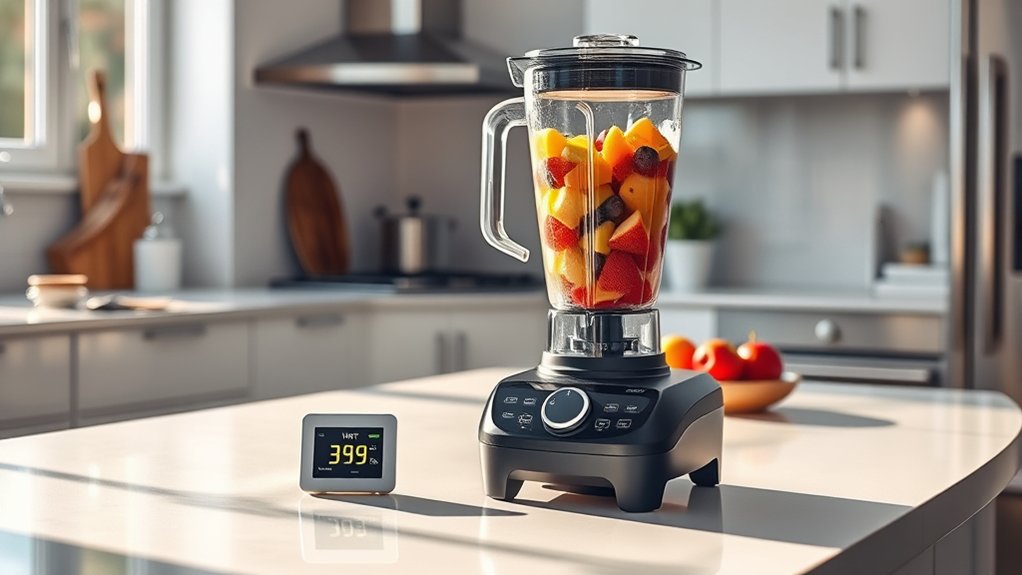
You’ll find most blenders use between 300 and 700 watts, depending on their size and what you’re blending. Understanding how many watts a blender uses is key to choosing the right appliance for your kitchen needs.
Lower watt models under 300 watts suit soft ingredients and save energy, while higher watt blenders over 700 watts handle tougher tasks like crushing ice.
Handheld blenders typically use less power, around 100-300 watts.
Using the right wattage keeps blending efficient without draining your energy bill. There’s more to know about picking and using blenders for the best results.
Key Takeaways
- Most blenders use between 300 to 1000 watts, with typical operation ranging from 300 to 700 watts depending on the model and task.
- Lower wattage blenders (<300W) are ideal for soft ingredients and energy-efficient light blending, while higher wattage models (>700W) handle tougher tasks.
- Blender wattage affects blending speed and efficiency; higher wattage crushes ice and dense foods faster, but can waste energy on simple tasks.
- Blenders do not run at full wattage continuously; power consumption varies with speed settings and ingredient hardness.
- Proper usage, like blending in small batches and using correct speeds, maximizes energy efficiency and extends blender lifespan.
How Blender Wattage Impacts Performance
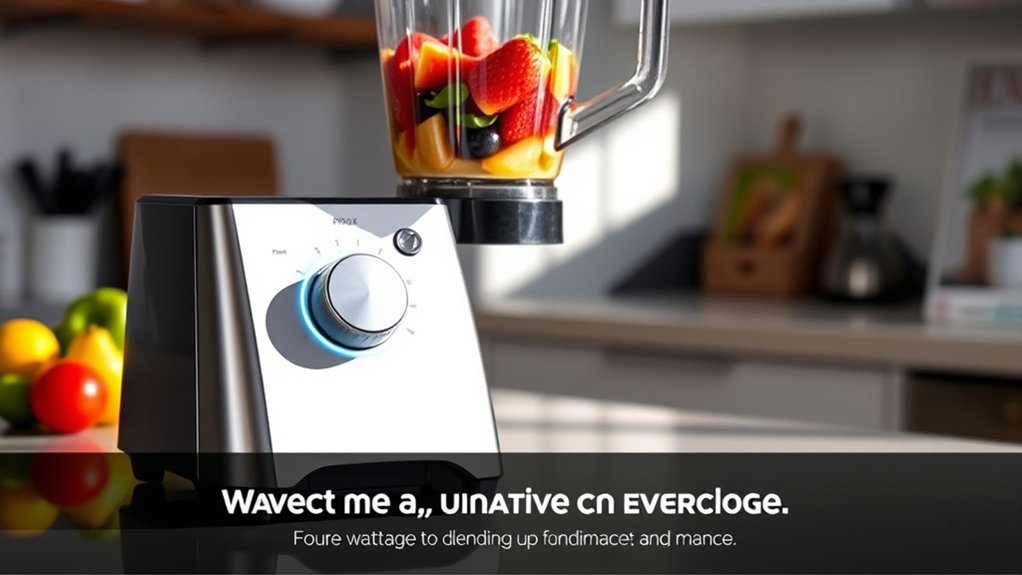
Although wattage isn’t the only factor that determines how well a blender works, it plays an essential role in performance. When you choose a blender with higher wattage, you’re likely getting a motor that can handle tougher ingredients more efficiently. This means you’ll blend smoothies, crush ice, or puree vegetables faster and with less effort.
Lower-wattage blenders might struggle with dense or frozen foods, leaving you with uneven textures or longer blending times. However, wattage alone doesn’t guarantee quality; blade design and motor build also matter. Still, if you want reliable power for various tasks, paying attention to wattage helps you avoid frustration.
In short, wattage gives you a good indication of how much blending muscle you’re getting.
Typical Blender Wattage: How Many Watts Do They Use?
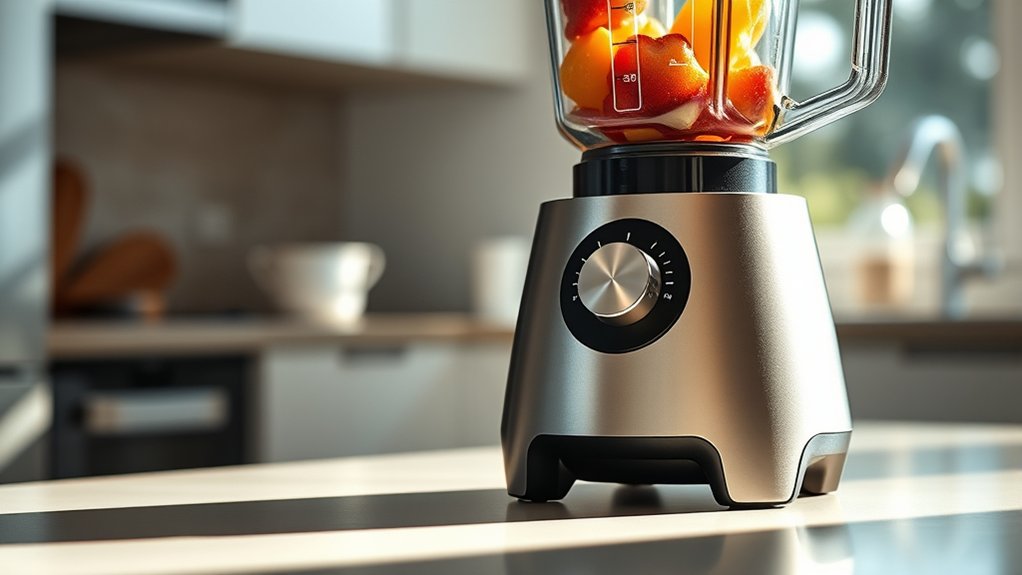
You’ll find most blenders use between 300 and 1000 watts, depending on their size and purpose. Lower wattage models handle simple tasks, while higher wattage blenders tackle tougher ingredients with ease.
Understanding this range helps you pick the right blender for your needs and guarantees you get the performance you want.
Average Power Consumption
Wondering how many watts a typical blender uses? On average, most blenders consume between 300 and 700 watts during regular use. This range covers standard household blenders designed for everyday tasks like smoothies and purees.
When you run your blender, the wattage indicates how much electrical power it draws from your outlet. Keep in mind, the blender doesn’t run at full wattage continuously; its power consumption varies depending on speed settings and blending duration. For instance, shorter blending times and lower speeds reduce energy use, while tougher ingredients and higher speeds demand more power.
Understanding this average power consumption helps you estimate your blender’s impact on your electricity bill and choose one that fits your needs without wasting energy.
Low vs High Wattage
How many watts does your blender really need? Low wattage blenders, usually under 300 watts, are great for simple tasks like making smoothies or blending soft fruits. They’re energy-efficient and often quieter, making them ideal if you don’t blend tough ingredients regularly.
On the other hand, high wattage blenders, which can exceed 700 watts, handle denser foods like nuts or ice with ease. They draw more power but offer versatility for various kitchen tasks. Choosing between low and high wattage depends on your blending habits.
If you mostly whip up light recipes, a low wattage blender will do the job. But if you want one that can tackle a wide range of ingredients, you might want to invest in a higher wattage model.
Impact On Performance
Although wattage isn’t the only factor affecting blender performance, it plays a crucial role in determining how efficiently your blender handles different ingredients. Higher wattage blenders can crush ice, blend tough vegetables, and create smoother textures faster than lower wattage models.
If you often work with dense or frozen ingredients, choosing a blender with more watts ensures consistent results without straining the motor. On the other hand, lower wattage blenders suit lighter tasks like smoothies with soft fruits or mixing liquids, saving energy and reducing noise.
Keep in mind, wattage also impacts the blender’s durability—higher wattage models typically last longer under frequent heavy use. So, consider your blending needs carefully to pick a wattage that balances power, efficiency, and longevity.
Comparing Wattage Across Different Blender Types
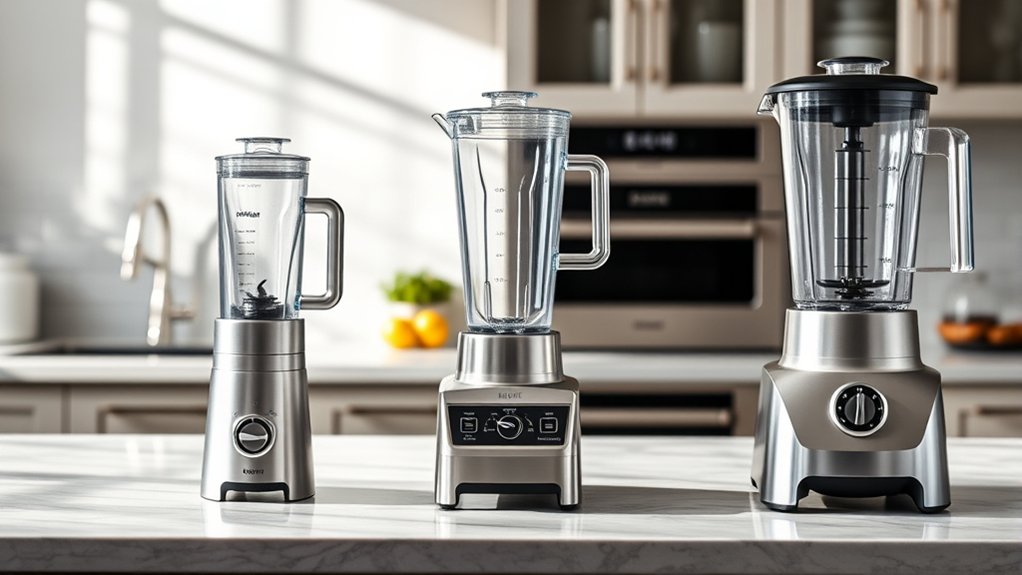
When you compare different blender types, you’ll notice their wattage can vary considerably, affecting both performance and energy consumption. Personal or handheld blenders typically use between 100 to 300 watts, making them energy-efficient but best suited for light tasks like smoothies or sauces. Countertop blenders usually range from 300 to 1000 watts, offering more power for tougher ingredients and larger batches.
High-performance blenders can exceed 1000 watts, but they consume more energy overall. You’ll find that the wattage reflects the blender’s intended use—lighter models prioritize energy savings, while heavier ones focus on versatility. Understanding these differences helps you choose a blender that matches your needs without wasting energy or power.
How Higher Wattage Improves Blending Power
When you choose a blender with higher wattage, you’re getting a stronger motor that can handle tougher ingredients. This means your blending will be faster and smoother, cutting down on chunks and uneven textures.
You’ll notice better efficiency, especially when working with frozen fruits or thick mixtures.
Increased Motor Strength
Since higher wattage directly powers the motor, it gives your blender the strength to crush tougher ingredients faster and more efficiently. This increased motor strength means you can blend fibrous vegetables, ice, and nuts without straining the appliance. You’ll notice smoother textures and fewer chunks because the motor maintains consistent power under load.
A stronger motor also reduces the risk of overheating since it doesn’t have to work as hard. That means your blender lasts longer and performs reliably over time. When choosing a blender, consider wattage as a key factor in motor strength.
Higher wattage models handle demanding tasks with ease, saving you time and effort in the kitchen. Ultimately, increased motor strength gives you more confidence in your blender’s performance.
Enhanced Blending Efficiency
Although wattage isn’t the only factor that determines blending quality, higher wattage markedly boosts your blender’s efficiency by delivering more consistent and powerful torque. This means you’ll experience smoother blends faster, even with tough ingredients like nuts or ice. A high-wattage motor reduces blending time and prevents overheating, so you get better results without overworking your blender.
Here’s how wattage impacts blending efficiency:
| Wattage Range | Blending Efficiency |
|---|---|
| Below 300W | Suitable for soft fruits, light tasks |
| 300W-600W | Handles most everyday blending tasks |
| Above 600W | Excels at tough, demanding blends |
Choosing a blender with higher wattage ensures you get reliable, consistent performance every time.
Choosing the Right Blender Wattage for Your Needs
Deciding on the right blender wattage depends largely on what you plan to blend and how often you’ll use it. If you mostly make smoothies or blend soft fruits, a lower wattage blender around 300-500 watts might do the trick.
Choosing the right blender wattage depends on your blending needs and usage frequency.
For tougher tasks like crushing ice or blending nuts, you’ll want something between 600-900 watts. Heavy-duty blending, such as making nut butters or grinding grains, calls for 1000 watts or more.
Consider how often you use the blender too; frequent use justifies investing in higher wattage for durability and efficiency.
Here’s a quick guide to help you choose:
- Light tasks (soft fruits, smoothies): 300-500 watts
- Medium tasks (ice crushing, nuts): 600-900 watts
- Heavy-duty tasks (nut butters, grains): 1000+ watts
- Usage frequency: More use = higher wattage recommended
How Blender Watts Affect Your Energy Bill
Understanding the wattage you need helps you pick the right blender, but it also impacts your energy bill. Higher-watt blenders consume more electricity per minute of use, so if you often blend tough ingredients or large batches, your energy costs might rise slightly.
However, since most blending sessions only last a few minutes, the overall impact on your monthly bill tends to be minimal. Still, using a blender with unnecessarily high wattage for simple tasks could mean you’re paying more than needed.
On the other hand, a lower-watt blender running longer to achieve the same result might also increase energy use. Balancing wattage with your blending habits guarantees you don’t waste electricity or overspend on your energy bill.
Tips to Maximize Blender Efficiency and Save Energy
To get the most out of your blender while keeping energy use low, you should focus on proper usage and maintenance. Using your blender efficiently not only saves energy but also extends its lifespan.
Here are some tips to help you maximize efficiency:
- Use the right speed setting: Avoid running your blender on maximum speed when lower settings work fine.
- Blend in batches: Overloading forces the motor to work harder and consume more power.
- Keep blades sharp and clean: Dull blades require more energy to blend ingredients.
- Regularly maintain your blender: Check for wear and tear, and clean the motor base to prevent overheating.
Following these steps ensures you blend smartly while cutting down on unnecessary electricity use.
Frequently Asked Questions
Are Higher Wattage Blenders Louder Than Lower Wattage Ones?
Yes, higher wattage blenders usually sound louder because their powerful motors run at higher speeds. However, noise levels also depend on design and materials, so some high-watt blenders might be quieter than lower watt ones.
Can Blender Wattage Affect the Lifespan of the Appliance?
You wouldn’t want to use a 19th-century steam engine to power your blender, right? Higher wattage can strain the motor if misused, but with proper care, you’ll keep your blender running smoothly for years.
Do Wattage Ratings Vary Between Brands for the Same Blender Model?
Yes, wattage ratings can vary between brands even for the same blender model because manufacturers might label power differently. You should always check the specific wattage listed to guarantee it meets your needs before buying.
Is Wattage the Only Factor Determining Blender Motor Quality?
No, wattage isn’t the only factor determining motor quality. You should also consider motor design, build materials, and cooling system. These aspects affect performance, durability, and how well the blender handles tough ingredients.
How Does Blender Wattage Impact Noise Levels During Operation?
Noise from a blender’s wattage is like a roaring engine—the higher the watts, the louder it can get. But you’ll find that efficient motors and good design often keep noise levels more manageable than you’d expect.
Higher wattage means more power, which can translate to increased noise during operation. However, modern blenders often incorporate noise-reducing technology to balance performance and sound.
Ultimately, wattage influences noise, but it’s not the sole factor determining how loud your blender will be.
Conclusion
So, you’ve learned that more watts mean more power, but don’t worry—you don’t need a blender that could power a small city to make a smoothie. Ironically, sometimes the lower-watt models get the job done just fine, saving you energy and cash.
So next time you shop, remember: you don’t have to go overboard with watts to blend like a pro. Who knew less could really be more? When it comes to how many watts does a blender use, choosing the right power level can help you blend efficiently without wasting electricity.