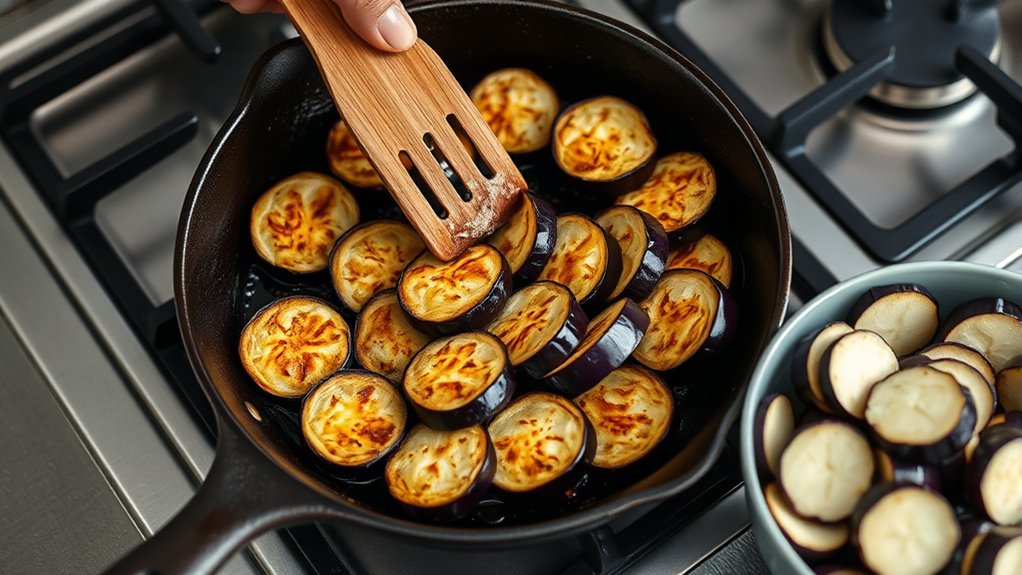
How to Pan Fry Eggplant in 7 Simple Steps
To pan fry eggplant perfectly, start by selecting a firm, medium-sized eggplant with shiny skin. This ensures the best texture and flavor for your dish. Slice the eggplant evenly about ½ inch thick to cook uniformly.
Next, sprinkle salt on the slices and let them rest for 20-30 minutes to reduce bitterness. Afterward, rinse and dry the slices thoroughly to prevent sogginess during frying.
Use a heavy skillet and preheat it on medium-high heat with an oil that has a high smoke point, such as canola oil.
Season the eggplant slices with pepper or your favorite spices. Fry them until they turn golden and tender.
Keep reading for tips on achieving perfect doneness and creative serving ideas for your pan-fried eggplant.
Key Takeaways
- Choose firm, medium-sized eggplants with smooth, shiny skin and fresh green stems for best flavor and texture.
- Slice eggplant evenly about ½ inch thick, salt both sides, rest 20-30 minutes, then rinse and pat dry to reduce bitterness.
- Use high smoke point oil like canola or peanut oil in a preheated heavy-bottomed skillet or cast-iron pan.
- Season slices with pepper, garlic powder, or spices before frying; avoid overcrowding the pan for even cooking.
- Fry until golden brown and tender, with crispy edges; test doneness by fork softness and a sizzling oil surface.
Choose the Right Eggplant for Pan Frying
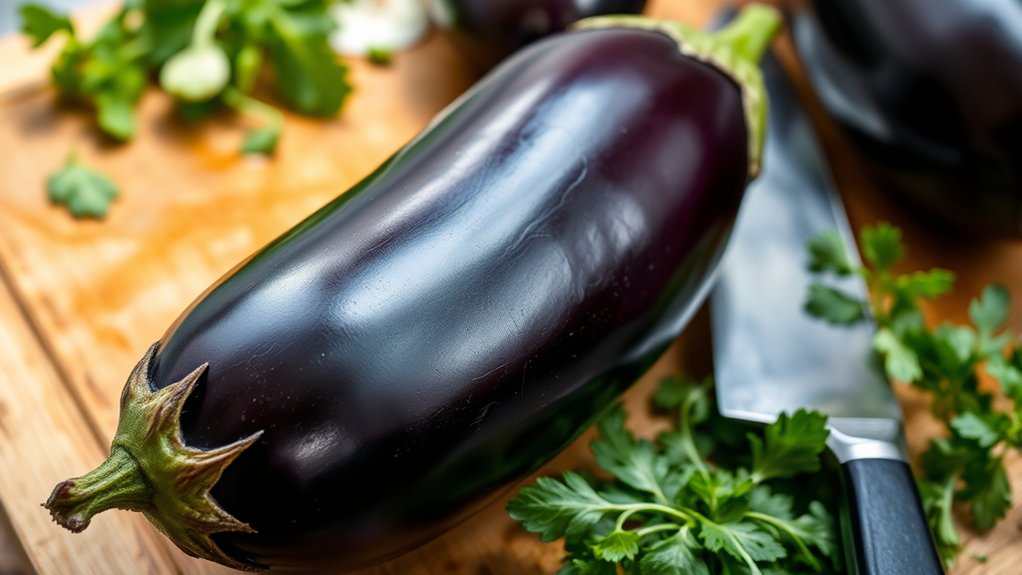
How do you pick the perfect eggplant for pan frying? Start by choosing one that feels firm yet slightly heavy for its size. Avoid any with soft spots, wrinkles, or blemishes, as they indicate overripe or damaged produce.
Look for smooth, shiny skin with a rich, deep purple color—this signals freshness and good flavor. The stem should be green and fresh-looking, not brown or dried out. Smaller or medium-sized eggplants usually work best; they tend to have fewer seeds and less bitterness.
When you press gently, the flesh should bounce back quickly. Selecting the right eggplant ensures you get tender, flavorful slices that cook evenly and absorb oil nicely, setting the stage for perfect pan-fried results every time.
Prep Eggplant Slices to Prevent Sogginess
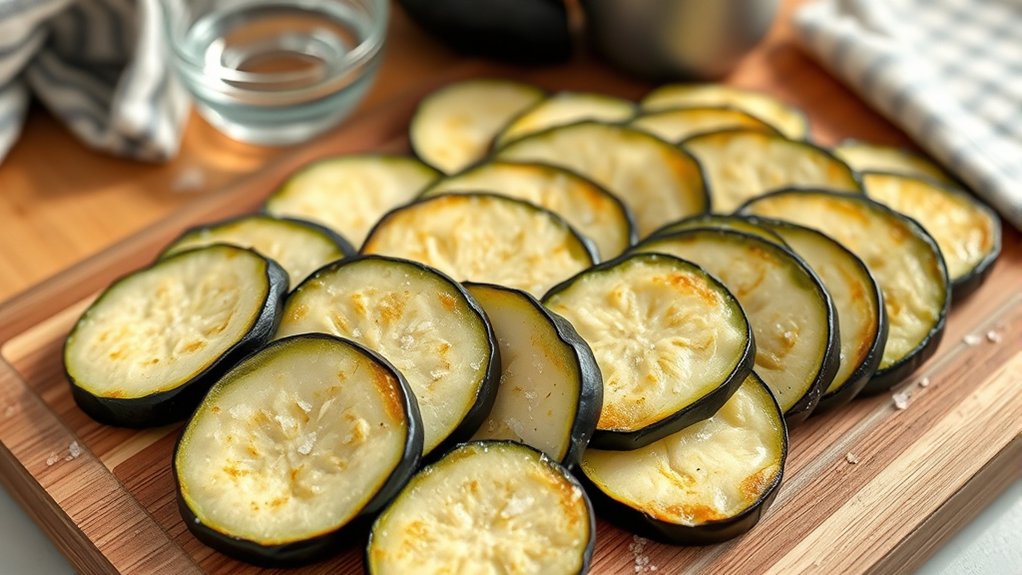
Once you’ve selected the perfect eggplant, the next step is preparing the slices to keep them from turning soggy during cooking. Start by slicing the eggplant evenly, about ½-inch thick, so they cook uniformly. Sprinkle salt on both sides of each slice and let them sit on a paper towel-lined tray for 20-30 minutes.
The salt draws out excess moisture and bitterness, which helps prevent sogginess. Afterward, rinse the slices lightly under cold water to remove the salt, then pat them completely dry with clean towels. Ensuring the slices are dry before frying is key—moisture causes oil to splatter and makes the eggplant limp.
With properly prepped slices, you’ll get crisp, flavorful results every time you pan fry.
Pick the Best Oil and Pan for Crispy Eggplant
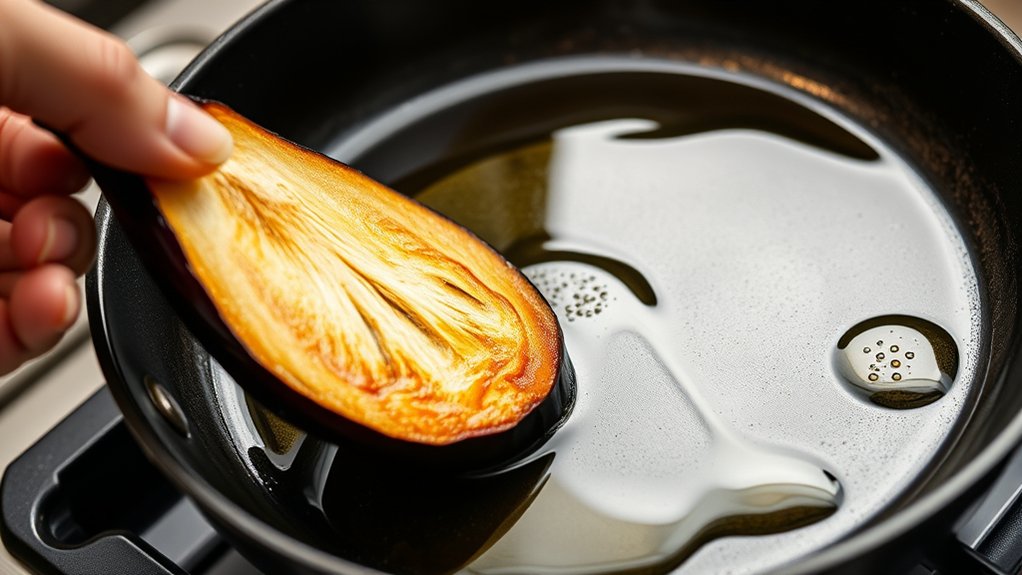
Because eggplant absorbs oil quickly, choosing the right cooking oil and pan is vital for achieving a crispy texture without greasiness. Use oils with a high smoke point like canola, vegetable, or peanut oil to withstand the heat without burning. Avoid olive oil since it smokes easily and can impart a bitter taste.
Select a heavy-bottomed skillet or cast-iron pan to guarantee even heat distribution. Non-stick pans work too but won’t develop the same crispy crust. Preheat your pan over medium-high heat before adding oil; this helps the eggplant slices sear properly and prevents sticking.
Avoid overcrowding the pan—cook in batches if needed—so each slice has room to crisp up. With the right oil and pan, you’ll get perfectly crispy eggplant every time.
Season Eggplant to Boost Its Flavor
To really bring out the eggplant’s flavor, you’ll want to season it just right. Use simple options like salt, pepper, garlic powder, or herbs to enhance its natural taste.
Seasoning is best done right before frying to keep the eggplant from getting soggy.
Best Seasoning Options
Although eggplant has a naturally mild flavor, seasoning it well can transform your pan-fried dish into something truly delicious. Start with salt to draw out moisture and add depth. Then, add black pepper for a subtle kick.
Garlic powder or fresh minced garlic enhances the savory notes, while smoked paprika brings a warm, smoky layer. If you like a bit of heat, sprinkle cayenne or red pepper flakes. Herbs like thyme, oregano, or basil complement eggplant’s earthiness beautifully.
For a touch of brightness, a squeeze of lemon juice or a dash of balsamic vinegar after frying can elevate the flavors. Experiment with these options to find your favorite combo and make your pan-fried eggplant irresistible every time.
When To Season
Since seasoning can make or break your pan-fried eggplant, knowing when to add your spices is key. You want to season the eggplant right after slicing and before cooking. This timing lets the salt and other spices draw out excess moisture while infusing flavor.
Sprinkle salt evenly and let the slices sit for about 20-30 minutes, then pat them dry. This step prevents sogginess and bitterness. After drying, add your other seasonings like pepper, garlic powder, or herbs just before frying.
Seasoning too early with delicate spices can cause them to burn in the pan, while seasoning only after cooking won’t allow flavors to penetrate. By seasoning at the right moments, you’ll boost the eggplant’s taste and get that perfect, crispy texture every time.
How to Pan Fry Eggplant Perfectly
To pan fry eggplant perfectly, you need to prep it right and get your pan to the ideal temperature. Make sure the slices are evenly cut and dry to avoid sogginess.
Then, heat your pan until it’s hot enough to give the eggplant a golden, crispy crust.
Preparing Eggplant Properly
When you prepare eggplant properly, you’ll guarantee it cooks evenly and absorbs flavors beautifully. Start by choosing firm, glossy eggplants with no blemishes. Slice them into even pieces, about ½ inch thick, to assure uniform cooking.
Salt the slices generously and let them sit for 20-30 minutes; this draws out bitterness and excess moisture. Rinse and pat dry to avoid sogginess when frying.
| Step | Purpose |
|---|---|
| Select firm | Ensures freshness and texture |
| Slice evenly | Promotes uniform cooking |
| Salt & rest | Removes bitterness, moisture |
| Rinse & dry | Prevents soggy pan frying |
Following these steps sets a solid foundation for perfectly pan-fried eggplant every time.
Achieving Ideal Pan Temperature
Properly prepared eggplant slices set you up for success, but controlling your pan’s temperature guarantees they cook to golden perfection without absorbing too much oil or turning mushy. Heat your pan over medium heat and add just enough oil to coat the surface. Test the temperature by flicking a few drops of water into the pan—if they sizzle and evaporate immediately, you’re ready.
If the oil starts to smoke, lower the heat slightly to avoid burning. When the oil shimmers but isn’t smoking, gently place your eggplant slices in the pan. This temperature ensures a crispy exterior and tender interior.
Keep adjusting the heat as needed throughout to maintain this balance, so your eggplant fries evenly and absorbs minimal oil.
How to Tell When Pan Fried Eggplant Is Done
Although eggplant can appear golden quickly, you’ll know it’s done pan frying when it becomes tender and easily pierced with a fork. The texture should be soft without falling apart, and the color should be a deep golden brown.
Press the eggplant gently with a spatula; it should give way slightly. If it feels tough or dry, it needs more time. Keep an eye on the edges—they’ll crisp up nicely when done.
| Indicator | What to Look For | Tip |
|---|---|---|
| Color | Deep golden brown | Avoid burning by adjusting heat |
| Texture | Soft, tender | Test with a fork or spatula |
| Aroma | Nutty, rich | Signals caramelization |
| Moisture | Slightly juicy | Not dry or oily |
| Edges | Crispy and firm | Adds pleasant contrast |
Serving Ideas and Variations for Pan Fried Eggplant
Since pan fried eggplant offers a rich, tender base, you can easily elevate it with a variety of toppings and sauces to suit your taste. Try drizzling it with a garlic yogurt sauce or a simple balsamic glaze for a tangy touch. You can also layer it with fresh tomatoes, basil, and mozzarella for a quick eggplant caprese.
For a heartier option, top with marinara and melted cheese, turning it into a mini eggplant Parmesan. If you prefer a Middle Eastern twist, sprinkle with tahini and chopped parsley. To add texture, toss with toasted pine nuts or crispy breadcrumbs.
Feel free to experiment with spices like smoked paprika or cumin before frying to customize your dish’s flavor profile.
Frequently Asked Questions
Can I Pan Fry Eggplant Without Peeling It?
Yes, you can pan fry eggplant without peeling it. Just wash it thoroughly, slice as desired, and cook.
The skin adds texture and nutrients, plus it helps the slices hold together while frying.
How Long Can Leftover Pan Fried Eggplant Be Stored?
You can store leftover pan-fried eggplant in the fridge for about 3 to 4 days—unless you want it to develop a personality of its own.
Just keep it airtight, and it’ll behave nicely until then.
Is It Better to Salt Eggplant Before or After Frying?
You’re better off salting eggplant before frying. It draws out bitterness and excess moisture, helping the eggplant cook evenly and absorb less oil.
Just let it sit, then pat dry before you start frying.
Can I Use an Air Fryer Instead of Pan Frying?
An air fryer allows you to achieve a crispy, golden crust without much oil, making it a healthier, hassle-free alternative.
Just slice, season, and air fry for a deliciously delightful dish!
What Are Common Substitutes for Eggplant in Frying Recipes?
You can substitute zucchini, mushrooms, or sliced portobello in frying recipes. These veggies have similar textures and absorb flavors well. Just adjust cooking times since they might cook faster or slower than eggplant.
Conclusion
Now that you know how to pan fry eggplant in just seven simple steps, you’re ready to create a crispy, flavorful dish every time. Remember, “practice makes perfect,” so don’t be discouraged if your first batch isn’t flawless.
With the right prep, seasoning, and cooking technique, you’ll turn humble eggplant into a tasty treat that’s sure to impress. Pan frying eggplant is a quick and easy way to enjoy this versatile vegetable.
Enjoy experimenting and savor every delicious bite of your perfectly pan fried eggplant!