How Do Aluminum Cookware Work on Induction Cooktops?
Aluminum cookware on induction cooktops doesn’t heat up by itself because aluminum is not magnetic. Induction cooking relies on magnetic fields to generate heat, and since aluminum can’t interact with these fields, it remains cool. This is why plain aluminum pans won’t work on induction stoves.
However, when aluminum cookware has a magnetic base or layer attached, it becomes induction-ready and heats efficiently. These magnetic additions allow the cookware to interact with the induction cooktop’s magnetic field, generating the necessary heat for cooking.
You can easily test if your cookware is compatible by using a magnet—if the magnet sticks well, the pan will work on an induction cooktop.
Understanding how these magnetic layers function helps explain why aluminum cookware can be a great choice for induction cooking.
Key Takeaways
- Aluminum cookware alone is non-magnetic and won’t heat on induction cooktops without modifications.
- Induction cooktops heat cookware by inducing eddy currents in magnetic materials.
- Manufacturers add magnetic bases or layers to aluminum cookware to enable induction compatibility.
- A magnet test can check if aluminum cookware is induction-ready by detecting magnetic attraction.
- Multi-layer designs combine aluminum’s heat conduction with magnetic materials for efficient induction cooking.
Why Aluminum Cookware Doesn’t Heat on Induction Cooktops
Why doesn’t aluminum cookware heat up on induction cooktops? When you place aluminum pots or pans on an induction surface, you’ll notice they don’t get hot. That’s because aluminum isn’t magnetic, which means it can’t interact with the cooktop’s magnetic field.
Without this interaction, the cooktop can’t induce the electric currents needed to generate heat directly in the cookware. You might feel frustrated if you expected your aluminum pans to work, but this limitation is simply due to the material’s properties.
How Induction Cooktops Generate Heat With Magnetic Materials
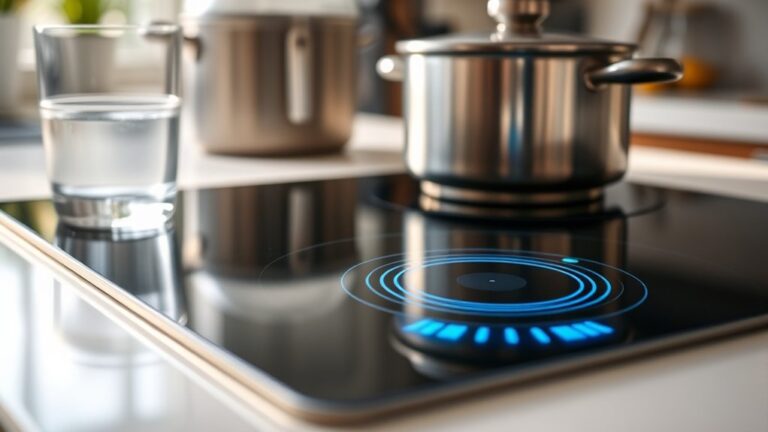
You’ll notice that induction cooktops create a magnetic field that interacts with certain cookware. This magnetic field induces eddy currents inside the cookware’s metal, producing heat directly where it’s needed.
Understanding this process helps explain why only magnetic materials work efficiently on induction surfaces.
Magnetic Field Generation
How exactly do induction cooktops generate heat using magnetic materials? When you place magnetic cookware on the cooktop, an alternating electric current flows through the cooktop’s coil beneath the surface. This current creates a rapidly changing magnetic field that interacts directly with the cookware’s magnetic material.
As a result, the cookware itself heats up, not the cooktop surface.
Here’s why this magnetic field generation matters to you:
1. You get instant heat without waiting, making cooking faster. 2. The cooktop stays cooler, reducing burn risks. 3. Energy efficiently transfers straight to your pot or pan.
4. You enjoy precise temperature control for better cooking results.
This magnetic magic is the heart of what makes induction cooking so efficient and safe.
Eddy Currents Explained
Although the magnetic field generated by the induction cooktop is invisible, it sets off tiny loops of electric current called eddy currents in the cookware. When you place a magnetic pot or pan on the cooktop, these currents flow within the metal. Because metals resist electric flow, the eddy currents encounter resistance, which generates heat directly inside the cookware.
This process is what cooks your food quickly and efficiently. Keep in mind, eddy currents only form in conductive materials that respond to magnetic fields. Aluminum, by itself, isn’t magnetic enough to create strong eddy currents, so it doesn’t heat well on induction.
That’s why many aluminum pans have a magnetic base layer to trigger these currents. Understanding eddy currents helps you see how induction delivers heat without a flame or electric coil.
Heat Transfer Mechanism
The heat you feel when cooking on an induction cooktop comes from the interaction between magnetic materials and the cooktop’s electromagnetic field. When you place a compatible pot or pan on the surface, the cooktop generates an alternating magnetic field. This field induces eddy currents in the magnetic cookware, creating resistance that converts electrical energy directly into heat.
This process heats your cookware efficiently and quickly.
Here’s why this matters to you:
- You get instant heat without waiting.
- Energy isn’t wasted heating the cooktop surface.
- Your food cooks evenly due to consistent heat.
- It’s safer, as the cooktop stays relatively cool.
Understanding this helps you appreciate why magnetic cookware works best with induction.
What Makes Cookware Compatible With Induction Technology
Because induction cooktops rely on magnetic fields to generate heat, cookware must have a magnetic base to work properly. You’ll want cookware made from ferromagnetic materials like cast iron or some types of stainless steel. Non-magnetic metals like pure aluminum or copper won’t work unless modified.
The magnetic field causes electric currents in the cookware’s base, producing heat directly in the pan.
Here’s a quick guide to what makes cookware compatible:
| Material | Magnetic Properties | Induction Compatibility |
|---|---|---|
| Cast Iron | Strongly Magnetic | Works Well |
| Stainless Steel | Varies (Some Magnetic) | Check Specific Type |
| Aluminum | Non-Magnetic | Not Compatible Without Modification |
Knowing this helps you pick cookware that heats efficiently on induction cooktops.
How Aluminum Cookware Becomes Induction-Ready
You might have noticed that pure aluminum won’t work on induction cooktops due to its lack of magnetic properties. To make aluminum cookware induction-ready, manufacturers use clever techniques that keep the benefits of aluminum while ensuring compatibility. Here’s how they do it:
Pure aluminum isn’t induction-compatible, so manufacturers use smart methods to make it work efficiently on induction cooktops.
- Bonding a magnetic layer: A magnetic base or plate is attached to the aluminum cookware.
- Cladding: Aluminum is sandwiched between layers of magnetic stainless steel.
- Coating with magnetic materials: Some use special ferromagnetic coatings on the base.
- Embedding magnetic discs: Small magnetic discs are inserted into the cookware’s base.
These methods let you enjoy aluminum’s excellent heat conduction while making your cookware induction-friendly, ensuring efficient and even cooking.
Why Magnetic Bases Make Aluminum Cookware Work on Induction
You rely on magnetic materials in the base to make aluminum cookware compatible with induction cooktops. These magnetic bases create the necessary electromagnetic field that heats your cookware efficiently. Without this magnetic layer, aluminum alone won’t respond to induction technology.
Role Of Magnetic Materials
Although aluminum itself isn’t magnetic and won’t work directly on induction cooktops, adding a magnetic base transforms its compatibility. This magnetic layer allows the cooktop’s electromagnetic field to induce the necessary heat by creating a magnetic circuit. When you use aluminum cookware with this base, it heats efficiently and evenly, combining aluminum’s excellent heat conduction with induction’s precise control.
Here’s why magnetic materials play a vital role:
- They enable the induction process by responding to magnetic fields.
- They improve energy efficiency, saving you money and time.
- They guarantee even heating, preventing hot spots and burning.
- They maintain the lightweight feel of aluminum while adding functionality.
Without magnetic materials, aluminum cookware simply can’t interact with induction cooktops.
Induction Compatibility Explained
Because aluminum isn’t naturally magnetic, it can’t generate the electromagnetic response induction cooktops require. To make aluminum cookware compatible, manufacturers add a magnetic base layer, usually made of stainless steel or iron. When you place this cookware on an induction cooktop, the magnetic base interacts with the cooktop’s electromagnetic field, creating the heat needed for cooking.
The aluminum body then efficiently distributes this heat across the surface, ensuring even cooking. Without this magnetic base, the cooktop wouldn’t recognize the pan, and no heat would be generated.
Common Types of Induction-Compatible Aluminum Pots and Pans
What makes aluminum pots and pans compatible with induction cooktops? It’s all about the base. Pure aluminum isn’t magnetic, so manufacturers add a magnetic stainless steel or iron layer to the bottom, making them induction-friendly.
When shopping, you’ll find these common types:
- Clad Aluminum Cookware – Aluminum core with a magnetic stainless steel base, offering quick heating and induction compatibility.
- Anodized Aluminum Cookware – Treated aluminum with a magnetic base, giving durability and a sleek finish.
- Aluminum Cookware with Magnetic Discs – Standard aluminum pots enhanced with magnetic plates for induction use.
- Hybrid Cookware – Combines aluminum’s heat conduction with a fully magnetic exterior, perfect for induction.
These options give you versatility and efficiency on your induction stove while enjoying aluminum’s lightweight feel.
Pros and Cons of Using Aluminum Cookware on Induction Stoves
You’ll find that aluminum cookware isn’t naturally magnetic, which affects its compatibility with induction stoves. However, its durability and excellent heat efficiency make it a popular choice when designed with the right base.
Let’s explore the key pros and cons to help you decide if aluminum works for your induction setup.
Aluminum’s Magnetic Compatibility
Aluminum cookware doesn’t naturally work with induction cooktops because it lacks the magnetic properties required to generate heat through induction. You’ll find that without a magnetic base, the cooktop won’t recognize your aluminum pans, leaving you frustrated and unable to cook efficiently.
Here’s what you should know about aluminum’s magnetic compatibility:
- Aluminum alone won’t activate the induction surface, making it incompatible by default.
- You might feel limited if you’re set on using your favorite aluminum pots.
- Some aluminum cookware includes a magnetic stainless steel base to solve this issue.
- Without that base, you’ll waste time and energy trying to get your induction cooktop to work.
Understanding this helps you avoid disappointment and choose cookware that truly fits your needs.
Durability and Heat Efficiency
Since aluminum cookware often needs a magnetic base to work on induction cooktops, it’s important to weigh how this affects durability and heat efficiency. You’ll find that the added magnetic layer, usually stainless steel, can enhance durability by protecting the aluminum core from warping and damage. However, this extra layer may reduce the overall heat conduction slightly because stainless steel doesn’t conduct heat as well as aluminum.
On the bright side, aluminum’s natural ability to heat up quickly and evenly still benefits you, ensuring fast cooking times and consistent results. Just remember, while the magnetic base improves compatibility and sturdiness, it might slightly compromise the pure heat efficiency you’d get from bare aluminum cookware on traditional stovetops.
How to Test If Your Aluminum Cookware Works on Induction
If you want to know whether your cookware is compatible with an induction cooktop, a simple magnet test can give you a quick answer. Induction cooktops require magnetic materials to generate heat, so aluminum alone usually won’t work unless it has a magnetic base.
Here’s how to test your cookware:
- Grab a small magnet from your fridge or toolbox.
- Press the magnet firmly against the bottom of your aluminum cookware.
- If the magnet sticks strongly, your cookware will work on induction.
- If the magnet doesn’t stick or barely holds, your cookware isn’t induction-compatible.
This test is quick and reliable, saving you from unnecessary frustration and helping you pick the right pots and pans for your induction stove.
Best Cookware Alternatives to Aluminum for Induction Cooking
Though aluminum cookware is popular, it often falls short on induction cooktops because it lacks magnetic properties. If you want cookware that works seamlessly with induction, consider cast iron, stainless steel with a magnetic base, or enameled cast iron.
Cast iron heats evenly and retains heat well, making it perfect for slow cooking. Stainless steel with a magnetic core offers durability and quick heating without reacting with food. Enameled cast iron provides the benefits of cast iron but with an easy-to-clean surface.
You can also look for multi-ply cookware, which layers aluminum or copper with magnetic stainless steel to combine excellent heat conduction with induction compatibility. Choosing these alternatives guarantees efficient cooking and avoids the frustration of poor heat response on your induction stove.
Maintaining Aluminum Cookware on Induction Stoves
While alternatives like cast iron and stainless steel offer better compatibility with induction cooktops, many still prefer aluminum cookware for its lightweight and excellent heat conduction. To keep your aluminum cookware in top shape on induction stoves, you need to be proactive and careful.
Aluminum cookware remains popular for its lightness and heat conduction, but requires careful care on induction stoves.
Here’s how you can maintain it effectively:
- Use induction-compatible discs to prevent damage and ensure even heating.
- Avoid overheating to protect the aluminum coating and prevent warping.
- Clean gently with non-abrasive sponges to preserve the surface and avoid scratches.
- Dry thoroughly after washing to prevent oxidation and discoloration.
Where to Buy Quality Induction-Ready Aluminum Cookware
Wondering where to find quality induction-ready aluminum cookware that combines performance with durability? Start by exploring reputable kitchenware brands like All-Clad, Calphalon, and Cuisinart, known for their reliable induction-compatible aluminum lines.
Online retailers such as Amazon and Williams Sonoma offer extensive selections and customer reviews to help you make an informed choice. Don’t overlook specialty stores or local kitchen supply shops where you can see products firsthand.
When shopping, look for cookware with a magnetic stainless steel base or layers that guarantee induction compatibility. Checking warranties and return policies is smart, so you can buy confidently.
Frequently Asked Questions
Can Aluminum Cookware Affect the Taste of Food?
Aluminum cookware can sometimes affect your food’s taste, especially if it’s uncoated and reacts with acidic ingredients. Using anodized or coated aluminum helps prevent this, so your meals stay flavorful without any metallic aftertaste.
Is Aluminum Cookware Safe for People With Metal Allergies?
If you have metal allergies, aluminum cookware is usually safe since it rarely causes reactions.
However, if your allergy is severe, you might want to choose non-metal or coated options to avoid any risk.
How Does Aluminum Cookware Compare in Weight to Other Materials?
You’d think aluminum feels like a brick, but it’s actually much lighter than cast iron or stainless steel.
You’ll easily lift and maneuver it, making cooking less of a workout and more of a breeze.
Can Aluminum Cookware Be Used on Other Cooktop Types?
Yes, you can use aluminum cookware on gas, electric, and ceramic cooktops without any issues. It heats up quickly and evenly, making it a versatile choice for most cooking surfaces except induction.
Does Aluminum Cookware Require Special Cleaning Products?
You don’t need special cleaning products for aluminum cookware, but coincidence has it that gentle soaps and non-abrasive sponges work best. Harsh cleaners can dull the finish, so you’ll keep your pots looking great by cleaning thoughtfully.
Conclusion
If you want your aluminum cookware to work on induction cooktops, you’ll need that magnetic base to bridge the gap. Without it, your pan’s like a square peg in a round hole—no heat, no cooking. Testing your cookware is simple.
If aluminum isn’t cutting it, there are plenty of great alternatives. With the right care and a little know-how, you’ll have your kitchen humming smoothly in no time. Understanding how aluminum cookware works on induction cooktops is key to making the best choice for your cooking needs.