Are Induction Cooktops Safe and How to Use Them
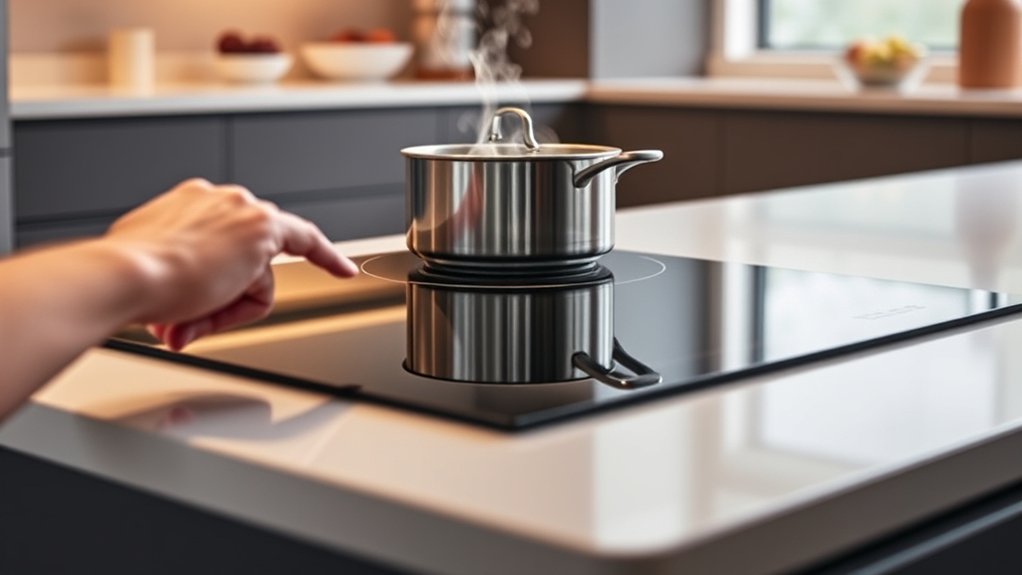
Induction cooktops are safe and efficient kitchen appliances, ideal for modern cooking. They work by using magnetic fields to heat compatible cookware like cast iron or stainless steel directly.
This method keeps the cooktop surface cooler, significantly reducing the risk of burns and accidents.
Built-in safety features such as auto shut-off and child locks offer additional protection for users. Proper precautions and regular cleaning are essential to maintain their performance and safety.
Using induction cooktops correctly ensures efficient, safe cooking every time.
There is much more to learn about their safety, use, and care to maximize benefits. Understanding these aspects helps you enjoy the convenience and reliability induction cooktops provide in your kitchen.
Key Takeaways
- Induction cooktops heat cookware directly using electromagnetic fields, making the surface cooler and reducing burn risks. Use only flat, induction-compatible cookware with clean, smooth bottoms for efficient and safe operation.
- Built-in safety features like auto shut-off, overheat protection, and child locks enhance user safety during cooking. Avoid placing metal objects on the cooktop and ensure proper electrical installation to prevent hazards.
- Regular cleaning after cooling and professional servicing for persistent issues maintain safe, reliable cooktop performance.
How Do Induction Cooktops Work?
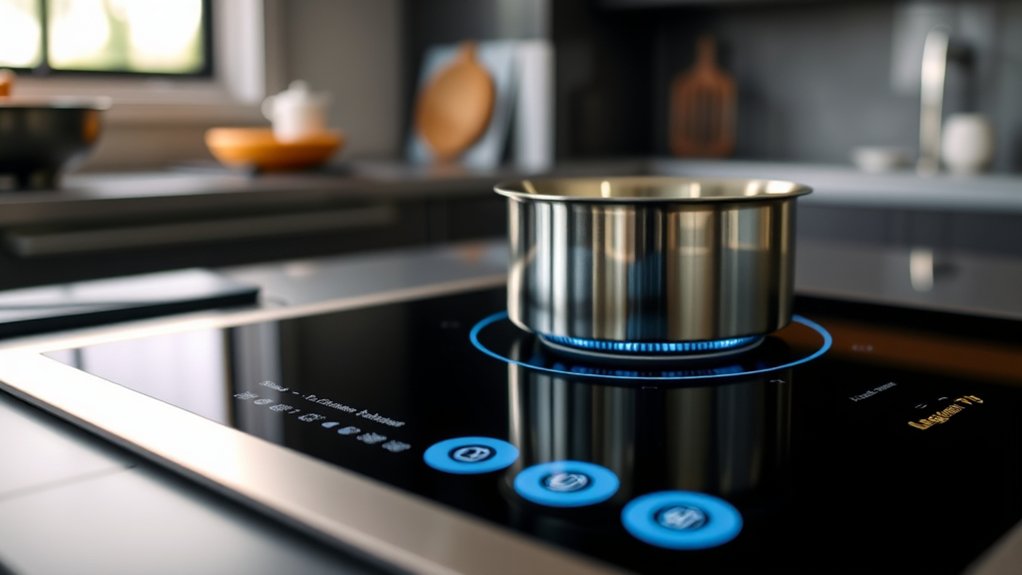
Although induction cooktops may look like traditional stoves, they work quite differently by using electromagnetic fields to heat your cookware directly. When you turn on the cooktop, an electric current flows through a coil beneath the surface, creating a magnetic field. This magnetic field induces electric currents, called eddy currents, in your pot or pan.
Those currents generate heat within the cookware itself, not the cooktop surface. This means your cookware heats up quickly and efficiently while the cooktop remains relatively cool. For this to work, your pots and pans need to be made of ferromagnetic materials like cast iron or stainless steel.
If your cookware isn’t compatible, the cooktop won’t heat it, so you’ll need to switch to induction-ready pieces.
Are Induction Cooktops Safe to Use?
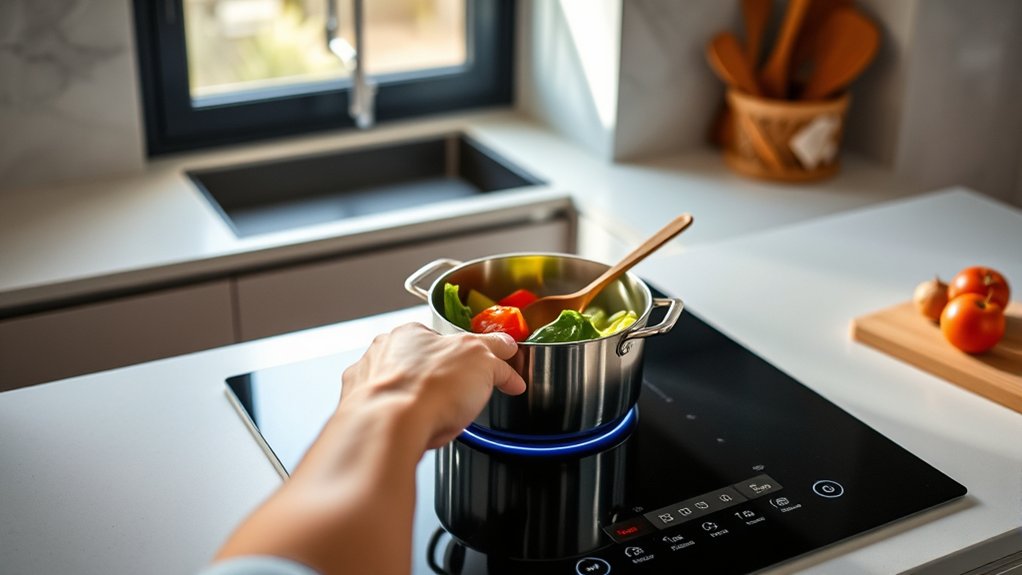
Since induction cooktops heat cookware directly without warming the surface as much, they reduce the risk of burns and accidental fires. You’ll find they’re generally safer than traditional gas or electric stoves because the cooktop itself stays cooler. However, safety depends on proper use and quality cookware.
You should also keep a few things in mind:
- Use only induction-compatible pots and pans to avoid damage or malfunction.
- Avoid placing metal objects like knives or spoons on the cooktop—they can heat up unexpectedly.
- Make sure your cooktop has built-in safety features such as auto shut-off or overheat protection for added peace of mind.
Are Induction Cooktops Safe Around Children and Pets?
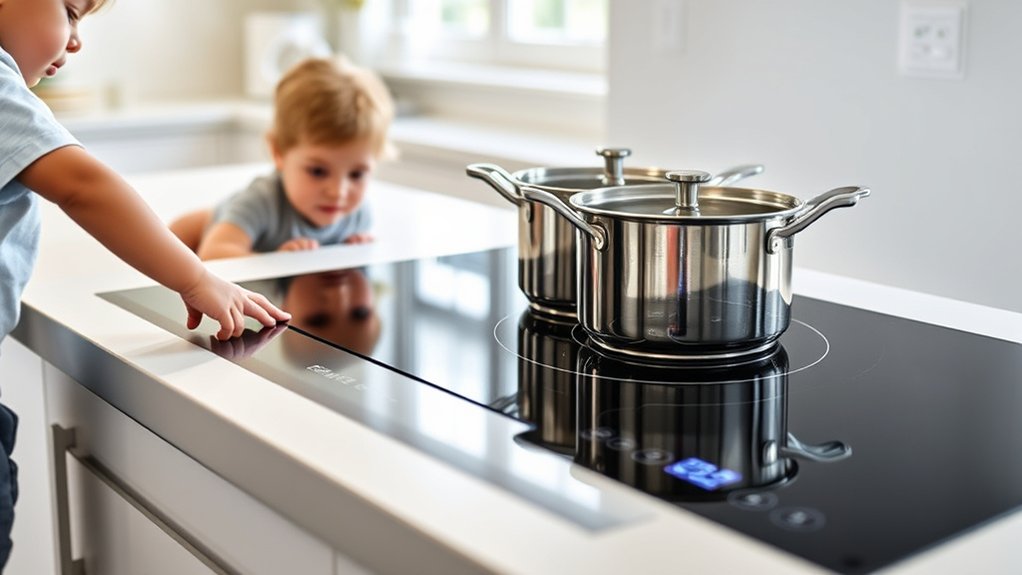
You might wonder if induction cooktops are safe around children and pets. Luckily, many models include heat safety features and child lock functions to help prevent accidents.
Let’s explore how you can keep your kitchen pet-proof and kid-friendly with these tools.
Heat Safety Features
When you use an induction cooktop, the surface stays much cooler than traditional stovetops, making it safer for children and pets. The cooktop only heats the pot or pan, so accidental touches to the surface won’t cause burns like with gas or electric burners.
Still, it’s wise to stay cautious around hot cookware.
Here are key heat safety features to keep in mind:
- Residual heat indicators: They show if the surface is still hot after cooking.
- Automatic shut-off: The cooktop turns off if it detects no cookware or overheating.
- Precise temperature control: Helps prevent overheating and reduces burn risks.
Child Lock Functions
The heat safety features on induction cooktops considerably reduce burn risks, but keeping curious children and pets safe requires additional precautions. One key feature to use is the child lock function. This lets you disable the cooktop controls temporarily, preventing little ones from accidentally turning it on or changing settings.
Activating the child lock is usually as simple as holding down a specific button or combination of buttons. When locked, the cooktop won’t respond to touch, so you don’t have to worry about unintended burns or kitchen mishaps. Make it a habit to engage the child lock whenever you step away or finish cooking.
This straightforward step helps you maintain a safer kitchen environment, giving you peace of mind around children and pets.
Pet-Proof Kitchen Tips
Although induction cooktops generate less ambient heat than traditional stoves, you still need to take precautions to keep pets safe in the kitchen. Pets might not understand that the cooktop surface can get hot, especially right after cooking. To avoid accidents, create a pet-safe zone around your induction cooktop.
Here are some quick tips:
- Use baby gates or pet barriers to keep curious pets out of the kitchen while cooking.
- Always turn off the cooktop immediately after use; residual heat can still cause burns.
- Never leave pots unattended, as pets might jump or knock them over, risking spills or injury.
What Health Risks Are Associated With Induction Cooking?
Since induction cooktops use electromagnetic fields to generate heat, you might wonder if these fields pose any health risks. The good news is that the electromagnetic fields produced are low-frequency and localized, which means they don’t penetrate far beyond the cookware.
Studies show that for most people, using induction cooktops is safe and doesn’t increase health risks. However, if you have a pacemaker or other electronic medical device, it’s wise to consult your doctor before using one, as electromagnetic interference could be a concern.
Also, induction cooktops don’t emit open flames or combustion gases, so they avoid risks linked to gas stoves, like carbon monoxide. Overall, with normal use, induction cooking poses minimal health risks to you and your family.
How to Choose Safe Cookware for Induction Cooktops
How can you guarantee your cookware works safely and efficiently with an induction cooktop? First, you need to choose the right materials. Induction cooktops work by generating a magnetic field, so your pots and pans must be magnetic.
Guarantee safe, efficient cooking by choosing cookware with magnetic materials for induction cooktops.
Here’s what to look for:
- Magnetic Base: Use cookware made from cast iron, magnetic stainless steel, or carbon steel.
- Flat, Smooth Bottom: Ensure the base is flat and smooth to maintain full contact with the cooktop for even heating.
- Size Compatibility: Pick cookware that matches the size of your induction burner to avoid energy waste and uneven cooking.
You can test your cookware with a magnet—if it sticks firmly, it’s induction-compatible. This simple step keeps your cooking safe and efficient.
Preventing Burns and Injuries When Using Induction Cooktops
To prevent burns and injuries, you’ll want to handle your induction cooktop carefully and stay aware of heat levels. Always use pot holders or mitts when moving cookware, and never touch the cooktop surface immediately after use.
Paying close attention to these safety tips keeps your cooking experience safe and comfortable.
Safe Handling Techniques
Although induction cooktops heat up quickly and efficiently, you need to handle them carefully to avoid burns and injuries. Here are some safe handling techniques to keep in mind every time you cook:
- Always use cookware with flat bottoms and handles that stay cool to prevent accidental burns.
- Avoid sliding pots and pans across the cooktop surface to reduce scratches and maintain a stable cooking area.
- Keep your hands and utensils away from the cooking zone while the cooktop is in use, even if it’s off, as residual heat might still be present.
Heat Awareness Tips
When you use an induction cooktop, staying aware of heat levels can prevent serious burns and injuries. Remember that although the cooktop surface itself doesn’t get as hot as traditional stoves, the cookware and surrounding areas can still reach high temperatures. Always use oven mitts or pot holders when handling pots and pans.
Avoid touching the cooking zone immediately after use, as residual heat can linger. Keep children and pets away from the cooktop while it’s in use and cooling down. Use cookware that matches the burner size to minimize heat spread.
Finally, pay attention to any warning indicators your cooktop provides, such as heat sensors or timers, to keep track of hot surfaces and avoid accidents.
How to Use and Care for Your Induction Cooktop Without Damage
Since induction cooktops use magnetic fields to heat cookware directly, you’ll want to handle them with care to avoid damage. To keep your cooktop functioning smoothly, always use cookware that’s induction-compatible and has a flat bottom. Avoid sliding pots and pans across the surface to prevent scratches.
Handle induction cooktops with care by using flat, induction-compatible cookware and avoiding sliding pots to prevent damage.
Also, never place empty cookware on the cooktop when it’s on, as this can overheat and damage both the pan and the cooktop.
Here are a few tips to protect your induction cooktop:
- Use cookware with smooth, clean bottoms to avoid scratching.
- Lift pots and pans instead of sliding them when moving.
- Avoid dropping heavy items on the cooktop surface to prevent cracks.
How to Clean and Maintain Your Induction Cooktop Safely
To keep your induction cooktop performing at its best, you need to clean it regularly and handle it with care. Always wait until the surface cools before wiping it down. Use a soft cloth with mild detergent or a specialized cooktop cleaner to avoid scratches.
Avoid abrasive pads or harsh chemicals. For tougher stains, a scraper designed for glass surfaces works well.
| Cleaning Step | Recommended Tool | Tip |
|---|---|---|
| Daily wipe-down | Soft microfiber cloth | Use gentle circular motions |
| Stubborn residue | Glass scraper | Hold at 30° angle |
| Regular polish | Cooktop cleaner | Follow product instructions |
Maintain your cooktop by avoiding spills and cleaning promptly to extend its lifespan.
What to Do When Your Induction Cooktop Malfunctions
If your induction cooktop starts acting up, you can often fix common issues by checking the power connection or resetting the unit.
Pay attention to error codes or unusual sounds that might signal a bigger problem.
When in doubt, don’t hesitate to contact a professional to avoid further damage or safety risks.
Troubleshooting Common Issues
When your induction cooktop malfunctions, you’ll want to quickly identify the cause to avoid disruption in your cooking routine. Start by checking if your cookware is compatible—induction requires magnetic materials like cast iron or stainless steel.
Next, ensure the cooktop surface and cookware bottoms are clean and dry since dirt or moisture can interfere with operation. Finally, verify that the cooktop is properly plugged in and that the circuit breaker hasn’t tripped.
Here are some quick troubleshooting tips:
- Confirm your pots and pans are induction-compatible.
- Wipe the cooktop and cookware clean to remove any residue.
- Check power connections and reset your circuit breaker if needed.
Following these steps often resolves common issues without hassle.
When To Seek Help
Although many minor issues with your induction cooktop can be fixed on your own, you should seek professional help if problems persist after basic troubleshooting or if you notice unusual noises, smells, or error codes. These signs often indicate electrical or internal component issues that require expert attention.
Don’t attempt to open or repair the cooktop yourself, as this can void warranties and pose safety risks. If your cooktop suddenly shuts off, displays persistent errors, or shows signs of overheating, unplug it immediately and contact a certified technician. Regular maintenance checks by professionals can also prevent malfunctions.
Prioritize safety by addressing serious problems promptly rather than risking further damage or injury. When in doubt, always rely on trained experts to handle repairs.
Induction Cooktops vs. Gas and Electric Stoves: Safety and Efficiency
While choosing a cooking appliance, you’ll notice that induction cooktops offer distinct advantages over gas and traditional electric stoves in both safety and efficiency. Induction cooktops use magnetic fields to heat cookware directly, so the surface stays cool to the touch, reducing burn risks. They’re also more energy-efficient, as less heat escapes into the air, saving you money and keeping your kitchen cooler.
Here’s why induction might be your best pick:
- Safer operation: No open flames or hot coils means fewer fire hazards.
- Faster cooking: Heats up quickly, cutting your cooking time.
- Easy cleanup: The flat, cool surface prevents spills from burning onto it.
With these benefits, induction cooktops stand out as a safer, smarter choice.
How to Maximize Safety When Installing Your Induction Cooktop
To maximize safety during your induction cooktop installation, you need to guarantee proper electrical connections and secure placement. First, ensure your kitchen wiring handles the cooktop’s voltage and amperage requirements; consult a licensed electrician if you’re unsure. Next, install the cooktop on a stable, heat-resistant surface to prevent shifting or damage.
Avoid placing it near water sources to reduce electrical hazards. Use the manufacturer’s mounting brackets and follow their guidelines precisely. Double-check that ventilation around the cooktop meets recommendations to prevent overheating.
Finally, test all functions before regular use to confirm everything works correctly. By paying close attention to these steps, you’ll create a safer cooking environment and protect your investment in your new induction cooktop.
Frequently Asked Questions
Can Induction Cooktops Interfere With Medical Devices Like Pacemakers?
Yes, induction cooktops can interfere with pacemakers, but the risk is very low. If you have a pacemaker, keep a safe distance and consult your doctor to guarantee you use the cooktop safely without any health issues.
Are Induction Cooktops Energy-Efficient Compared to Other Cooking Methods?
Yes, induction cooktops are energy-efficient because they heat cookware directly, reducing heat loss. You’ll save energy compared to gas or electric stoves, making your cooking faster and more eco-friendly while keeping your kitchen cooler.
What Types of Cookware Are Incompatible With Induction Cooktops?
You can’t use glass, aluminum, copper, or non-magnetic stainless steel cookware on induction cooktops because they won’t heat properly.
Stick to cast iron or magnetic stainless steel to guarantee your cookware works efficiently with induction.
Can Induction Cooktops Be Used Outdoors or in RVS?
You can use induction cooktops outdoors or in RVs, as long as you have a stable power source. In fact, 60% of RV owners prefer induction for its efficiency and portability, making it a smart choice for travel cooking.
How Fast Do Induction Cooktops Heat Compared to Traditional Stoves?
You’ll find induction cooktops heat much faster than traditional stoves, often boiling water in half the time. They use electromagnetic energy to directly heat pots, making cooking quicker and more efficient for you.
This direct heating method reduces energy loss and speeds up the cooking process. Traditional stoves heat indirectly, which can take longer and use more energy.
With induction cooktops, you get precise temperature control and faster response times. This makes them a popular choice for both home cooks and professional chefs.
Conclusion
Just like a skilled conductor guiding an orchestra, you can master your induction cooktop with ease and confidence. Its safety features and precise control put you in charge, minimizing risks for your family and pets. By choosing the right cookware and keeping your cooktop clean, you’ll enjoy a cooking experience as smooth as a well-rehearsed symphony.
Embrace induction cooking, and let safety and efficiency take center stage in your kitchen. With proper use, induction cooktops are not only safe but also energy-efficient and convenient. Incorporating these tips will help you maximize the benefits of your induction cooktop while ensuring a secure cooking environment.