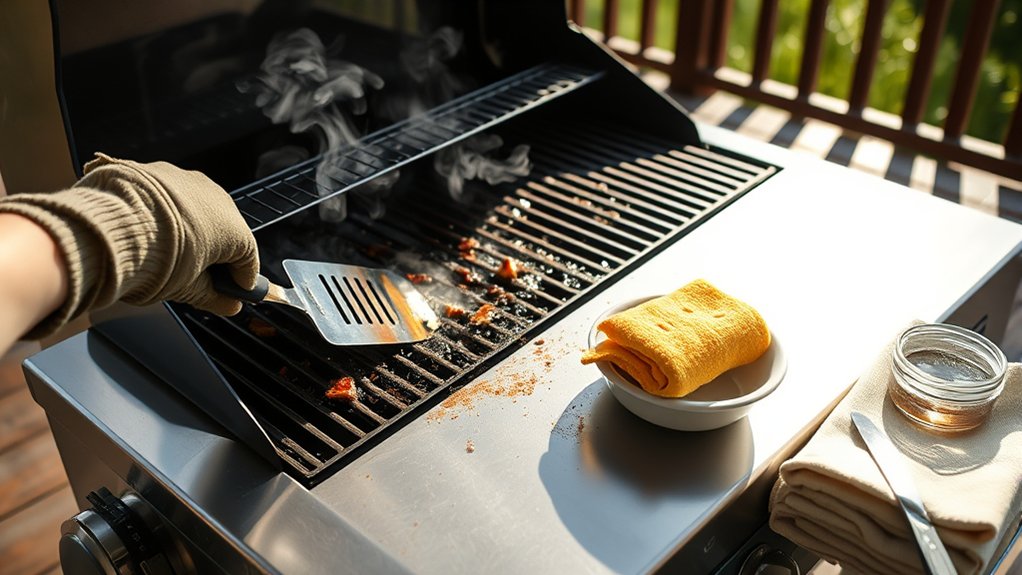
7 Easy Steps to Clean a Flat Top Grill Without Chemicals
Start by scraping off food residue and loose debris from your flat top grill with a grill scraper. This essential step ensures you remove any stuck-on particles before cleaning.
Next, warm the grill on medium-high heat for 10-15 minutes to loosen grease and make the cleaning process easier.
Use a wooden or nylon scraper to remove any remaining buildup gently. For tough spots, apply a baking soda paste to break down stubborn grease naturally.
Spray vinegar to naturally disinfect the surface, then rinse with warm water.
Dry the grill thoroughly to prevent rust from forming.
Finish by maintaining your grill weekly using these natural cleaning methods to keep it in top shape.
Keep following for more easy, effective tips on flat top grill care.
Key Takeaways
- Heat the grill on medium-high for 10-15 minutes to soften grease and stuck-on food naturally.
- Scrape off residue using a wooden or nylon scraper to avoid surface damage.
- Apply a baking soda paste on tough spots and scrub gently with a non-abrasive sponge.
- Rinse the grill with warm water and dry thoroughly to prevent rust.
- After cooking, sprinkle coarse salt and scrub with a damp cloth or lemon for easy maintenance.
Clear Away Food Residue and Loose Debris From Your Grill
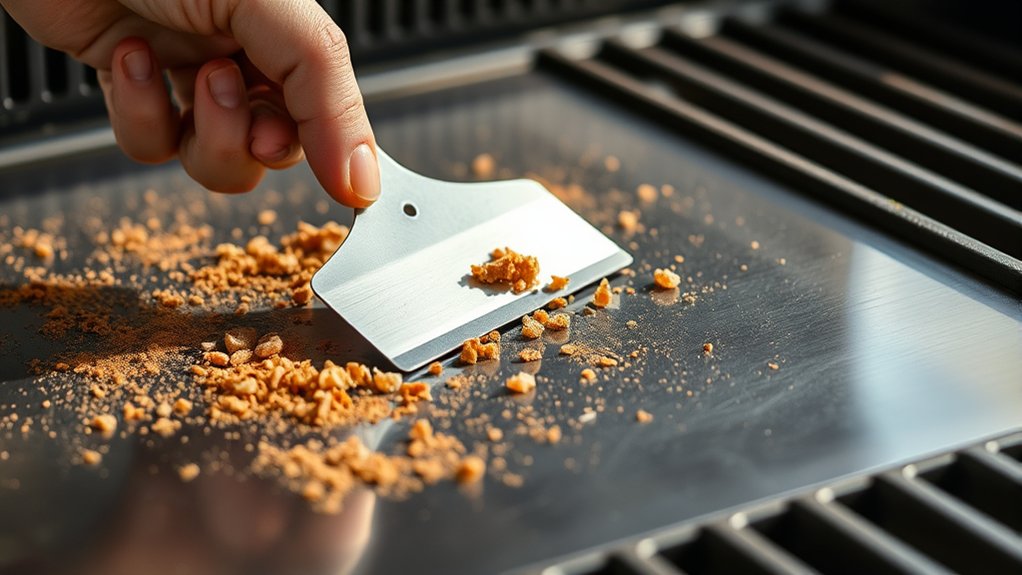
How do you begin cleaning your flat top grill without harsh chemicals? Start by removing any food residue and loose debris using a grill scraper or spatula. Gently scrape the surface to lift off stuck-on bits, being careful not to damage the cooking surface.
Next, wipe away the loosened debris with a damp cloth or paper towel. This step clears the grill of loose particles that could interfere with deeper cleaning later. Don’t forget to check the edges and corners where crumbs often accumulate.
Clearing away these remnants ensures your grill is ready for the next step and helps maintain food safety. By tackling the surface debris first, you make the whole cleaning process more efficient and effective—without relying on chemicals.
Heat the Flat Top Grill to Loosen Stuck-On Grease
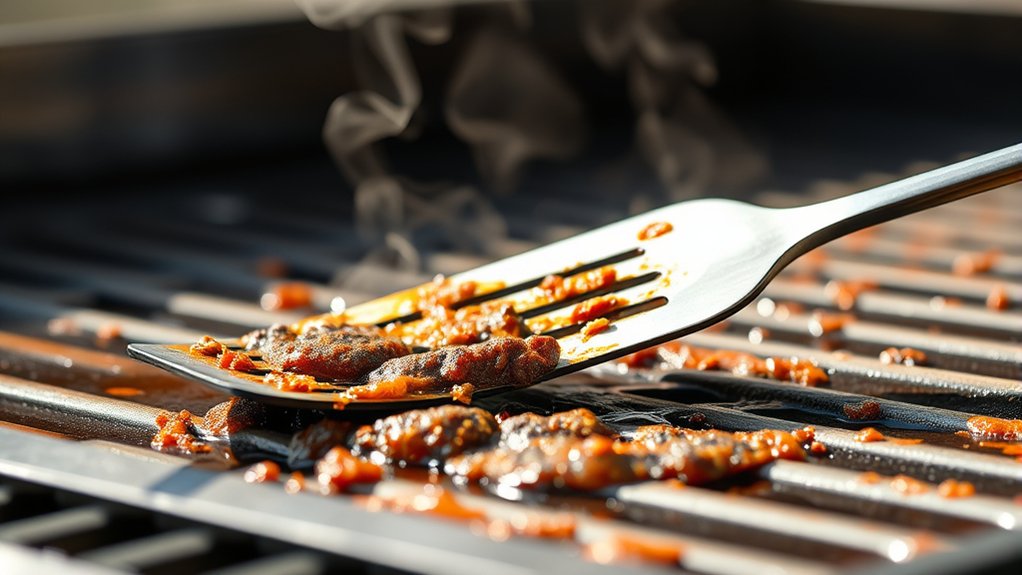
Before tackling stubborn grease, you’ll want to heat your flat top grill until it’s hot enough to loosen residue effectively. Turn the grill on to medium-high heat and let it warm up for about 10 to 15 minutes. Heating softens the stuck-on grease, making it easier to remove without harsh chemicals.
You’ll notice the surface becoming slick and oily as the grease melts. Be sure to keep an eye on the temperature to avoid overheating, which can damage the grill surface or create safety hazards. Once heated, the loosened grease will be ready for scraping and wiping away in the next step.
Heating is essential because it breaks down buildup naturally, so don’t skip this vital part of your chemical-free cleaning routine.
Scrape the Grill Surface Using a Wooden or Nylon Scraper
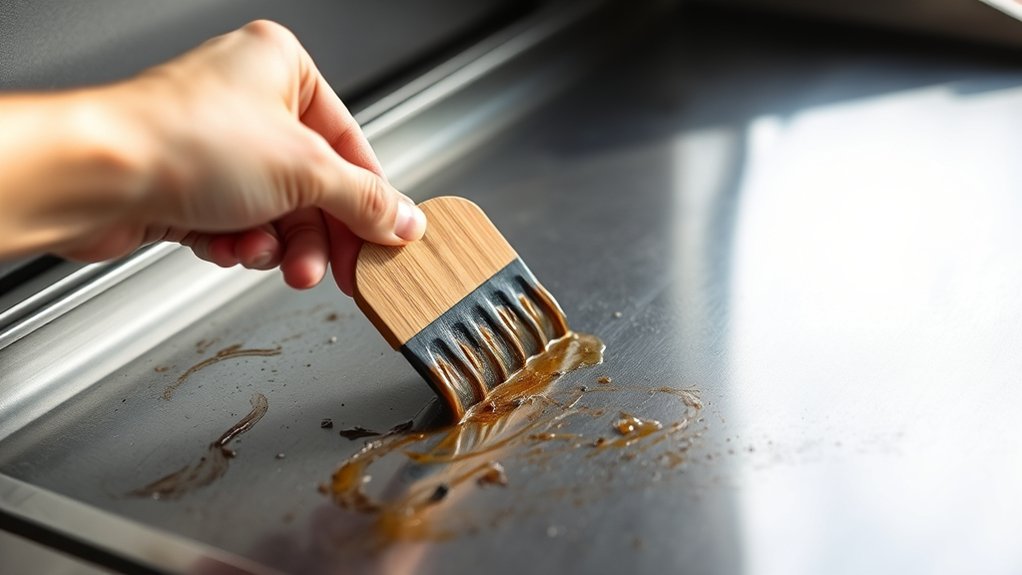
Once your grill is heated and the grease has softened, it’s time to scrape off the loosened residue. Grab a wooden or nylon scraper—these tools are gentle enough to avoid damaging your grill’s surface while still effective at removing stuck-on grime. Hold the scraper at a slight angle and push firmly across the grill, working in small sections.
You’ll notice the residue coming off in thin layers; keep scraping until most of the buildup is gone. Avoid using metal scrapers here, as they can scratch the surface. Regularly wipe the scraper clean to prevent spreading grease back onto the grill.
This step clears the way for a cleaner surface, making your grill ready for the next cleaning stage without resorting to harsh chemicals.
Tackle Tough Spots With Baking Soda and Water
Although scraping removes most residue, some stubborn spots may still cling to your grill’s surface. To handle these, mix baking soda with just enough water to create a thick paste.
Apply the paste directly onto the tough spots and let it sit for about 10 to 15 minutes. The mild abrasive nature of baking soda will help break down grease and burnt-on food without damaging your grill.
After the wait, use a non-abrasive scrubber or sponge to gently scrub the area. Rinse the surface clean with warm water and wipe it dry with a clean cloth.
This simple, natural method tackles tough grime effectively, keeping your flat top grill spotless without relying on harsh chemicals or synthetic cleaners.
Disinfect the Grill Naturally Using Vinegar
Since vinegar naturally kills bacteria and cuts through grease, it’s a perfect choice to disinfect your flat top grill without harsh chemicals. Start by pouring white vinegar into a spray bottle. Spray a generous amount across the entire grill surface, focusing on areas you cleaned with baking soda.
Let the vinegar sit for about 5 to 10 minutes; this gives it time to break down any remaining grease and kill bacteria. You’ll notice the vinegar bubbling as it works, which means it’s doing its job. After the wait, you can use a clean cloth or a grill scraper to wipe away any loosened residue.
This natural disinfectant keeps your grill sanitary and safe without leaving harmful chemical residues behind.
Rinse the Grill With Warm Water and Dry Thoroughly
You’ll want to rinse your grill with warm water to break down any leftover residue effectively. Use a gentle but thorough technique to guarantee all cleaning agents wash away completely.
Finally, dry the grill thoroughly to prevent rust and keep it ready for your next cookout.
Importance Of Warm Water
Three key reasons make warm water essential when rinsing your flat top grill. First, warm water melts grease more effectively than cold water, helping you remove stubborn residues quickly. Second, it loosens food particles, making it easier to wipe the surface clean without harsh scrubbing.
Third, warm water helps prevent rust by drying faster, reducing moisture that can damage your grill. When you rinse, you’ll notice the surface feels smoother and cleaner, ready for drying. Using warm water also minimizes the amount of elbow grease you need, saving time and effort.
Effective Rinsing Techniques
Warm water not only helps break down grease but also prepares your grill for a thorough rinse. After scrubbing, pour or spray warm water over the surface to loosen remaining food particles and residue. Use a clean cloth or a non-abrasive sponge to wipe away loosened debris gently.
Make certain to rinse every corner and edge to prevent buildup. Avoid using cold water, as it can harden grease and make cleaning harder. If your grill has a grease trap, don’t forget to rinse it out too.
Once you’ve rinsed, wipe the grill surface again with a dry cloth to remove excess moisture. This step guarantees your grill is clean and ready for the final drying process, maintaining its quality without harsh chemicals.
Proper Drying Methods
Although rinsing removes most debris, drying your flat top grill thoroughly is essential to prevent rust and maintain its surface. After rinsing with warm water, don’t leave moisture to sit.
Instead, follow these simple steps:
- Use a clean, dry microfiber cloth to wipe the grill surface immediately. This absorbs water quickly and prevents water spots.
- Heat the grill on low for a few minutes to evaporate any remaining moisture. This step ensures even the smallest drops disappear.
- Once cool, apply a thin layer of cooking oil to the surface. This seals the metal, adding a protective barrier against rust.
Maintain Your Flat Top Grill by Cleaning Weekly With Natural Methods
How often you clean your flat top grill can make a big difference in its performance and lifespan. To keep it in top shape, clean your grill weekly using natural methods. After cooking, scrape off food residue with a metal spatula while the surface is still warm.
Then, sprinkle coarse salt over the grill and scrub with a damp cloth or half a lemon to loosen stuck-on grease. Rinse with a little water and wipe dry to prevent rust. Regular weekly cleaning prevents buildup, making each session easier and extending your grill’s life.
Frequently Asked Questions
Can I Use Salt Instead of Baking Soda for Cleaning?
Yes, you can use salt instead of baking soda to clean your grill. Salt acts as a natural abrasive, helping scrub away grime without chemicals.
Just sprinkle it on while the grill’s warm and scrub with a brush.
How Often Should I Reseason My Flat Top Grill?
You’ll want to give your flat top grill a little love every few months, especially after deep cleans or heavy use. This gentle refresh keeps it happy, shiny, and ready to deliver delicious meals without sticking or rust.
What Is the Best Way to Prevent Rust on My Grill?
To prevent rust on your grill, you’ll want to keep it clean and dry after each use, apply a thin layer of oil while it’s still warm, and store it in a dry place or cover it properly to block moisture.
Can I Clean My Flat Top Grill Immediately After Cooking?
You wouldn’t wash a cast iron skillet while it’s still blazing hot, right?
Similarly, you can clean your flat top grill right after cooking, but wait a bit for it to cool slightly to avoid warping or burns.
Are There Any Foods to Avoid Cooking on a Flat Top Grill?
You should avoid cooking highly acidic foods like tomatoes or citrus directly on your flat top grill, as they can damage the seasoning. Also, steer clear of overly delicate items that might stick or break apart easily.
These foods can compromise the surface and affect future cooking performance.
Choosing the right ingredients helps maintain your grill’s longevity and cooking quality.
Conclusion
Cleaning your flat top grill without chemicals is simple and effective. You might worry natural methods won’t be tough enough on grease, but heating the grill first and using baking soda tackles stubborn spots easily. Plus, vinegar disinfects without harsh fumes.
By following these easy steps weekly, you’ll keep your grill spotless and safe for cooking—no toxins needed. Give it a try; your grill and health will thank you! Using natural cleaning methods ensures a chemical-free kitchen and promotes safe cooking practices.