How to Use a Toaster Oven in 7 Easy Steps
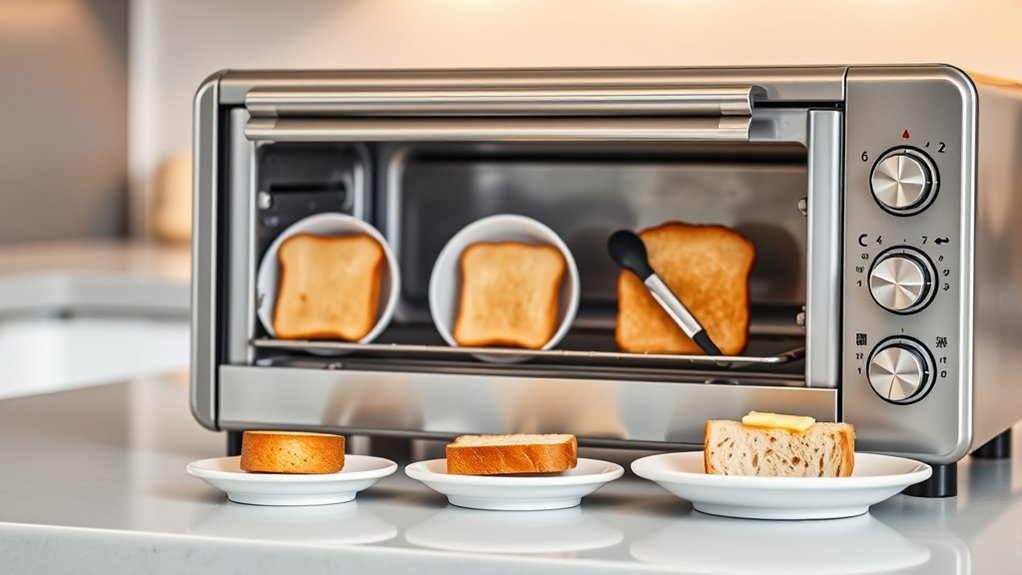
To use your toaster oven in 7 easy steps, start by placing it on a stable surface and plugging it in.
A toaster oven is a versatile kitchen appliance perfect for toasting, baking, broiling, and roasting small meals quickly and efficiently.
Choosing the right rack for your food is essential—middle for even cooking, top for crisping, bottom for roasting.
Pick cookware that’s oven-safe and fits inside the toaster oven.
Set the temperature and timer carefully to match your recipe requirements.
Use toast, bake, or broil modes as needed to achieve the best results.
Keep an eye on your food and adjust settings to avoid burning.
Finally, clean it regularly to keep it working well.
You’ll find even more handy tips ahead.
Key Takeaways
- Place the toaster oven on a stable surface, plug it in, and preheat according to the desired cooking mode.
- Select the appropriate rack position based on the food type and cooking method for even heat distribution.
- Use oven-safe cookware sized to fit the toaster oven interior, avoiding plastic or non-heat-resistant materials.
- Set the temperature and timer precisely, monitor cooking progress, and adjust as needed to prevent burning.
- After use, unplug the oven, let it cool, clean the crumb tray, interior, and door glass regularly for safety and maintenance.
Getting Started With Your Toaster Oven
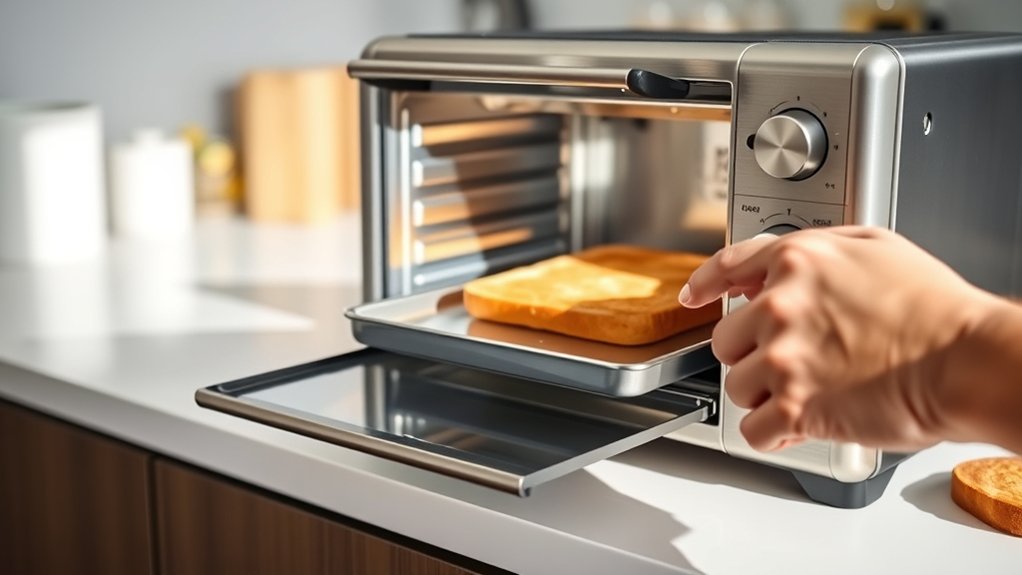
Before you begin using your toaster oven, make certain you place it on a stable, heat-resistant surface with enough space around it for proper ventilation. Plug it in and check the manual for any initial setup instructions—some models require a quick test run to burn off manufacturing residues. Familiarize yourself with the control panel, noting settings like temperature, timer, and function modes (toast, bake, broil).
Always preheat the toaster oven when the recipe calls for it, as this ensures even cooking. Keep the crumb tray clean by emptying it regularly to prevent smoke or fire hazards. Ultimately, avoid using oversized pans or foil that can block air circulation inside.
Following these steps ensures your toaster oven works efficiently and safely from the start.
Choose the Right Rack Position for Your Food
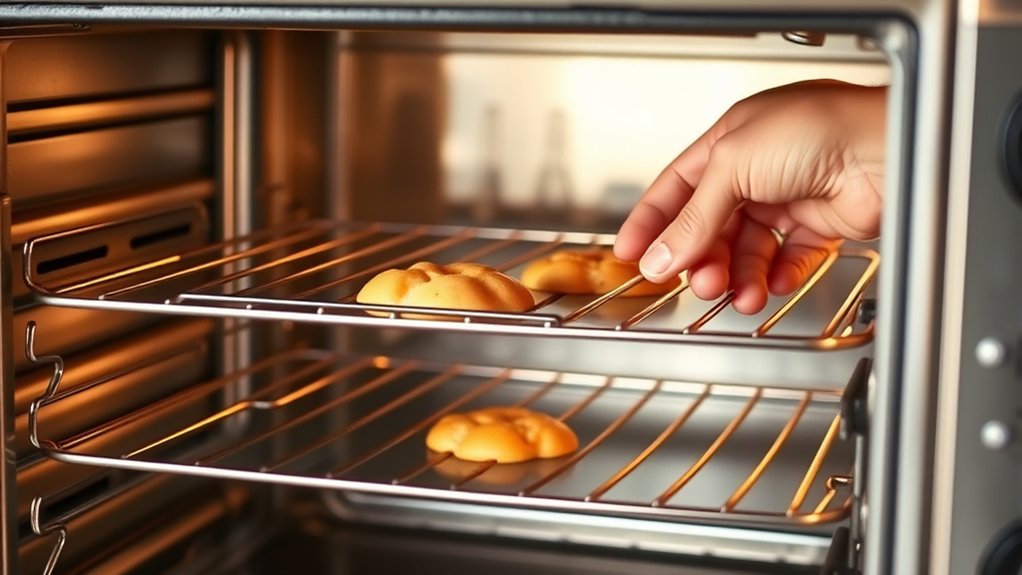
To get the best results, you’ll need to choose the right rack position in your toaster oven. Different rack levels affect how heat reaches your food, so consider what you’re cooking. Understanding these positions helps you cook evenly and avoid burning.
Rack Levels Explained
Where you place your food inside the toaster oven can make a big difference in how evenly it cooks. Most toaster ovens have three rack levels: top, middle, and bottom. The middle rack is your go-to spot for balanced heat and even cooking.
Use the top rack if you want more direct heat for browning or crisping the surface quickly. The bottom rack works best when you’re baking or roasting foods that need more heat from below, like pizzas or casseroles. Keep in mind that the closer your food is to the heating elements, the faster it will cook, so adjust cooking times accordingly.
Experiment with these rack levels to find what works best for your recipes and toaster oven model.
Food Type Considerations
How do you decide which rack position suits your food best? It relies on what you’re cooking. Different foods need varying heat intensities and air circulation.
Using the right rack guarantees even cooking and perfect results.
Here’s a quick guide to help you choose:
| Food Type | Recommended Rack Position |
|---|---|
| Toast and bagels | Top rack (closer to heating element) |
| Cookies and pastries | Middle rack (even heat distribution) |
| Roasting meats | Bottom rack (more space, slower heat) |
| Casseroles and reheated dishes | Middle or lower rack (gentle heat) |
Adjust based on your toaster oven’s wattage and size. This way, you’ll get the best texture and flavor every time!
Select Cookware Compatible With Your Toaster Oven
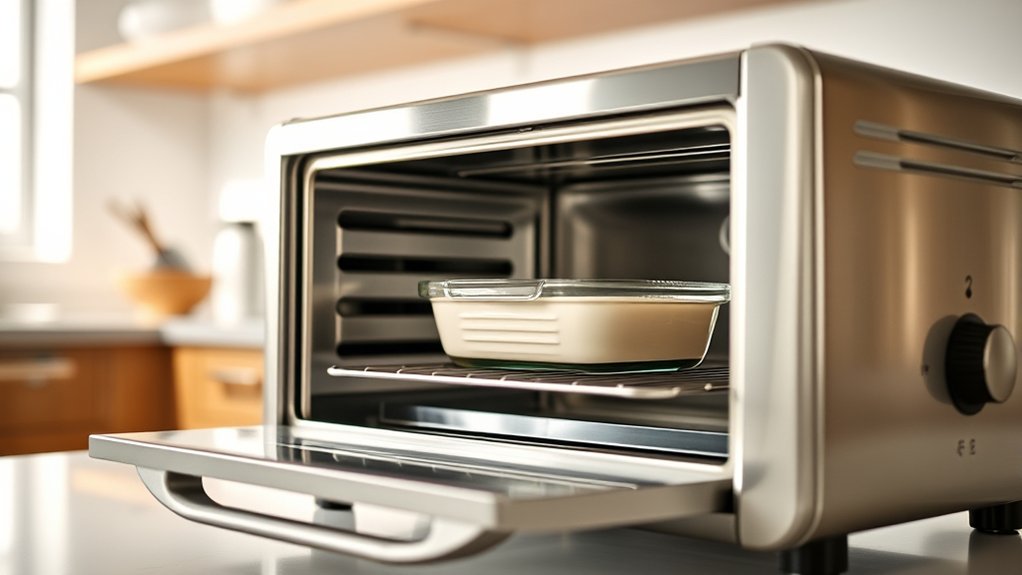
You’ll want to pick cookware made from materials that can handle high heat without warping or releasing toxins. Make sure your pans fit comfortably inside the toaster oven to allow proper air circulation for even cooking.
Choosing the right size and heat-resistant materials helps you get the best results every time.
Suitable Materials Overview
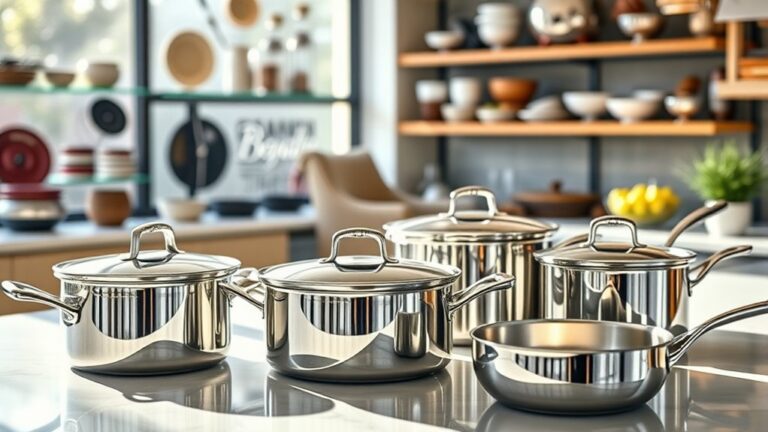
Although toaster ovens are versatile, not all cookware works well inside them. You’ll want to choose materials that can handle high heat without warping or releasing harmful chemicals. Metal pans, like stainless steel and cast iron, are excellent choices because they conduct heat evenly and withstand high temperatures.
Glass and ceramic dishes also work well but make sure they’re labeled oven-safe to avoid cracking. Avoid plastic or non-oven-safe materials, as they can melt or release toxins. Aluminum foil and disposable aluminum pans are handy for quick meals but use them carefully to prevent blocking air circulation.
Size And Shape Considerations
Since toaster ovens come in various sizes, selecting cookware that fits properly is essential to guarantee even cooking and safety. You want to measure the interior space before choosing pans or trays. Avoid oversized cookware that blocks air circulation or touches the heating elements, as this can cause uneven cooking or damage.
Opt for compact, low-profile pieces that leave room for heat to circulate freely. Also, consider the shape—round pans may not fit well if the oven has a square interior, so rectangular or square cookware often works best. If you plan to use racks or multiple levels, make sure your cookware fits comfortably on each tier without crowding.
Being mindful of size and shape helps you get the most out of your toaster oven every time.
Heat Resistance Importance
When selecting cookware for your toaster oven, prioritize materials that can withstand high temperatures without warping or releasing harmful chemicals. Choose bakeware made from heat-resistant glass, ceramic, or metal like stainless steel or cast iron. Avoid plastic, non-oven-safe silicone, or thin aluminum foil, as they can melt or emit toxins.
Also, check the manufacturer’s guidelines for maximum temperature limits to guarantee safety. Using appropriate cookware not only protects your toaster oven but also assures even cooking and prevents accidents. When in doubt, opt for products explicitly labeled “toaster oven safe.”
This way, you’ll extend your appliance’s lifespan and enjoy consistently great results without compromising your health. Remember, selecting the right cookware is essential for safe and efficient toaster oven use.
Set the Temperature and Timer Correctly
Before you start cooking, you’ll want to set the temperature and timer accurately to guarantee your food cooks evenly and safely. Check your recipe for the recommended temperature, then adjust your toaster oven’s dial or digital control to match it exactly. Avoid guessing, since too high heat can burn your food, while too low may leave it undercooked.
Next, set the timer based on your recipe’s suggested cooking time. Use the toaster oven’s built-in timer or an external one to keep track. Don’t forget to factor in preheating time if your toaster oven requires it.
Always stay nearby to monitor progress and adjust the timer if needed. Setting these controls correctly ensures you get perfect results every time.
Toast, Bake, and Broil in Your Toaster Oven
Now that you’ve set the temperature and timer correctly, you can start using your toaster oven’s main functions: toasting, baking, and broiling. To toast, place your bread or bagel on the rack or tray, select the toast setting, and watch as it crisps evenly.
For baking, use the bake setting and place your dish inside—perfect for small casseroles, cookies, or reheating leftovers. When broiling, position the rack close to the top heating element, select broil, and cook foods like meat or vegetables quickly for a nice char.
Always use oven-safe cookware and avoid overcrowding to guarantee even cooking. With these functions, your toaster oven becomes a versatile tool, handling many tasks quickly without heating your whole kitchen.
Keep an Eye on Your Food and Adjust as You Go
Although toaster ovens cook quickly, you’ll want to keep a close watch on your food to avoid burning or uneven cooking. Check your food periodically, especially near the end of the cooking time.
If you notice hotspots or uneven browning, rotate the tray or adjust the rack position. Lower the temperature slightly if food browns too fast but isn’t cooked inside.
Use this quick guide to help you adjust as you go:
| Issue | Solution |
|---|---|
| Food browning uneven | Rotate tray or change rack |
| Food burning edges | Lower temperature or time |
| Undercooked center | Increase cooking time slightly |
| Smoke or smell | Check for food debris |
| Uneven cooking | Use foil tent or preheat oven |
Stay attentive, and you’ll get perfectly cooked results every time.
Clean and Maintain Your Toaster Oven Regularly
Because food particles and grease can build up quickly, you should clean your toaster oven regularly to keep it working efficiently and safely. First, unplug the oven and let it cool completely before you start cleaning. Remove the crumb tray and empty it, then wash it with warm, soapy water.
Wipe down the interior walls and ceiling with a damp cloth or sponge, avoiding abrasive cleaners that can damage the surface. For stubborn stains, use a baking soda paste to gently scrub. Don’t forget to clean the door glass with a glass cleaner or vinegar solution.
Regularly check and wipe the heating elements carefully without applying too much pressure. Keeping your toaster oven clean not only extends its lifespan but also prevents unpleasant odors and potential fire hazards.
Frequently Asked Questions
Can I Use Aluminum Foil in My Toaster Oven?
Yes, you can use aluminum foil in your toaster oven, but don’t cover the entire rack or block air vents.
Make certain the foil doesn’t touch the heating elements to avoid fire hazards and guarantee even cooking.
Is It Safe to Leave a Toaster Oven Unattended?
No, you shouldn’t leave a toaster oven unattended. It can overheat or cause a fire if something goes wrong.
Always stay nearby and keep an eye on it while it’s in use to stay safe.
How Much Electricity Does a Toaster Oven Use?
Wondering about your toaster oven’s electricity appetite? It typically uses 1200 to 1800 watts per hour, so you’ll want to keep an eye on usage to avoid surprises on your energy bill.
Can I Cook Frozen Meals Directly in the Toaster Oven?
Yes, you can cook frozen meals directly in the toaster oven. Just make sure to adjust the temperature and cooking time according to the meal’s instructions, and preheat the oven for even cooking and better results.
What Are Common Toaster Oven Safety Tips?
Sure, you’ll definitely want to ignore safety tips—said no one ever. Keep your toaster oven clean, don’t overcrowd it, avoid metal near heating elements, and unplug it when not in use to prevent fires and accidents.
Conclusion
Now that you know how to use your toaster oven in just seven easy steps, you’re ready to enjoy quick, convenient meals.
Did you know that toaster ovens use up to 50% less energy than traditional ovens? That means you can save time and money while cooking delicious food.
Just remember to keep an eye on your food and clean your toaster oven regularly to make sure it works perfectly every time.
Happy cooking with your energy-efficient toaster oven! Embrace the convenience and versatility of your toaster oven for all your quick meal needs.