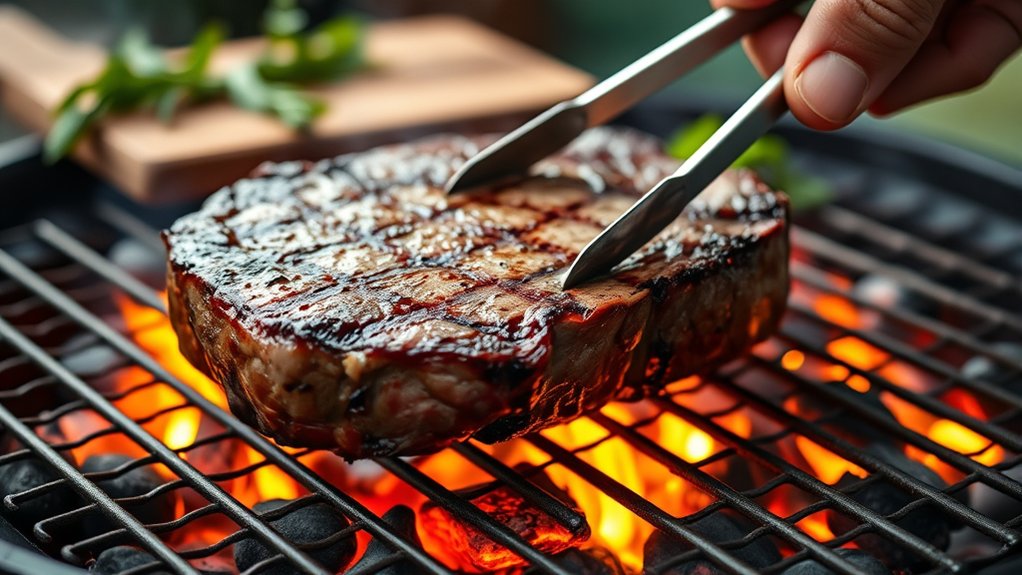
How Long to Grill a Ribeye Medium Rare in 7 Easy Steps
To grill a ribeye medium rare perfectly, start by choosing a well-marbled ribeye steak that is about 1 to 1.5 inches thick. This thickness ensures even cooking and a juicy interior.
Preheating your grill to high heat, around 450-500°F, is essential for a great sear.
Season the steak generously and let it come to room temperature before placing it on the grill.
Grill the ribeye for about 4-5 minutes on each side, flipping only once.
Use a meat thermometer to check the internal temperature, aiming for 130°F for medium rare.
After grilling, rest the steak for 5-10 minutes to allow the juices to redistribute.
Slice against the grain to maximize tenderness.
Follow these steps to master grilling a perfect medium rare ribeye every time.
Key Takeaways
- Preheat grill to 450-500°F (232-260°C) for optimal searing heat before cooking the ribeye.
- Season ribeye with salt and pepper, then let it rest at room temperature for 30 minutes.
- Grill ribeye 4-5 minutes on the first side without pressing, then flip and cook 3-5 minutes more.
- Rotate the steak 45° halfway through each side to create grill marks and ensure even cooking.
- Use a meat thermometer to check for 130°F (54°C) internal temperature, then rest steak 5-10 minutes before serving.
Picking the Best Ribeye for Grilling
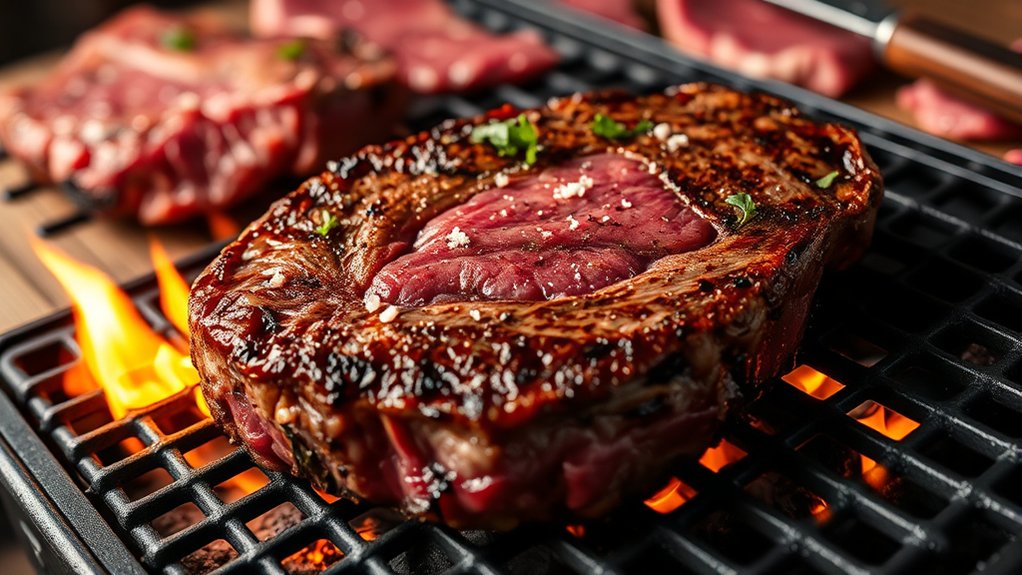
When choosing a ribeye for grilling, focus on marbling and thickness to guarantee juiciness and flavor. You want a steak with visible white streaks of fat woven throughout the meat—this marbling melts during grilling, enhancing tenderness and taste.
Look for a ribeye that’s at least 1 to 1.5 inches thick; thinner cuts tend to dry out quickly, while thicker ones cook evenly and stay juicy inside. Also, check the color: pick a bright red steak with firm texture, avoiding any that look dull or have brown spots.
If possible, choose USDA Prime or Choice grades—they offer better marbling. By selecting a well-marbled, thick ribeye, you set yourself up for a perfectly grilled, medium-rare steak every time.
How to Prep Your Ribeye for Medium Rare
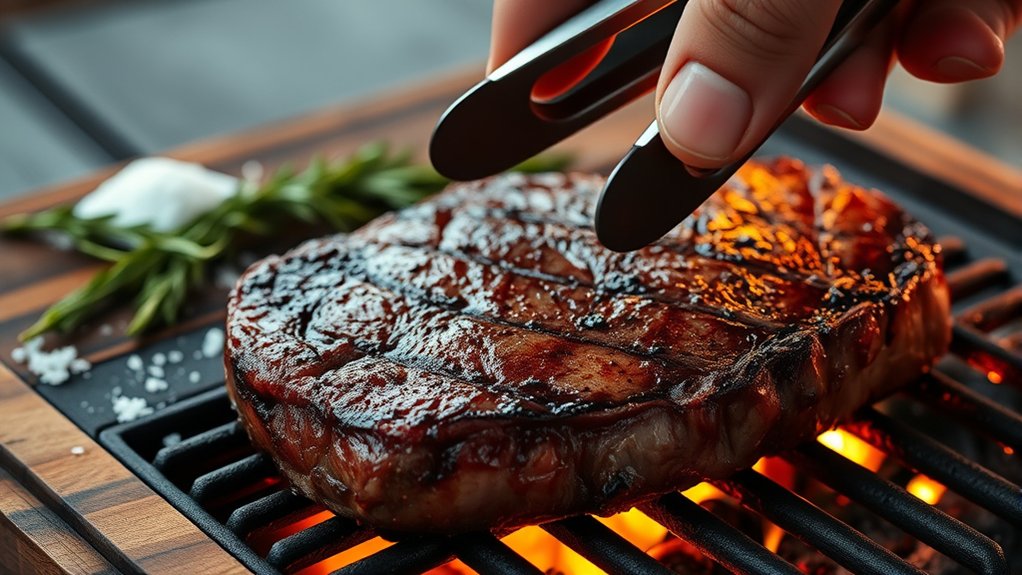
To get your ribeye ready for medium rare, start by choosing a quality cut with good marbling. Then, season it simply but well—salt and pepper are your best friends here. Proper prep sets the stage for a perfectly grilled steak.
Choosing Quality Ribeye
Although choosing the right ribeye can seem overwhelming, focusing on marbling and thickness will set you up for a perfect medium rare. Look for even marbling—those thin streaks of fat throughout the meat—which guarantees juiciness and flavor during grilling. Aim for a steak that’s about 1 to 1.5 inches thick; thinner cuts cook too fast, making it harder to hit medium rare, while thicker ones take longer and require more attention.
Check the color too: a bright, rich red indicates freshness. When buying, pick ribeyes labeled “choice” or “prime” for higher quality. Finally, let your steak rest at room temperature for about 30 minutes before grilling to promote even cooking and better texture.
These steps set a solid foundation for grilling success.
Seasoning Techniques
Since seasoning is key to enhancing your ribeye’s natural flavors, you’ll want to prep your steak carefully before grilling. Start by patting your ribeye dry to guarantee the seasoning sticks well. Use kosher salt and freshly ground black pepper as the base, then add complementary spices if you like.
Let the steak sit at room temperature for about 30 minutes after seasoning to absorb the flavors evenly.
| Seasoning | Purpose | Tips |
|---|---|---|
| Kosher Salt | Enhances natural taste | Apply generously, evenly |
| Black Pepper | Adds mild heat | Freshly ground for best flavor |
| Garlic Powder | Adds depth | Use sparingly to avoid bitterness |
| Rosemary | Herbal aroma | Crush leaves for release |
| Olive Oil | Helps seasoning stick | Brush lightly before grilling |
This simple prep ensures a flavorful, perfectly cooked medium-rare ribeye.
Preheat Your Grill to High Heat
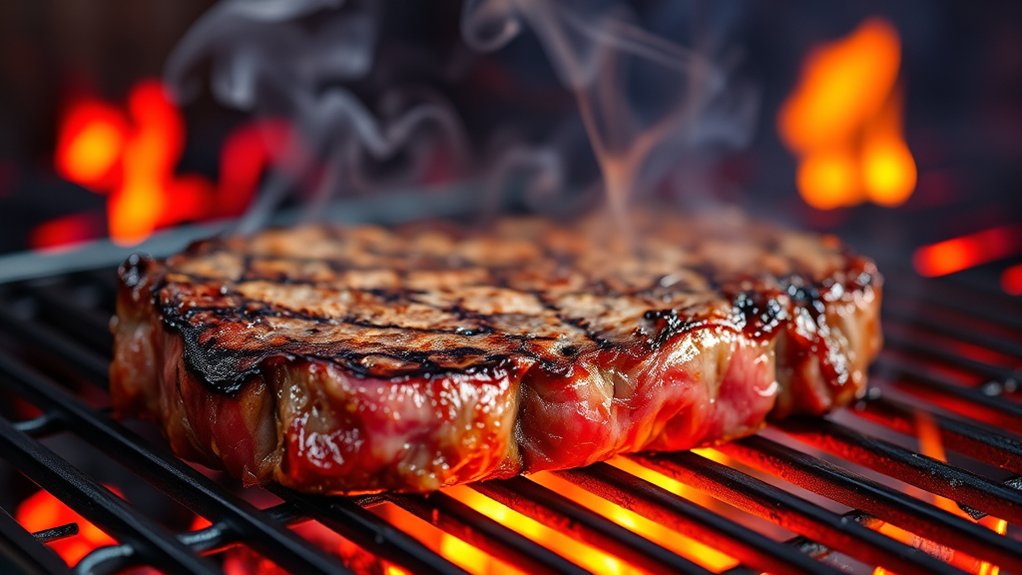
When you preheat your grill to high heat, you create the perfect searing environment to lock in the ribeye’s juices and flavor. Start by cleaning the grill grates thoroughly to prevent sticking and guarantee even heat distribution. Turn the burners to high or pile the charcoal for intense heat, then close the lid and let it heat for at least 10-15 minutes.
You want the grill surface to reach around 450-500°F (232-260°C). This high temperature will give your ribeye a beautiful crust while keeping the inside tender. Avoid placing the steak on a cool grill—it won’t sear properly and can cause uneven cooking.
Once preheated, you’re ready to place your ribeye on the grill and start achieving that perfect medium rare.
Grill Your Ribeye to Medium Rare: Timing Guide
As soon as your grill reaches the ideal temperature, you’ll want to place your ribeye directly on the grates and start timing carefully to achieve that perfect medium rare. Grill the steak for about 4 to 5 minutes on the first side without moving it. This allows the meat to develop a nice sear and locks in juices.
Flip the ribeye and cook for another 3 to 5 minutes on the other side. The exact time depends on the steak’s thickness, but this range typically hits medium rare. Avoid pressing the meat down or lifting it too often, as this can cause heat loss and uneven cooking.
Once you’ve hit the timing, it’s time to check its doneness before serving.
Check Ribeye Doneness With a Meat Thermometer
You’ll want to aim for an internal temperature of 130–135°F for a perfect medium rare ribeye. Using the right meat thermometer—whether digital or instant-read—makes checking easy and accurate.
Insert the thermometer carefully to avoid overcooking while you monitor the temperature.
Ideal Temperature Range
Although grilling a ribeye to medium rare might seem straightforward, using a meat thermometer guarantees you hit the ideal temperature every time. For medium rare, aim for an internal temperature between 130°F and 135°F. This range ensures your steak stays juicy, tender, and flavorful without overcooking.
Here’s a quick guide to help you recognize what each temperature means:
| Temperature (°F) | What You’ll Feel |
|---|---|
| 120-125 | Very rare, cool to warm |
| 130-135 | Medium rare, warm and juicy |
| 140-145 | Medium, firm and pink center |
| 150-155 | Medium well, less juicy |
| 160+ | Well done, dry and firm |
Stick within the medium rare range for the best ribeye experience every time.
Thermometer Types Explained
Getting the right internal temperature is key, and choosing the right meat thermometer makes this task easier and more accurate. You have a few options: instant-read, leave-in, and digital probe thermometers. Instant-read thermometers give quick results when you insert them into your ribeye, letting you check doneness without leaving the grill open for long.
Leave-in thermometers stay in the steak while it cooks, providing continuous temperature updates, which is great if you want hands-off monitoring. Digital probes often come with timers and alerts, helping you avoid overcooking. Whatever you pick, make sure it’s precise and reads temperatures quickly.
Using the right thermometer ensures your ribeye hits that perfect medium rare without guesswork or cutting into the steak prematurely.
Checking Without Overcooking
When you use a meat thermometer to check your ribeye’s doneness, you prevent overcooking by knowing the exact internal temperature. Insert the thermometer into the thickest part of the steak, avoiding bone and fat, to get an accurate reading. For medium-rare, aim for 130°F to 135°F.
Pull the steak off the grill a few degrees before it hits this range, as it will continue to cook while resting. Checking frequently in the final minutes helps you catch the perfect moment to stop grilling. Using a reliable thermometer takes the guesswork out of grilling, so you don’t have to rely on timing alone.
This way, you get a juicy, tender ribeye every time without worrying about drying it out.
Rest Your Ribeye Steak for Juicy Medium Rare
Once you take your ribeye off the grill, you’ll want to let it rest for at least five minutes. This essential step allows the juices to redistribute throughout the meat, ensuring every bite is tender and flavorful. If you cut into it immediately, the juices will escape, leaving your steak dry.
Tent the ribeye loosely with foil to keep it warm without steaming it. Avoid wrapping it tightly, as that traps moisture and softens the crust you worked hard to achieve. Use this resting time to prepare any sides or sauces.
Tips for Serving and Enjoying Your Ribeye
Although the steak is the star, how you serve and enjoy your ribeye can elevate the entire meal. Start by slicing against the grain for maximum tenderness. Pair it with complementary sides and sauces to enhance flavors.
Let your guests customize with condiments like chimichurri or garlic butter. Use a warm plate to keep the steak hot longer.
| Serving Tip | Purpose | Example |
|---|---|---|
| Slice Against Grain | Maximizes tenderness | Cut perpendicular to muscle |
| Warm Plates | Maintains temperature | Preheat in oven or warm water |
| Flavor Pairings | Enhances taste | Roasted veggies or mashed potatoes |
| Sauces & Condiments | Adds variety | Chimichurri, garlic butter |
| Rest Before Serving | Keeps juices inside | Let rest 5-10 minutes |
Enjoy your perfectly grilled ribeye with these simple tips!
Frequently Asked Questions
Can I Use a Cast Iron Pan Instead of a Grill for Ribeye?
Yes, you can use a cast iron pan for ribeye. It gets super hot, giving you a great sear. Just preheat the pan, cook each side a few minutes, and let it rest before serving.
What Side Dishes Pair Best With Medium Rare Ribeye?
Think of your ribeye as a star performer; roasted asparagus and garlic mashed potatoes are its perfect supporting cast. When I paired them once, the flavors harmonized like a well-rehearsed symphony, making every bite unforgettable.
How Do Different Grill Types Affect Ribeye Cooking Time?
Different grills affect cooking time because charcoal grills get hotter and cook faster, while gas grills offer more temperature control but may take longer. Electric grills usually cook slower due to lower maximum heat. Adjust accordingly.
Is It Safe to Eat Ribeye Cooked Medium Rare?
Yes, it’s safe to eat ribeye cooked medium rare as long as you use fresh, high-quality beef and proper grilling techniques.
The internal temperature should reach 130-135°F to reduce harmful bacteria risks effectively.
How Do Marinating Times Affect Ribeye Flavor and Texture?
As you wait for the marinade to soak in, flavors deepen and tenderize the ribeye’s fibers. If you marinate too long, though, the texture can turn mushy, so timing is key to a perfect bite.
Conclusion
So, after all this precision—picking the perfect ribeye, timing every second, and checking temps like a scientist—you might think grilling medium rare is rocket science.
But really, it’s just about trusting your instincts and letting that grill do its magic. Remember, even the best steps won’t help if you burn it or forget to rest it.
Ironically, sometimes the simplest touch makes the juiciest, most perfect steak you’ll ever eat.
Grilling a ribeye medium rare is all about balance and attention to detail. Follow these easy steps, and you’ll enjoy a perfectly cooked ribeye every time.
Trust the process, use the right timing, and don’t skip resting your steak for maximum flavor and tenderness.