7 Easy Steps to Season Ceramic Cookware
To season your ceramic cookware effectively, start by gathering all necessary supplies and cleaning the cookware thoroughly with mild soap. Proper seasoning helps enhance the non-stick surface and prolongs the life of your ceramic pots and pans.
Make sure to dry the cookware completely before moving on to the next step.
Warm the cookware slowly to avoid any damage caused by sudden temperature changes. Then, apply a thin layer of high smoke point oil such as avocado or grapeseed oil. These oils withstand high heat, making them ideal for sealing your ceramic cookware.
Bake the cookware upside down at 350°F for 30 minutes to lock in the seasoning. Once done, allow it to cool completely before wiping off any excess oil.
Maintain your ceramic cookware regularly by cleaning gently and re-oiling occasionally to keep it in top shape.
Key Takeaways
- Clean and dry the ceramic cookware thoroughly to remove any residue before seasoning.
- Apply a thin, even layer of high smoke point oil like avocado or grapeseed oil.
- Preheat the oven to 350°F (175°C) and bake the cookware upside down for 30 minutes.
- Allow the cookware to cool completely, then wipe off any excess oil with a soft cloth.
- Maintain seasoning by regularly cleaning gently and reapplying oil after each use.
Gather Supplies for Seasoning Ceramic Cookware
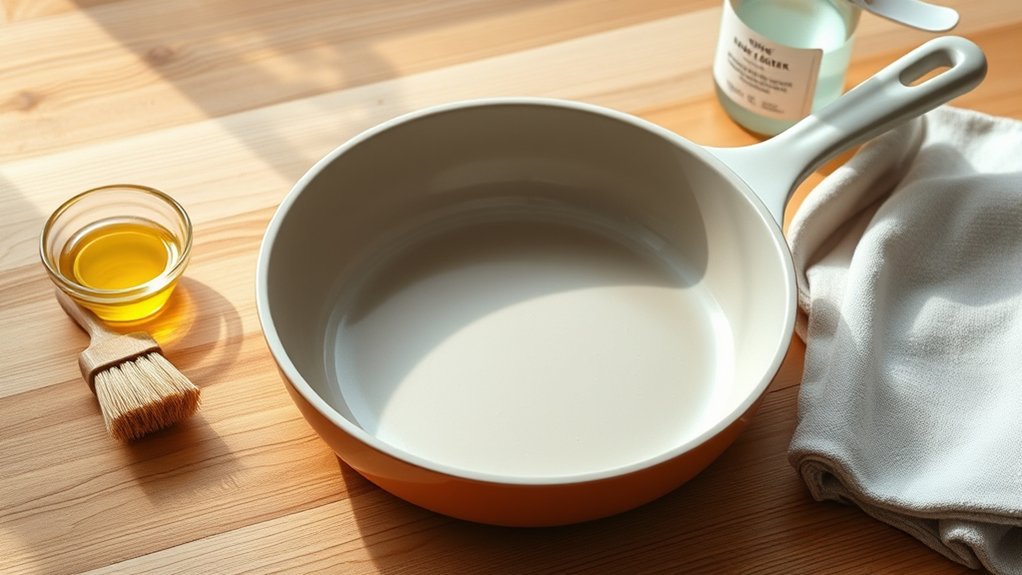
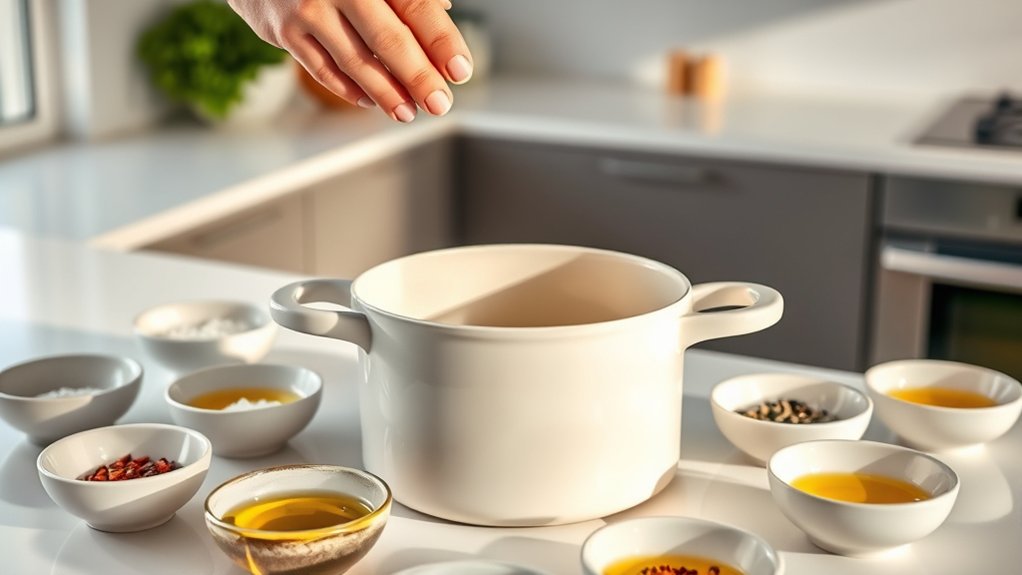
Before you begin seasoning your ceramic cookware, you’ll need to gather a few essential supplies. Start with a high-quality cooking oil that has a high smoke point, such as grapeseed, avocado, or vegetable oil. Avoid olive oil since it smokes at a lower temperature.
Next, have a clean, soft cloth or paper towels ready to evenly apply the oil. You’ll also want a non-abrasive sponge or soft brush on hand for light scrubbing if needed. Make sure your cookware is dry before you start seasoning, so have a clean dish towel nearby.
Finally, if you want to speed up the seasoning process, you might consider using an oven or stovetop, so prepare to preheat accordingly. Having these supplies ready makes the seasoning process smooth and effective.
Clean Your Ceramic Cookware Thoroughly Before Seasoning
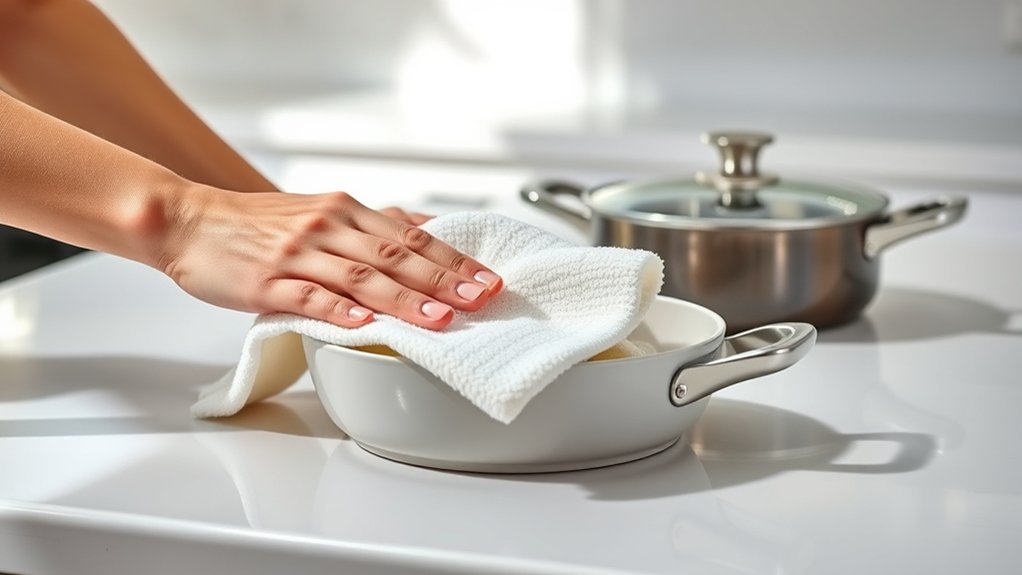
Before you start seasoning, make sure to remove any residue or debris from your ceramic cookware. Use mild cleaning agents to avoid damaging the surface, and rinse thoroughly.
Once it’s clean, dry it completely to guarantee the seasoning sticks properly.
Remove Residue and Debris
Start by giving your ceramic cookware a thorough cleaning to remove any leftover residue and debris. Check every corner, especially around the edges and any textured surfaces, where particles can hide. Use a soft sponge or cloth to gently scrub away stuck-on food or grease.
Avoid abrasive tools that might scratch the ceramic coating. Rinse the cookware well under warm water to wash away loosened debris completely. If you notice any stubborn spots, soak the cookware briefly in warm water to soften them before scrubbing again.
Removing all residue guarantees your seasoning layer will adhere properly and last longer. Taking this step seriously helps maintain your cookware’s non-stick qualities and prolongs its lifespan. Clean cookware is the foundation for effective seasoning.
Use Mild Cleaning Agents
While cleaning your ceramic cookware, choose mild cleaning agents to protect its delicate surface. Harsh chemicals or abrasive cleaners can damage the ceramic coating, making seasoning less effective and reducing the cookware’s lifespan. Stick to gentle options that clean thoroughly without scratching or dulling the finish.
Here are three mild cleaning agents you can use:
- Dish soap and warm water – A simple mix that removes grease and food particles safely.
- Baking soda paste – Combine baking soda with water for gentle scrubbing on stubborn spots.
- White vinegar solution – Dilute vinegar with water to tackle mineral deposits without harming the ceramic.
Use soft sponges or cloths with these agents to keep your cookware pristine before seasoning.
Dry Completely Before Seasoning
After cleaning your ceramic cookware with gentle agents, make sure it’s completely dry before seasoning. Any moisture left on the surface can interfere with the seasoning process, preventing the oil from properly bonding with the ceramic coating.
To dry your cookware thoroughly, use a clean, soft towel to wipe it down, then let it air dry for a few minutes. Avoid rushing this step, as even small droplets can cause uneven seasoning or create spots where food might stick later.
Ensuring your cookware is fully dry helps the seasoning layer form evenly and last longer, improving its non-stick qualities. Taking this simple step sets you up for a successful seasoning that enhances your ceramic cookware’s performance and durability.
Warm Up Your Cookware Slowly
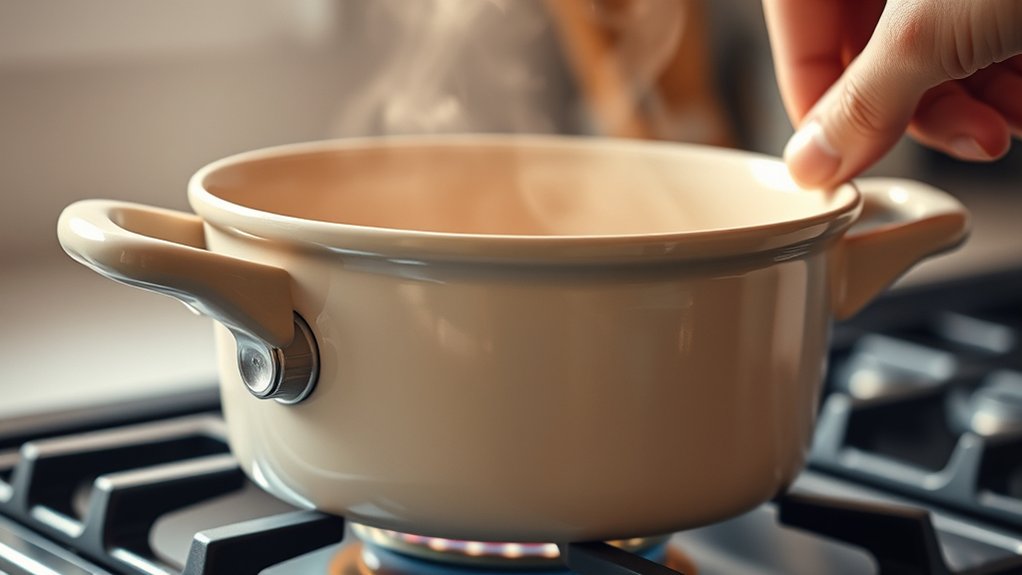
You’ll want to warm up your ceramic cookware gradually to avoid sudden temperature changes. This slow increase helps prevent thermal shock, which can crack or damage the surface. Taking this step guarantees your cookware stays in great shape as you season it.
Gradual Temperature Increase
How do you prevent cracking or warping when seasoning your ceramic cookware? The key is to increase the temperature gradually. Sudden heat changes can stress the ceramic, causing damage.
To warm up your cookware safely, follow these steps:
- Start with low heat: Place your cookware on the stove or in the oven using the lowest setting.
- Increase temperature slowly: Raise the heat in small increments every few minutes, allowing the ceramic to adjust.
- Monitor closely: Keep an eye on the cookware to avoid overheating or hot spots during the process.
Prevent Thermal Shock
Gradually increasing the temperature helps, but preventing thermal shock means warming your ceramic cookware slowly to avoid sudden temperature changes that can cause cracking. Start by placing your cookware on low heat and give it time to adjust. Avoid moving it directly from the refrigerator or freezer into a hot stove or oven.
Instead, let it come to room temperature first. When cooking, raise the heat gradually rather than turning it to high immediately. Thermal shock occurs when the material expands or contracts too quickly, leading to damage.
Choose and Apply Oil to Enhance the Non-Stick Surface
Since the right oil creates a durable, non-stick layer, choosing one with a high smoke point is essential. This guarantees the oil won’t burn during seasoning, which can ruin the ceramic surface. When picking your oil, focus on those that handle heat well and provide a smooth coat.
Here are three great options to consider:
- Avocado Oil – Has a smoke point around 520°F, making it ideal for seasoning.
- Grapeseed Oil – Offers a neutral flavor and a smoke point near 420°F.
- Refined Coconut Oil – With a smoke point of about 450°F, it’s another solid choice.
Once you’ve selected your oil, apply a thin, even layer all over the cookware using a soft cloth or paper towel. Avoid excess to prevent sticky residue.
Bake the Cookware to Seal the Seasoning Layer
After applying the oil, you’ll need to bake the cookware to lock in the seasoning layer. Preheat your oven to 350°F (175°C), place the cookware upside down on the middle rack, and bake for 30 minutes. This step polymerizes the oil, creating a durable, non-stick coating.
| Step | Detail |
|---|---|
| Oven Temperature | 350°F (175°C) |
| Placement | Upside down on middle rack |
| Baking Duration | 30 minutes |
| Purpose | Polymerize oil, seal layer |
| Safety Tip | Use oven mitts to handle cookware |
This baking process guarantees your ceramic cookware develops a smooth, resilient surface that enhances cooking performance and longevity.
Cool and Wipe Excess Oil
Once the baking is complete, let your ceramic cookware cool down completely before handling it. This step is essential to avoid burns and to allow the seasoning to set properly.
After cooling, you’ll want to remove any excess oil that didn’t absorb during baking.
Here’s how you can do it effectively:
- Use a soft, clean cloth or paper towel to gently wipe the surface.
- Avoid scrubbing, which can damage the seasoning layer.
- Inspect the cookware for any sticky or oily patches and wipe them until the surface feels smooth and dry.
Maintain Your Seasoned Ceramic Cookware
Although seasoning your ceramic cookware improves its performance, maintaining that seasoning is key to long-lasting benefits. To keep your cookware in top shape, avoid using harsh detergents or abrasive scrubbers that can strip away the seasoning layer. Instead, gently hand wash with warm water and a soft sponge.
After washing, dry your cookware thoroughly to prevent moisture buildup, which can damage the seasoned surface. Regularly apply a thin layer of oil after cleaning to reinforce the non-stick coating. Avoid cooking on excessively high heat, as this can degrade the seasoning.
With consistent care, your seasoned ceramic cookware will stay non-stick, durable, and ready for delicious meals. Remember, maintenance is just as important as the initial seasoning process.
Frequently Asked Questions
Can Seasoning Ceramic Cookware Improve Its Heat Distribution?
Seasoning ceramic cookware won’t substantially improve heat distribution because ceramic already heats evenly. Instead, seasoning mainly enhances non-stick properties and protects the surface, so focus on those benefits rather than expecting better heat spread.
How Often Should I Reseason My Ceramic Cookware?
You should reseason your ceramic cookware every few months or whenever food starts sticking. If you use it frequently, seasoning more often helps maintain its nonstick surface and prolongs the cookware’s life.
Is It Safe to Use Metal Utensils on Seasoned Ceramic Cookware?
You shouldn’t use metal utensils on seasoned ceramic cookware because they can scratch and damage the surface.
Instead, stick to wooden, silicone, or plastic utensils to keep your cookware’s non-stick layer intact and lasting longer.
Can Seasoning Remove Existing Stains or Discoloration on Ceramic Cookware?
You won’t magically erase old marks by seasoning, but it can freshen your ceramic cookware’s surface.
Think of it as giving your pots a gentle glow-up, not a complete makeover for stains or discoloration.
Does Seasoning Ceramic Cookware Affect Its Warranty?
Generally, seasoning ceramic cookware doesn’t void its warranty, but you should check the manufacturer’s guidelines.
If they specify no seasoning or particular care instructions, following those is essential to keep your warranty intact.
Conclusion
Now that you’ve seasoned your ceramic cookware, you’re opening its full potential—like giving it a fresh start every time. With just a little care and these simple steps, your pots and pans will reward you with smoother cooking and effortless cleanup.
Remember, seasoning isn’t a one-time trick; it’s a love letter to your kitchen that keeps on giving. So, treat your cookware well, and it’ll serve you faithfully for years to come. By regularly seasoning your ceramic cookware, you maintain its non-stick surface and enhance its durability.
Embrace these easy steps to season ceramic cookware, and enjoy a better cooking experience every time.