7 Easy Steps to Clean a Cast Iron Frying Pan With Salt
To clean a cast iron frying pan with salt effectively, start by heating the pan on medium heat to loosen any stuck-on food. This simple method uses coarse kosher salt as a natural abrasive to help remove residue without harming the pan’s seasoning.
Cleaning your cast iron pan with salt is an easy and eco-friendly way to maintain its non-stick surface and extend its lifespan.
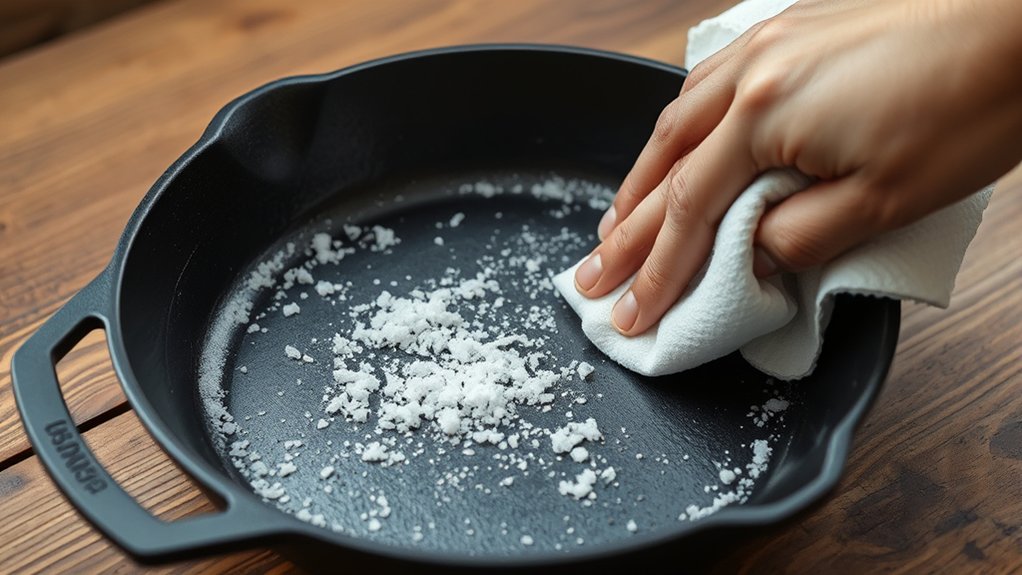
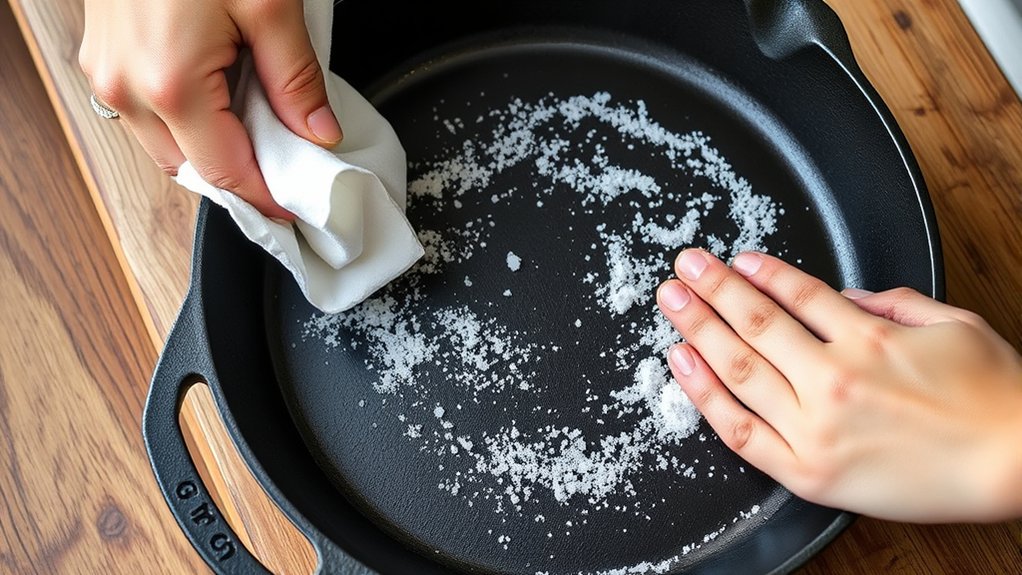
Next, sprinkle a generous layer of coarse kosher salt over the heated surface. Using a damp cloth, scrub the salt in gentle circular motions to lift away food particles. This technique avoids harsh scrubbing that could damage the seasoning.
Rinse the pan with warm water, making sure to avoid soap as it can strip the seasoning.
Dry the pan thoroughly to prevent rust from forming. Finish by applying a thin layer of oil and heating the pan briefly to protect and preserve the surface.
Follow these steps regularly for a perfectly maintained cast iron frying pan.
Key Takeaways
- Heat the pan over medium heat to loosen stuck-on food before cleaning with salt.
- Sprinkle coarse kosher salt generously over the pan’s surface for effective scrubbing.
- Scrub the pan gently with a damp cloth or sponge in circular motions to remove residue.
- Rinse the pan under warm water without soap, then dry thoroughly to prevent rust.
- Apply a thin layer of cooking oil and heat the pan to maintain seasoning and prolong lifespan.
Why Use Salt to Clean Your Cast Iron?
Why choose salt for cleaning your cast iron? Salt acts as a natural abrasive that scrubs away stuck-on food without harming the pan’s seasoning. Unlike harsh detergents, salt won’t strip away the protective oil layer you’ve carefully built over time.
When you add coarse salt to your cast iron, it helps lift residue and grime efficiently. You don’t need chemicals or soaking, just a simple, effective method. Salt’s abrasive texture works perfectly with your pan’s surface, scouring gently yet thoroughly.
Plus, it’s safe, inexpensive, and readily available in your kitchen. Using salt helps you maintain that non-stick surface and extends the life of your cast iron. So, salt isn’t just a seasoning—it’s a powerful cleaning ally for your cast iron cookware.
Gather Supplies to Clean Your Cast Iron
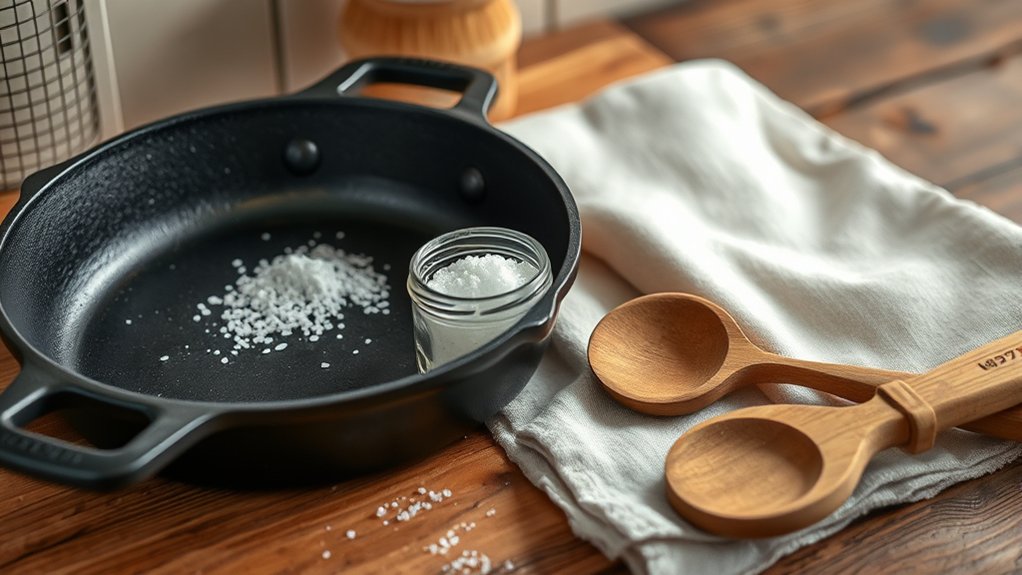
Before you start cleaning, gather the essential tools like coarse salt, a scrub brush, and a cloth. Make sure you choose the right type of salt—coarse kosher salt works best for scrubbing.
Also, prepare your workspace by clearing the sink area and having everything within reach.
Essential Cleaning Tools
Although cleaning cast iron might seem straightforward, having the right tools makes the process much easier and more effective. When you’re ready to clean your pan with salt, make sure you have these essentials on hand:
- Coarse Salt – Acts as an abrasive to scrub away stuck-on food without damaging the seasoning.
- Non-metal Scrubber or Sponge – Helps you gently scrub the surface without scratching the cast iron.
- Paper Towels or a Clean Cloth – For wiping out the salt and moisture after scrubbing.
- Tongs or Heat-safe Gloves – Useful if the pan is still warm, so you can handle it safely during cleaning.
With these tools ready, you’ll maintain your pan’s seasoning and keep it in great shape for years.
Choosing The Right Salt
Selecting the right type of salt is essential for effectively cleaning your cast iron pan without harming its seasoning. Coarse salts work best because their abrasive texture scrubs away stuck-on food without scratching the surface. Avoid fine salts, which dissolve too quickly and lack the scrubbing power you need.
Kosher salt and sea salt are popular choices, offering natural grains that won’t damage your pan. Stay away from iodized table salt, as additives may affect the pan’s seasoning.
| Salt Type | Best Use |
|---|---|
| Kosher Salt | Gentle scrubbing, easy to rinse |
| Sea Salt | Natural, effective abrasive |
| Coarse Salt | Tough residue removal |
| Table Salt | Not recommended (additives) |
| Rock Salt | Good for heavy-duty cleaning |
Preparing Your Workspace
Gathering the right supplies sets you up for an efficient and effective cleaning session. Before you start scrubbing, make sure your workspace is organized and ready. This helps you focus on cleaning without interruptions.
Here’s what you’ll need:
- Coarse kosher salt – for scrubbing off residue without damaging the pan
- A stiff brush or non-metal scrubber – to work the salt into the surface
- Warm water – to rinse away loosened debris
- A clean towel – for drying and preventing rust
Arrange these items close to your sink or cleaning area. Having everything within reach keeps the process smooth and speeds up your cleanup. With your supplies ready, you’re all set to restore your cast iron pan to top condition.
Heat the Pan to Loosen Stuck Food
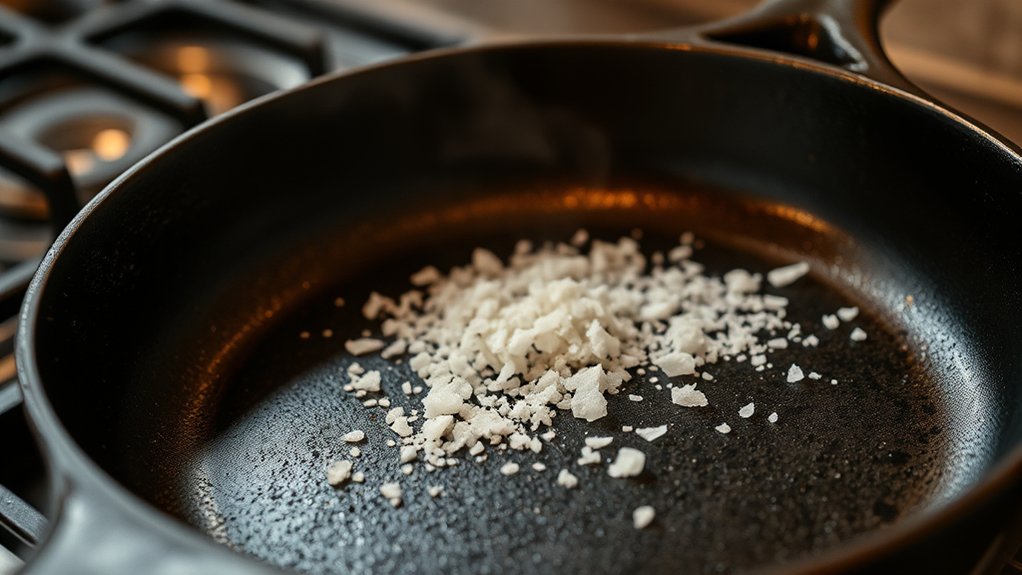
How do you loosen stubborn bits stuck to your cast iron pan? Start by placing the pan on your stove over medium heat. Let it warm up for a few minutes; the heat will help soften and loosen any dried-on food.
You’ll notice that the stuck bits begin to lift as the pan heats. Be careful not to overheat or burn the pan—moderate heat is key. Once the pan is hot enough, remove it from the heat and let it cool slightly so it’s safe to handle.
Heating the pan first makes the cleaning process much easier and prevents you from scrubbing too hard, which can damage the seasoning. This step sets you up perfectly for the next stage of cleaning.
Sprinkle Coarse Salt to Scrub Residue
You’ll want to choose coarse salt because its gritty texture helps scrub away residue without damaging the pan. Sprinkle it generously over the surface, then use a cloth or sponge to scrub stubborn bits in circular motions.
This method lifts stuck-on food effectively, making your pan ready for rinsing.
Choosing The Right Salt
Selecting the right type of salt makes a big difference when cleaning your cast iron pan. Coarse salt works best because its larger grains effectively scrub away residue without scratching the surface. Here’s what you should consider:
- Coarse Kosher Salt – Ideal for scrubbing due to its large, flaky crystals.
- Sea Salt – Also coarse enough, but check for additives that might harm the pan.
- Avoid Table Salt – Its fine grains won’t provide enough abrasion and may dissolve too quickly.
- No Iodized Salt – Contains chemicals that could affect your pan’s seasoning.
Using the right salt guarantees you clean thoroughly while protecting your pan’s seasoning layer. Stick with coarse, natural salts to get the best results every time.
Effective Scrubbing Techniques
Once you’ve chosen the right coarse salt, sprinkle a generous layer over the pan’s surface to tackle stuck-on residue effectively. Use a damp cloth or a folded paper towel to rub the salt in gentle, circular motions. The salt acts as an abrasive, loosening food particles without damaging the seasoning.
Focus on areas with visible buildup, applying just enough pressure to lift residue. Avoid harsh scrubbing that can strip the pan’s protective layer. As you scrub, the salt will darken, signaling it’s working.
When you’ve covered the entire surface, rinse the pan with warm water to wash away the salt and loosened debris. Finally, dry the pan thoroughly to prevent rust. This technique keeps your cast iron clean and well-seasoned without needing harsh chemicals.
Removing Stubborn Food Residue
Although stubborn food residue can be tough to remove, sprinkling coarse salt directly onto the pan provides an effective, gentle abrasive. This method protects your cast iron’s seasoning while tackling stuck-on bits. Here’s how to do it:
- Sprinkle a generous layer of coarse salt over the residue.
- Use a damp cloth or paper towel to scrub the salt in circular motions.
- Keep scrubbing until the food particles loosen and come off.
- Rinse the pan with warm water and dry it thoroughly.
This technique avoids harsh detergents and helps maintain your pan’s non-stick surface. You’ll find that stubborn residue lifts easily without damaging your cast iron, keeping your frying pan in top shape for many meals to come.
Wipe the Pan Clean With a Cloth
After scrubbing away the salt and residue, you’ll want to grab a clean cloth to wipe the pan thoroughly. Use a dry or slightly damp cloth to pick up the loosened particles and any excess salt left behind. Make sure to cover the entire surface, including the sides and handle if needed.
This step helps prevent leftover grit from affecting your next cook and prepares the pan for seasoning. If the cloth becomes too dirty, switch to a fresh one to avoid spreading residue. Wiping the pan at this stage ensures it’s clean without overexposing it to water.
Taking your time here makes the cleaning process more effective and keeps your cast iron in great condition for future use.
Rinse Your Pan Gently: Don’t Soak
Wiping the pan clean removes most of the salt and residue, but a gentle rinse helps wash away any remaining particles. When rinsing, remember not to soak your cast iron pan, as prolonged exposure to water can cause rust.
Instead, follow these simple steps:
- Hold the pan under warm running water.
- Use a soft sponge or cloth to gently rinse off leftover salt.
- Avoid using soap or harsh detergents to protect the seasoning.
- Quickly remove the pan from the water once rinsed.
Dry and Oil Your Pan to Keep It Seasoned
Once you finish rinsing, dry your pan thoroughly to prevent rust from forming. Use a clean towel or heat it gently on the stove for a few minutes until all moisture evaporates. This step is essential because any leftover water can cause your cast iron to rust quickly.
Next, apply a thin layer of cooking oil to the entire surface, inside and out. Use a paper towel to spread the oil evenly, removing any excess. This helps maintain the seasoning layer that keeps your pan non-stick and rust-free.
After oiling, heat the pan on low for about five minutes to let the oil absorb fully. Proper drying and oiling will extend your pan’s life and improve its cooking performance every time you use it.
Frequently Asked Questions
Can I Use Table Salt Instead of Coarse Salt?
You can use table salt, but coarse salt works better as a scrub because its larger grains help remove stuck-on food without scratching.
Table salt might dissolve too quickly, making cleaning less effective.
How Often Should I Clean My Cast Iron Pan With Salt?
You should clean your cast iron pan with salt after every use; studies show seasoning lasts longer when maintained regularly. This keeps the surface non-stick and prevents rust, ensuring your pan stays in great shape over time.
Will Salt Cleaning Remove the Pan’s Seasoning?
No, salt cleaning won’t remove your pan’s seasoning if you do it gently. It acts as an abrasive scrub, helping you remove stuck-on food without stripping the protective oil layer you’ve built up over time.
Can I Use Salt Cleaning on Rusty Cast Iron?
Yes, you can use salt cleaning on rusty cast iron. The coarse salt acts as an abrasive to scrub off rust gently, but you’ll need to re-season the pan afterward to restore its protective coating properly.
Is Salt Cleaning Safe for Enameled Cast Iron Pans?
You shouldn’t use salt cleaning on enameled cast iron pans because it can scratch the enamel coating.
Instead, clean them gently with warm soapy water and a soft sponge to keep the surface intact and shiny.
Conclusion
Cleaning your cast iron pan with salt is as simple as shaking off dust from a favorite book. By following these easy steps, you’ll keep your pan seasoned and ready for your next meal.
Remember, a well-maintained cast iron pan improves with each use, just like a trusted companion. So, heat it, scrub it, rinse it gently, and oil it well.
With these 7 easy steps to clean a cast iron frying pan with salt, you’ll enjoy cooking with it for years to come while preserving its seasoning and durability.