How You Can Recycle Cookware Step-by-Step
To recycle cookware step-by-step, start by checking if your local recycling facility accepts metal pots and pans. Proper recycling of cookware helps reduce waste and supports environmental sustainability.
Knowing how to recycle different materials like aluminum, stainless steel, cast iron, and copper is essential for effective recycling.
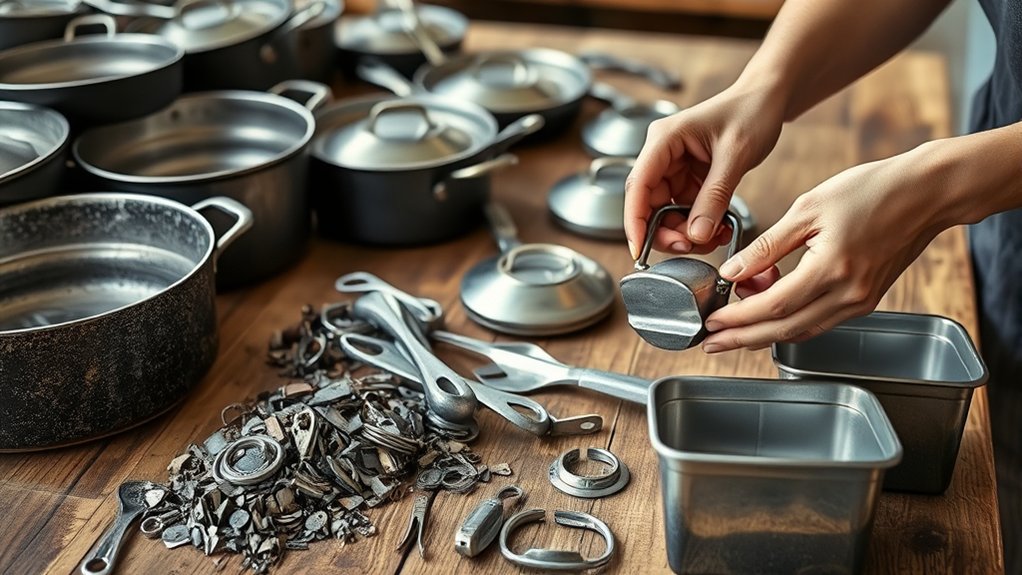
Sort your cookware items by material type and remove any non-metal parts such as handles or lids.
Cleaning your cookware thoroughly to eliminate grease, food residue, and especially non-stick coatings is important before recycling.
Once prepared, drop off your cookware at scrap yards, recycling centers, or consider donating usable pieces.
Keep exploring recycling options to reduce waste and promote eco-friendly habits.
Key Takeaways
- Check local recycling guidelines to confirm which cookware materials, like aluminum or stainless steel, are accepted for recycling.
- Separate cookware by material type and remove non-metal parts such as handles, lids, and plastic components before recycling.
- Thoroughly clean cookware to remove grease, food residue, and coatings that may interfere with recycling processes.
- Take prepared cookware to designated recycling centers, scrap yards, or participate in community recycling events.
- Consider donating or repurposing usable cookware to reduce waste and extend its lifecycle before recycling.
Is Your Cookware Recyclable?
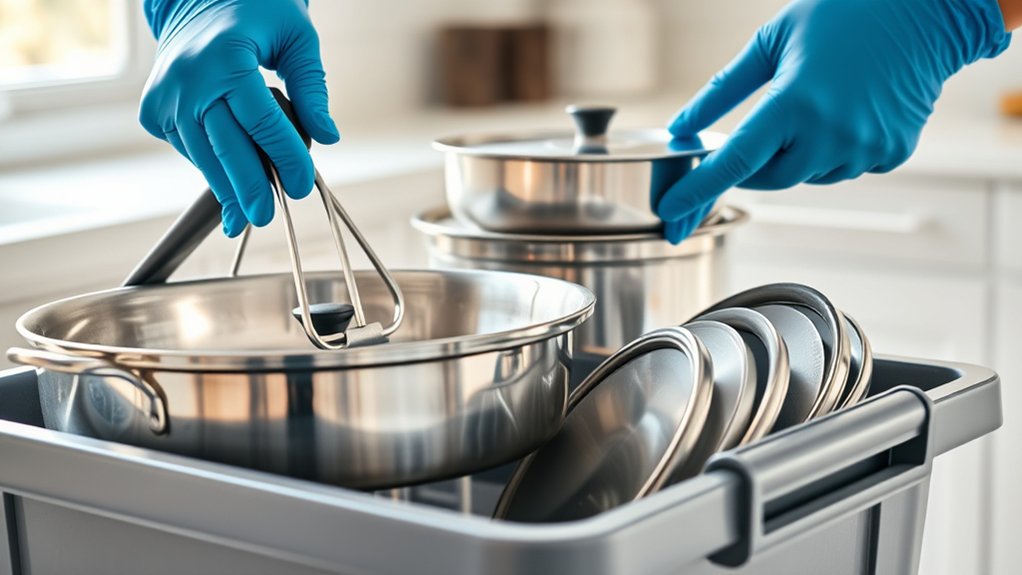
Before you recycle cookware, you need to know if it’s recyclable in the first place. Not all cookware materials are accepted by standard recycling programs. You should check if your local recycling facility accepts metal items like pots and pans.
Cookware with non-metal parts, like plastic handles or silicone grips, might need to be separated or disposed of differently. If your cookware is heavily coated with non-stick surfaces or has significant wear, it may not be recyclable through curbside programs. Look for any recycling symbols or material information on the item itself.
When in doubt, contact your local waste management service to confirm. Taking these steps guarantees you don’t accidentally contaminate the recycling stream or throw away something that could be reused or recycled properly.
Sort Cookware by Material Type

Once you know which cookware can be recycled, the next step is to sort it by material type. Sorting helps recycling centers process items efficiently and guarantees your cookware gets a new life.
Separate pots, pans, and lids based on what they’re made from, like aluminum, stainless steel, or cast iron.
| Material Type | Common Cookware Examples |
|---|---|
| Aluminum | Lightweight pans, baking trays |
| Stainless Steel | Saucepans, mixing bowls |
| Cast Iron | Skillets, Dutch ovens |
| Copper | Decorative pots, specialty pans |
Prepare Non-Stick Pans for Recycling
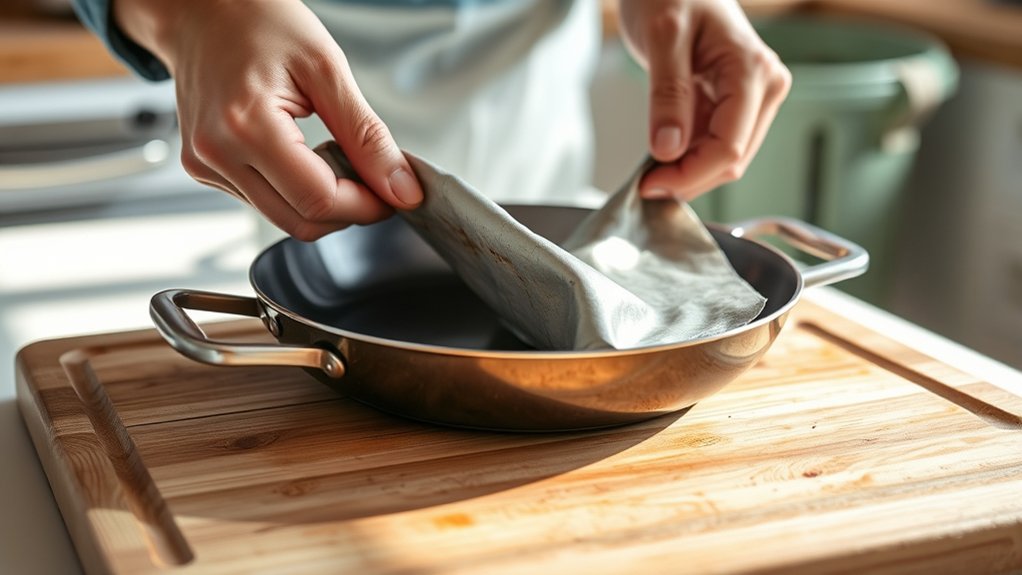
Although non-stick pans can be tricky to recycle, you can prepare them properly to guarantee they’re accepted by recycling facilities. Start by cleaning the pan thoroughly to remove any food residue or grease. Avoid using harsh chemicals that could damage the surface further.
If your pan has a plastic or rubber handle, remove it carefully using a screwdriver or pliers; these parts usually aren’t recyclable with metal. If the non-stick coating is peeling or flaking, check with your local recycling center to see if they accept pans with damaged coatings. In some cases, you might need to dispose of it separately.
Finally, label the pan as “non-stick” when dropping it off, so recyclers know how to process it correctly and safely.
Recycle Cast Iron and Stainless Steel Cookware
To recycle cast iron and stainless steel cookware, start by cleaning and removing any non-metal parts. Check with local scrap yards to see where you can drop off your items. Recycling these metals helps conserve resources and reduces waste in landfills.
Preparing Cookware For Recycling
Before you recycle cast iron or stainless steel cookware, you’ll need to clean and prepare it properly to guarantee it can be processed efficiently. Start by scrubbing off any food residue, grease, or rust using a stiff brush or steel wool. For cast iron, avoid soap to maintain the seasoning if you plan to reuse it, but thorough cleaning is vital for recycling.
Next, remove any non-metal parts like plastic handles or rubber grips to prevent contamination. If your cookware has glass lids or silicone parts, separate those as well. Once cleaned and disassembled, dry the pieces completely to avoid rust during storage or transport.
Finally, bundle similar metals together to make sorting easier for recycling facilities. Taking these steps makes certain your cookware is ready for recycling without delays.
Finding Local Scrap Yards
Once your cookware is clean, disassembled, and sorted, the next step is to locate a nearby scrap yard that accepts cast iron and stainless steel. Start by searching online for scrap yards in your area, using keywords like “metal scrap yard” or “scrap metal recycling.” Check their websites or call to confirm they take cookware materials.
You can also ask local hardware stores or waste management centers for recommendations. When you find a suitable yard, inquire about their drop-off procedures, hours, and any fees. Some scrap yards may pay you for your metals, so it helps to ask about pricing.
Planning your visit ahead guarantees time and ensures your cookware gets recycled properly, contributing to a more sustainable cycle.
Benefits Of Metal Recycling
Why should you recycle your cast iron and stainless steel cookware? Recycling these metals not only keeps them out of landfills but also conserves valuable resources and energy. When you recycle, you help reduce mining and environmental harm, making a positive impact on the planet.
Plus, your old cookware gets a new life, turning into useful products again.
Here’s what you gain by recycling metal cookware:
- You cut down on energy use, saving the environment.
- You reduce harmful mining and pollution.
- You support sustainable manufacturing.
- You help decrease landfill waste.
- You promote a greener, healthier planet for future generations.
Recycle Aluminum and Copper Cookware
You can start by spotting aluminum and copper cookware based on their weight and color—aluminum is lightweight and silvery, while copper has a distinct reddish hue. Make sure to clean and dry your cookware thoroughly before recycling to avoid contamination.
Then, check with local recycling centers to see if they accept these metals and learn their specific drop-off guidelines.
Identifying Aluminum And Copper
How can you quickly tell if your cookware is made of aluminum or copper? Start by looking at the color and weight. Aluminum cookware is lightweight with a silver-gray finish, while copper cookware shines with a warm, reddish tone and feels heavier.
You can also tap the cookware—aluminum produces a dull sound, copper a higher-pitched ring. Here’s how to identify them:
- Aluminum is dull, light, and often has a brushed or matte finish.
- Copper gleams with a distinct reddish-orange shine.
- Copper cookware often has a protective coating to prevent tarnish.
- Aluminum feels noticeably lighter when you lift it.
- Copper produces a clear, ringing sound when tapped.
Knowing this helps you recycle the right way and gives you confidence in handling your cookware responsibly.
Cleaning And Preparing Cookware
Before recycling aluminum or copper cookware, make certain to clean and prepare it thoroughly to guarantee it’s accepted by recycling centers. Remove any food residue, grease, or burnt material using warm soapy water and a scrub brush. Rinse well and let the cookware dry completely.
Check for non-metal parts like plastic handles or rubber grips and remove them, as most centers require pure metal. If your cookware is large, consider cutting it into smaller pieces to facilitate processing.
| Step | Action | Tip |
|---|---|---|
| Clean | Wash with warm, soapy water | Use a non-abrasive scrubber |
| Remove Non-Metal | Detach handles or grips | Use pliers or a screwdriver |
| Size Reduction | Cut large pieces if needed | Wear gloves and use metal shears |
Finding Local Recycling Centers
Several resources can help you locate local recycling centers that accept aluminum and copper cookware. Start by checking your city or county’s official website for recycling programs. You can also use online tools like Earth911 or RecycleNation to find nearby facilities.
Don’t hesitate to call local scrap yards or metal recycling centers, as many accept these materials. Community centers or environmental groups often have valuable information too. Here’s why finding the right place matters:
- You’ll reduce landfill waste and protect the environment
- You’ll give your old cookware a new purpose
- You’re supporting sustainable resource use
- It feels good to contribute positively
- You set an example for others to follow
Take a moment now—your effort makes a real difference!
Remove Handles and Non-Metal Parts From Cookware
Since non-metal parts can interfere with recycling processes, you’ll need to remove handles and any other attachments before recycling your cookware. Start by inspecting each item carefully to identify screws, rivets, or clips that hold handles or lids in place. Use a screwdriver or wrench to detach these parts safely.
If handles are glued or welded, check if they can be separated with gentle force or consider cutting them off with appropriate tools. Remove rubber, plastic, silicone, and wooden parts as well, since these materials can contaminate the metal recycling stream. Keep in mind that any glass lids or ceramic inserts should also be separated.
Once you’ve removed all non-metal components, you’re ready to proceed with recycling the pure metal parts efficiently.
Clean Cookware Before Recycling
Although you’ve removed all non-metal parts, you’ll still need to clean your cookware thoroughly to make certain it’s free of food residue and grease. This step is essential because leftover food can contaminate the recycling process, making your efforts less effective. Here’s how to get it spotless:
- Scrub stubborn grease with hot, soapy water.
- Use a non-abrasive sponge to avoid damaging the metal.
- Rinse thoroughly to remove all soap and debris.
- Dry completely to prevent rust during storage or transport.
- Inspect for any remaining food bits or stains before recycling.
Taking the time to clean your cookware guarantees it’s ready for recycling and helps protect the environment by keeping materials pure and reusable.
Avoid Common Recycling Mistakes
Before you recycle cookware, make sure you know which materials aren’t accepted in your local program. You’ll also want to clean your items thoroughly to avoid contamination.
Avoiding these common mistakes helps guarantee your cookware gets recycled properly.
Identify Non-Recyclable Materials
When you’re ready to recycle cookware, you need to know which materials don’t belong in the recycling bin. Tossing the wrong items can contaminate the recycling stream and waste your effort.
To avoid this frustration, steer clear of these non-recyclable materials:
- Non-stick coatings that release toxins when processed
- Ceramic or porcelain pieces that don’t break down properly
- Cookware with wooden handles that can’t be separated
- Items containing heavy metals or hazardous substances
- Cookware fused with plastic parts that confuse recycling machines
Clean Cookware Properly
How clean should your cookware be before recycling? You’ll want to remove all food residue and grease since dirty items can contaminate the recycling process. Start by scrubbing your pots and pans with warm, soapy water.
If there’s stubborn food stuck on, soak them briefly to loosen debris. Avoid using harsh chemicals or abrasive tools that could damage the material. Once clean, dry the cookware thoroughly to prevent rust, especially for metal pieces.
Where to Recycle Cookware Locally
Although finding a local spot to recycle cookware might seem tricky, many communities offer convenient options that make the process straightforward. You just need to know where to look! Check out these places near you:
- Municipal recycling centers often accept metal cookware—call ahead to confirm.
- Local thrift stores or donation centers might take usable cookware for resale.
- Community recycling events sometimes include special drop-offs for bulky kitchen items.
- Eco-friendly stores occasionally run take-back programs for old cookware.
- Household hazardous waste facilities sometimes accept cookware with non-stick coatings for special handling.
Using Scrap Metal Yards for Old Cookware
If you have old cookware made of metal, scrap metal yards offer a practical way to recycle it while earning a little cash. First, separate your cookware by metal type—aluminum, stainless steel, or cast iron—as scrap yards often pay differently depending on the material. Make sure the items are clean and free of non-metal parts like plastic handles or rubber grips, which you should remove beforehand.
Next, locate a nearby scrap metal yard and check their current metal prices and accepted items. When you bring your cookware, the staff will weigh it and offer you payment based on the metal’s value. Using scrap yards not only helps reduce waste but also gives your old cookware a new life as recycled metal.
Donate or Repurpose Cookware Instead of Recycling
When your cookware still has life left, consider donating or repurposing it instead of recycling. You can give your pots and pans a second chance to brighten someone else’s kitchen or find new uses around your home. This choice not only reduces waste but also spreads joy and creativity.
Think about:
- Donating to local shelters, schools, or community centers
- Gifting to friends or family who are starting out
- Turning old pans into plant pots or garden containers
- Using baking sheets as trays for crafts or organizing tools
- Transforming lids into wall art or trivets
Recycle Cookware Without Contamination
Because contaminated cookware can disrupt the recycling process, you need to clean and prepare your items properly before recycling. Rinse off any food residue and grease thoroughly. Use a mild detergent and scrub stubborn spots to guarantee your cookware is free from oils and burnt bits.
Avoid using harsh chemicals that could harm recycling facilities. Remove non-metal parts like plastic handles or rubber grips, as these can contaminate metal recycling streams. If parts can’t be separated, check with your local recycling center for specific instructions.
Dry your cookware completely to prevent rust, which complicates recycling. By taking these simple steps, you help recycling plants process your cookware efficiently, reducing waste and supporting environmental sustainability. Your effort makes a real difference.
Tips to Reduce Cookware Waste in the Future
To cut down on cookware waste, you’ll want to choose durable, high-quality pieces that last longer and perform better. Taking care of your cookware also extends its life, saving you money and reducing waste.
Choosing durable cookware and maintaining it well helps save money and reduces waste.
Here are some tips to help you minimize cookware waste in the future:
- Invest in timeless, versatile cookware you actually enjoy using
- Avoid non-stick coatings that flake easily or degrade quickly
- Repair minor damages like loose handles or scratches instead of replacing
- Donate or sell cookware you no longer need to keep it in use
- Store cookware properly to prevent warping or damage
Frequently Asked Questions
Can I Recycle Cookware With Plastic Coatings?
You usually can’t recycle cookware with plastic coatings through regular curbside programs. You’ll need to check with local recycling centers or specialty facilities that handle mixed materials, or consider donating if it’s still usable.
What Should I Do With Damaged Non-Stick Pans?
You should avoid using damaged non-stick pans for cooking. Instead, check if your local recycling center accepts them or separate the metal parts for scrap recycling.
Otherwise, consider donating or repurposing them creatively at home.
Are Ceramic Cookware Items Recyclable?
Yes, you can recycle ceramic cookware, but it’s tricky. Most curbside programs don’t accept it, so you’ll need to find a specialized recycling center or repurpose it creatively instead of tossing it in the trash.
How Long Does the Recycling Process for Cookware Take?
The recycling process for cookware usually takes a few weeks. Once you drop off your items, facilities sort, clean, and process them. Timing varies by location, but you can expect it to be completed within two to four weeks.
Can Recycled Cookware Materials Be Used for New Products?
Yes, you can use recycled cookware materials for new products, and you’ll find they often become parts of fresh cookware, construction materials, or even art pieces. Recycling keeps resources moving, making your impact both practical and inspiring.
Conclusion
Recycling your cookware is easier than you think when you sort by material and prepare each piece properly. For example, Sarah donated her still-good but unused cast iron skillet to a community kitchen, giving it new life without waste.
By recycling metals and repurposing usable items, you not only help the environment but also save resources. Start today, and you’ll reduce landfill waste while supporting sustainable practices. Small steps make a big impact in cookware recycling and environmental conservation!