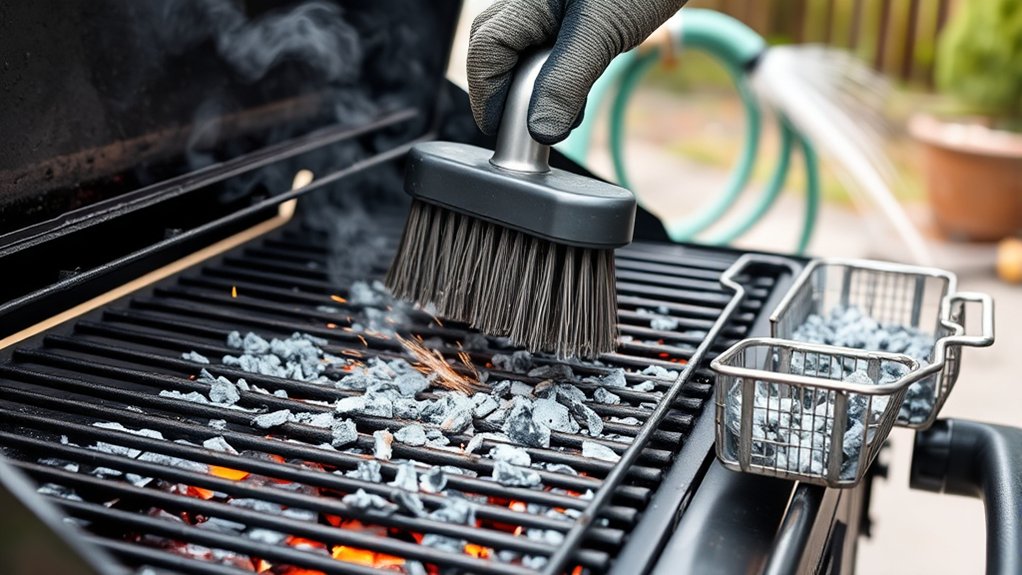
How to Clean a Charcoal Grill in 10 Easy Steps
To clean your charcoal grill in 10 easy steps, start by ensuring the grill is completely cool with the lid closed. Proper charcoal grill cleaning is essential for maintaining optimal performance and preventing flare-ups. Regular maintenance also extends the lifespan of your grill and ensures safe, tasty barbecues every time.
Remove the cooled ash using a metal scoop and empty it into a metal container. Next, scrape and brush the grates with a stiff wire brush to remove any stuck-on residue. Wash, dry, and lightly oil the grates to prevent rust and keep them ready for your next cookout.
Scrape any remaining residue inside the grill chamber and clean out the ash catcher thoroughly. Wipe down the exterior with mild soap and water to keep your grill looking great.
Finally, reassemble all the parts and store the grill properly until the next use. Keep up with regular cleaning to guarantee a safe and delicious barbecue experience.
Discover how simple maintenance boosts your charcoal grill’s performance and lifespan.
Key Takeaways
- Let the grill cool completely, then remove and brush grates with a stiff wire brush to remove food and grease residue.
- Scoop out cooled ash and dispose of it safely in a metal container with a lid to prevent fire hazards.
- Scrape interior walls and clean the ash catcher to remove buildup and ensure proper airflow.
- Wash grates with warm, soapy water, rinse, dry thoroughly, and lightly oil to prevent rust and sticking.
- Wipe down exterior surfaces with a damp cloth and mild soap, then dry; regularly inspect and treat rust spots.
Why Cleaning Your Charcoal Grill Matters
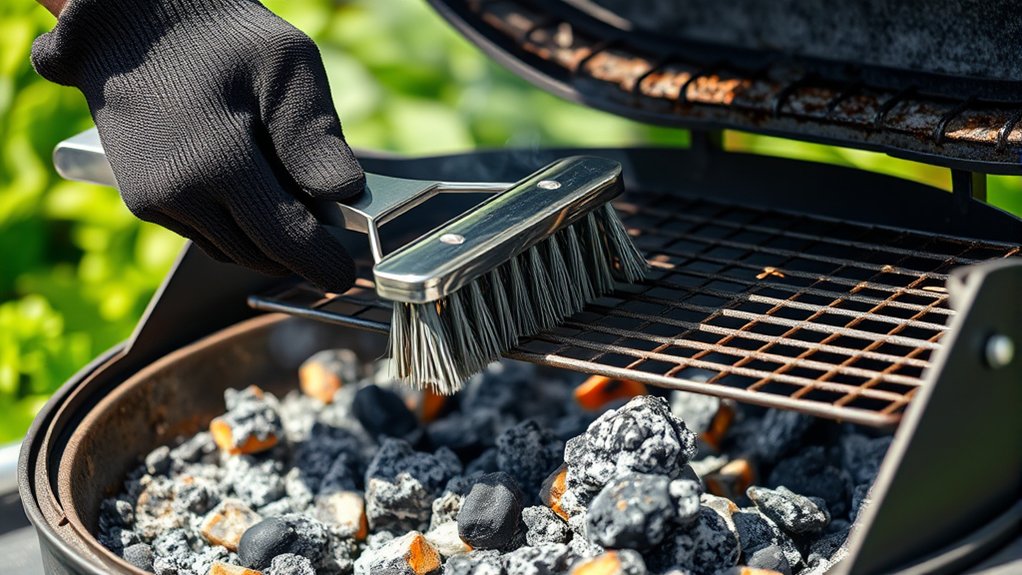
Why should you clean your charcoal grill regularly? Because it directly affects your food’s taste and safety. When you leave grease and food residue on the grill, it can cause flare-ups, leading to uneven cooking or burnt flavors.
Plus, leftover buildup attracts bacteria and mold, which isn’t something you want on your next meal. Regular cleaning also extends your grill’s lifespan by preventing rust and corrosion. You preserve money by avoiding costly repairs or premature replacements.
Additionally, a clean grill performs better, heating evenly and efficiently. So, by making cleaning a habit, you guarantee every barbecue is delicious, safe, and hassle-free. Taking a few minutes to clean your charcoal grill after each use pays off in the long run.
Gather Tools for Cleaning Your Charcoal Grill
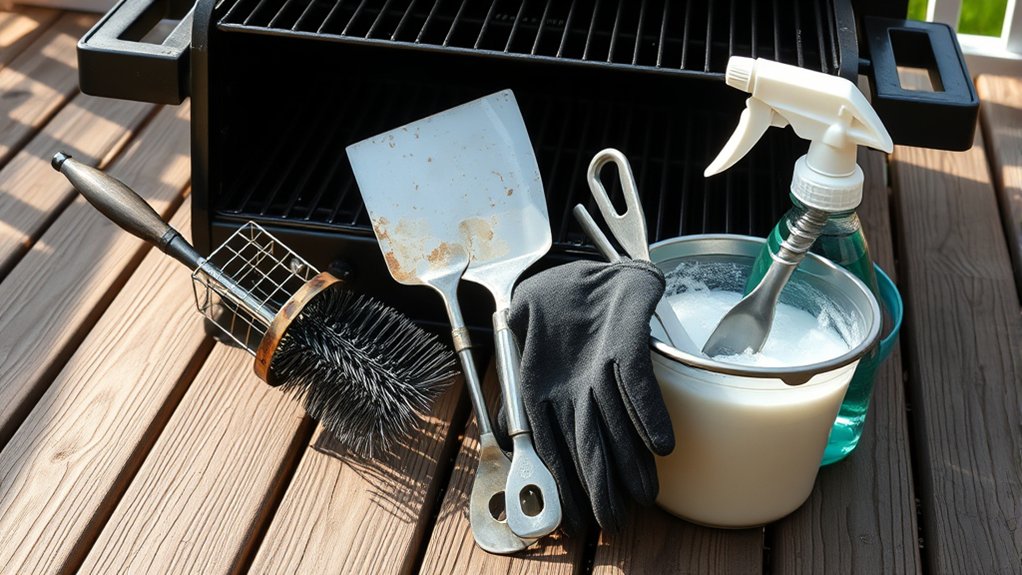
Before you start scrubbing your charcoal grill, you’ll need to gather the right tools to make cleaning easier and more effective. Grab a stiff wire brush to tackle stuck-on food and grease from the grates. A putty knife or grill scraper will help remove stubborn residue and buildup.
Don’t forget a bucket filled with warm, soapy water for soaking removable parts. Have a sponge or cloth handy for wiping down surfaces. You’ll also want heat-resistant gloves to protect your hands during cleaning.
Ultimately, keep a trash bag nearby for disposing of ash and debris. Having these tools ready ensures you can clean your grill thoroughly and efficiently, so your next barbecue is hassle-free and enjoyable.
Let the Grill Cool and Clear Out Ash
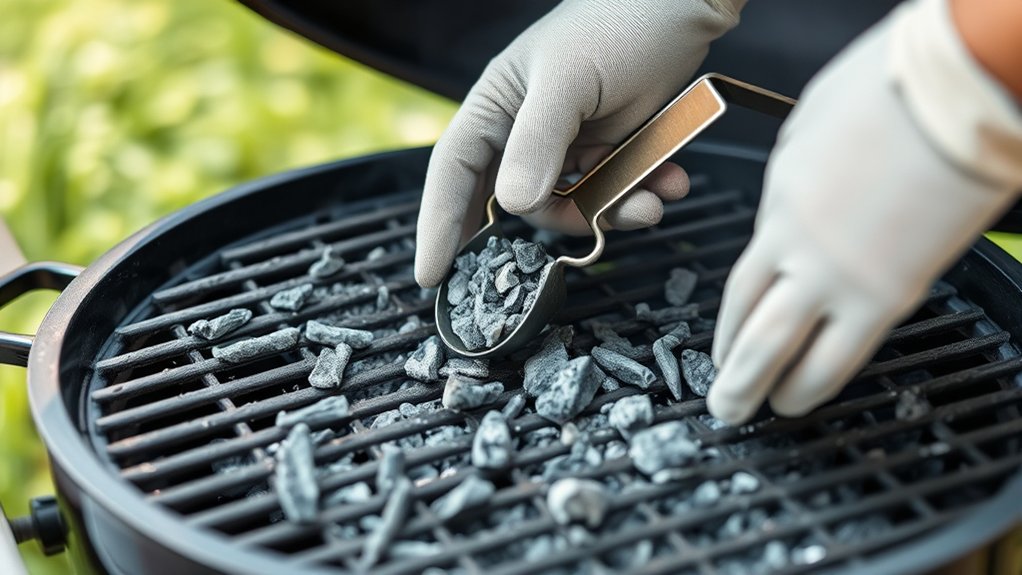
After cooking, let your grill cool completely to avoid burns and accidents. Once it’s safe, use a scoop or brush to remove the ash efficiently.
Clearing out the ash helps maintain airflow for your next grilling session.
Safe Cooling Practices
Once you’ve finished cooking, let your charcoal grill cool completely to prevent burns and accidental fires. Don’t rush this step—hot coals can stay dangerously warm for hours. Keep the grill lid closed to help smother the fire and speed up cooling.
Make certain children and pets stay away during this time. Avoid using water to cool the coals quickly, as it can cause steam burns and damage your grill. Once the grill is cool, you can safely handle the interior without risking injury.
This cautious approach ensures you won’t accidentally ignite leftover embers or cause harm while cleaning. Taking the time to let your grill cool properly is essential for safe, effective maintenance.
Removing Ash Effectively
Letting your grill cool completely sets the stage for safely removing the ash. Once the coals are cold, open the grill and carefully scoop out the ash using a small metal shovel or scoop. Don’t forget to wear heat-resistant gloves to protect your hands from residual heat.
Dispose of the ash in a metal container with a lid to prevent any fire hazards. If your grill has an ash catcher, empty it regularly to prevent buildup and improve airflow during your next cookout. Use a brush or vacuum designed for ash to clear any remaining debris from the bottom and vents.
Removing ash effectively not only keeps your grill clean but also guarantees better airflow and consistent heat for your future grilling sessions.
Clean Charcoal Grill Chamber and Ash Catcher
Once the ash has cooled, carefully remove it to avoid spreading dust or debris.
Next, scrub the grill chamber to get rid of leftover residue and buildup.
Don’t forget to clean and maintain the ash catcher to keep your grill working efficiently.
Removing Ash Safely
Before you start removing ash, make sure your charcoal grill has completely cooled down to prevent any risk of burns or accidental fires. Once cool, open the grill and carefully scoop out the ash from the grill chamber using a metal ash tool or small shovel. Avoid using plastic tools that might melt or break.
Place the ash into a metal container with a lid to guarantee no stray embers ignite nearby materials. If your grill has an ash catcher, detach it and empty the ash similarly. Always dispose of ash away from combustible materials and never in a plastic trash bin.
Wearing gloves can protect your hands from sharp debris and soot. Taking these precautions keeps you safe and prepares your grill for the next cleaning step.
Cleaning Grill Chamber
After safely removing the ash, you can move on to cleaning the grill chamber and ash catcher. Start by brushing off any leftover debris with a stiff grill brush to loosen stuck-on residue. Then, wipe down the inside with a damp cloth or sponge, using warm soapy water to tackle grease and grime.
Rinse thoroughly and dry to prevent rust. Don’t forget to clean the ash catcher by emptying any remaining ashes and wiping it clean.
Here’s a quick checklist for cleaning the grill chamber and ash catcher:
- Brush off charcoal residue and debris
- Use warm soapy water to scrub the chamber interior
- Rinse and dry completely to avoid rust
- Empty and wipe down the ash catcher thoroughly
This keeps your grill ready for the next cookout!
Maintaining Ash Catcher
Why does maintaining the ash catcher matter? It collects ash and debris, preventing buildup that can block airflow and reduce grill efficiency. If you don’t clean it regularly, ash can pile up, making it harder to start your grill and affecting cooking temperature.
To maintain the ash catcher, first, ensure your grill is completely cool. Remove the ash catcher carefully to avoid spilling ash. Empty all the ash into a metal container—never use plastic, as ashes can stay hot and cause fires.
Use a brush or cloth to wipe away residue inside the catcher. Check for rust or damage, and replace it if necessary. Regular cleaning keeps your grill working smoothly and extends its lifespan.
Make it a habit after every few uses.
Remove and Scrape the Grill Grates
Once the charcoal has cooled completely, you can remove the grill grates to begin the cleaning process. Take them out carefully to avoid bending or damaging the metal. Use a sturdy grill brush or scraper to tackle the stuck-on food and grease.
Focus on removing all residue to keep your grill in good shape.
Here’s how to scrape the grates efficiently:
- Hold the grate over a trash bin or outdoors to catch debris.
- Use firm, even strokes with a grill brush.
- Pay extra attention to corners and edges.
- For stubborn spots, a scraper or crumpled aluminum foil can help.
Wash, Dry, and Oil the Grill Grates
While the grates are still warm, wash them thoroughly with warm, soapy water to remove any remaining residue. Use a sponge or grill brush to scrub away grease and stuck-on bits. Rinse the grates well with clean water to get rid of soap.
Next, dry the grates completely with a clean cloth or let them air dry to prevent rust. Once dry, lightly coat the grates with cooking oil—like vegetable or canola oil—to create a protective layer. This helps keep food from sticking and protects the metal from moisture.
Use a paper towel or brush to spread the oil evenly. Now your grill grates are clean, dry, and ready for your next barbecue session!
Scrape Residue From Grill Interior Walls
You’ll want to grab a sturdy grill brush or a metal scraper to tackle the residue on the interior walls. Hold your tool at a slight angle and use firm, steady strokes to remove stuck-on buildup.
Taking your time here guarantees your grill stays clean and ready for your next cookout.
Best Tools for Scraping
Although scraping residue from your charcoal grill’s interior walls can be tough, having the right tools makes the job much easier and more effective. You want tools that are sturdy, comfortable to grip, and designed to tackle tough buildup without damaging your grill.
Here are some of the best tools to keep handy:
- Grill scraper with a long handle: Helps you reach deep corners without straining your hands.
- Wire brush with stiff bristles: Perfect for loosening stubborn residue quickly.
- Putty knife or metal spatula: Great for scraping flat surfaces and scraping off thick layers.
- Scraper with a curved edge: Designed to fit the grill’s rounded interior for more efficient cleaning.
These tools will help you remove grime effectively before you move on to rinsing and wiping.
Effective Scraping Techniques
Once you have the right tools ready, focus on applying steady pressure and consistent strokes to loosen built-up residue inside your charcoal grill. Start scraping from the top and work your way down the interior walls to prevent debris from falling onto cleaned areas. Use short, firm strokes to chip away stubborn soot and grease without damaging the grill’s surface.
If residue resists, dampen a cloth with warm water and wipe the walls before resuming scraping. Avoid using excessive force, which can scratch or deform the metal. Pay special attention to corners and crevices where buildup tends to accumulate.
Regularly remove loosened debris to keep your workspace clean. These effective scraping techniques ensure your grill interior stays free of grime, improving airflow and grilling performance.
Clean the Exterior of Your Charcoal Grill
While the interior of your charcoal grill gets the most attention, cleaning the exterior is just as important to maintain its appearance and prevent rust. Start by wiping down the outer surfaces with a damp cloth or sponge to remove loose dirt and dust. For tougher grime, use a mild dish soap mixed with warm water.
Rinse thoroughly and dry with a clean towel to avoid water spots. Don’t forget these key areas:
- Handles and knobs, which can accumulate grease and dirt
- Wheels or legs, especially if they touch the ground
- Vents and air intakes to keep them clear
- Painted or stainless steel surfaces, using a non-abrasive cleaner
Taking a few minutes to clean the exterior extends your grill’s lifespan and keeps it looking sharp.
Reassemble and Prep Your Grill for Next Use
After thoroughly cleaning your charcoal grill, you’ll want to reassemble all the parts carefully to guarantee it functions properly. Begin by placing the charcoal grate back into the grill’s base, ensuring it sits securely. Next, position the cooking grate on top, making sure it aligns correctly with the grill frame.
Reattach any removable components like the ash catcher or vents, checking they move freely. Once assembled, inspect the grill for any leftover debris or moisture, wiping it dry as needed. Finally, leave the lid open for a while to air out and prevent rust.
Maintain Your Charcoal Grill Between Deep Cleans
Even if you clean your charcoal grill thoroughly after each use, maintaining it regularly between deep cleans will extend its life and improve cooking performance. You don’t want grease buildup or rust to sneak up on you.
Stay on top of maintenance with these simple habits:
- Brush the grates after each cook while they’re still warm to remove residue easily.
- Empty the ash catcher regularly to prevent airflow blockages.
- Wipe down the exterior with a damp cloth to keep dirt and grime at bay.
- Check for rust spots and treat them promptly with a wire brush and heat-resistant paint if needed.
Frequently Asked Questions
Can I Use a Wire Brush on Porcelain-Coated Grill Grates?
You shouldn’t use a wire brush on porcelain-coated grill grates because it can damage the coating. Instead, use a soft-bristle brush or a nylon scrubber to clean without scratching or chipping the porcelain surface.
How Often Should I Replace Charcoal Grill Grates?
You should replace charcoal grill grates every 3–5 years, depending on wear and rust.
If you notice flaking, warping, or stubborn rust that cleaning won’t fix, it’s time to get new grates for safe grilling.
Is It Safe to Clean a Grill With Bleach?
You shouldn’t clean your grill with bleach because it’s toxic and can leave harmful residues. Instead, use warm soapy water or a grill cleaner made for cooking surfaces to keep it safe and effective for your next barbecue.
Can Leftover Ash Be Composted or Reused?
You can compost leftover ash, but don’t overdo it—it’s alkaline and might harm plants if used excessively. Instead, sprinkle it sparingly in your garden or mix it into compost to recycle nutrients safely.
Be cautious with the amount you use to avoid soil imbalance. Ash can provide valuable minerals, but moderation is key. Always monitor your plants’ response when applying ash.
What Are the Best Natural Alternatives to Chemical Grill Cleaners?
You’ll find baking soda, vinegar, lemon juice, and salt are great natural grill cleaners. They cut grease and grime effectively without harsh chemicals, so you can clean your grill safely and keep it tasting fresh.
Conclusion
Just like a knight sharpens his sword before battle, you need to keep your charcoal grill clean to guarantee it performs its best. By following these simple steps, you’re not just maintaining a grill—you’re preparing your trusty cooking companion for many flavorful adventures ahead.
So, take a little time after each cookout, and your grill will reward you with smoky, mouthwatering meals every time. A clean charcoal grill ensures even heat distribution, prevents flare-ups, and extends the life of your equipment.
Remember, a clean grill means a happy chef and delicious results, making your outdoor cooking experiences more enjoyable. Clean grill, happy chef!