How Long to Cook Fish in the Oven at 350°F in 7 Simple Steps
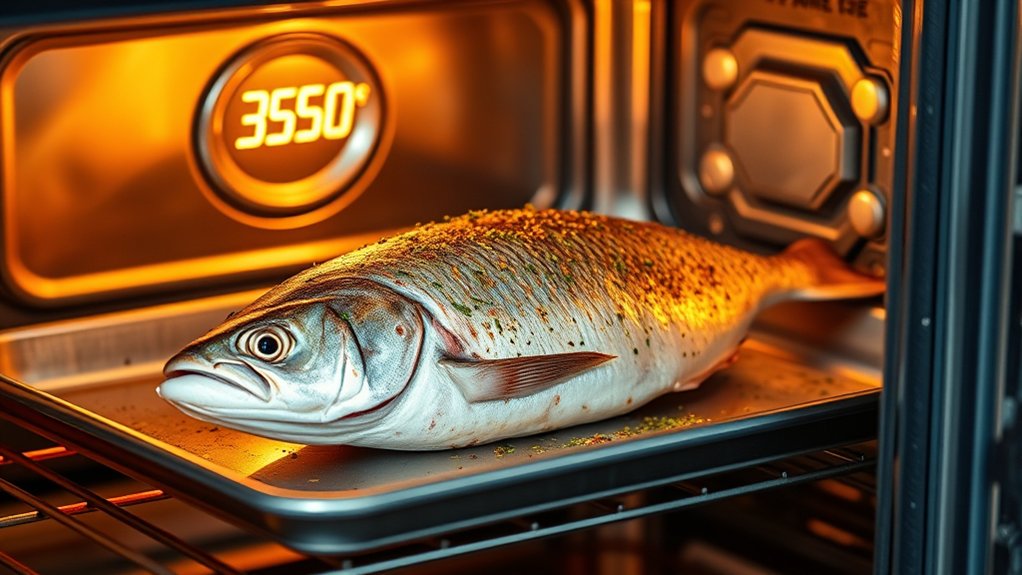
To cook fish in the oven at 350°F, it’s important to start with fresh, dry fish and season it well for the best flavor. Whether you’re preparing thin fillets, thicker cuts, or whole fish, knowing the right cooking time ensures your meal is perfectly cooked every time.
Baking fish at 350°F is a reliable method that preserves moisture and enhances taste.
For thin fillets, bake for 10-12 minutes; thicker cuts require 15-20 minutes. Whole fish generally need 25-30 minutes per pound to cook thoroughly.
Check for doneness early by seeing if the fish flakes easily, looks opaque, and reaches an internal temperature of 145°F.
Cover the fish with foil to keep it moist and prevent overcooking. Maintain a steady oven temperature and watch closely to achieve the perfect texture.
Want to master every step? We’ve got you covered.
Key Takeaways
- Bake fish for about 20 minutes per inch of thickness at 350°F, adjusting time for thinner or thicker cuts accordingly.
- Fish is done when it flakes easily, appears opaque, and reaches an internal temperature of 145°F.
- Use visual cues and start checking a few minutes before the expected time to prevent overcooking.
- Apply oil or marinade and cover with foil to maintain moisture and enhance flavor during baking.
- Prepare fish properly by patting dry, seasoning, and using a greased or parchment-lined baking dish for even cooking.
How Long to Cook Fish in the Oven at 350°F
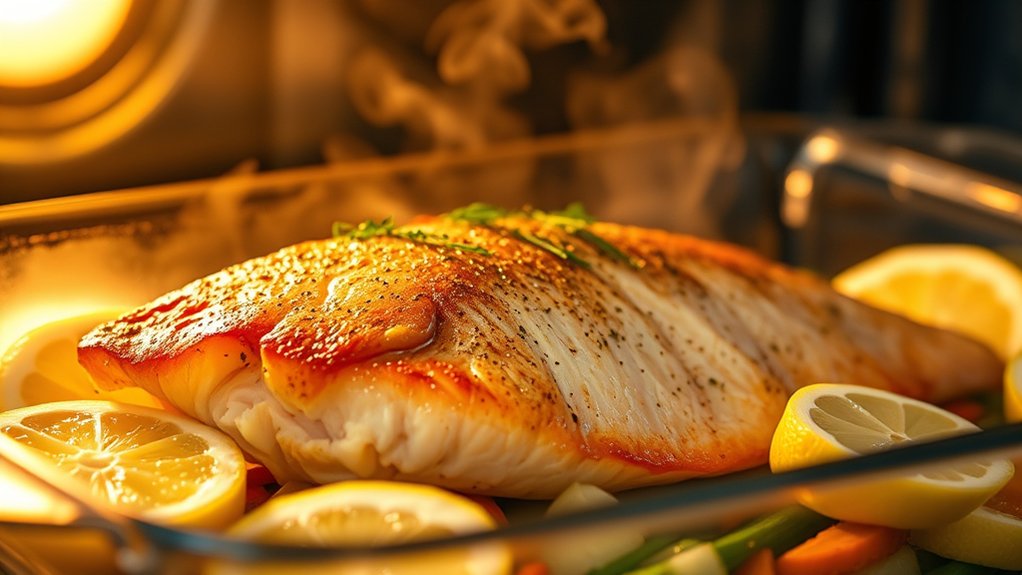
When you cook fish in the oven at 350°F, the cooking time depends on the thickness and type of fish. Generally, you’ll want to bake fish for about 20 minutes per inch of thickness. This means if your fillet is half an inch thick, it’ll take roughly 10 minutes.
You don’t need to overthink it—just check for doneness by seeing if the fish flakes easily with a fork and appears opaque throughout. Avoid opening the oven too often, or the temperature will drop, extending the cooking time.
How Fish Type and Thickness Affect Cooking Time
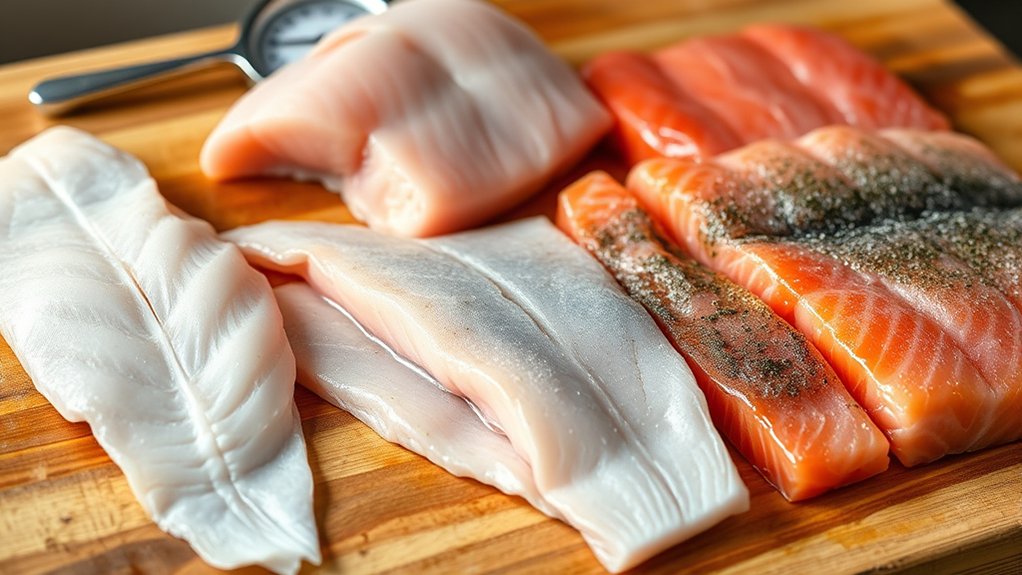
You’ll notice that different fish types cook at varying speeds, especially when you consider their thickness. Thicker cuts naturally need more time, while delicate varieties cook faster and require careful attention.
Let’s explore some common fish and how to adjust your cooking time for each.
Common Fish Types
Because different fish types vary in density and moisture, their cooking times at 350°F can differ considerably. For example, lean fish like cod and haddock cook faster since they have less fat and denser flesh. Oily fish such as salmon and mackerel take a bit longer because their higher fat content retains moisture and heat differently.
Delicate fish like sole or flounder require careful timing to avoid overcooking, as they’re thinner and cook quickly. When you pick your fish, keep in mind how its natural characteristics affect cooking. Understanding these differences helps you avoid dryness or undercooking, ensuring a perfectly baked meal every time.
Thickness Impact On Time
Although fish type plays an essential role in cooking time, thickness often has an even greater impact on how long your fish needs to bake at 350°F. The thicker your fillet or steak, the longer it’ll take to cook through evenly without drying out. Thin pieces might only need 10-12 minutes, while thick cuts can require 20 minutes or more.
Keep in mind:
- Thicker fish feels satisfying and hearty when cooked just right.
- Undercooking leaves you worried about safety and texture.
- Overcooking results in dry, flavorless fish that disappoints.
Cooking Tips By Variety
When cooking fish at 350°F, different varieties and their thicknesses demand specific attention to achieve the best results. Lean fish like cod or tilapia cook faster, usually needing about 10 minutes per inch of thickness. Oily fish such as salmon or trout require a bit more time, around 12-15 minutes per inch, to fully render their fat and develop flavor.
Thicker cuts or whole fish naturally take longer, so adjust your timing accordingly. You’ll want to check the fish’s internal temperature—it should reach 145°F for safety and ideal texture. Remember, thinner fillets cook quickly, so keep an eye to avoid drying out.
Tailoring your approach to the fish type and thickness ensures moist, flavorful results every time.
Preparing Fish for Even Baking at 350°F
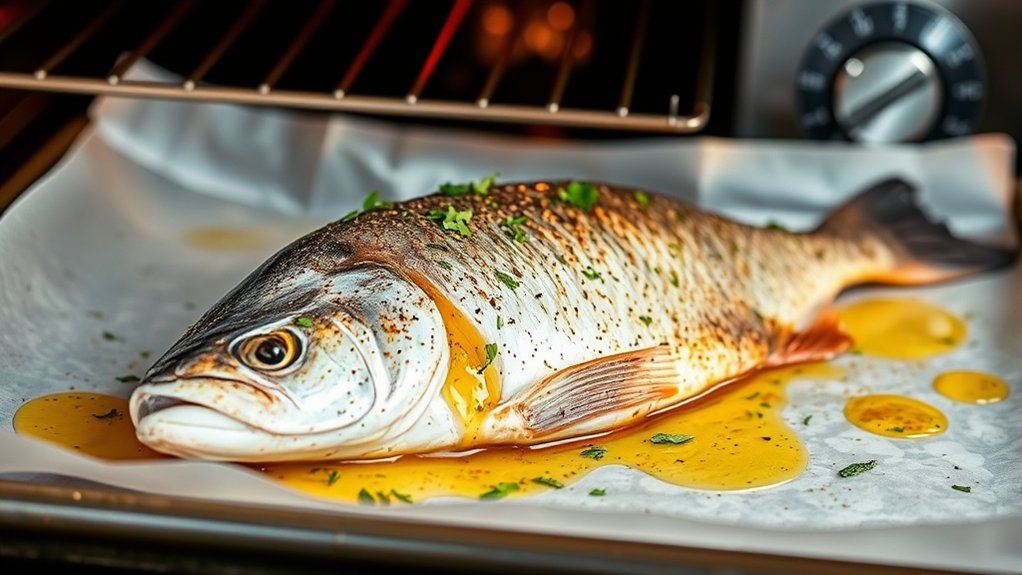
To get your fish to bake evenly at 350°F, start by choosing the freshest fillets you can find. Next, use simple seasoning techniques that enhance flavor without overpowering the fish.
Finally, prepare your baking dish properly to guarantee even heat distribution and prevent sticking.
Choosing Fresh Fish
Selecting fresh fish is essential for achieving even baking at 350°F, as freshness directly affects texture and flavor. When you pick your fish, look closely at the eyes—they should be clear and bright, not sunken or cloudy. Check the gills too; vibrant red or pink gills indicate freshness.
The flesh should be firm and spring back when you press it gently. Avoid fish that smells overly fishy; fresh fish has a mild, ocean-like scent.
Choosing fresh fish means you’ll enjoy:
- A tender, flaky texture that bakes evenly
- Rich, clean flavors that shine through your cooking
- A satisfying meal that feels light and nourishing
Fresh fish sets the foundation for perfectly baked results every time.
Seasoning Techniques
Although seasoning might seem simple, it plays a essential role in preparing fish for even baking at 350°F. You want to enhance flavor while ensuring the fish cooks uniformly. Start by patting the fish dry to help the seasoning stick and prevent sogginess.
Use a balanced mix of salt, herbs, and citrus to brighten the taste without overpowering it.
Here’s a quick guide to seasoning techniques:
| Technique | Purpose | Example Ingredients |
|---|---|---|
| Dry Rub | Adds crust, flavor | Paprika, garlic powder |
| Marinade | Tenderizes, flavors | Lemon juice, olive oil |
| Herb Bed | Infuses aroma | Dill, parsley, thyme |
Apply seasoning evenly for best results.
Preparing Baking Dish
When you prepare your baking dish properly, you help the fish cook evenly and prevent it from sticking. Start by choosing a baking dish that fits the fish comfortably without crowding. Next, lightly grease the dish with olive oil, melted butter, or non-stick spray to create a smooth surface.
You can also line the dish with parchment paper for easy cleanup and extra protection against sticking.
This simple step makes a big difference—your fish will come out perfect every time, juicy and intact.
- Feel the satisfaction of a beautifully cooked fish that slides off the dish effortlessly.
- Enjoy the confidence that comes with knowing your preparation guarantees success.
- Relish the ease of cleaning up afterward without scrubbing stuck-on bits.
Cooking Times for Different Fish Cuts at 350°F
Since different fish cuts vary in thickness and density, their cooking times at 350°F will differ accordingly. For thinner fillets, like sole or flounder, plan on about 10 to 12 minutes. Thicker fillets such as salmon or cod usually need 15 to 20 minutes.
If you’re cooking fish steaks, like tuna or swordfish, give them 20 to 25 minutes depending on thickness. Whole fish takes the longest; allow 25 to 30 minutes per pound. Remember, the key is consistent heat, so avoid opening the oven frequently.
Adjust your cooking time slightly if your fish is particularly thick or thin, but these general times will help you get started. This way, you’ll have perfectly cooked fish every time you bake at 350°F.
How to Tell When Your Fish Is Perfectly Cooked
You’ll know your fish is perfectly cooked by checking its texture and appearance. When it flakes easily with a fork and the flesh turns opaque, it’s ready to enjoy. Avoid overcooking to keep it moist and tender.
Look for these signs:
- The fish’s surface glistens slightly, showing it’s juicy and not dried out.
- The flesh separates into flakes without resistance, promising a melt-in-your-mouth bite.
- The color changes from translucent to solid, signaling thorough cooking.
Trust these cues rather than relying solely on time. Paying attention to texture and color guarantees your fish tastes fresh, delicate, and satisfying every time you bake it at 350°F.
Adjusting Cooking Time: Whole Fish vs. Fillets
Although cooking times vary, you should modify the duration depending on whether you’re baking a whole fish or fillets. Whole fish takes longer since heat needs to penetrate the bones and thicker flesh. Fillets cook faster because they’re thinner and boneless.
Here’s a quick guide:
| Type | Weight | Cooking Time at 350°F |
|---|---|---|
| Whole Fish | 1 to 1.5 pounds | 25-30 minutes |
| Fillets | 6 to 8 ounces | 12-15 minutes |
| Fillets | 8 to 12 ounces | 15-20 minutes |
Keep in mind, thicker fillets might need extra minutes, while smaller whole fish cook faster. Adjust cooking time accordingly to ensure even doneness.
Tips to Prevent Overcooking and Keep Fish Moist
Knowing the right cooking times for different types of fish helps, but preventing overcooking takes a bit more attention. You want your fish tender and juicy, not dry and tough.
Here are some tips to keep your fish moist and flavorful:
- Use a marinade or brush with oil: This adds moisture and helps create a delicious crust.
- Cover with foil: Trapping steam keeps the fish from drying out during baking.
- Check early and often: Start checking for doneness a few minutes before the expected time to avoid overcooking.
Frequently Asked Questions
Can I Cook Frozen Fish Directly at 350°F?
Yes, you can cook frozen fish directly at 350°F. Just add extra cooking time, usually about 50% longer than thawed fish, and make sure it reaches an internal temperature of 145°F for safe, delicious results.
What Side Dishes Pair Best With Oven-Baked Fish?
You’ll love pairing oven-baked fish with roasted vegetables, garlic mashed potatoes, or a fresh green salad. Steamed asparagus or quinoa also work great, adding light, healthy flavors that complement your delicious fish perfectly.
Is It Safe to Reheat Fish Cooked at 350°F?
Yes, you can safely reheat fish cooked at 350°F. Just make sure to heat it thoroughly to at least 165°F to kill bacteria.
Don’t overheat, or it might become dry and lose flavor.
How Do I Season Fish Before Baking at 350°F?
You can season fish with salt, pepper, lemon juice, garlic, and herbs like dill or parsley. Rub the seasonings on both sides before baking.
Don’t forget a drizzle of olive oil to keep it moist and flavorful.
Can I Use Foil or Parchment Paper When Cooking Fish?
Yes, you can use foil or parchment paper when cooking fish. They help lock in moisture and flavors while preventing sticking. Just wrap the fish tightly to create a steaming effect for tender, delicious results every time.
Conclusion
Cooking fish at 350°F is easy and forgiving, even if you worry about getting it just right. Remember, thickness matters more than exact minutes—thicker pieces need more time, thinner less. Don’t stress over perfection; using a fork to check flakiness helps you avoid overcooking.
With these simple tips, you’ll enjoy moist, tender fish every time, proving that oven-baked fish can be both delicious and hassle-free. Give it a try!
By following these guidelines, you’ll master how long to cook fish in the oven at 350°F and achieve perfect results with every bake.