10 Cookware Types That Are 100% Non-Toxic
You want cookware that’s safe, durable, and free from harmful chemicals, ensuring a healthy cooking environment. Choosing 100% non-toxic cookware is essential for both your well-being and the flavor of your meals.
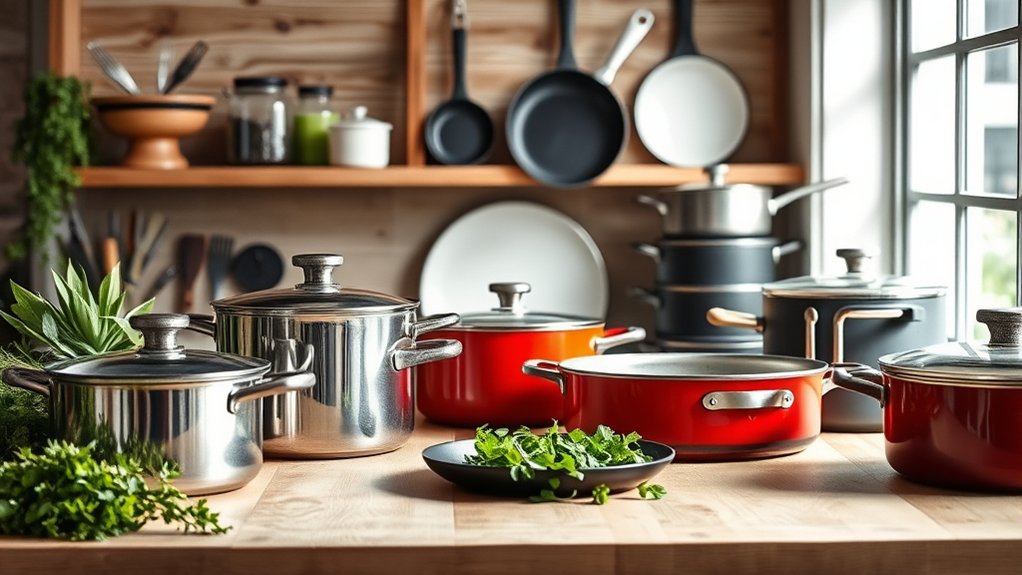
Popular materials like ceramic, glass, cast iron, enameled cast iron, stainless steel, carbon steel, 100% titanium, or copper lined with stainless steel, tin, or ceramic are excellent options.
These materials resist toxins, won’t leach metals, and offer lasting performance. Avoid non-stick surfaces containing PFOA or PTFE to stay healthy and prevent exposure to harmful chemicals.
If you keep exploring, you’ll discover which cookware suits your cooking style best and how to care for them properly.
Key Takeaways
- Stainless steel, cast iron, and glass cookware are safe, durable, and free from harmful chemical coatings or heavy metals.
- Ceramic cookware offers a non-reactive, chemical-free, naturally non-stick surface suitable for everyday use.
- Carbon steel cookware provides a natural non-stick surface through seasoning, avoiding synthetic coatings and toxins.
- 100% titanium cookware is lightweight, non-reactive, scratch-resistant, and easy to clean for safe cooking.
- Copper cookware with stainless steel, tin, or ceramic linings prevents copper leaching while delivering excellent heat control.
Why Non-Toxic Cookware Matters for Your Health
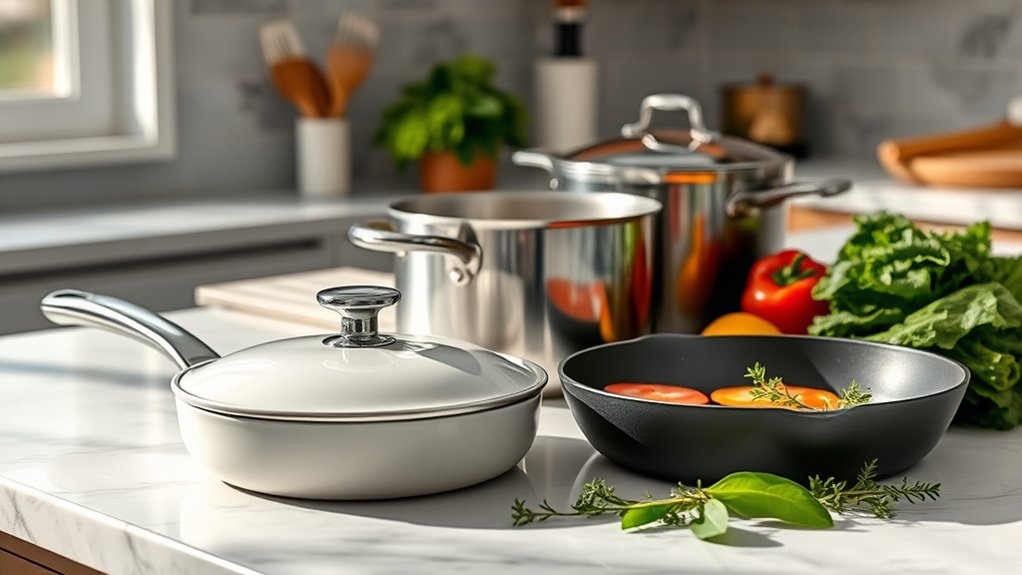
Although cookware may seem like a simple kitchen tool, the materials it’s made from can directly affect your health. When you use cookware with harmful chemicals or toxic coatings, those substances can leach into your food, especially when heated. This exposure might lead to long-term health issues, including hormonal imbalances or respiratory problems.
You want to avoid anything that could introduce toxins into your meals. Choosing non-toxic cookware means you’re protecting yourself and your family from unnecessary risks. Plus, safer materials often hold up better over time, so you won’t have to worry about quick wear or peeling surfaces that can contaminate food.
Being mindful of the cookware you use is a smart step toward healthier cooking and eating habits every day.
How to Recognize Safe, Non-Toxic Cookware Materials
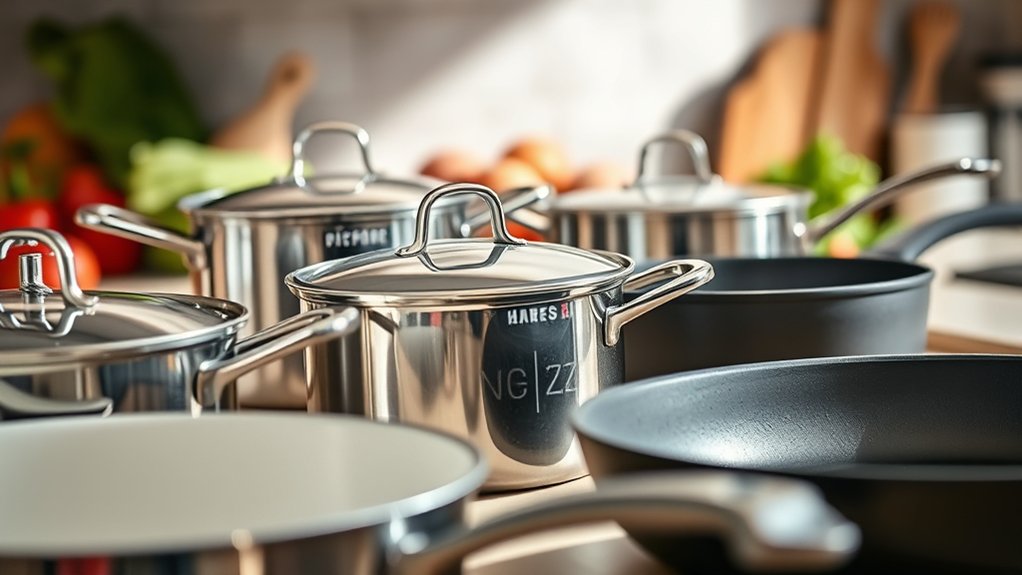
When choosing cookware, you want to look for materials that won’t release harmful chemicals into your food. Start by checking the material’s reputation for safety. Stainless steel, cast iron, and glass are known for being non-toxic and durable.
Avoid cookware with non-stick coatings containing PFOA or PTFE, as they can emit toxic fumes when overheated. Look for labels that specify “PFOA-free” or “PFAS-free” to guarantee safety. You should also consider if the cookware is free from heavy metals like lead or cadmium, especially in enamel coatings.
Finally, trust brands that provide transparent information about their manufacturing processes and materials. By paying attention to these details, you’ll confidently select cookware that’s safe and healthy for your kitchen.
Ceramic Cookware: Safe, Durable, and Chemical-Free
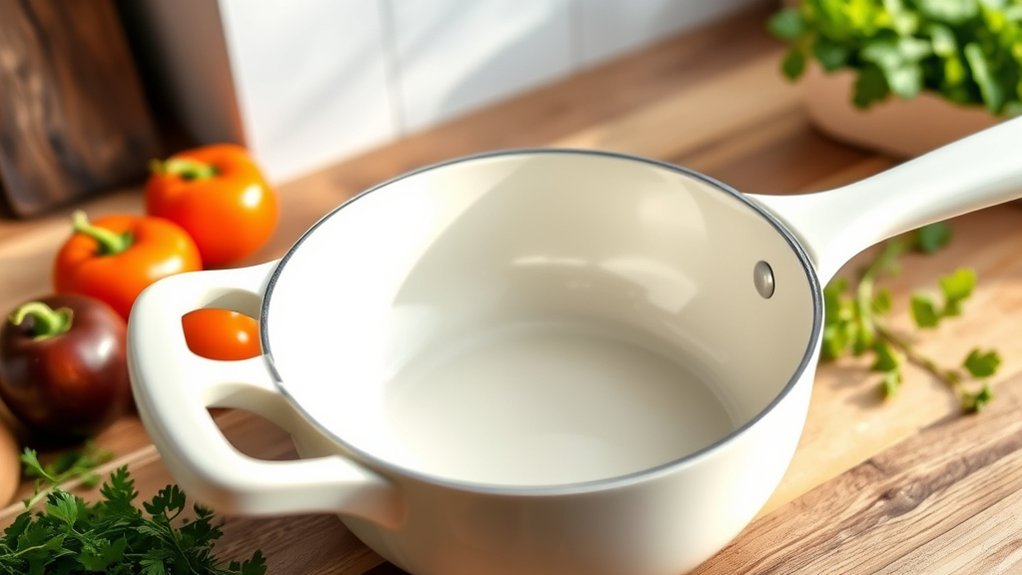
You’ll appreciate ceramic cookware for its durable, heat-resistant design that stands up to everyday use. Its chemical-free coating means you can cook without worrying about harmful toxins leaching into your food.
Choosing ceramic guarantees a safe and reliable cooking surface every time.
Benefits of Ceramic Coating
Since ceramic coatings don’t contain harmful chemicals like PTFE or PFOA, you can cook your meals with confidence that no toxins will leach into your food. This means you’re choosing cookware that supports a healthier lifestyle without sacrificing performance. Ceramic coatings are naturally non-stick, so you’ll use less oil or butter, making your dishes lighter and healthier.
You’ll also find cleanup easier since food won’t cling to the surface. Because ceramic is inert, it won’t react with acidic or alkaline ingredients, preserving your meal’s natural flavors. Plus, ceramic coatings are free from heavy metals and harmful additives, giving you peace of mind every time you cook.
Choosing ceramic-coated cookware means prioritizing safety without compromising on convenience or taste.
Durability and Heat Resistance
Although ceramic cookware is prized for its safety and non-toxicity, it also stands out for its impressive durability and heat resistance. When you use ceramic pots and pans, you’ll notice they handle high cooking temperatures without warping or cracking. Their solid construction ensures they last for years, even with regular use.
Plus, ceramic materials distribute heat evenly, so your food cooks consistently without hot spots. You won’t have to worry about the cookware degrading over time or losing its strength. Just remember to avoid sudden temperature changes, like moving a hot pan directly into cold water, to maintain its resilience.
Chemical-Free Cooking Surface
How does ceramic cookware guarantee a truly chemical-free cooking experience? When you cook with ceramic, you’re using a surface made from natural minerals baked at high temperatures, free from synthetic chemicals or harmful coatings. Unlike traditional non-stick pans that may release toxic fumes when overheated, ceramic cookware stays safe and inert, ensuring no toxins leach into your food.
You’ll appreciate that ceramic surfaces resist scratches and don’t degrade over time, maintaining their purity throughout daily use. Plus, ceramic heats evenly, so your meals cook consistently without hotspots. By choosing ceramic, you’re protecting your health and the environment.
It’s a simple switch that lets you enjoy clean, chemical-free cooking every day without sacrificing durability or performance.
Glass Cookware: Pure and Non-Toxic for Oven and Stove
You’ll appreciate how glass cookware handles high heat without releasing toxins, making it safe for both oven and stove use.
To keep it in top shape, you’ll want to avoid sudden temperature changes and clean it gently.
These simple steps help maintain its purity and durability.
Heat Resistance and Safety
When you choose glass cookware, you’re opting for a material that handles high heat without releasing harmful chemicals. Glass cookware withstands oven temperatures up to 450°F (232°C) and can shift safely from oven to table. It’s non-reactive, so it won’t leach toxins or metallic flavors into your food, ensuring safe cooking every time.
However, avoid sudden temperature changes to prevent cracking.
Here’s a quick overview of heat resistance and safety for glass cookware:
| Feature | Temperature Range | Safety Benefit |
|---|---|---|
| Oven Use | Up to 450°F (232°C) | Stable under high heat |
| Stove Use | Medium heat recommended | Prevents thermal shock |
| Chemical Reactivity | Non-reactive | No leaching or flavor change |
Glass cookware keeps your meals pure and safe.
Cleaning and Maintenance Tips
Maintaining the integrity of glass cookware means paying close attention to cleaning and care. You should avoid sudden temperature changes, like moving your glass dish from the oven directly to cold water, as this can cause cracking. After cooking, let your glass cookware cool before washing.
Use warm, soapy water and a soft sponge to clean it, steering clear of abrasive pads that might scratch the surface. For stubborn stains or baked-on food, soak your cookware in warm water with a bit of baking soda before gently scrubbing. Avoid harsh chemical cleaners, since they can damage the glass and affect its non-toxic nature.
Cast Iron Cookware: Natural and Long-Lasting Safety
Although cast iron cookware has been around for centuries, it remains a top choice for those seeking a non-toxic and durable option. When you use cast iron, you avoid synthetic coatings that can release harmful chemicals at high temperatures. Its natural surface, once properly seasoned, becomes non-stick without needing toxic additives.
Plus, cast iron evenly distributes heat, so your food cooks consistently and safely. With proper care, your skillet or Dutch oven can last generations, making it a sustainable and economical investment. Just remember to dry it thoroughly after washing to prevent rust and occasionally re-season it to maintain its protective layer.
Enameled Cast Iron Cookware: Easy to Clean and Non-Toxic
Because enameled cast iron combines the durability of traditional cast iron with a smooth, non-porous coating, it offers a non-toxic cooking surface that’s easy to clean and resistant to rust. You won’t have to season it like regular cast iron, and the enamel prevents food from reacting with the metal. This makes it perfect for acidic dishes.
Plus, its vibrant colors add style to your kitchen.
Here’s a quick look at what you can expect:
| Feature | Benefit |
|---|---|
| Non-toxic coating | Safe cooking without chemicals |
| Easy to clean | No scrubbing or seasoning |
| Rust-resistant | Long-lasting use |
| Heat retention | Cooks food evenly |
| Versatile use | Oven and stovetop friendly |
Enameled cast iron is a smart, safe choice.
Stainless Steel Cookware: Durable and Non-Reactive
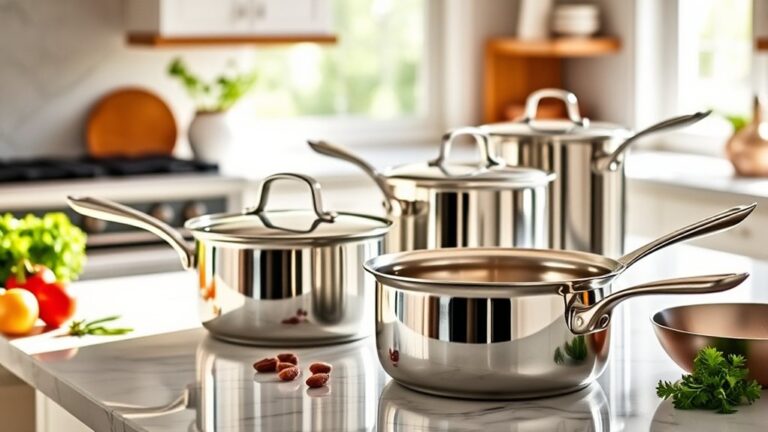
If you appreciate the non-toxic benefits of enameled cast iron, stainless steel cookware offers another reliable option that combines durability with safety. You’ll find it’s made from an alloy of iron, chromium, and sometimes nickel, which creates a tough, corrosion-resistant surface. This means you won’t have to worry about chemicals leaching into your food because stainless steel is non-reactive.
It’s perfect for searing, boiling, and sautéing without altering flavors or releasing toxins. Plus, its sturdy construction ensures it withstands scratches and high heat, lasting for years. While it may need a bit more oil to prevent sticking, stainless steel’s longevity and safety make it a smart choice if you want cookware that’s both practical and non-toxic.
Carbon Steel Cookware: A Non-Toxic Alternative to Non-Stick
If you’re looking for a non-toxic alternative to traditional non-stick pans, carbon steel cookware is worth considering. You’ll enjoy great cooking performance once you learn how to properly season and maintain it.
Let’s explore its benefits and the simple care it requires.
Benefits Of Carbon Steel
While many non-stick pans rely on synthetic coatings that can release harmful chemicals, carbon steel cookware offers a naturally safe alternative you can trust. It heats up quickly and distributes heat evenly, so your food cooks consistently without hot spots. You’ll appreciate its durability—it’s nearly indestructible and can last a lifetime with proper care.
Carbon steel is also versatile; you can use it on the stovetop, in the oven, or even over an open flame. Plus, it naturally develops a non-stick surface as you cook, reducing the need for added oils. Because it contains no synthetic chemicals, you avoid toxins often found in traditional non-stick pans, making it a healthier choice for you and your family.
Maintenance And Seasoning Tips
To keep your carbon steel cookware performing at its best, regular maintenance and proper seasoning are key. After each use, clean your pan with hot water and a soft sponge—avoid soap, which can strip the seasoning. Dry it completely to prevent rust.
If you notice rust spots, scrub them gently with steel wool, then reseason.
Seasoning involves coating your pan with a thin layer of oil and heating it until it polymerizes, creating a natural non-stick surface. Do this when your pan is new and periodically afterward, especially if food starts sticking. Use oils with a high smoke point like flaxseed or grapeseed oil.
With proper care, your carbon steel will develop a durable, non-toxic coating that improves with every meal.
Cooking Performance Compared
Although many cooks reach for traditional non-stick pans for convenience, carbon steel offers a safer, non-toxic alternative without sacrificing performance. When you switch to carbon steel, you’ll notice it heats quickly and evenly, giving you excellent control over your cooking.
Here’s how carbon steel stacks up:
- Heat Distribution: It heats rapidly and holds temperature well, perfect for searing and frying.
- Durability: Carbon steel is tough and can withstand high heat, unlike many non-stick coatings that degrade.
- Versatility: You can use it on the stovetop, in the oven, and even over an open flame, making it ideal for various recipes.
With proper seasoning, carbon steel develops a natural non-stick surface, making it a reliable, non-toxic choice for everyday cooking.
100% Titanium Cookware: Lightweight and Safe for Every Meal
Because titanium is both incredibly strong and lightweight, 100% titanium cookware offers a safe and convenient option for your kitchen. You’ll appreciate how easy it is to handle, especially when cooking multiple dishes or moving pans from stove to oven. Titanium doesn’t react with your food, so it keeps every meal free from harmful chemicals or metallic tastes.
Plus, its durability means your cookware resists scratches and dents, lasting for years without degrading. Cleaning up is simple since titanium’s non-porous surface prevents food from sticking. While it might come at a higher price point, the long-term benefits and peace of mind make it worthwhile.
Choosing 100% titanium cookware ensures you enjoy healthy meals with cookware that’s both safe and built to perform consistently.
Copper Cookware With Safe, Non-Toxic Linings
When you choose copper cookware with safe, non-toxic linings, you get the benefit of excellent heat conductivity without worrying about harmful chemicals leaching into your food. Copper heats quickly and evenly, making it ideal for precise cooking.
To guarantee safety, look for these common non-toxic linings:
To ensure safe cooking, choose copper cookware with reliable, non-toxic linings.
- Stainless Steel – Durable, easy to clean, and non-reactive, it prevents copper from interacting with acidic foods.
- Tin – A traditional lining that’s natural and non-toxic, though it requires occasional re-tinning to maintain effectiveness.
- Ceramic – Provides a smooth, non-stick surface without synthetic chemicals, perfect for healthier cooking.
Frequently Asked Questions
How Should I Clean and Maintain Non-Toxic Cookware?
You should clean your non-toxic cookware gently with warm, soapy water and a soft sponge. Avoid abrasive scrubbers and harsh chemicals.
Dry it thoroughly to prevent rust, and season if recommended to maintain its non-stick surface.
Can Non-Toxic Cookware Be Used on Induction Cooktops?
Like a magnet pulling metal, non-toxic cookware works on induction cooktops if it has a magnetic base. You’ll want to check for materials like stainless steel or cast iron to guarantee it heats properly.
Are Non-Toxic Cookware Options Suitable for Outdoor Cooking?
Yes, you can use non-toxic cookware for outdoor cooking. Just make sure it’s durable and compatible with your heat source, like a campfire or portable stove, so you cook safely and enjoy your meal without toxins.
What Is the Average Lifespan of Non-Toxic Cookware?
You can expect non-toxic cookware to last anywhere from 5 to 15 years, depending on the material and care. Proper cleaning and avoiding metal utensils will help you extend its lifespan considerably.
Taking good care of your cookware is essential for longevity. Regular maintenance and gentle handling make a significant difference. This way, your cookware remains safe and effective for years.
Do Non-Toxic Cookware Types Affect Cooking Times or Temperatures?
Yes, non-toxic cookware can affect cooking times or temperatures because materials like ceramic or stainless steel distribute heat differently. You’ll want to adjust heat settings and monitor your food to cook it perfectly every time.
Conclusion
Choosing cookware carefully can create a clean, chemical-free cooking corner in your kitchen. By picking pieces that prioritize purity—like ceramic, cast iron, or titanium—you protect your plates and your people. Safe, sturdy, and sustainable, these selections serve up a satisfying solution to sneaky toxins.
So, start steering toward safer selections and savor the simple satisfaction of stress-free, scrumptious meals made with mindful materials. Your health and happiness will surely thank you! Embracing non-toxic cookware options ensures a healthier lifestyle and a more enjoyable cooking experience.