How Do You Pan Fry a Salmon Fillet in 7 Easy Steps?
Choose a fresh, skin-on salmon fillet about 1 to 1.5 inches thick for the best pan-frying results. Pat the fillet dry and season it generously with salt and pepper. This preparation ensures a flavorful and crispy exterior.
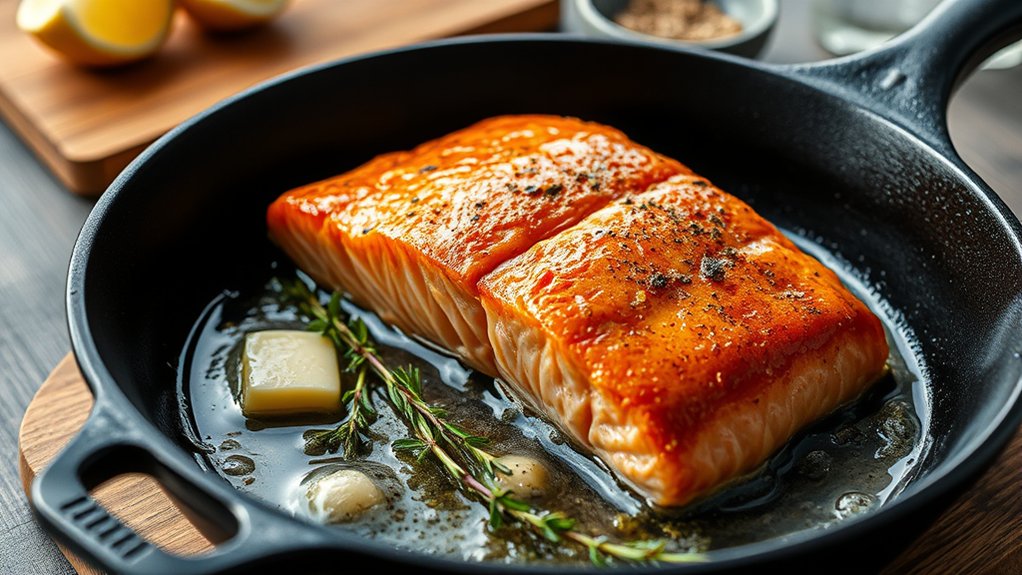
Heat a cast iron pan over medium-high heat and add a high-smoke-point oil like avocado or canola oil. Place the salmon fillet skin-side down in the hot pan. Cook for 4–5 minutes until the skin is crispy and golden brown.
Flip the fillet carefully and cook for an additional 2–3 minutes. Check that the flesh is opaque and flakes easily with a fork or reaches an internal temperature of 125°F.
Let the salmon rest briefly before serving to retain its juices and flavor.
Keep following these simple steps to master the art of pan-frying salmon fillets perfectly every time.
Key Takeaways
- Choose fresh, skin-on salmon fillets about 1–1.5 inches thick and pat dry before seasoning with salt and pepper.
- Preheat a cast iron or stainless steel pan over medium-high heat and add high smoke point oil once hot.
- Place salmon skin-side down, cooking 4–5 minutes until skin is crispy and golden brown.
- Flip and cook the other side for 2–3 minutes until the flesh is opaque and flakes easily.
- Check for an internal temperature of 125°F for medium doneness, then rest briefly before serving.
Choose the Right Salmon Fillet for Pan Frying
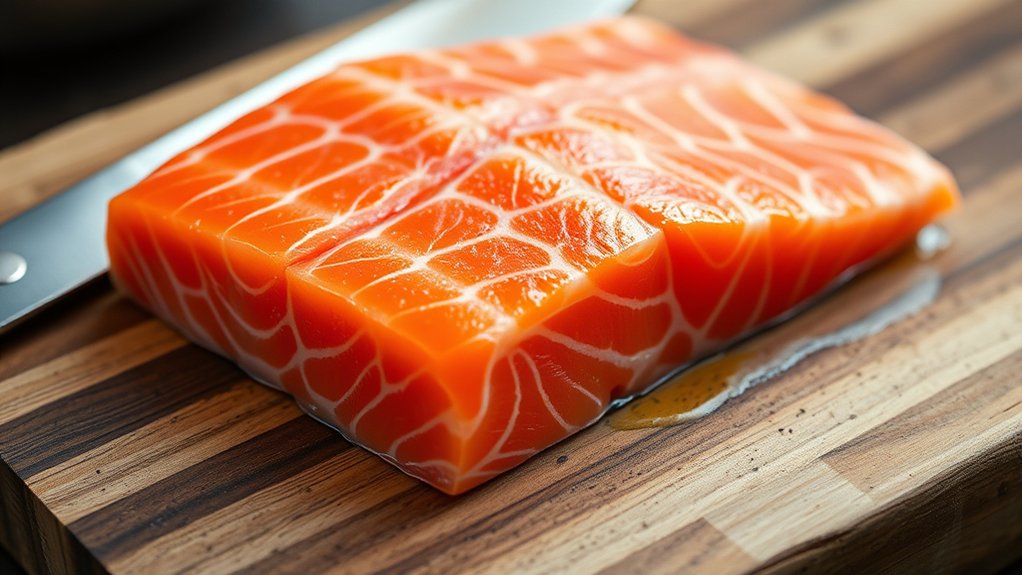
When choosing the right salmon fillet for pan frying, you’ll want to look for a piece that’s fresh, firm, and evenly sized to guarantee even cooking. Check the color—bright pink or orange indicates freshness. Avoid fillets with brown spots or dull hues.
The flesh should spring back when you press it gently, signaling firmness. Opt for skin-on fillets, which help keep the fish moist and add flavor during cooking. Also, consider the thickness; a fillet about one to one-and-a-half inches thick cooks evenly without drying out.
If possible, select wild-caught salmon for a richer taste and better texture. By picking the right fillet, you set yourself up for a perfectly pan-fried salmon every time.
Prepare Your Salmon for Pan Frying
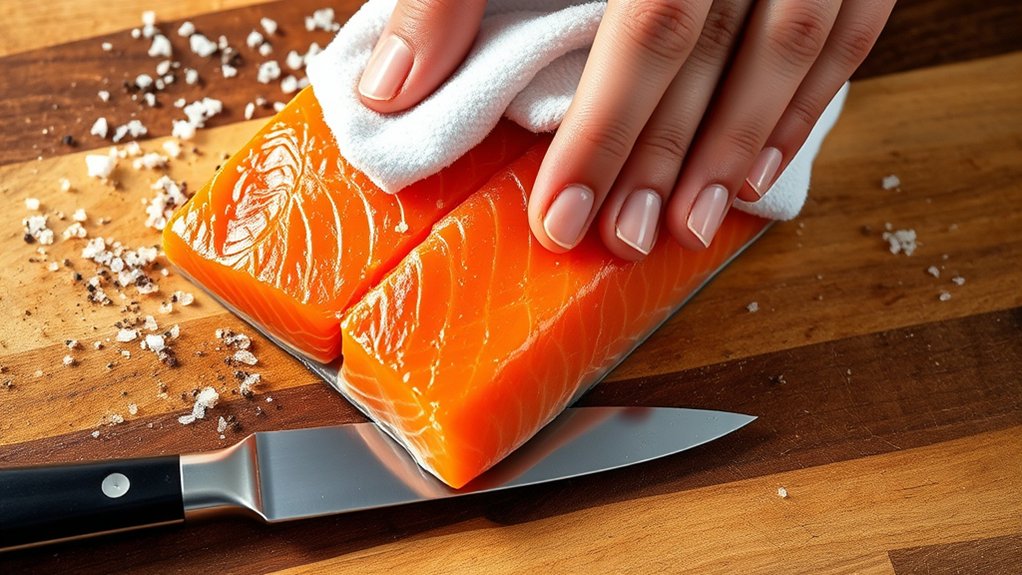
Before you start cooking, pat your salmon fillet dry with paper towels to remove excess moisture, which helps achieve a crispier crust. Next, inspect the fillet for any pin bones by gently running your fingers along the flesh; remove any you find with tweezers. Season your salmon generously with salt and pepper on both sides to enhance the flavor.
If you like, add a light sprinkle of garlic powder or paprika for extra taste. Let the seasoned fillet sit at room temperature for about 10–15 minutes before cooking; this helps it cook evenly. Avoid overcrowding the fillet with too many spices or marinades, as they can interfere with the pan-frying process and the salmon’s natural flavor.
Pick the Best Pan and Oil for Crispy Salmon
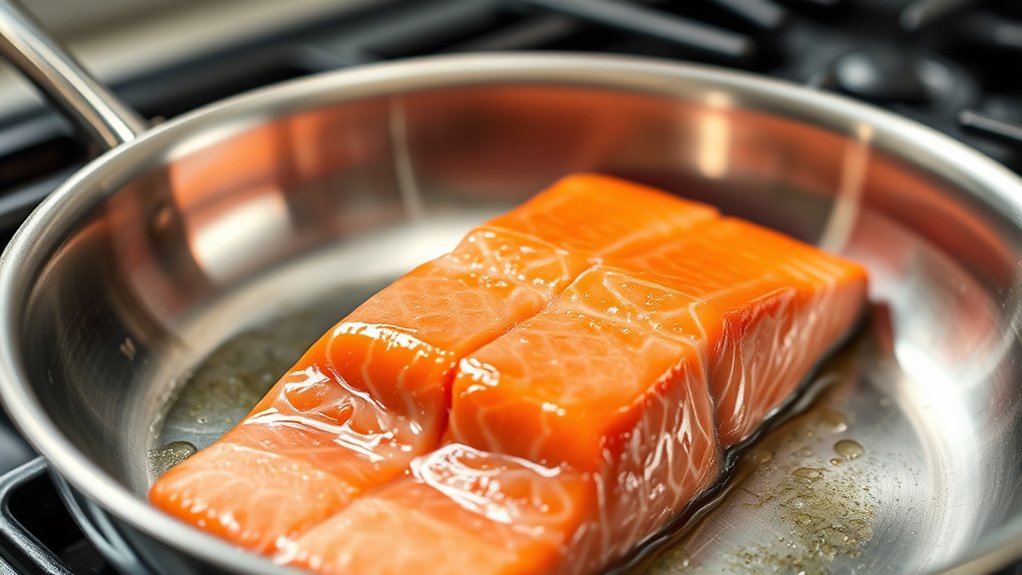
To get that perfect crispy crust, you need the right pan and oil. Choose a pan with good heat retention and a size that fits your salmon without crowding.
Picking an oil with a high smoke point will help you fry without burning.
Ideal Pan Materials
Selecting the right pan and oil plays a crucial role in achieving crispy, perfectly cooked salmon. When it comes to pans, you want materials that heat evenly and maintain a steady temperature. Non-stick pans help prevent sticking but may not give you the best sear.
Cast iron and stainless steel pans excel at creating a crispy crust due to their excellent heat retention.
Here’s a quick overview of ideal pan materials:
| Pan Material | Benefits |
|---|---|
| Cast Iron | Excellent heat retention, great crust |
| Stainless Steel | Even heating, ideal for searing |
| Non-stick | Easy release, less oil needed |
Choose your pan based on the texture and crust you want, then pair it with the right oil for best results.
Best Oils for Frying
Pairing the right oil with your pan can make all the difference in achieving that perfect crispy salmon skin. You want an oil with a high smoke point so it won’t burn at the temperatures needed for searing. Avocado oil and refined grapeseed oil are excellent choices; both handle heat well and have neutral flavors that won’t overpower the salmon.
Light olive oil also works, but avoid extra virgin olive oil since it smokes too quickly. You could use clarified butter (ghee) for a richer taste, but be mindful of its lower smoke point compared to oils. Whichever oil you pick, heat it until shimmering before adding your salmon to guarantee a beautiful, crisp crust that locks in flavor and moisture.
Pan Size and Shape
Which pan will give you the crispiest salmon skin? A heavy-bottomed skillet, like cast iron or stainless steel, is your best bet. These pans hold heat evenly, ensuring consistent cooking and a golden crust.
Choose a pan just large enough to fit your fillet without crowding; overcrowding traps steam, making skin soggy. Avoid nonstick pans if you want maximum crispiness—though easier to clean, they don’t develop that perfect sear. Opt for a pan with slightly sloped sides to let steam escape and make flipping easier.
Before adding oil, preheat the pan on medium-high heat until shimmering. Using the right pan size and shape helps you control heat and moisture, giving your salmon that irresistible crispy skin you’re aiming for every time.
Set the Perfect Heat for Pan Frying Salmon
Before you place the salmon in the pan, heat it to medium-high so the fillet gets a crisp, golden crust without overcooking inside. You want the pan hot enough that the salmon sizzles immediately when it hits the surface. If the heat’s too low, the fish will cook unevenly and won’t develop that desirable sear.
On the other hand, too high heat risks burning the outside while leaving the center undercooked. Adjust your stove accordingly, aiming for a steady sizzle rather than a roar. Once the pan reaches the right temperature, add a small amount of oil with a high smoke point, like avocado or grapeseed oil.
This guarantees the salmon won’t stick and helps create that perfect crust you’re aiming for.
Cook Your Salmon Fillet Perfectly
Once your pan is properly heated and oiled, gently place the salmon fillet skin-side down to start cooking. Press it lightly for even contact. Cook without moving it for about 4-5 minutes until the skin crisps and the fish changes color halfway up.
Flip carefully with a spatula and cook the other side for 2-3 minutes. This method guarantees a juicy interior and crispy skin.
| Step | Action | Time (minutes) |
|---|---|---|
| 1 | Place skin-side down | 4-5 |
| 2 | Press gently | 0.5 |
| 3 | Flip and cook other side | 2-3 |
This approach delivers perfectly cooked salmon every time, locking in flavor and texture.
Check When Your Pan-Fried Salmon Is Done
Although the cooking time gives you a good estimate, you’ll want to check your salmon to verify it’s done perfectly. Look for opaque flesh that flakes easily with a fork—this is a clear sign it’s cooked through. The color should change from translucent to a solid pink.
Avoid overcooking; the salmon should still be moist inside. You can also gently press the fillet with your finger; it should spring back slightly but not feel mushy. If you have a food thermometer, aim for an internal temperature of 125°F (52°C) for medium doneness.
Checking these indicators ensures your salmon is tender and flavorful, not dry or undercooked. Taking a moment to confirm will reward you with perfectly pan-fried salmon every time.
Serve and Store Your Pan-Fried Salmon
Once your salmon is perfectly cooked, you’ll want to serve it with fresh sides like steamed vegetables or a crisp salad.
If you have leftovers, store them properly in an airtight container to keep the fish fresh.
Let’s go over the best ways to enjoy and preserve your pan-fried salmon.
Serving Suggestions
When you finish pan-frying your salmon, serving it immediately will highlight its crispy exterior and tender interior. Plate your fillet alongside fresh, vibrant sides like steamed asparagus, roasted potatoes, or a simple mixed green salad to balance the rich flavors. A squeeze of lemon or a dollop of herb butter can add brightness and enhance the taste.
For a more elegant touch, garnish with fresh dill or parsley. If you’re aiming for a quick meal, serve the salmon over a bed of rice or quinoa, letting the juices soak in. Remember to use a warm plate to keep the salmon hot longer.
These serving ideas guarantee your pan-fried salmon shines as the meal’s star without overpowering its delicate flavor.
Proper Storage Techniques
To keep your pan-fried salmon fresh and flavorful, you need to store it properly as soon as possible after serving. Follow these simple steps to maintain its taste and texture:
- Cool quickly: Let the salmon cool to room temperature within two hours to prevent bacterial growth.
- Use airtight containers: Store the fillet in an airtight container or wrap it tightly in plastic wrap to avoid moisture loss.
- Refrigerate promptly: Place the salmon in the fridge at or below 40°F (4°C) to keep it safe for up to 3 days.
- Freeze for longer storage: If you want to keep it longer, freeze the salmon in a sealed bag or container, and consume it within 2 months for best quality.
Proper storage ensures your pan-fried salmon stays delicious for your next meal.
Frequently Asked Questions
Can I Pan Fry Salmon Skinless Fillets?
Yes, you can pan fry skinless salmon fillets. Just make sure to handle them gently to prevent sticking or breaking. Use medium heat, oil the pan well, and cook each side until golden and cooked through.
How Long Does Pan-Fried Salmon Stay Fresh in the Fridge?
You can keep pan-fried salmon fresh in the fridge for up to 3 days. Make sure you store it in an airtight container to maintain flavor and prevent it from drying out or absorbing other odors.
What Side Dishes Pair Best With Pan-Fried Salmon?
Looking for the perfect sides? Why not try roasted asparagus, garlic mashed potatoes, or a fresh quinoa salad?
You’ll love how these dishes complement your salmon’s rich, crispy flavor and keep your meal balanced and delicious.
Can I Use Frozen Salmon Fillets for Pan Frying?
Yes, you can use frozen salmon fillets for pan frying, but you’ll need to thaw them completely first.
Pat them dry to avoid splattering, then season and cook as usual for the best texture and flavor.
How Do I Reheat Pan-Fried Salmon Without Drying It Out?
You can reheat pan-fried salmon gently in a low oven or on the stovetop with a lid, adding a splash of water or broth. This keeps it moist and prevents it from drying out while warming evenly.
Using low heat ensures the salmon warms through without overcooking. The added liquid creates steam, which helps maintain moisture.
Covering the pan traps heat and moisture, making reheating more effective. This method preserves the salmon’s texture and flavor.
Conclusion
Now that you’ve mastered pan frying salmon, you’re ready to create a golden masterpiece that’s crispy on the outside and tender inside. With the right fillet, heat, and a bit of patience, cooking salmon becomes as easy as a Sunday morning.
Remember, practice makes perfect, so don’t be afraid to try again and again. Soon, you’ll be serving salmon that’s as inviting as a warm hug on a cold day. Mastering the art of pan frying salmon fillets will elevate your cooking skills and impress your guests every time.