How Much Do Induction Cooktops Cost?
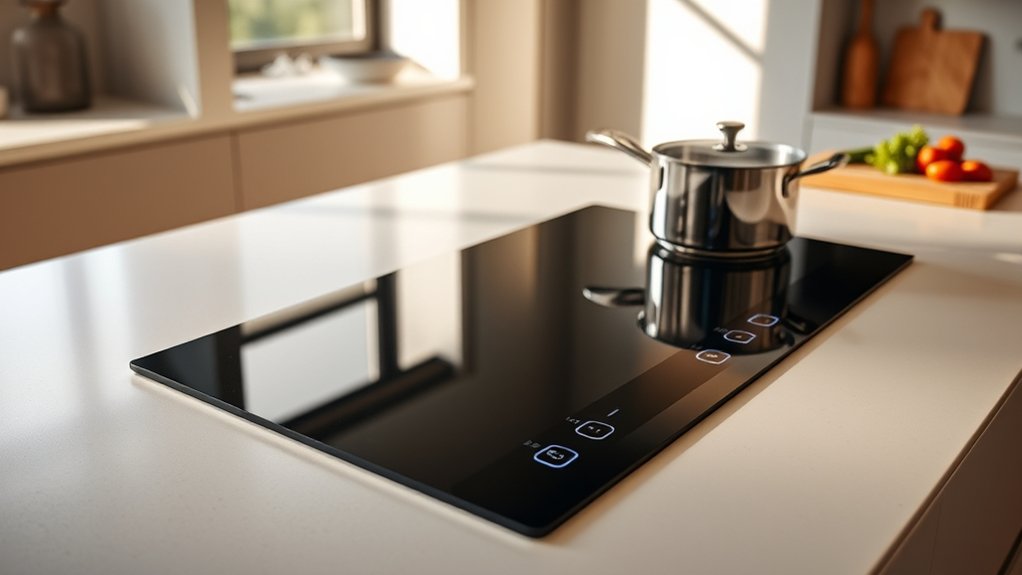
You can expect to pay between $100 and $2,500 for an induction cooktop, with costs varying based on size, features, and brand. Induction cooktops offer efficient cooking and precise temperature control, making them a popular choice for modern kitchens. Understanding the price range helps you choose the best option for your needs and budget.
Small models with 1-2 burners typically cost around $100 to $300, making them ideal for compact spaces or single users.
Full setups with 4 or more burners range from $1,000 to $2,500, offering more cooking capacity and advanced features.
Features like smart controls and safety functions can raise the price further.
Installation costs and potential energy savings also impact the overall expense of owning an induction cooktop.
Keep exploring to find the option that best fits your kitchen and financial plan.
Key Takeaways
- Induction cooktops range from $100 for basic single burners to $2,500+ for large, multi-zone models with advanced features.
- Small models (1-2 burners) typically cost $100-$300, while full kitchen setups (4+ burners) range from $1,000 to $2,500.
- Advanced features like smart controls, Wi-Fi, and safety enhancements increase the price but improve convenience and safety.
- Professional installation costs $150-$500, with possible additional expenses for electrical upgrades or countertop modifications.
- Online shopping offers variety and deals, while in-store shopping allows hands-on testing for size, controls, and features.
How Much Do Induction Cooktops Cost?
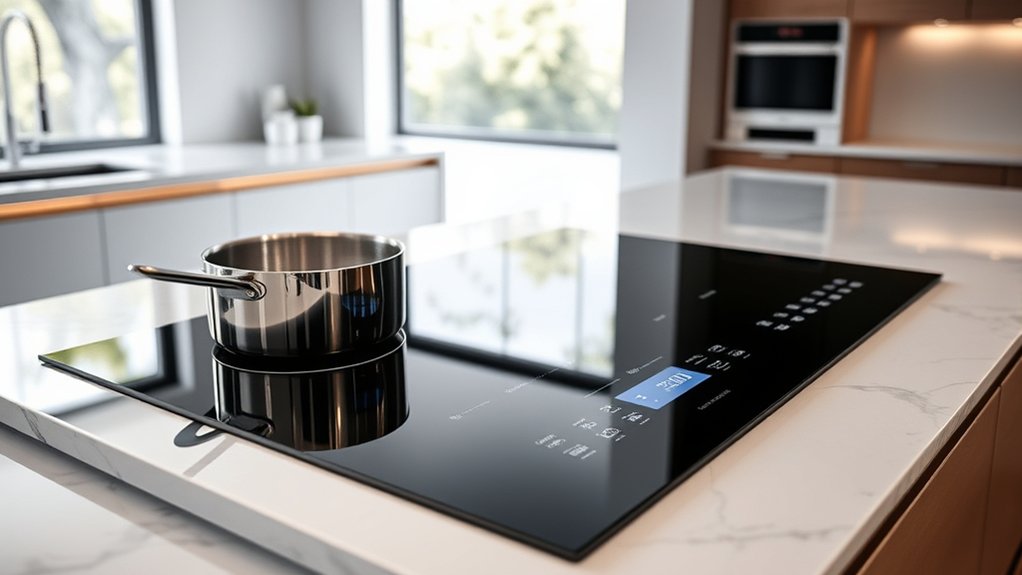
Induction cooktops typically cost between $300 and $2,500, depending on features, size, and brand. When you shop, you’ll find models ranging from single-burner portable cooktops to multi-burner built-in units. If you want a compact option for small spaces or occasional use, a single or double burner model usually costs around $300 to $700.
For a full kitchen setup with four or more burners, expect prices closer to $1,000 to $2,500. You’ll notice that popular brands tend to be on the higher end, while lesser-known names offer more budget-friendly choices. By understanding these general price ranges, you can better plan your budget and find an induction cooktop that fits your cooking needs and kitchen space.
What Makes Induction Cooktops Cost More or Less?
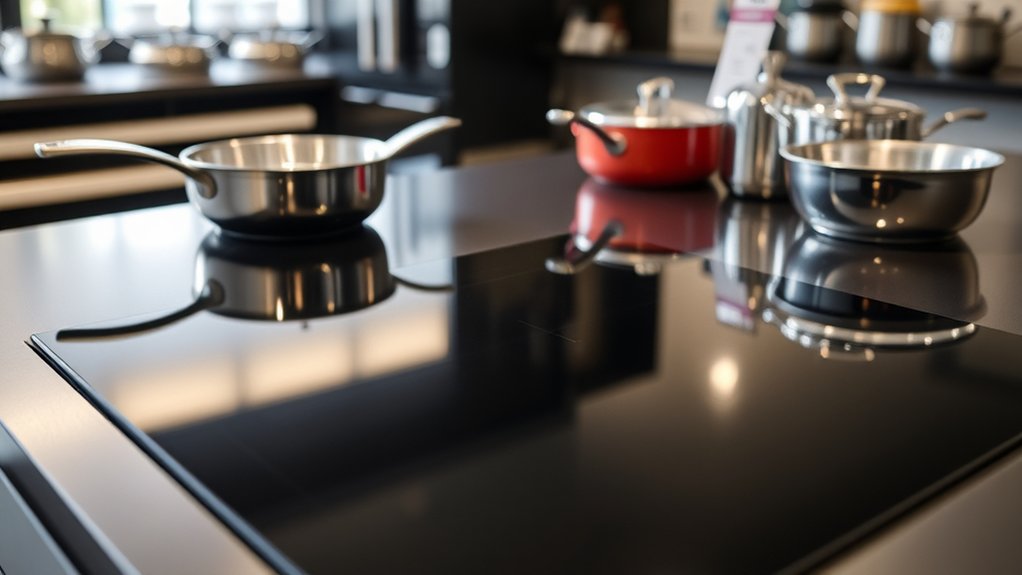
You’ll find that the technology and features built into an induction cooktop play a big role in its price. The brand and overall build quality also affect how much you’ll pay.
Understanding these factors helps you choose a cooktop that fits your budget and needs.
Technology and Features
Although many factors influence the price of cooktops, the technology and features built into them play a major role in determining how much you’ll pay. Advanced tech like smart controls, precise temperature sensors, and multi-zone cooking increase the cost but boost convenience and efficiency.
Basic models with fewer features are more affordable but offer less flexibility. Here’s a quick look at how specific features affect pricing:
| Feature | Impact on Price |
|---|---|
| Power Boost | Raises price |
| Touch Controls | Moderate increase |
| Wi-Fi Connectivity | Higher cost |
| Bridge Elements | Adds to price |
| Child Safety Lock | Minimal cost impact |
Choosing features based on your cooking needs helps balance cost and functionality.
Brand and Build Quality
When deciding how much to invest in a cooktop, the brand and build quality play pivotal roles in shaping the price. Trusted brands often charge more because they use premium materials and rigorous testing, ensuring durability and performance. When you pick a high-quality induction cooktop, you get reliable heating, sleek design, and longer lifespan.
On the other hand, budget brands may cut corners, affecting longevity and safety.
Consider these factors that influence cost:
- Stainless steel vs. plastic components
- Glass surface thickness and scratch resistance
- Brand reputation and warranty coverage
- Precision of temperature control
- Customer service and repair availability
Choosing wisely means balancing your budget with the quality and brand reliability you expect.
How Does Cooktop Size Affect the Price?
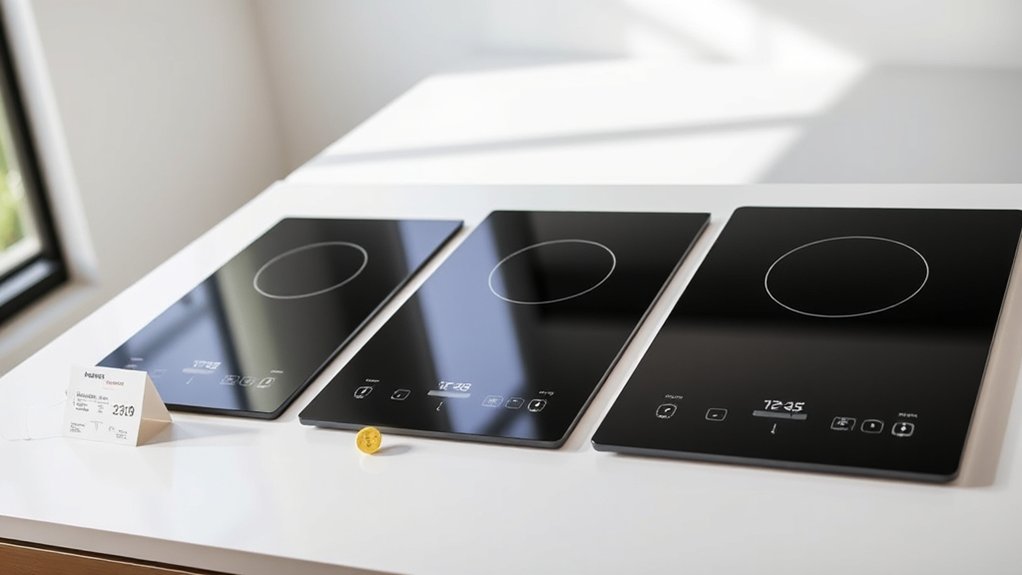
Because cooktop size directly impacts the number of burners and overall surface area, it plays a significant role in determining the price. Larger cooktops offer more cooking zones, letting you prepare multiple dishes simultaneously, but they usually come with a higher price tag. Smaller models are budget-friendly and fit compact kitchens but limit your cooking capacity.
Here’s a quick comparison:
| Cooktop Size | Typical Price Range |
|---|---|
| Small (1-2 burners) | $100 – $300 |
| Medium (3-4 burners) | $300 – $700 |
| Large (5+ burners) | $700 – $1,500+ |
Your choice depends on your kitchen space and cooking needs, balancing cost with convenience and functionality.
How Much Do Basic Induction Cooktops Cost?
You can find basic induction cooktops starting around $100 to $300, depending on features like burner count and power settings. Keep in mind that simpler models often have fewer controls and smaller cooking zones.
Shopping online or at major appliance stores gives you plenty of options to fit your budget and needs.
Entry-Level Price Range
How much should you expect to spend on a basic induction cooktop? Entry-level models typically range from $100 to $300, making them an affordable option if you’re new to induction cooking. These cooktops usually have a simple design and fewer burners, perfect for smaller kitchens or occasional use.
Here’s what you might find in this price range:
- 1 to 2 burners for compact cooking
- Basic touch controls or knob settings
- Standard safety features like auto shut-off
- Portable or countertop models
- Limited warranty and simpler construction
Choosing an entry-level cooktop gets you efficient heating without breaking the bank, ideal if you want to try induction cooking without a big investment.
Features Affecting Cost
While basic induction cooktops offer affordable entry points, several features can influence their final price. You’ll find that size, power levels, and controls affect cost the most. Extra zones, safety features, and smart technology also add to the price.
Choosing the right combination depends on your cooking needs and budget.
| Feature | Impact on Cost | Benefit |
|---|---|---|
| Size | Higher for larger | More cooking space |
| Power Levels | More = costlier | Better heat control |
| Control Type | Touch = pricier | Easier, precise adjustments |
| Safety Features | Add to price | Prevent accidents |
| Smart Tech | Premium feature | Remote control, timers |
Understanding these helps you pick what fits your kitchen and wallet best.
Where To Buy
Wondering where to find basic induction cooktops at reasonable prices? You’ve got several solid options. Start by checking out big-box retailers, which often have competitive deals and seasonal sales.
Online marketplaces offer a vast range of models, letting you compare prices and read customer reviews easily. Specialty appliance stores provide expert advice and hands-on demos. Don’t overlook warehouse clubs if you have a membership—they sometimes stock quality cooktops at lower prices.
In conclusion, local classified ads or resale shops can be treasure troves for gently used units.
Consider these places:
- Home improvement stores like Home Depot or Lowe’s
- Amazon or eBay for online deals
- Appliance specialty shops
- Costco or Sam’s Club
- Craigslist or Facebook Marketplace for used options
Each option helps you balance cost with convenience and choice.
Features of Mid-Range Induction Cooktops
Although mid-range induction cooktops don’t come with all the bells and whistles of high-end models, they still offer a solid blend of performance and useful features that suit most home cooks. You’ll get multiple cooking zones with flexible sizing, allowing you to cook different dishes simultaneously without hassle. Most models include touch controls for easy temperature adjustments and safety features like automatic shut-off and child locks.
Many also offer power boost settings to speed up cooking times when needed. Some mid-range cooktops come with timer functions and residual heat indicators, helping you manage your cooking efficiently and safely. These features strike a great balance between convenience and cost, making mid-range induction cooktops a smart choice if you want reliable performance without splurging on premium options.
What Premium Induction Cooktops Offer for the Price
A premium induction cooktop delivers advanced features and superior performance that justify its higher price. When you invest in one, you get precision and convenience that elevate your cooking experience.
These cooktops often include multiple cooking zones with flexible bridge elements for larger cookware. They feature touch controls with customizable settings and smart temperature sensors. Faster heat response times allow for precise simmering and boiling.
Multiple cooking zones, touch controls, and smart sensors ensure precise and flexible cooking performance.
Sleek, durable glass-ceramic surfaces resist scratches and stains. Safety features like automatic shut-off and child lock functions add peace of mind.
With these benefits, you’ll find cooking more efficient, enjoyable, and safer. Premium models also often support smart home integration, letting you monitor and control your cooktop remotely.
While the upfront cost is higher, the enhanced capabilities can make a real difference if you cook frequently or want top-tier kitchen technology.
How Brand Choice Impacts Induction Cooktop Prices
When you’re deciding on an induction cooktop, the brand you choose plays a big role in the price you’ll pay. Well-known brands often command higher prices because they invest in quality materials, rigorous testing, and customer support. If you pick a premium brand, you’re likely paying more upfront but can expect reliability and better resale value.
On the other hand, lesser-known or store brands tend to offer more affordable options, but they might compromise on durability or performance. Keep in mind that brand reputation reflects years of user feedback and warranty services, which can save you money and hassle long term. So, balancing your budget with brand trustworthiness will help you find the right induction cooktop without overspending.
How Features Add to Induction Cooktop Costs
You’ll notice that adding advanced safety features can push the price up, but they offer peace of mind while cooking. The number and variety of cooking zones also affect costs, giving you more flexibility in how you prepare meals.
Plus, smart connectivity options let you control your cooktop remotely, which often comes with a higher price tag.
Advanced Safety Features
Though induction cooktops are already safer than traditional stoves, manufacturers keep improving safety features to protect you further. These enhancements make your cooking experience more secure but also add to the cost. When you shop, look for:
- Automatic shut-off if no pan is detected
- Child lock to prevent accidental activation
- Overheat protection to avoid burns or damage
- Residual heat indicators to warn when the surface is hot
- Spill detection that pauses cooking to prevent accidents
Each of these features increases the complexity and price of the cooktop but offers peace of mind. Investing in advanced safety means you can cook confidently, knowing your induction cooktop actively minimizes risks, making the additional cost worthwhile.
Cooking Zones Variety
Since induction cooktops come with varying numbers and types of cooking zones, the cost can fluctuate considerably based on what you need. More zones mean you can cook multiple dishes simultaneously, but that usually bumps up the price. Some cooktops feature flexible zones that combine smaller areas into larger ones to accommodate different pot sizes, adding to the cost as well.
When choosing, consider how many burners you regularly use and if you want specialized zones like bridge or simmer settings.
| Cooking Zone Type | Typical Cost Impact |
|---|---|
| 2 Zones | Budget-friendly |
| 3-4 Zones | Mid-range |
| 5+ Zones | Higher-end |
| Flexible/Bridge Zones | Premium feature |
| Specialized Zones | Adds to overall cost |
Smart Connectivity Options
Beyond the number and type of cooking zones, smart connectivity options can substantially influence the price of an induction cooktop. These features let you control your cooktop remotely, enhancing convenience but also adding to the cost. When shopping, you might find options like:
- Wi-Fi or Bluetooth connectivity for remote control via smartphone apps
- Voice assistant compatibility with Alexa or Google Assistant
- Integration with smart home systems for automated cooking routines
- Real-time temperature monitoring and alerts
- Customizable cooking presets accessible through the app
These smart features make cooking easier and more efficient, but they also mean paying a premium. If you value tech-savvy convenience, expect to invest more in your induction cooktop for these advanced capabilities.
Installation Costs: What to Expect
When you decide to install an induction cooktop, you’ll need to take into account the costs beyond the unit itself. Installation typically involves hiring a licensed electrician, especially if your kitchen needs an upgrade to handle the cooktop’s power requirements. Expect to pay between $150 and $500 for labor, depending on your location and the complexity of the job.
If your existing countertop isn’t compatible, you might also incur additional fees for cutting or modifying it. Keep in mind that older homes may require electrical panel upgrades, which can add several hundred dollars more. Getting a professional assessment beforehand can help you understand these potential expenses.
Budgeting for installation guarantees your new cooktop works safely and efficiently right from the start.
Induction Cooktop Prices vs. Gas and Electric: What to Expect
Understanding installation costs helps you get a clearer picture of the overall investment, but comparing the price of induction cooktops to gas and electric models is just as important. Induction cooktops generally cost more upfront, but their sleek design and advanced technology justify the price for many. Gas cooktops usually fall in a mid-price range, while electric models tend to be the most affordable.
Here’s what you can expect:
- Induction cooktops: $300 to $2,500+
- Gas cooktops: $150 to $1,500
- Electric cooktops: $100 to $1,200
- High-end features increase costs for all types
- Installation complexity can affect total expenses
Knowing these price ranges helps you decide which cooktop fits your kitchen budget.
How Energy Efficiency Affects Long-Term Costs
Energy efficiency plays a crucial role in determining how much you’ll spend on your cooktop over time. Induction cooktops are generally more energy-efficient than gas or traditional electric models, which can lower your utility bills substantially. By converting energy directly into heat for your pots and pans, they minimize wasted heat, saving you money in the long run.
Here’s a quick comparison of energy use and cost savings:
| Cooktop Type | Energy Efficiency (%) | Annual Energy Cost* |
|---|---|---|
| Gas | 40 | $150 |
| Electric | 74 | $90 |
| Induction | 84 | $70 |
*Based on average home usage. Choosing an induction cooktop means less energy wasted and lower operating costs for you.
Where to Find the Best Deals on Induction Cooktops
Although induction cooktops can have a higher upfront cost, you can find great deals if you know where to look. Start by checking out seasonal sales, especially during holidays when retailers slash prices. Outlet stores often have discounted models with minor cosmetic flaws.
Induction cooktops may cost more initially, but holiday sales and outlet stores offer great discounts.
Don’t overlook clearance sections in big appliance stores—they can offer substantial savings. Local home improvement fairs sometimes feature exclusive deals from manufacturers. Ultimately, consider refurbished units, which perform like new but cost considerably less.
Here are five places to find the best deals on induction cooktops:
- Seasonal holiday sales
- Appliance outlet stores
- Clearance sections in big retailers
- Home improvement fairs
- Certified refurbished product sellers
Buy Online or In-Store: Which Is Better?
When deciding whether to buy an induction cooktop online or in-store, you’ll want to weigh convenience against the hands-on experience. Buying online offers you the comfort of browsing numerous models, reading reviews, and comparing prices without leaving your home. Plus, online retailers often have better deals and occasional discounts.
However, shopping in-store lets you see the cooktop’s size, feel the controls, and ask questions directly to sales staff. This hands-on interaction can help you make a confident choice, especially if you’re new to induction cooking.
Ultimately, if you value convenience and variety, online shopping might suit you best. But if you prefer testing products before buying, visiting a store is the way to go. Both options have benefits, so choose what fits your needs.
Frequently Asked Questions
Are Induction Cooktops Safe to Use Around Children?
Yes, induction cooktops are safe around children since they don’t get hot like traditional stoves. You’ll appreciate the quick cool-down and precise control, but always supervise kids near any cooking appliance to prevent accidents.
How Do Induction Cooktops Affect Cooking Times?
You’ll notice induction cooktops cook food up to 50% faster because they heat pans directly with magnetic energy. This means you’ll spend less time waiting and more time enjoying your meals, making cooking way more efficient.
What Cookware Is Compatible With Induction Cooktops?
You’ll need cookware made of magnetic materials like cast iron or stainless steel for induction cooktops. Avoid aluminum, copper, or glass unless they have a magnetic base.
Test with a magnet to check compatibility easily.
Can Induction Cooktops Be Repaired Easily?
You’ll find that 70% of induction cooktop repairs are straightforward, often involving simple component replacements. You can usually fix issues quickly if you know what to check, but sometimes professional help is the best choice to avoid damage.
Do Induction Cooktops Emit Any Electromagnetic Radiation?
Yes, induction cooktops do emit electromagnetic radiation, but it’s very low and confined to the cooking area. You won’t be exposed to harmful levels, so you can use them safely without worrying about radiation risks.
Conclusion
If you think induction cooktops are just pricey gadgets, think again—they can be your kitchen’s superhero, saving you heaps on energy bills and cooking time! Whether you pick a basic model or splurge on fancy features, there’s an induction cooktop that fits your budget perfectly.
Don’t wait forever hunting deals—grab one now and watch your cooking game skyrocket like a rocket on steroids. Seriously, it’s a total game-changer! Investing in an induction cooktop not only boosts your kitchen efficiency but also offers long-term savings on energy costs.
When considering how much induction cooktops cost, remember that their value goes beyond the price tag. With energy savings and faster cooking times, they pay for themselves in no time. Make the smart choice and upgrade your kitchen with an induction cooktop today!