How Do You Cook Steak on a George Foreman Grill?
To cook steak on a George Foreman Grill, start by preheating the grill for about 5 minutes until the green light signals it’s ready.
Using a George Foreman Grill allows for quick, even cooking and helps reduce fat, making it a convenient choice for preparing delicious steak at home.
Choose a suitable cut like ribeye or sirloin, then bring your steak to room temperature. Pat it dry and season well to enhance flavor.
Place the steak in the center of the grill, close the lid, and cook for 4-7 minutes depending on your preferred doneness.
After grilling, let the steak rest for 5-10 minutes to lock in the juices. This step ensures a tender and flavorful result.
Keep following along to master perfect grilling techniques and tips.
Key Takeaways
- Preheat the George Foreman Grill for 4-5 minutes until the green indicator light turns on.
- Bring steak to room temperature, pat dry, and season generously with salt and pepper or preferred rub.
- Place the steak centered on the grill, press gently, and cook for 4-7 minutes depending on thickness and desired doneness.
- Avoid opening the grill during cooking to maintain heat and achieve even searing from both top and bottom plates.
- Rest the cooked steak for 5-10 minutes covered loosely with foil before serving to retain juices and tenderness.
Why the George Foreman Grill Is Ideal for Cooking Steak
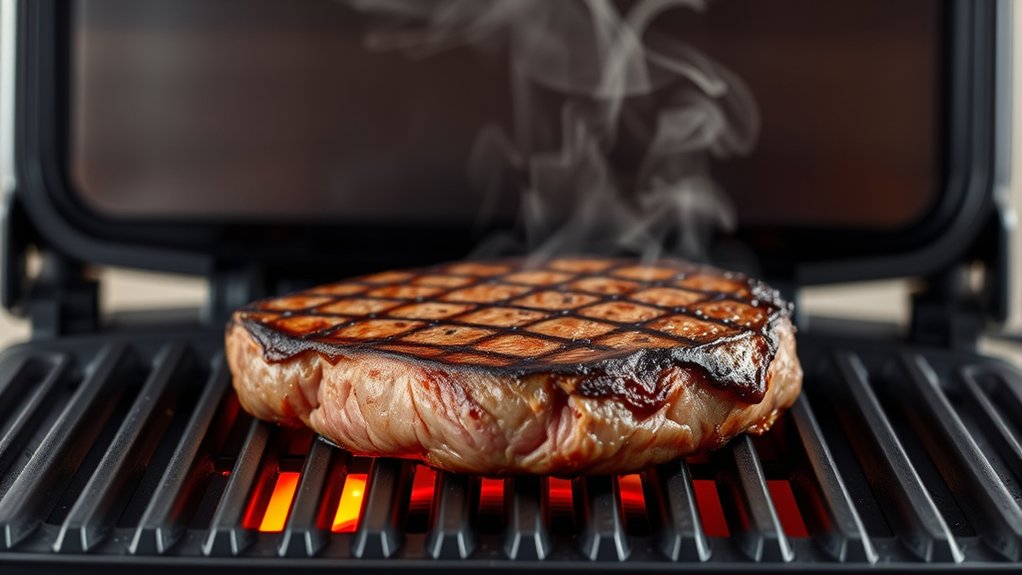
Because the George Foreman Grill cooks from both the top and bottom simultaneously, you’ll get a perfectly even sear on your steak every time. This dual-contact grilling considerably cuts cooking time, letting you enjoy your steak faster without sacrificing flavor. The grill’s sloped design drains excess fat away from your meat, making your steak healthier without losing juiciness.
You’ll appreciate how easy cleanup is—removable plates and nonstick surfaces prevent sticking and reduce scrubbing. Plus, the grill heats up quickly, so no waiting around before you start cooking. Whether you’re new to grilling or just want a simple, efficient method, the George Foreman Grill offers consistent results.
It’s a convenient tool that makes cooking steak straightforward and satisfying.
Choosing the Right Steak Cut for Your George Foreman Grill
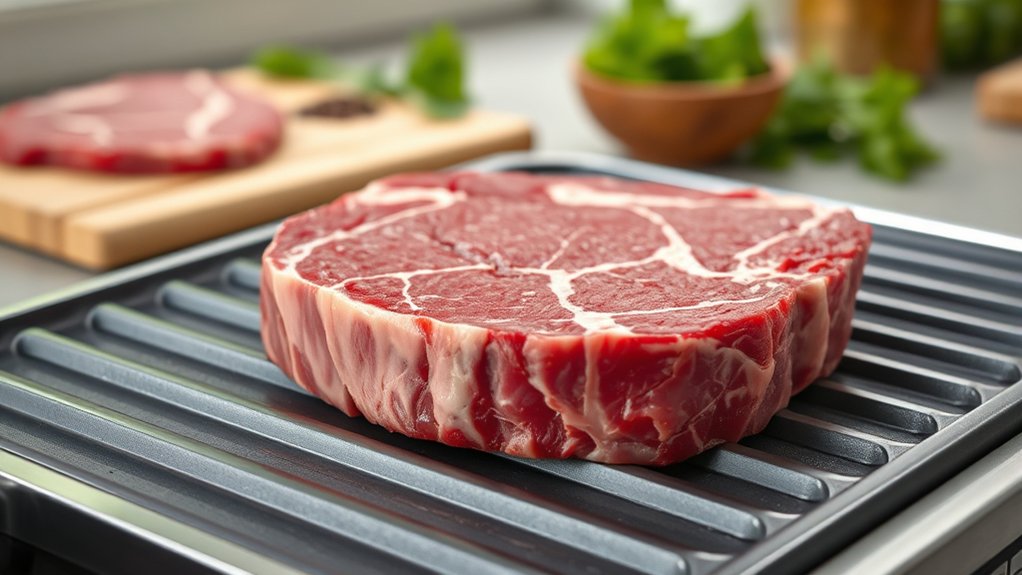
You’ll want to pick steak cuts that cook evenly and stay juicy on your George Foreman Grill. Thicker cuts like ribeye or sirloin work great but remember they’ll need a bit more time to cook through.
Paying attention to thickness helps you avoid overcooking or undercooking your steak every time.
Best Cuts For Grilling
When selecting a steak for your George Foreman Grill, choosing the right cut can make all the difference in flavor and texture. Opt for cuts that cook quickly and evenly, such as ribeye, sirloin, or strip steak. These cuts have a good balance of marbling and tenderness, ensuring juicy results without drying out.
Flank and skirt steaks also work well due to their thinness and rich flavor, but remember to slice them against the grain after cooking for maximum tenderness. Avoid very thick or excessively fatty cuts, as they might not cook evenly on this grill.
Thickness And Cooking Time
Selecting the right thickness for your steak plays a big role in how well it cooks on a George Foreman Grill. Thicker cuts need more time to reach your desired doneness, while thinner slices cook faster but can dry out if left too long. Knowing the thickness helps you avoid undercooked or overcooked steaks.
Here’s a quick guide to help you time your grilling perfectly:
| Thickness | Cooking Time (Minutes) |
|---|---|
| 1/2 inch | 4-6 |
| 3/4 inch | 6-8 |
| 1 inch | 8-10 |
| 1 1/2 inch | 10-12 |
| 2 inch or more | 12-15 |
Adjust times based on steak type and personal preference for best results.
Preparing Your Steak Before Grilling
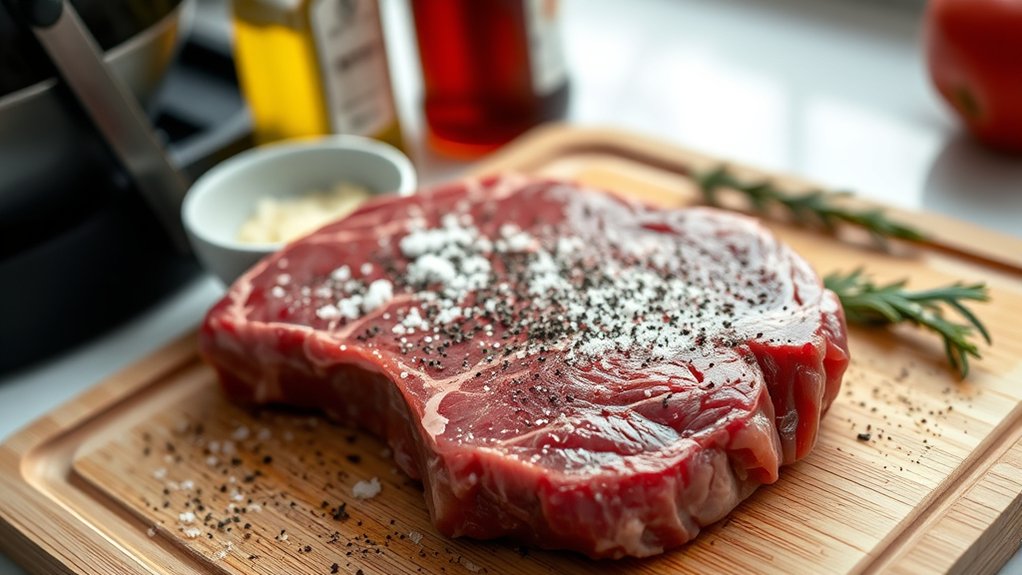
Before grilling, it’s crucial to bring your steak to room temperature so it cooks evenly. Take it out of the fridge about 20-30 minutes before cooking. While waiting, pat the steak dry with paper towels to remove excess moisture, which helps achieve a better sear.
Next, season your steak generously with salt and pepper or your favorite steak rub. Don’t be shy—seasoning adds flavor and enhances the crust. If you prefer, you can lightly brush the steak with a bit of oil to prevent sticking, but the George Foreman grill’s non-stick plates usually handle this well.
Preparing your steak properly guarantees you get a juicy, flavorful result once it hits the grill.
How to Preheat Your George Foreman Grill Properly
Before you start grilling, you need to preheat your George Foreman Grill for about 5 minutes to reach the perfect cooking temperature. Keep an eye on the indicator light—it’ll let you know when the grill is ready.
Proper preheating guarantees your steak cooks evenly and seals in the juices.
Optimal Preheat Time
Although it might seem simple, properly preheating your George Foreman grill is essential for cooking the perfect steak. You want the grill hot enough to sear the meat quickly, locking in juices and flavor.
Typically, a preheat time of 4-5 minutes works best. Avoid rushing this step, as an insufficiently heated grill can cause uneven cooking.
Here’s a quick guide for ideal preheat times based on steak thickness:
| Steak Thickness | Preheat Time |
|---|---|
| Thin (1/2 inch) | 3-4 minutes |
| Medium (1 inch) | 4-5 minutes |
| Thick (1.5 inch) | 5-6 minutes |
| Extra Thick | 6+ minutes |
Stick to these times to ensure your grill reaches the right temperature for a perfectly cooked steak every time.
Indicator Light Usage
Getting the right preheat time is just part of the process; knowing how to use your George Foreman grill’s indicator lights will help you get that timing spot on. When you plug in your grill, the red light signals it’s heating up. Don’t place your steak on the grill yet—wait until the red light turns off and the green light comes on.
This means your grill has reached the perfect cooking temperature. If you skip this step, your steak might cook unevenly or stick to the plates. Remember, the lights act as your guide, so watch them closely.
Using the indicator lights properly guarantees your steak starts cooking immediately at the right heat, locking in juices and flavor from the very first second.
How Long to Cook Steak on a George Foreman Grill
When you cook steak on a George Foreman Grill, timing is key to achieving the perfect doneness. Generally, a 1-inch thick steak takes about 4 to 7 minutes to cook. For rare, aim for 4 minutes; medium-rare, 5 minutes; and medium, around 6 to 7 minutes.
Thicker cuts will need more time, so adjust accordingly. Avoid opening the grill during cooking, as this drops the temperature and extends cooking time. Remember, the grill cooks both sides simultaneously, cutting down the usual grilling time.
After cooking, let your steak rest for a few minutes to allow juices to redistribute. Timing varies based on steak thickness and grill model, so use these guidelines as a starting point and adjust as you gain experience.
Achieving Your Perfect Steak Doneness on a George Foreman Grill
Since the George Foreman Grill cooks both sides simultaneously, you can achieve your desired steak doneness faster than traditional methods. To get it right, focus on the cooking time and the thickness of your steak.
Here’s a simple guide to help you reach your perfect doneness level:
| Doneness | Cooking Time (per side) |
|---|---|
| Rare | 2-3 minutes |
| Medium Rare | 3-4 minutes |
| Medium | 4-5 minutes |
| Medium Well | 5-6 minutes |
| Well Done | 6-7 minutes |
Adjust times depending on steak thickness and grill temperature. Remember, thinner cuts cook faster. Keep an eye on your steak, and you’ll enjoy a perfectly cooked meal every time.
Checking Steak Doneness Without a Thermometer
Although a meat thermometer is the most accurate way to check steak doneness, you can rely on simple touch tests to gauge how cooked your steak is without one. Press the steak gently with your fingertip or tongs. Rare feels soft and spongy, similar to pressing the fleshy part of your palm below your thumb when your hand is relaxed.
Medium rare is slightly firmer, like when you touch that same spot while touching your thumb and middle finger together. Medium feels firmer still, resembling the tension when your thumb and ring finger meet. Well done steaks are very firm, like when you press your thumb and pinky together.
With practice, this method helps you cook steaks perfectly on your George Foreman grill.
Getting Perfect Grill Marks on Your George Foreman Steak
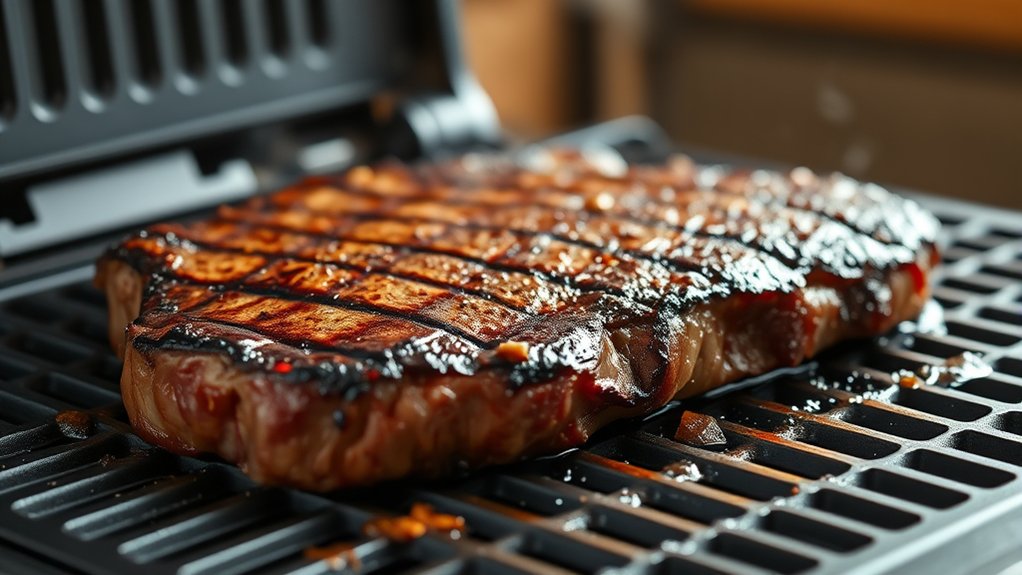
To get perfect grill marks on your George Foreman steak, you’ll need to prepare the grill and steak carefully to maximize contact and searing. First, preheat the grill for at least 5 minutes to guarantee it’s hot enough. Lightly oil your steak to prevent sticking and promote those signature lines.
Avoid moving the steak once it’s on the grill to let the marks form clearly.
| Step | Tip |
|---|---|
| Preheat grill | At least 5 minutes |
| Oil steak | Use a high smoke point oil |
| Place steak | Center for even contact |
| Don’t move steak | Let marks develop |
| Press gently | Ensure full grill contact |
Following these steps helps you achieve attractive, well-defined grill marks every time.
Seasoning and Marinating Steak for the George Foreman Grill
When you season or marinate your steak properly, you’ll enhance its natural flavors and tenderness, making every bite more enjoyable. Start with a simple seasoning of salt and freshly ground black pepper to bring out the beef’s rich taste. If you want more depth, try a marinade with olive oil, garlic, soy sauce, and a splash of vinegar or lemon juice.
Let your steak soak for at least 30 minutes, or up to 4 hours for tougher cuts, in the fridge. Avoid sugary marinades, as they can burn quickly on the George Foreman grill. Pat the steak dry before grilling to ensure a good sear and avoid steaming.
Proper seasoning and marinating set the foundation for a flavorful, juicy steak cooked perfectly on your grill.
Resting Steak After Grilling for Maximum Juiciness
Since the juices in your steak continue to redistribute after it comes off the George Foreman grill, letting it rest is essential for maximum flavor and tenderness. Once you remove the steak, place it on a plate or cutting board and cover it loosely with aluminum foil. This traps heat without steaming the meat, preserving its texture.
Rest your steak for about 5 to 10 minutes, depending on thickness. During this time, the internal temperature evens out, and the juices get reabsorbed into the fibers, preventing them from spilling out when you cut. Skipping this step can leave your steak dry and less flavorful.
Cleaning and Maintaining Your George Foreman Grill After Cooking
Although cleaning your George Foreman grill might seem like a chore, doing it promptly guarantees it stays in great condition and ready for your next steak. Start by unplugging and letting it cool slightly. Use a damp cloth or sponge with warm soapy water to wipe down the plates.
Avoid abrasive tools that damage the non-stick surface. Don’t forget to clean the drip tray, as it collects excess fat and juices. Regular maintenance extends your grill’s life and improves cooking results.
| What You Do | How It Feels |
|---|---|
| Wipe plates gently | Satisfaction from care |
| Empty drip tray | Relief and freshness |
| Store grill properly | Confidence for next use |
Troubleshooting Common George Foreman Steak Grilling Issues
If your steak cooks unevenly, try adjusting the placement or flipping it halfway through. To stop your steak from sticking, make sure your grill plates are clean and lightly oiled before cooking.
These simple fixes can make a big difference in your grilling results.
Uneven Cooking Solutions
When you notice your steak cooking unevenly on a George Foreman grill, you’ll want to adjust your approach to get consistent results. Uneven cooking often happens because the steak isn’t placed properly or the grill isn’t preheated enough. To fix this, try these solutions:
- Make sure the grill is fully preheated before placing the steak.
- Position the steak flat and centered on the grill plates for even heat distribution.
- Avoid overcrowding the grill; cook steaks one or two at a time.
- Flip the steak halfway through grilling if your model allows, promoting uniform cooking on both sides.
Preventing Steak Sticking
Since steak can easily stick to the George Foreman grill, taking simple steps to prevent this will save you frustration and preserve your steak’s texture. First, preheat the grill thoroughly; a hot surface sears the steak quickly, reducing sticking. Lightly brush both the steak and grill plates with oil—use a high smoke point oil like canola or avocado.
Avoid using too much oil, which can cause flare-ups or uneven cooking. Also, don’t move the steak around immediately after placing it on the grill. Give it a few minutes to develop a natural crust before flipping or checking.
Finally, clean the grill plates after each use to remove residue that could cause sticking next time. These steps guarantee you get a juicy, well-seared steak every time.
Frequently Asked Questions
Can I Cook Frozen Steak on a George Foreman Grill?
You can cook frozen steak on a George Foreman Grill, but it’s better to thaw it first for even cooking. If you grill frozen, expect longer cook time and check for doneness to avoid undercooked spots.
Thawing helps the steak cook more evenly and retain its juices. Cooking from frozen may result in uneven temperature distribution. Always monitor the steak closely to ensure it cooks through properly.
Is It Safe to Use Metal Utensils on the Grill Plates?
Think of the grill plates as a delicate painting—using metal utensils is like scratching the surface. You shouldn’t use metal tools on them because they can damage the nonstick coating, shortening your grill’s life.
Use plastic or wood instead.
Can I Grill Vegetables Alongside My Steak on the Foreman Grill?
Yes, you can grill vegetables alongside your steak on the Foreman Grill. Just cut them into similar sizes for even cooking, and watch closely to prevent overcooking since veggies usually cook faster than steak.
How Do I Store Leftover Steak Cooked on a George Foreman Grill?
Think of leftover steak like a treasure chest—seal it tight!
You’ll want to wrap your steak in foil or store it in an airtight container,
then refrigerate within two hours to keep flavor and safety locked in.
Does the George Foreman Grill Require Any Special Electrical Outlet?
No, the George Foreman grill doesn’t require a special electrical outlet. You just plug it into any standard 120V household outlet, and it’s ready to use.
Just make sure the cord and plug are in good condition.
Conclusion
Cooking steak on your George Foreman Grill is simple, speedy, and satisfying. You’ll savor juicy, flavorful results every time because you’ve chosen the right cut, seasoned with care, and mastered the perfect cook time.
Remember, resting your steak is the secret to locking in those delicious juices. So fire up that grill, embrace the ease, and enjoy steak nights that turn ordinary meals into extraordinary memories.
You’ve got this, grill master! With your George Foreman Grill, cooking steak becomes effortless and delicious every time.