7 Tips to Keep Your Grill Fire Going Strong
To keep your grill fire going strong, choosing the right fuel is essential. Opt for quality options like lump charcoal or dry hardwood to ensure steady heat and long-lasting flames. Proper fuel selection sets the foundation for successful grilling.
Arrange coals evenly using a two-zone setup, allowing for both direct and indirect cooking areas.
Control airflow by adjusting vents to regulate oxygen, which helps maintain a consistent temperature.
Adding fuel at the right time is key. Add fuel when the coals’ edges turn gray but still glow red to keep the fire hot without smothering it.
Light your fire quickly and safely using a chimney starter for efficient ignition.
Keep your grill clean to prevent flare-ups and ensure better heat distribution.
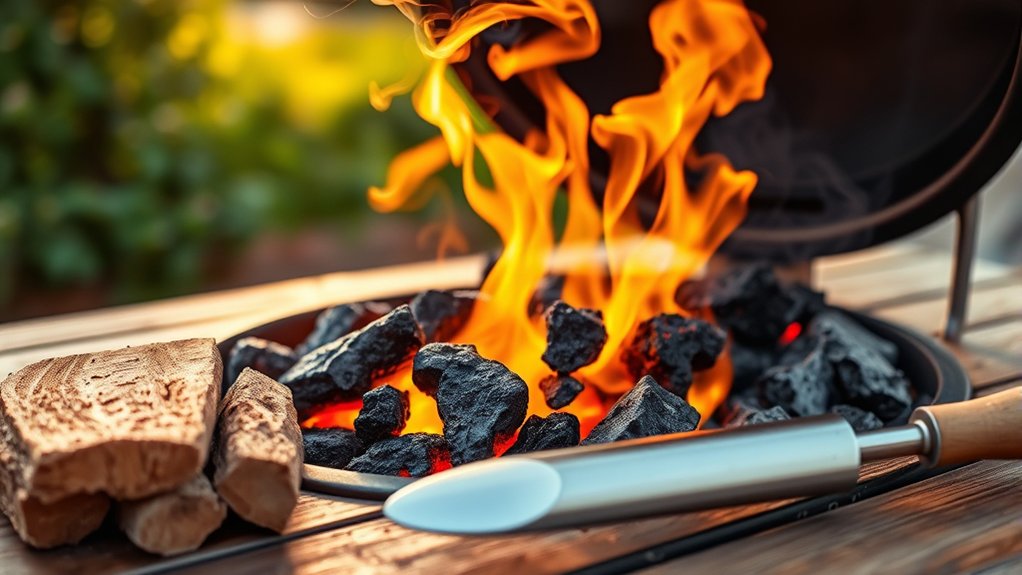
Finally, have tools handy to manage flame intensity and food placement.
These tips will make your grilling smoother, more consistent, and enjoyable every time you fire up the grill.
Key Takeaways
- Use high-quality, dry hardwood charcoal or logs for steady, long-lasting heat.
- Arrange coals in a two-zone setup to balance direct and indirect heat zones.
- Adjust grill vents to control airflow, increasing oxygen for hotter flames or closing slightly to cool fire.
- Add small amounts of fuel when coals are gray on the edges but glowing red in the center.
- Prevent flare-ups by cleaning grease buildup and repositioning food away from flames as needed.
Pick the Best Fuel for a Long-Lasting Grill Fire
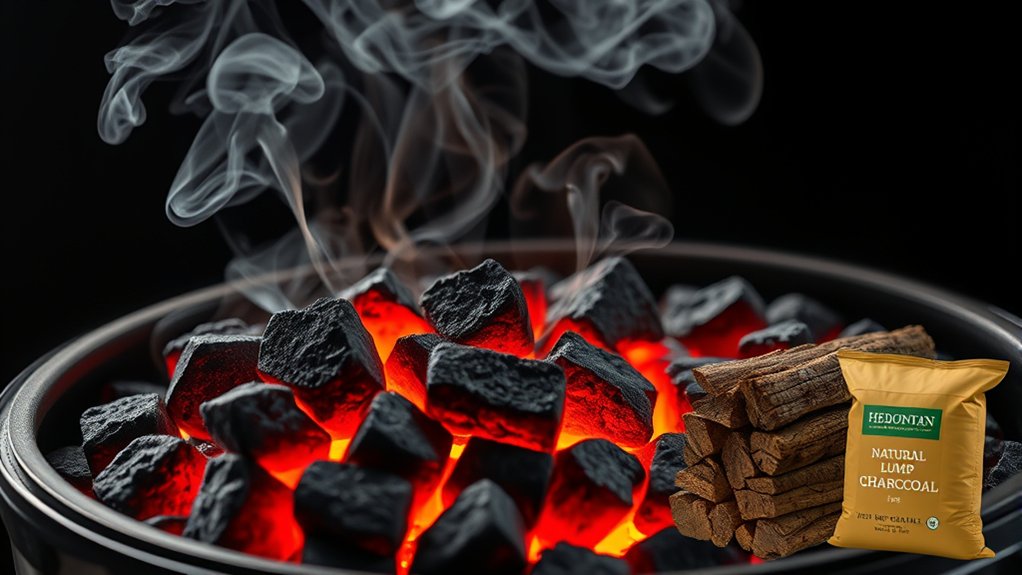
How do you guarantee your grill fire lasts through the entire cookout? Start by choosing the right fuel. Lump charcoal is a top pick because it burns hotter and longer than briquettes, giving you steady heat without constant refueling.
If you like briquettes, go for high-quality ones that contain fewer fillers and binders—they burn more consistently and produce less ash. Avoid using softwoods or damp wood since they smolder and create excessive smoke. Hardwood chunks or logs, like oak or hickory, add great flavor while maintaining a slow, steady burn.
Make sure your fuel is dry; moisture kills burn time and makes lighting difficult. By picking the best fuel, you set yourself up for a reliable, long-lasting fire that keeps your grill ready from start to finish.
Arrange Charcoal or Wood for Even Grill Fire Heat
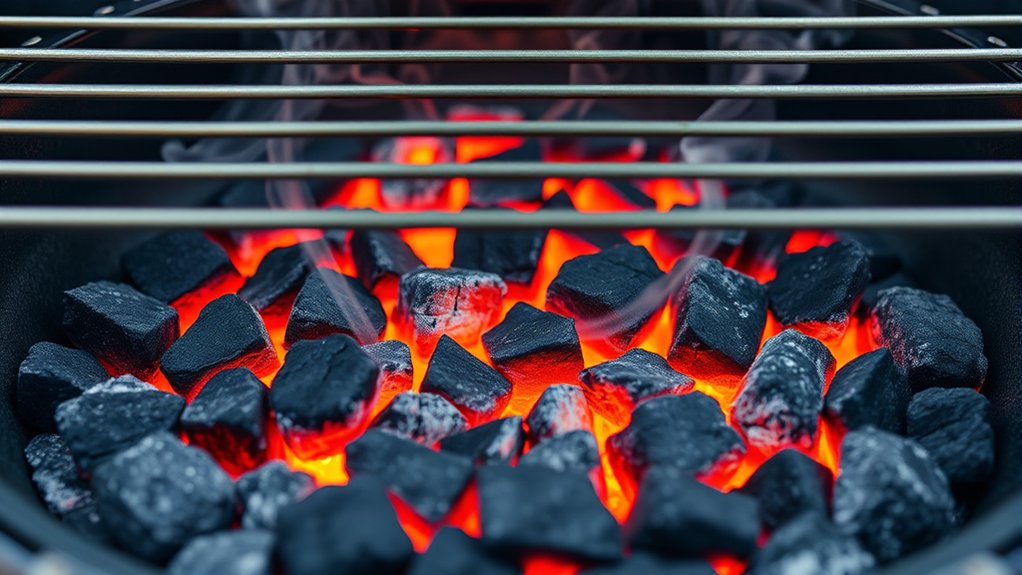
You’ll want to arrange your charcoal or wood carefully to create an even heat across the grill. Spreading the fuel evenly and using techniques like the two-zone method can help maintain consistent temperatures.
This setup makes it easier to control your fire and cook your food perfectly.
Proper Charcoal Placement
Where you place your charcoal can make all the difference in maintaining an even grill fire. Start by spreading the charcoal in a single, uniform layer across the grill’s charcoal grate. Avoid piling it all in one spot, which causes uneven heat and hot spots.
Instead, arrange the briquettes closely together but with enough space for airflow—this balance helps the coals burn steadily. If you want a two-zone fire, cluster some coals on one side for direct heat and leave the other side empty for indirect cooking. Remember, placing charcoal too far apart lowers the temperature, while stacking too tightly chokes airflow.
With proper placement, your grill will deliver consistent heat, making it easier to cook your food evenly every time.
Wood Arrangement Techniques
Although arranging wood or charcoal can seem straightforward, mastering the technique is key to maintaining even heat across your grill. Start by stacking your wood in a loose, crisscross pattern, allowing air to flow freely between pieces. This promotes efficient burning and prevents hot spots.
For smaller pieces, group them tightly in the center to build a strong core fire, then surround with larger logs for steady, consistent heat. Avoid piling wood too densely; it restricts airflow and causes uneven temperatures. You can also try the “log cabin” style—build a square frame with larger logs, then stack smaller wood inside to create balanced heat distribution.
With these techniques, you’ll keep your grill fire steady, ensuring your food cooks evenly every time.
Maintaining Consistent Heat
Mastering wood arrangement sets the stage, but maintaining consistent heat requires careful management of how you position your charcoal or wood throughout the cooking process.
To keep your grill fire even and steady, follow these steps:
- Spread the coals or wood evenly across the grill base to avoid hot and cold spots.
- Add small amounts of charcoal or wood periodically instead of dumping large piles, ensuring a steady burn.
- Use a grill thermometer to monitor and adjust the heat as needed, moving coals for hotter or cooler zones.
- Stir or rake the coals gently to redistribute heat and prevent ash buildup, which can choke the fire.
Control Airflow to Keep Your Grill Fire Steady
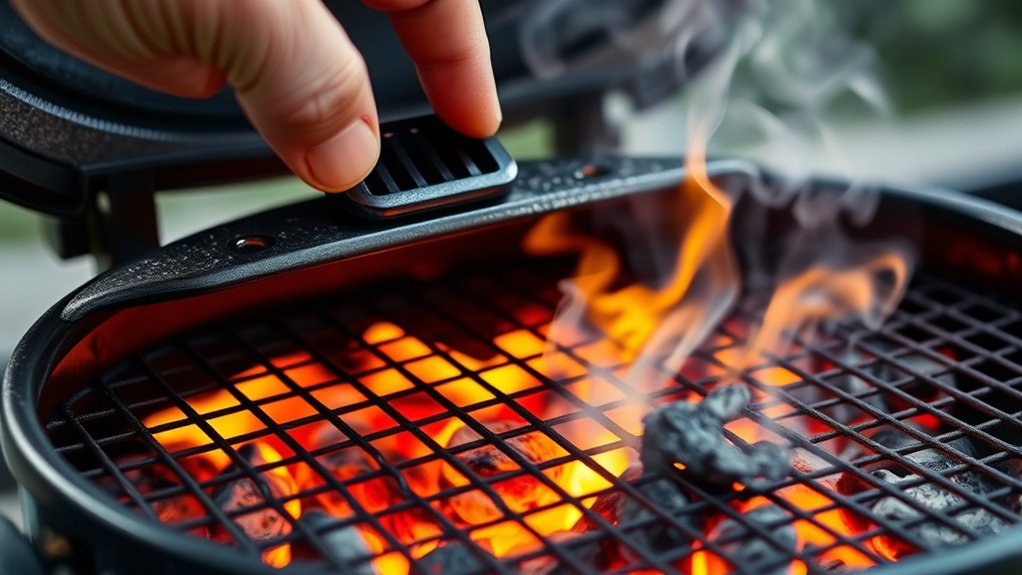
Since oxygen fuels your grill fire, controlling airflow is key to keeping your flames steady and strong. You can adjust the vents on your grill to regulate how much air enters, which directly affects the fire’s intensity. Opening the vents increases oxygen flow, boosting the heat.
Partially closing them reduces airflow and cools things down. Be careful not to shut the vents completely, or you risk smothering the fire. Keep an eye on the vent settings as the fire burns, and tweak them as needed to maintain a consistent temperature.
Add Fuel at the Right Time to Maintain Temperature
You’ll want to add fuel just before the fire starts to die down to keep the temperature steady. Adding too late can cause a drop, while too much fuel at once can smother the flames.
Finding the right timing and amount is key to maintaining consistent heat.
Timing Your Fuel Addition
Although keeping your grill fire going strong requires attention, adding fuel at the right moment is essential to maintaining a steady temperature. Timing your fuel addition helps avoid sudden flare-ups or temperature drops.
Follow these steps to get it right:
- Watch the coals – Add fuel when the edges turn gray but the center still glows red.
- Don’t wait too long – Adding fuel too late causes the fire to die down and the grill to cool.
- Add small amounts gradually – This keeps the temperature steady without smothering the fire.
- Check the temperature gauge – When it starts to dip, it’s time to add more fuel.
Avoiding Temperature Drops
How can you prevent your grill from losing heat mid-cook? The key is adding fuel at the right moment before the temperature dips. Keep a close eye on your grill’s temperature gauge and anticipate when it’s about to drop.
Don’t wait until the heat falls considerably; instead, add a small amount of fuel while the grill is still hot. This approach lets the new fuel ignite quickly and maintain a steady temperature. Adding fuel too late causes a sudden temperature drop, making your food cook unevenly.
Using Proper Fuel Amount
When you add fuel at the right time, you keep your grill’s temperature steady and your cooking on track. Using the proper amount of fuel prevents temperature fluctuations and ensures consistent heat.
Here’s how to manage it effectively:
- Check your fuel level before starting to avoid running low mid-cook.
- Add small amounts gradually to maintain a steady temperature without overwhelming the fire.
- Time your fuel additions just as the flames begin to dwindle, not after the fire cools down.
- Monitor the grill temperature closely with a thermometer to know when it’s time for more fuel.
Light Your Grill Fire Fast With a Chimney Starter
Wondering how to get your grill fire blazing quickly? Using a chimney starter is your best bet. Simply fill the chimney with charcoal, place some crumpled newspaper or natural fire starters underneath, and light it.
The design promotes excellent airflow, allowing the coals to ignite evenly and rapidly. Within 10 to 15 minutes, you’ll see glowing embers ready to spread in your grill. This method eliminates the need for lighter fluid, which can affect flavor and safety.
Once the coals are covered in gray ash, carefully pour them into your grill. You’ll have a hot, consistent fire that’s perfect for cooking. Using a chimney starter saves time and gives you better control over your grilling fire from the start.
Keep Grease and Ash in Check to Avoid Flare-Ups
Why do flare-ups happen so often while grilling? They’re usually caused by grease and ash buildup. When grease drips onto hot coals, it ignites, sending flames flaring up unexpectedly.
Flare-ups during grilling often occur when grease drips onto hot coals, igniting sudden flames.
Ash buildup blocks airflow, causing uneven heat and flare-ups. To keep your grill fire steady, follow these tips:
- Clean grease traps regularly to prevent excess buildup.
- Scrape grill grates after each use to remove fat residue.
- Empty ash catcher after every few grilling sessions to maintain airflow.
- Avoid overloading your grill with fatty foods that drip excessive grease.
Keep Essential Tools Nearby to Manage Your Grill Fire
Two or three essential tools can make all the difference in keeping your grill fire under control. You’ll want to have items that help you adjust the fire quickly and safely.
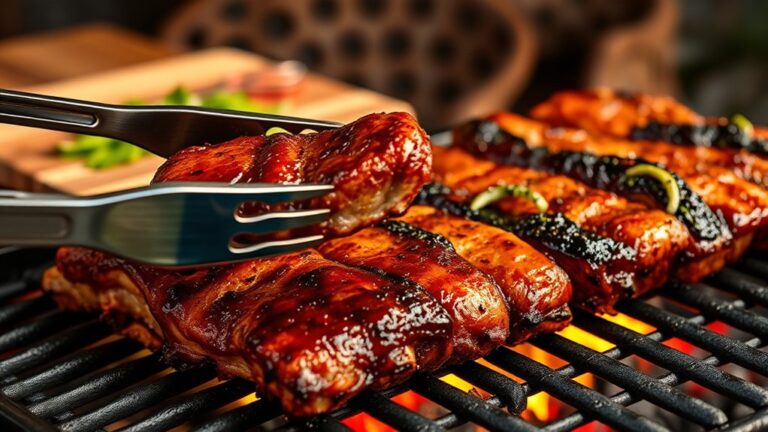
A long-handled lighter or matches let you reignite coals without burning your hands. A sturdy pair of tongs helps you move food and coals around to manage flare-ups.
Finally, a grill brush keeps your grate clean, preventing stuck-on food that can cause smoke and flare-ups.
| Tool | Purpose |
|---|---|
| Long-handled Lighter | Safely ignite or relight coals |
| Tongs | Rearrange coals & food |
| Grill Brush | Clean grates to avoid flare-ups |
Frequently Asked Questions
How Do I Clean My Grill After Cooking?
You should clean your grill by brushing the grates with a wire brush while they’re still warm, scraping off residue.
Then, wipe down surfaces with soapy water and rinse.
Don’t forget to empty the drip tray too!
What Safety Precautions Should I Take When Grilling?
You should keep a fire extinguisher nearby, never leave the grill unattended, and avoid wearing loose clothing.
Make sure your grill is on a stable surface away from flammable materials, and always check for gas leaks before lighting.
Can I Use Lighter Fluid Safely on My Grill?
You can use lighter fluid safely if you apply it before lighting the grill and never add it to an open flame. Always follow the instructions, use sparingly, and keep it away from children and pets.
How Do I Store Leftover Charcoal or Wood?
About 60% of charcoal users store leftover fuel improperly, risking moisture damage. You should keep leftover charcoal or wood in airtight containers or sealed bags, storing them in a dry, cool place to maintain their effectiveness for your next grill session.
What Are the Best Types of Food to Grill?
You’ll love grilling meats like steak, chicken, and sausages, plus veggies such as peppers, zucchini, and corn. Seafood like shrimp and salmon also grill beautifully, giving you smoky, delicious flavors every time you fire up the grill.
Conclusion
Keeping your grill fire going strong is like tending a garden—you need the right fuel, careful arrangement, and timely care. Remember, even the best grill masters started with a spark that needed nurturing. Just like a study found that 75% of great chefs credit fire control for perfect grilling, you can too.
With these tips, you’ll turn every cookout into a smoky, sizzling success that friends and family won’t forget. Keep that fire alive! Mastering fire control and using the right fuel are key to achieving the perfect grill every time.