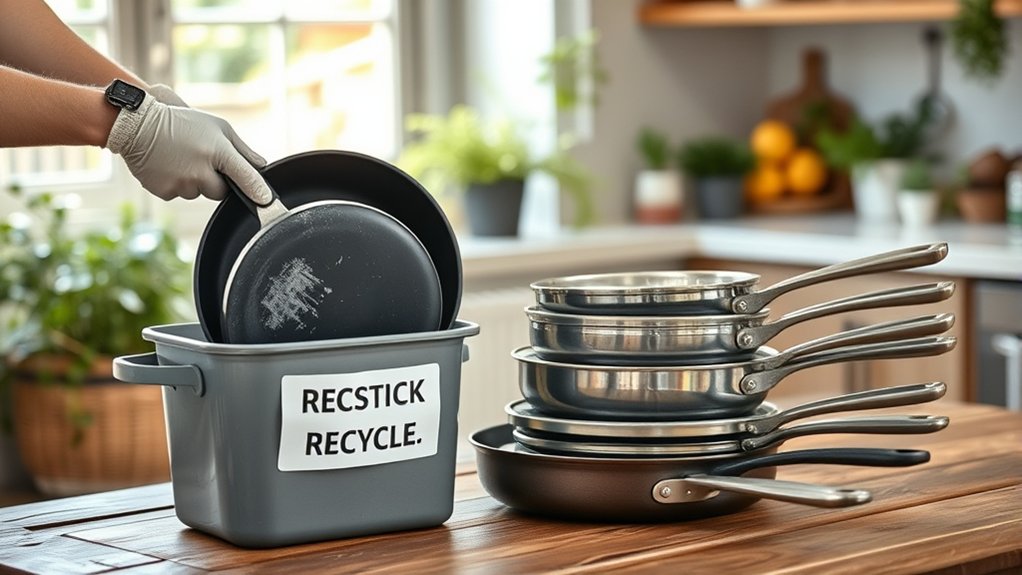
How to Dispose of Old Cookware Safely
You’ll want to check your cookware for scratches, rust, or peeling nonstick coatings, as these can be unsafe. Inspecting old cookware is essential for safe disposal and maintaining kitchen health.
Clean and separate metal parts from plastics before recycling, and avoid tossing hazardous nonstick items in the regular trash to prevent toxins.
Consider donating usable pieces or repurposing them for non-food uses. Always confirm local recycling and disposal rules, especially for cast iron or aluminum cookware.
Keeping these tips in mind helps ensure you handle old cookware safely and responsibly.
Keep following for smart tips on safely handling and giving your old cookware a new life. Proper disposal protects the environment and promotes sustainability in your home.
Key Takeaways
- Inspect cookware for damage like peeling coatings or rust to determine if it’s hazardous and requires special disposal.
- Thoroughly clean cookware and remove non-metal parts before recycling metals like aluminum, stainless steel, or cast iron.
- Donate usable cookware to charities or community centers to extend its life and reduce waste.
- Repurpose damaged or non-food-safe cookware for storage, planters, or decorative uses instead of discarding.
- Contact local waste management or recycling centers for guidance on disposing hazardous cookware safely and avoid regular trash.
How To Decide If Your Cookware Is Still Safe To Use
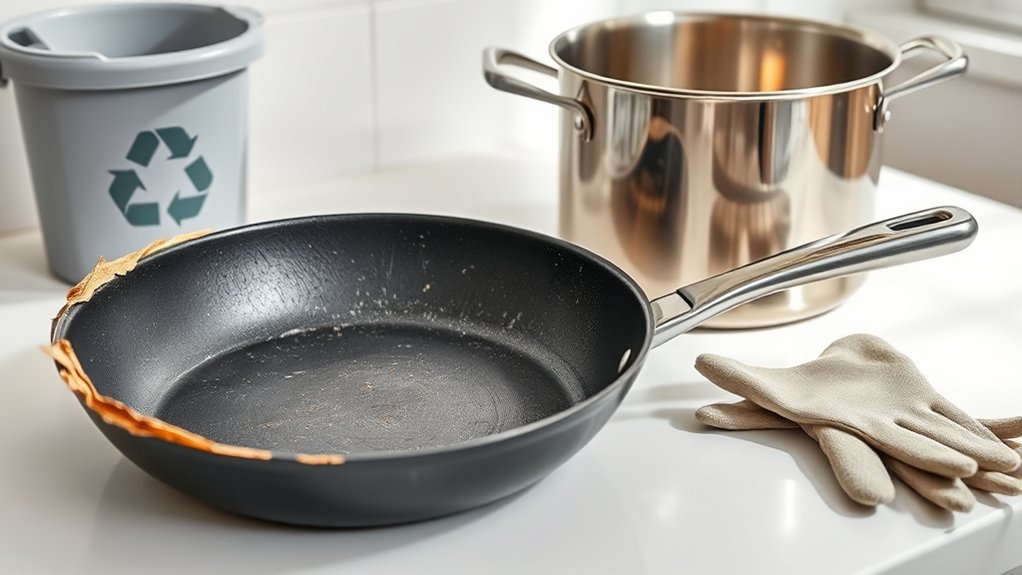
Before you toss your old pots and pans, you’ll want to check if they’re still safe to use. Look for signs like scratches, warping, or peeling nonstick coatings, which can release harmful chemicals into your food. If your cookware has rust or corrosion, it’s time to retire it, especially if it’s exposed the food to metal contaminants.
Also, test the handles and lids—loose or damaged parts can be dangerous while cooking. Stainless steel and cast iron can last longer if well maintained, but aluminum or nonstick pans degrade faster. If your cookware heats unevenly or sticks excessively despite proper seasoning or cleaning, it’s a red flag.
Overview Of Safe And Sustainable Cookware Disposal Options
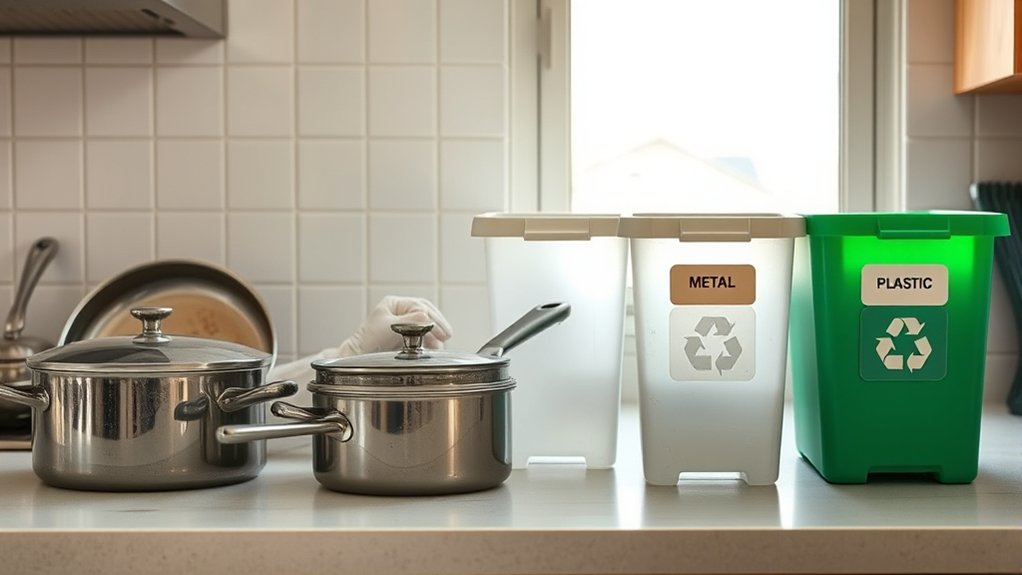
When it’s time to part with your old cookware, you have a couple of responsible options. You can recycle materials like metal and glass to keep them out of landfills or donate pots that are still in good shape to someone who’ll use them.
Both choices help reduce waste and give your cookware a second life.
Recycling Cookware Materials
Although it might seem easier to toss old cookware in the trash, recycling offers a safer and more sustainable way to dispose of these items. Cookware made from metals like aluminum, stainless steel, and cast iron can often be recycled, reducing landfill waste and conserving resources.
Before recycling, separate any non-metal parts such as plastic handles or silicone grips, as these typically require different disposal methods. Check with your local recycling center to confirm they accept cookware, since guidelines vary by location. You may need to clean the items thoroughly to avoid contamination.
Donating Usable Pots
How can you give your old pots a second life while helping others? Donating usable pots is a smart, sustainable way to clear clutter and support your community. Before you donate, make sure your cookware is clean, free of damage, and still functional.
Here’s how to do it effectively:
- Identify local charities or shelters that accept kitchen items, such as thrift stores or community centers.
- Check donation guidelines to confirm they accept pots and meet condition requirements.
- Package your cookware securely to avoid damage during transport.
How To Dispose Of Non-Stick Cookware Safely
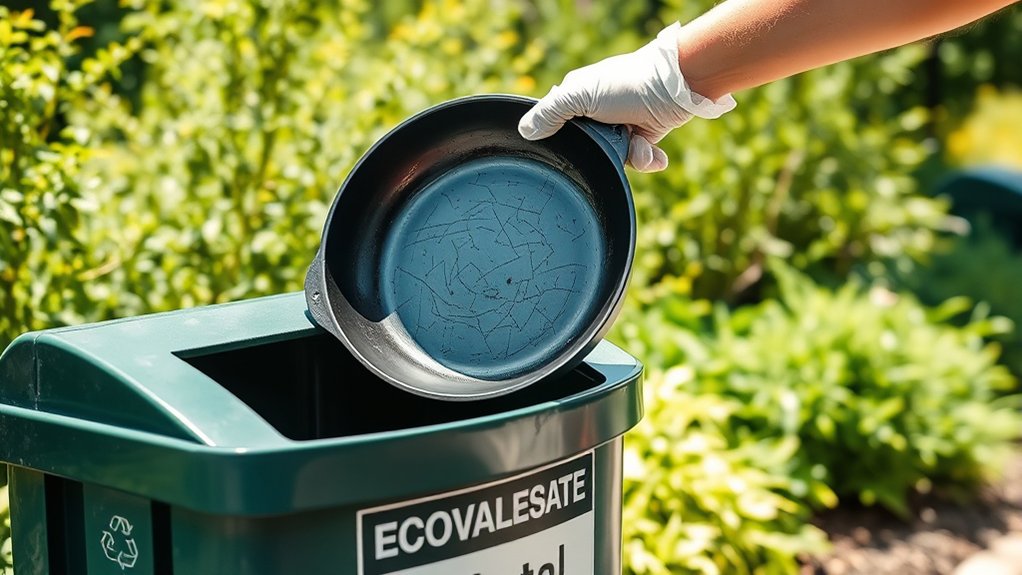
Because non-stick cookware often contains chemicals that can be harmful when broken down improperly, you’ll need to take extra care when disposing of it. First, check with your local waste management facility to see if they accept non-stick pans for special handling. Avoid throwing them in regular trash, as the coatings can release toxins if incinerated or left in landfills.
If the cookware is still in decent shape but no longer safe for cooking, consider repurposing it for non-food uses like plant trays or storage. Never try to scrape or burn off the coating yourself, as this can release dangerous fumes. By following these steps, you’ll keep harmful chemicals out of the environment and dispose of your non-stick cookware responsibly.
How To Recycle And Donate Cast Iron Cookware
If you’re looking to recycle or donate cast iron cookware, start by cleaning and seasoning it properly to guarantee it’s ready for reuse. Check with local donation centers or thrift stores that accept cast iron, as many people still value these durable pieces.
If donation isn’t an option, search for recycling facilities that specifically handle cast iron to dispose of it responsibly.
Preparing Cast Iron Properly
When you decide to recycle or donate cast iron cookware, proper preparation is key to guaranteeing it gets reused effectively. Start by thoroughly cleaning the cookware—scrub off any food residue and rust using a stiff brush or steel wool.
Next, season the cast iron lightly with a thin coat of vegetable oil to prevent rust during storage or transport. Finally, inspect for any cracks or severe damage that might make the piece unsafe or unusable.
Follow these steps to prepare your cast iron:
- Clean it completely, removing all debris and rust.
- Apply a light seasoning layer to protect the surface.
- Check for structural integrity to ensure it’s still functional.
Proper prep helps extend your cookware’s life and makes recycling or donating easier.
Local Donation Options
Once your cast iron cookware is clean, seasoned, and checked for damage, you’re ready to find local places that accept donations or recycling. Start by reaching out to thrift stores, community centers, or shelters—they often welcome cast iron cookware to provide quality kitchen items to those in need.
You can also check with local churches or nonprofit organizations that run kitchen programs or food pantries. Another good option is to look for community swap events or freecycling groups where you can pass your cookware directly to someone who’ll appreciate it.
Before dropping off your cookware, call ahead to confirm they accept cast iron and understand their donation guidelines. This way, you guarantee your cookware gets a second life without ending up in the trash.
Cast Iron Recycling Centers
Although donating is a great way to give your cast iron cookware a new life, recycling centers offer an eco-friendly alternative when your items are too worn for reuse. Cast iron is highly recyclable, and recycling helps reduce landfill waste and saves energy compared to producing new metal.
To recycle your cast iron cookware, follow these steps:
- Locate a scrap metal or specialized recycling center that accepts cast iron by searching online or calling local facilities.
- Clean your cookware to remove food residue and grease, ensuring it’s ready for processing.
- Drop off your items at the center, or see if they offer pickup services for larger quantities.
How To Recycle Aluminum And Stainless Steel Cookware
Because aluminum and stainless steel are highly recyclable metals, you can easily give your old cookware a new life by recycling it properly. First, clean your cookware thoroughly to remove food residues and grease, as recycling centers prefer scrap free of contaminants. Check with your local recycling facility to see if they accept aluminum and stainless steel cookware—many do.
Remove any non-metal parts like plastic handles or rubber grips, as these can interfere with the recycling process. If your local center doesn’t take cookware, look for scrap metal yards or specialized recycling programs. Avoid tossing metal cookware in regular bins since it can damage sorting machinery.
How To Repurpose Old Cookware Creatively
If you’re not ready to part with your old cookware permanently, you can give it a fresh purpose around your home. Repurposing cookware not only reduces waste but also adds a unique touch to your space. Here are some ideas to get you started:
- Planters: Turn old pots and pans into charming planters for herbs or succulents. Drill drainage holes if needed, then fill with soil and plants.
- Storage Containers: Use skillets or baking sheets as catch-alls for keys, coins, or craft supplies, keeping clutter organized.
- Decorative Pieces: Transform lids or lids with handles into wall art or hang pans as rustic decor in your kitchen or garden.
These creative uses extend your cookware’s life while enhancing your home’s style and functionality.
How To Handle Cookware With Hazardous Materials
When dealing with cookware that contains hazardous materials like Teflon coatings or heavy metals, you need to take extra precautions to protect yourself and the environment. Avoid breaking or sanding these items, as this can release harmful particles or fumes. Handle them gently and wear gloves if possible.
Never dispose of such cookware in regular trash bins, since landfills may leak contaminants. Instead, check with your local hazardous waste facility or recycling center to see if they accept these materials. If no options exist nearby, contact your waste management authority for guidance.
Preparing Cookware For Donation Or Recycling: Best Practices
After ensuring hazardous cookware is handled safely, you can focus on preparing other items for donation or recycling. Start by thoroughly cleaning your cookware to remove food residue and grease, making it more appealing and hygienic for recipients.
Next, inspect each piece for damage; cookware with cracks or warped surfaces may not be suitable for donation but could still be recycled. Finally, organize your cookware by type—metal, non-stick, ceramic—since many recycling centers accept materials separately.
- Clean all cookware thoroughly.
- Check for damage and usability.
- Separate items by material for recycling.
Frequently Asked Questions
Can Old Cookware Be Composted or Broken Down Naturally?
No, old cookware can’t be composted or broken down naturally because it’s usually made from metals or non-biodegradable materials.
Instead, you should recycle it properly or donate it if it’s still usable to reduce waste.
Are There Specific Disposal Rules for Ceramic Cookware?
You don’t need to consult a Victorian-era almanac for ceramic cookware disposal, but you should check local rules. Many places treat ceramics as landfill waste since they don’t break down easily or belong in recycling bins.
How to Safely Dispose of Cookware With Plastic Handles?
You should remove plastic handles if possible, then recycle metal parts separately. If handles aren’t detachable, check local disposal rules for mixed materials. Avoid burning, as plastic releases harmful fumes.
Consider donating if still usable.
Can Cookware Be Disposed of in Regular Household Trash?
You can’t just toss cookware in regular trash without a second thought—it’s better to explore recycling or donation options.
This way, you’re giving your old pots and pans a respectful farewell that benefits others.
What Local Services Accept Cookware for Disposal or Recycling?
You can check with local recycling centers, scrap metal yards, or municipal waste facilities—they often accept old cookware. Some charities or thrift stores might take usable items too. Contact them directly to confirm their policies.
Conclusion
Now that you know how to decide if your cookware’s still safe and the best ways to dispose of it, the real question is: what will you do next?
Will you recycle, donate, or get creative and repurpose your old pots and pans? Whatever you choose, remember—handling them safely protects your health and the planet.
So, take a moment, make your move, and turn that old cookware into something better before it’s too late. Safe disposal of old cookware is key to reducing waste and preventing harm.
By following these steps, you contribute to environmental protection and ensure your cookware’s safe disposal.