How Long to Pan Fry Mahi Mahi in 7 Simple Steps
To pan fry mahi mahi perfectly, start by choosing a firm, moist fillet with no strong odor. This ensures the freshest and best-tasting fish for your meal. Proper preparation is key to achieving a delicious, flaky texture.
Rinse the fillet, season it well, and pat it dry thoroughly. Let it rest at room temperature for 10-15 minutes before cooking. This step helps the fish cook evenly and retain moisture.
Heat a heavy skillet with a high-smoke-point oil over medium-high heat. Cook the fillet about 3-4 minutes per side until it’s golden brown and flakes easily.
Rest the fish a few minutes before serving for juicy results.
Keep going to discover tips for a crisp crust and perfect doneness when pan frying mahi mahi. These simple steps will help you master this tasty, healthy dish every time.
Key Takeaways
- Pan fry 1-inch thick mahi mahi fillets for about 3-4 minutes per side over medium-high heat.
- Preheat a heavy-bottomed skillet and use an oil with a high smoke point for even browning.
- Pat the fillets dry and avoid moving them prematurely to form a golden crust.
- Flip the fish carefully once the crust forms, then cook until opaque and flaky.
- Rest the cooked mahi mahi for 3-5 minutes before serving to retain moisture and enhance flavor.
How To Choose The Best Mahi Mahi Fillet For Pan Frying
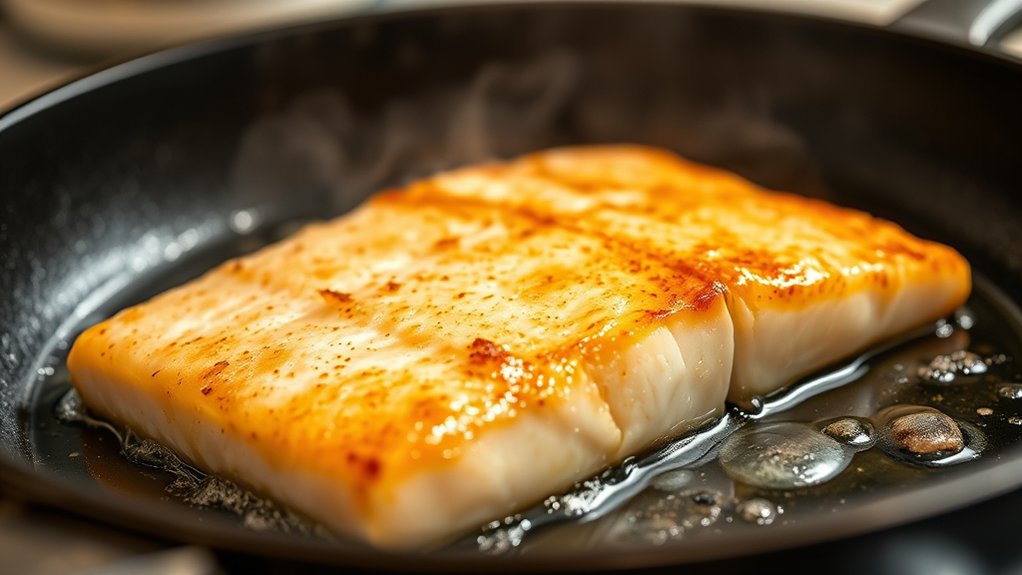
When selecting a mahi mahi fillet for pan frying, you’ll want to look for firm, moist flesh with a mild, fresh scent. Avoid fillets that seem slimy or have a strong fishy odor, as these indicate the fish isn’t fresh. Choose fillets with a vibrant, slightly translucent color—bright white or light pinkish shades work best, as they’ll cook evenly and taste better.
Check that the fillet feels dense and springy when you press it lightly; this firmness means the fish is fresh and will hold together well during cooking. Also, aim for a fillet that’s evenly cut, without ragged edges or uneven thickness, so it cooks uniformly in your pan. Picking the right fillet sets the foundation for a delicious, perfectly cooked mahi mahi.
Preparing Mahi Mahi: Cleaning, Seasoning, And Drying
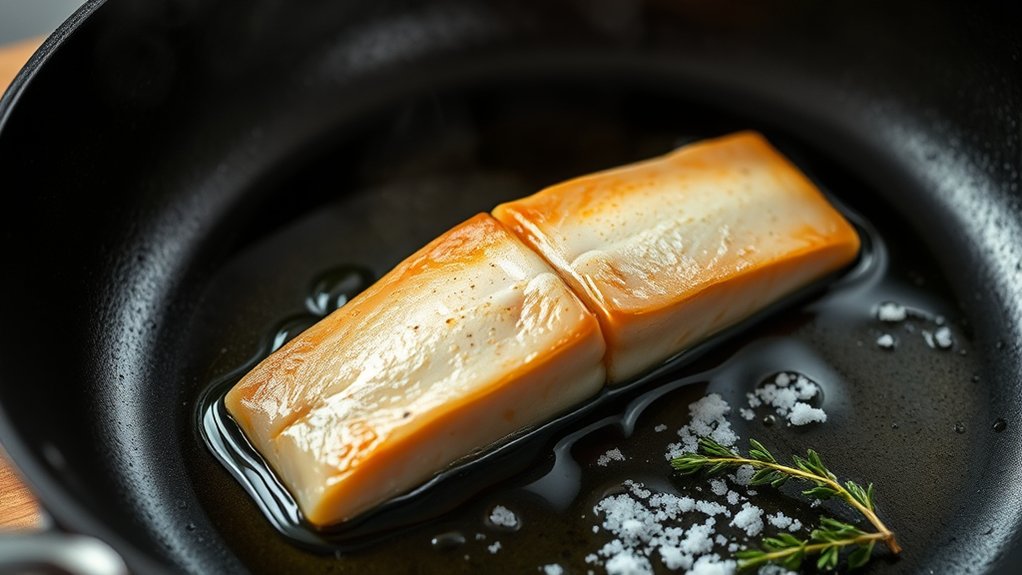
Before pan frying, make certain you clean your mahi mahi thoroughly to remove any scales or residue. Next, season it well to enhance its natural flavor, using your favorite herbs and spices.
Finally, pat the fish dry to guarantee a perfect sear and crispy crust.
Cleaning Mahi Mahi
How do you guarantee your mahi mahi is perfectly clean and ready to cook? Start by rinsing the fillets under cold running water to remove any surface slime or debris. Use your fingers to gently rub the flesh, ensuring all scales and loose bits are washed away.
Pat the fish dry with paper towels to eliminate excess moisture, which helps achieve a better sear later. Check for any remaining pin bones by running your fingers along the fillet and remove them with tweezers if necessary. If you bought whole mahi mahi, gut and clean the body cavity thoroughly, then rinse inside and out.
Proper cleaning ensures a fresh taste and safe eating experience, setting the stage for seasoning and cooking.
Seasoning Techniques
Although cleaning preps your mahi mahi for cooking, seasoning brings out its natural flavors and enhances the overall taste. To get the best results, focus on simple yet effective seasoning techniques that complement the fish’s mild flavor.
Here are three key seasoning tips:
- Use salt and pepper generously – They’re essential for highlighting mahi mahi’s natural taste.
- Add a squeeze of citrus – Lemon or lime juice brightens the flavor and adds a fresh zing.
- Incorporate herbs and spices – Try garlic powder, paprika, or fresh herbs like thyme or parsley to add depth without overpowering the fish.
Drying Fish Properly
Once you’ve seasoned your mahi mahi, you’ll want to dry it properly to guarantee a perfect sear. Pat the fish gently with paper towels, removing any excess moisture from the surface. This step is essential because wet fish steams rather than sears, preventing that desirable crispy crust.
Avoid pressing too hard, which can damage the delicate flesh. After drying, let the fish rest at room temperature for about 10-15 minutes; this helps it cook evenly. If you store your seasoned fish in the fridge before cooking, dry it again briefly to remove any condensation.
Taking these simple steps ensures your mahi mahi develops a beautiful golden-brown crust, locking in flavor and moisture for a delicious pan-fried result every time.
Picking The Best Pan And Oil For Pan Frying Mahi Mahi
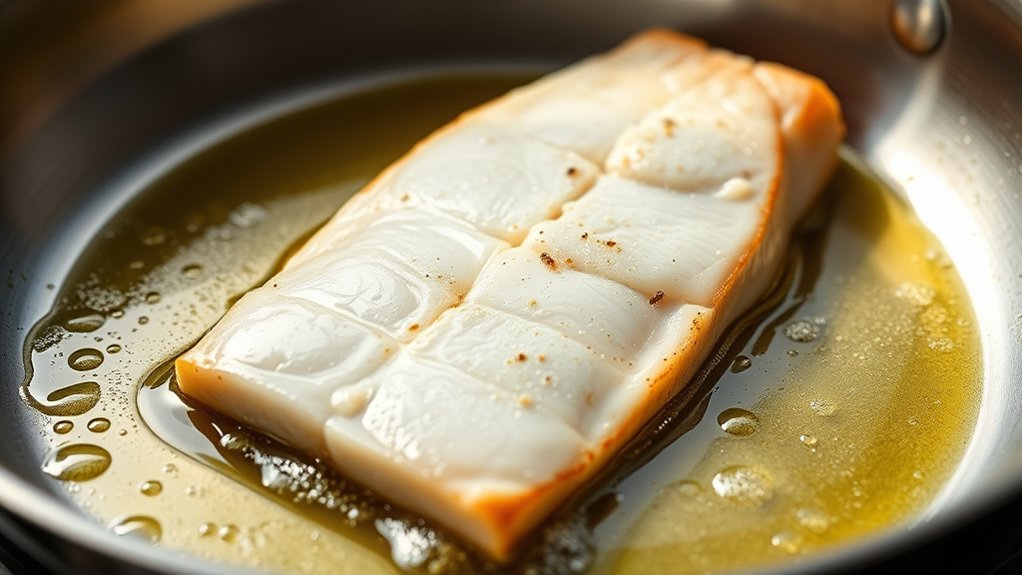
Choosing the right pan and oil is essential to achieve a perfectly cooked mahi mahi with a crispy crust and moist interior. You want to use cookware and oils that handle heat well and complement the fish’s delicate flavor.
Here are three tips to guide your choice:
- Use a heavy-bottomed skillet: Cast iron or stainless steel pans distribute heat evenly, preventing hot spots and ensuring a consistent sear.
- Pick oils with high smoke points: Avocado oil, grapeseed oil, or refined olive oil tolerate high heat without burning, preserving flavor and texture.
- Avoid strong-flavored oils: Skip extra virgin olive oil or butter for frying, as their intense flavors can overpower mahi mahi’s mild taste.
With the right pan and oil, your mahi mahi will develop that perfect golden crust every time.
How Long To Pan Fry Mahi Mahi For Perfect Doneness
You’ll want to pan fry mahi mahi for about 3 to 4 minutes per side to reach perfect doneness. Look for opaque flesh that flakes easily with a fork as your key sign.
Remember to adjust your cooking time depending on the thickness of the fillet to avoid undercooking or drying it out.
Ideal Cooking Time
While pan frying mahi mahi, timing is essential to achieve a moist, flaky texture without overcooking it. You want to cook it just right, so it stays tender and flavorful.
Here’s a quick guide to help you nail the ideal cooking time:
- Preheat your pan over medium-high heat for a couple of minutes before adding the fish.
- Cook each side of a 1-inch thick fillet for about 3 to 4 minutes. Adjust slightly for thicker or thinner cuts.
- Avoid flipping multiple times; one flip ensures even cooking and a nice crust.
Stick to these timing tips, and you’ll consistently get perfectly pan-fried mahi mahi every time!
Signs Of Perfect Doneness
Getting the timing right is just part of the process—you also need to recognize when your mahi mahi has reached perfect doneness. You’ll notice the fish turns opaque and flakes easily with a fork. The surface should be golden brown but not burnt.
Press gently; it should feel firm but still spring back slightly.
| Sign | What to Look For | Why It Matters |
|---|---|---|
| Color | Opaque, white, no translucence | Indicates cooked through |
| Texture | Flakes easily, firm but moist | Prevents overcooking or dryness |
| Surface | Golden brown, not burnt | Ensures a flavorful crust |
Watch these signs closely to serve mahi mahi that’s juicy and perfectly cooked every time.
Adjusting Time For Thickness
Because mahi mahi fillets come in various thicknesses, modifying your pan-frying time is essential to achieve perfect doneness. Thicker fillets need more time to cook through, while thinner ones require less to avoid drying out.
Here’s how to adjust:
- For fillets under 1 inch thick, cook about 2-3 minutes per side.
- For 1 to 1.5 inches thick, aim for 4-5 minutes per side.
- For thicker cuts over 1.5 inches, sear each side for 5-6 minutes, then finish in the oven if needed.
Always check for an internal temperature of 145°F and look for opaque flesh that flakes easily. Adjusting time based on thickness ensures your mahi mahi stays juicy and flavorful every time.
How To Tell When Mahi Mahi Is Cooked Through
To know when mahi mahi is cooked through, look for firm, opaque flesh that flakes easily with a fork. When you press the fish gently, it should feel springy but not mushy. Avoid cutting into the fish too early, as it can cause moisture loss.
The color will change from translucent to a milky white or light beige. If you’re unsure, insert a fork at the thickest part and twist gently; the layers should separate without resistance. Overcooking will make mahi mahi dry and tough, so it’s best to remove it from heat as soon as it reaches this flaky stage.
Trust these visual and tactile cues to guarantee your mahi mahi is perfectly cooked every time.
How To Get A Perfect Golden Crust On Pan-Fried Mahi Mahi
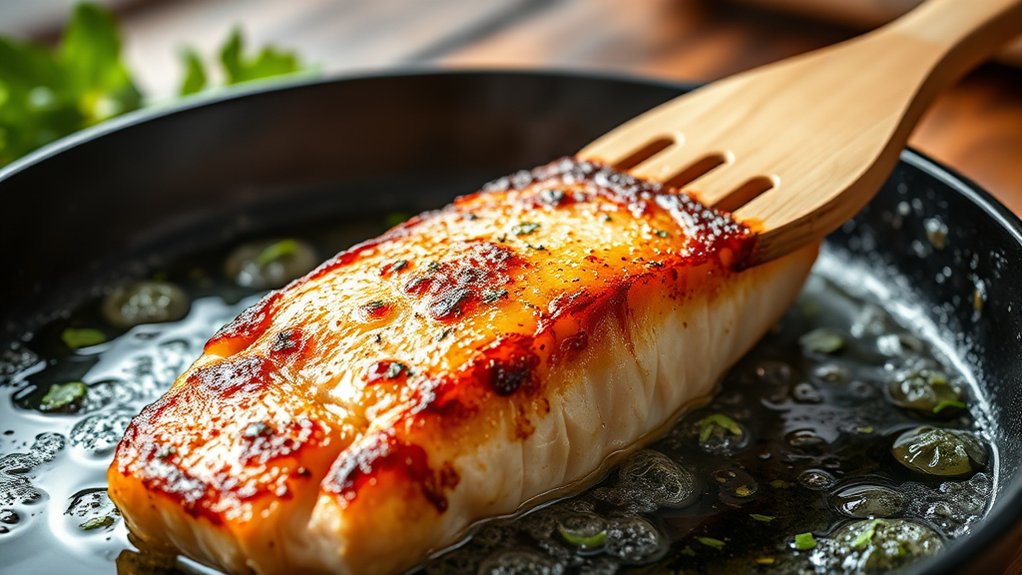
When you want a perfect golden crust on pan-fried mahi mahi, the key lies in preparation and temperature control. First, make sure your fish is dry by patting it with paper towels; moisture creates steam, which prevents browning.
Second, preheat your pan over medium-high heat until it’s hot but not smoking — this ensures immediate searing. Third, add a high smoke point oil like avocado or grapeseed oil and let it heat evenly before placing the fish skin-side down.
Press the fillet lightly to maintain contact with the pan. Avoid moving the fish too soon; let it form that golden crust naturally. Follow these steps, and you’ll get a beautifully crisp exterior every time.
How To Rest And Serve Pan-Fried Mahi Mahi For Juicy Results
Although pan-frying mahi mahi creates a delicious crust, letting the fish rest before serving locks in its juices and enhances flavor. Once your mahi mahi is cooked, transfer it to a warm plate and loosely cover it with foil. Rest it for about 3 to 5 minutes—this brief pause allows the natural juices to redistribute throughout the flesh, making every bite moist and tender.
Avoid cutting into the fish immediately, as this causes valuable juices to escape. When ready, serve your mahi mahi with complementary sides like a fresh salad or roasted vegetables. Add a squeeze of lemon or a drizzle of herb butter to brighten the flavors.
Frequently Asked Questions
Can I Pan Fry Mahi Mahi From Frozen?
You can pan fry mahi mahi from frozen, but it’s best to thaw it first for even cooking.
If not, cook on medium heat longer, flipping carefully to avoid breaking the fish apart during cooking.
What Side Dishes Pair Well With Pan-Fried Mahi Mahi?
You’ll love pairing pan-fried mahi mahi with garlic mashed potatoes, steamed asparagus, or a fresh mango salsa. These sides complement the fish’s flavor and keep your meal light, vibrant, and perfectly balanced.
Is Mahi Mahi Sustainable and Environmentally Friendly?
Yes, mahi mahi is generally sustainable if you choose responsibly sourced options. You’ll want to look for certifications like MSC or buy from local fisheries using eco-friendly methods to support healthy ocean ecosystems while enjoying your meal.
Choosing sustainable mahi mahi helps protect marine life and ensures the species remains abundant. Supporting fisheries that practice responsible fishing reduces environmental impact.
Always check for labels and ask about sourcing when purchasing mahi mahi. This way, you can enjoy your meal with confidence that it’s environmentally friendly.
Can I Use Leftover Pan-Fried Mahi Mahi for Other Recipes?
You absolutely can use leftover pan-fried mahi mahi to create culinary masterpieces! Just flake it into salads, tacos, or pasta—you’ll transform simple leftovers into gourmet dishes that’ll impress anyone at your table effortlessly.
How Do I Store Leftover Pan-Fried Mahi Mahi Safely?
You should cool the leftover pan-fried mahi mahi quickly, then store it in an airtight container.
Keep it in the fridge for up to 3 days, and reheat thoroughly before eating to stay safe.
Conclusion
Now that you know how to pick, prepare, and pan fry your mahi mahi to perfection, you’re set to savor a succulent, sizzling success every time.
Remember, mastering moisture and making a magnificent golden crust makes all the difference. Resting your fish right after frying really seals in that juicy, just-right flavor.
So, grab your pan, get going, and enjoy deliciously delightful mahi mahi that’s simply sensational!
By following these steps on how long to pan fry mahi mahi, you’ll achieve a perfectly cooked fish with a crispy exterior and tender interior every time.