How Do You Close the Grill When Cooking Steak?
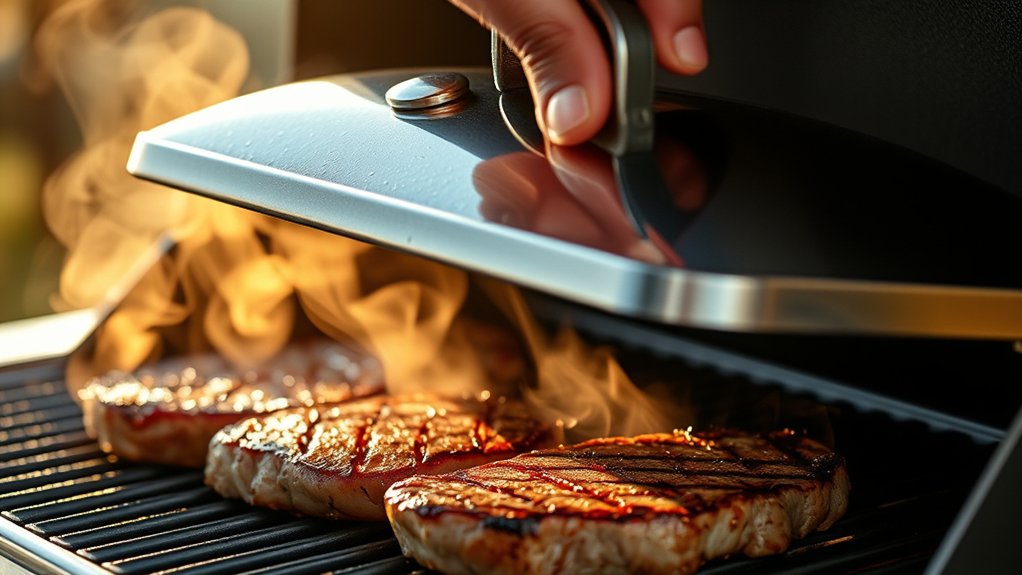
When cooking steak on a grill, knowing how to close the grill properly is essential for achieving the best results. Closing the grill right after placing the steak on the grates traps heat and smoke, ensuring even cooking and enhanced flavor. This technique helps to lock in juices, keeping your steak tender and delicious.
On a gas grill, make sure all burners are set to the right temperature before closing the lid. Avoid lifting the lid too often to maintain consistent heat.
For charcoal grills, gently close the lid and adjust the vents to control temperature and smoke flow.
This method also prevents flare-ups and promotes juicy, flavorful steaks. To master perfect grilling, you’ll want to explore timing and techniques further.
Key Takeaways
- Place the steak on the grill grates, then promptly close the lid to trap heat for even cooking.
- Ensure all burners or charcoal are at the desired temperature before closing the lid.
- Avoid frequent lid lifting to maintain consistent heat and prevent flare-ups.
- Adjust vents on a charcoal grill to control oxygen flow and regulate temperature while the lid is closed.
- Keep the lid closed during the initial sear, then open briefly as needed for flipping or checking doneness.
When Should You Close the Grill?
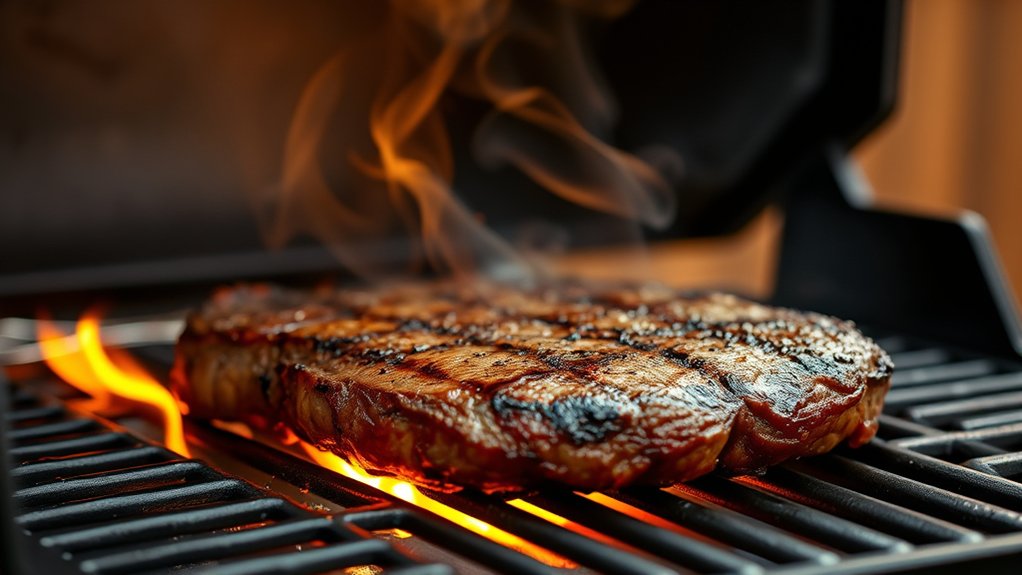
Although you can leave the grill open for certain cuts, you should close it when you want to trap heat and cook the steak evenly. Closing the grill creates an oven-like environment, ensuring the heat surrounds the steak for consistent doneness. This is especially important for thicker cuts, where you want the inside to cook without burning the outside.
When you close the lid, you also reduce flare-ups caused by dripping fat, helping you maintain better control over the cooking process. If you’re aiming for a medium or higher level of doneness, closing the grill helps achieve that without constant flipping. However, for thin steaks or quick sears, leaving the grill open can be fine.
But generally, closing the grill is your go-to for even, efficient cooking.
How Closing the Grill Affects Steak Flavor and Texture
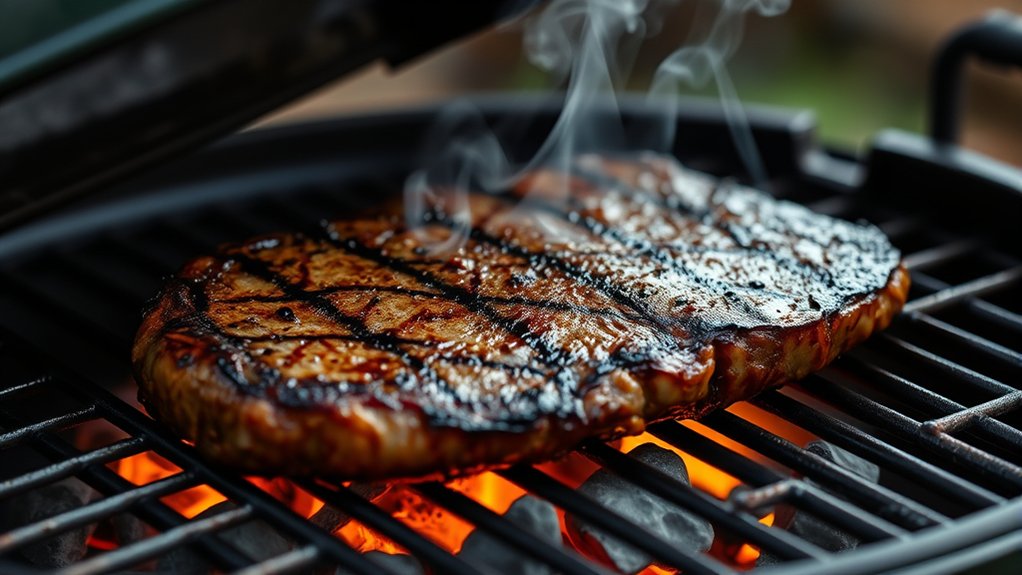
When you close the grill, you lock in heat and smoke, which deeply enhances the steak’s flavor and texture. This trapped heat cooks the steak more evenly while the smoke infuses a rich, smoky taste. Closing the grill also helps maintain moisture, preventing your steak from drying out and keeping it juicy.
You’ll notice a better sear and a more tender bite as the heat circulates around the meat.
| Effect | Result |
|---|---|
| Trapped heat | Even cooking |
| Smoke retention | Enhanced smoky flavor |
| Moisture preservation | Juicier steak |
| Circulating heat | Better sear and tenderness |
Closing the grill transforms your steak from ordinary to exceptional by improving flavor and texture.
How to Close a Gas Grill for Steak
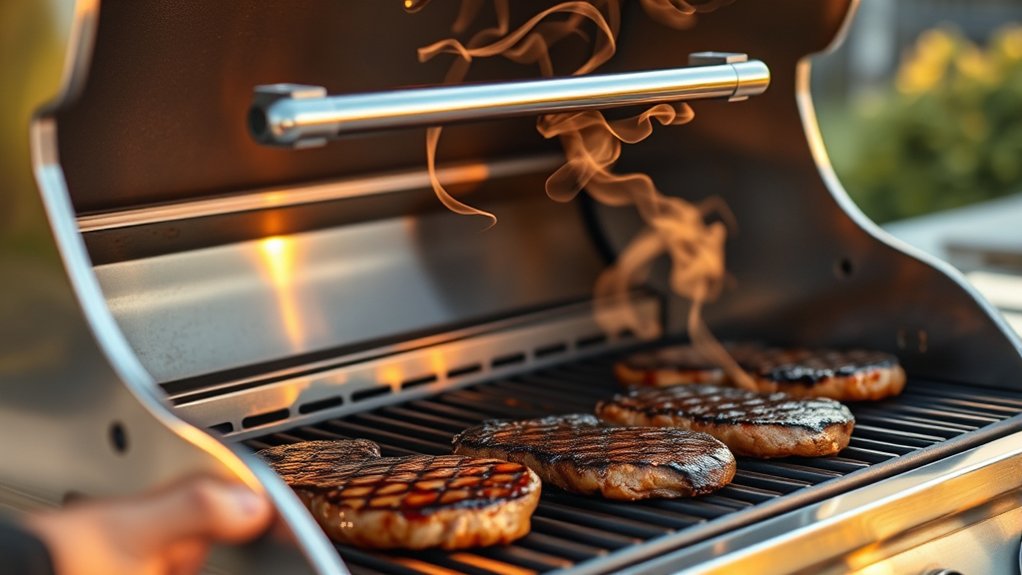
The benefits of closing your grill become clear once you know the right way to do it, especially with a gas grill. When you place your steak on the grates, close the lid promptly to trap heat evenly around the meat. This creates a convection effect, cooking your steak faster and more uniformly.
Make sure all burners are on the desired temperature before closing the lid to avoid temperature drops. Avoid lifting the lid frequently, as this releases heat and interrupts cooking. If you want that perfect sear, leave the lid closed during the initial searing phase, then adjust as needed for doneness.
Closing the gas grill properly helps lock in juices and enhances flavor without overcooking or drying out your steak.
How to Close a Charcoal Grill for Steak
Since charcoal grills rely on airflow to control temperature, knowing how to close the grill properly is key to cooking a perfect steak. First, place the steak on the grill grate, then close the lid gently to maintain steady heat. Adjust the vents to control oxygen flow—the more open, the hotter the fire.
| Step | Action |
|---|---|
| 1 | Place steak on grill grate |
| 2 | Close grill lid gently |
| 3 | Adjust top and bottom vents |
| 4 | Monitor temperature regularly |
Closing the lid traps heat and smoke, cooking your steak evenly. Avoid slamming the lid to prevent flare-ups and temperature spikes. Keep an eye on the vents to maintain the right airflow.
Controlling Heat and Smoke by Closing the Grill Lid
Although controlling heat and smoke can seem tricky, closing the grill lid properly gives you significant control over both. When you close the lid, you trap heat inside, creating an oven-like environment that cooks your steak evenly. This sealed environment also limits oxygen, reducing flare-ups and managing smoke levels.
If smoke builds up too much, it can overpower the steak’s flavor, so keeping the lid closed helps maintain a balanced smoky taste. You can adjust vents or dampers to fine-tune airflow, which directly affects heat and smoke intensity. By mastering how and when to close the lid, you guarantee steady heat and flavorful smoke, giving your steak that perfect sear and mouthwatering aroma without burning or drying it out.
When to Open the Grill Lid to Flip or Check Steak
Keeping the grill lid closed helps maintain steady heat and smoke, but you’ll need to open it at the right moments to flip or check your steak. Typically, wait until the steak naturally releases from the grill grates before flipping—this usually happens after 4-5 minutes per side for a medium-thick cut. Opening the lid too soon can cause sticking and heat loss.
When checking for doneness, briefly lift the lid to avoid dropping the temperature drastically. Use a meat thermometer or press the steak gently to gauge firmness without cutting into it. Limiting lid openings ensures consistent cooking and better flavor.
How to Avoid Overcooking Steak When the Grill Is Closed
Even with the grill lid closed, it’s easy to overcook your steak if you’re not paying close attention. To avoid this, use a reliable meat thermometer to check the internal temperature without opening the grill. Aim for 125°F for rare, 135°F for medium-rare, and 145°F for medium.
Also, consider the steak’s thickness; thinner cuts cook faster, so adjust your timing accordingly. Keep the heat at a steady medium-high to prevent flare-ups that can char the steak’s exterior while leaving the inside overdone. Finally, factor in carryover cooking—remove the steak a few degrees before your target temperature, letting it rest to reach perfection without drying out.
These steps help you lock in juiciness and flavor every time.
Mistakes to Avoid When Closing Your Grill for Steak
When you close your grill to cook steak, certain mistakes can quickly ruin your meal. First, don’t shut the lid too forcefully; this can disrupt the heat distribution and cause flare-ups. Avoid leaving the lid open for too long, as it lets heat escape and slows cooking.
Also, don’t rely solely on guesswork—use a meat thermometer to prevent over or undercooking. Avoid crowding the grill, which reduces airflow and results in uneven cooking. Finally, don’t neglect cleaning the grill grates before sealing; leftover residue can cause sticking and off-flavors.
Frequently Asked Questions
What Type of Steak Cuts Are Best for Grilling?
You’ll want to choose ribeye, sirloin, T-bone, or New York strip for grilling. These cuts have great marbling and flavor, so they stay juicy and tender while cooking over high heat on your grill.
How Long Should Steak Rest After Grilling?
Think of your steak as a warrior returning from battle—it needs about 5 to 10 minutes to regain its strength.
You’ll want to let it rest so juices redistribute, ensuring every bite stays juicy and tender.
Should I Marinate Steak Before Grilling?
You don’t have to marinate steak before grilling, but it can add flavor and tenderness. If you do, marinate for 30 minutes to a few hours.
Avoid acidic marinades too long to prevent mushiness.
What Tools Do I Need for Grilling Steak?
You’ll need a good grill, tongs, a meat thermometer, a spatula, and a basting brush. Don’t forget heat-resistant gloves and a clean wire brush for prepping the grill grates before cooking your steak.
Can I Use Wood Chips for Extra Flavor?
Yes, you can use wood chips for extra flavor. Soak them in water first, then add them to your grill. They’ll create smoky aromas that enhance your steak, giving it a delicious, rich taste you’ll love.
Conclusion
Closing the grill lid while cooking steak locks in heat and smoke, boosting flavor and tenderness. Surprisingly, studies show that grilling with the lid closed can raise the internal temperature by up to 20%, cooking your steak faster and juicier.
Just remember to open it to flip or check doneness, and avoid overcooking by monitoring closely. Mastering when and how to close the grill makes all the difference in achieving that perfect steak every time.
Understanding how to close the grill when cooking steak ensures optimal heat retention and flavor enhancement. Properly closing the grill lid is key to grilling success and delicious results.