How to Season Non Stick Cookware in 7 Easy Steps
To season your non-stick cookware effectively, it’s important to follow a few simple steps that enhance its durability and cooking performance. Properly seasoning your non-stick pans helps to maintain their non-stick surface, making cooking and cleaning much easier.
This process also extends the lifespan of your cookware, ensuring it stays in top shape for longer.
Start by washing your cookware gently with warm soapy water. Dry it completely before moving on to the next step.
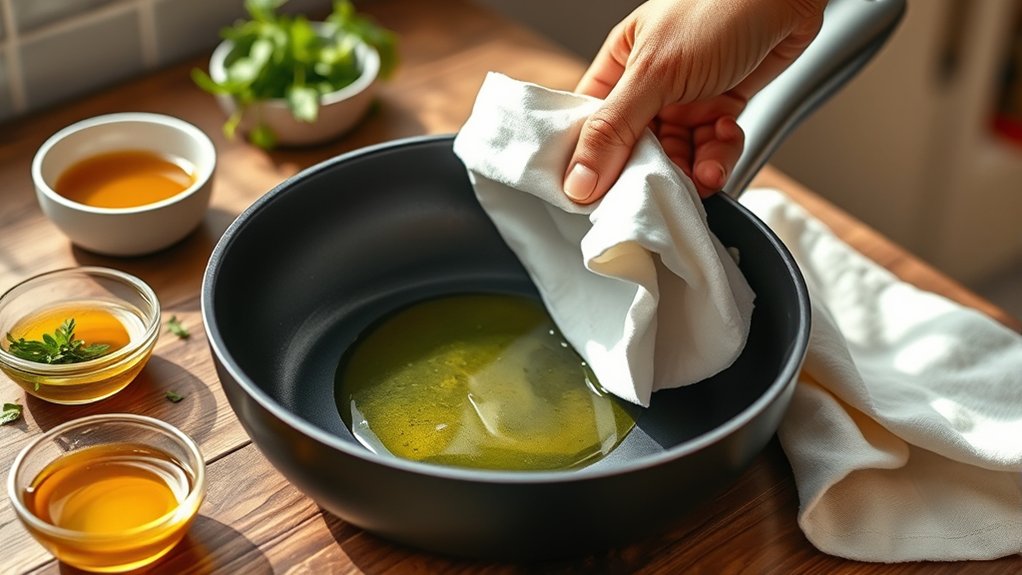
Use a high smoke point oil such as grapeseed or flaxseed oil. Spread a thin, even layer over the surface with a cloth.
Heat the pan on medium heat, around 300-350°F, for 10-15 minutes. Wait until light smoke appears, then turn off the heat and let it cool fully.
Finally, wipe off any excess oil with a clean cloth. Store your seasoned cookware in a dry, well-ventilated place to maintain its quality.
Keep going to discover tips that keep your pans in top shape longer.
Key Takeaways
- Wash and dry the non-stick pan thoroughly to remove factory coatings and moisture before seasoning.
- Apply a thin, even layer of high smoke point oil like flaxseed or grapeseed using a paper towel.
- Heat the pan on low to medium heat (300-350°F) for 10-15 minutes until light smoke appears.
- Allow the pan to cool completely at room temperature before wiping off excess oil gently.
- Store the seasoned pan in a dry, ventilated space with padding to protect the coating.
How to Prepare Your Non-Stick Cookware for Seasoning
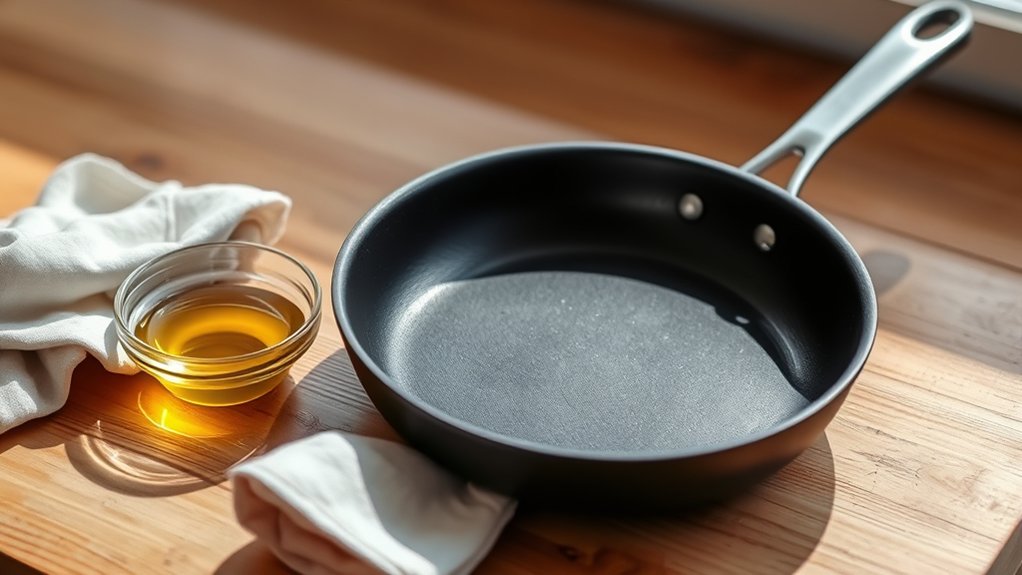
Before you begin seasoning your non-stick cookware, you need to verify it’s clean and dry. Start by washing the pan with warm water and a mild dish soap to remove any factory coatings, oils, or dust. Use a soft sponge to avoid scratching the surface.
Rinse thoroughly and dry it completely with a clean towel or let it air dry. Make certain no moisture remains, as water can interfere with the seasoning process. If your pan has stubborn residues, avoid harsh abrasives; instead, soak it briefly in soapy water and gently scrub.
Once dry, check for any visible damage or peeling of the coating. Preparing your cookware carefully ensures the seasoning will adhere properly and last longer.
Best Oils for Seasoning Non-Stick Pans
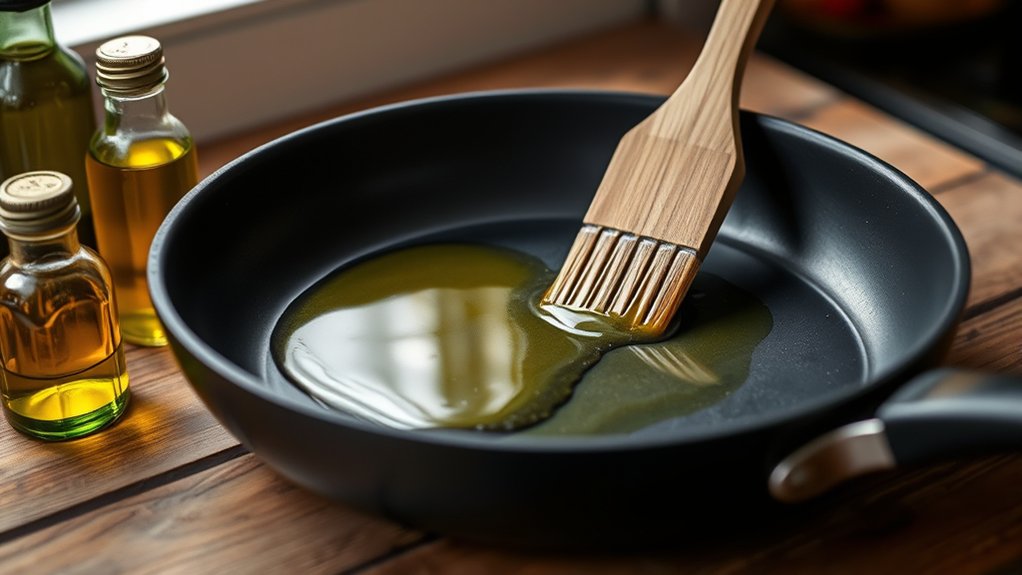
Which oils work best for seasoning non-stick pans? You want oils with a high smoke point and neutral flavor. Flaxseed oil is a popular choice because it polymerizes well, creating a strong, durable layer.
Grapeseed oil also works great due to its high smoke point and light taste. Canola and sunflower oils are good alternatives if you’re looking for easy-to-find options. Avoid olive oil since its lower smoke point can leave a sticky residue.
Using these oils helps build a smooth, protective coating that enhances your pan’s non-stick properties and longevity. Picking the right oil guarantees your seasoning process goes smoothly and your cookware stays in top shape for countless meals.
How to Apply Oil Evenly When Seasoning
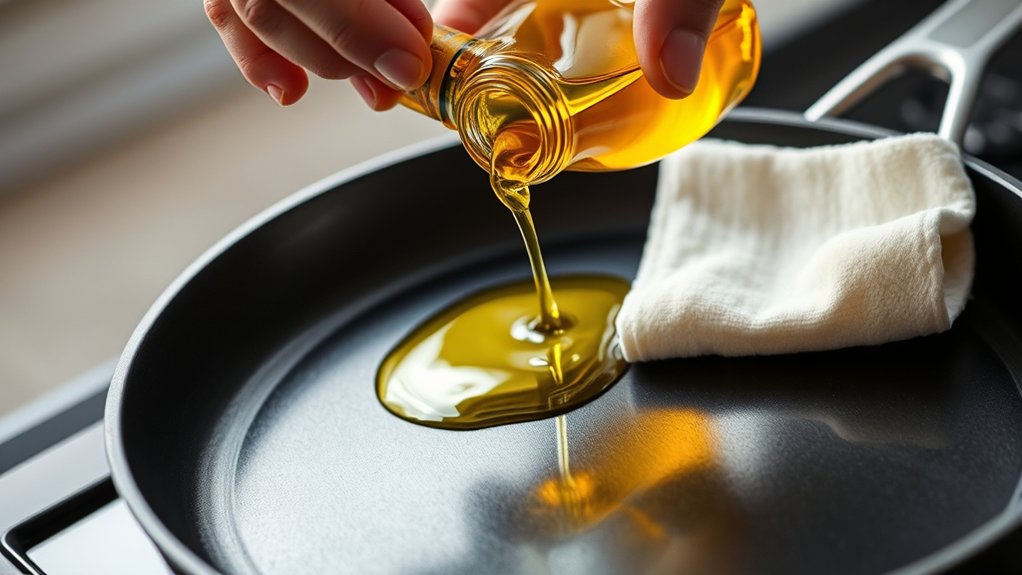
You’ll want to pick an oil with a high smoke point for the best results. To apply it evenly, use a paper towel or cloth to spread a thin, smooth layer across the pan’s surface.
This helps create a consistent coating that strengthens the non-stick finish.
Choosing The Right Oil
How do you pick the best oil for seasoning your non-stick cookware? Look for oils with a high smoke point and neutral flavor, such as canola, grapeseed, or avocado oil. These oils withstand heat without breaking down or leaving a sticky residue.
Avoid oils like olive oil or butter, which smoke too early and can create uneven seasoning. Cold-pressed or unrefined oils might add unwanted flavors and don’t handle heat as well. Also, choose oils that are easy to spread evenly over the surface.
Using the right oil ensures your cookware develops a durable, smooth coating that improves non-stick performance and longevity. Picking the right oil sets the foundation for effective seasoning and better cooking results.
Techniques For Smooth Coating
Although seasoning your non-stick cookware starts with choosing the right oil, applying it evenly is just as important to create a smooth, durable coating. Start by pouring a small amount of oil onto the pan’s surface. Use a clean, lint-free cloth or a paper towel to spread the oil in a thin, uniform layer.
Don’t pour too much; excess oil can pool and cause sticky spots. Pay special attention to edges and corners, ensuring every part is lightly coated. Avoid rubbing too hard — gentle, circular motions work best.
After applying, wipe away any visible excess oil to prevent buildup. This even application helps the seasoning bond properly, giving your cookware a sleek, long-lasting non-stick finish.
Ideal Heat Settings for Seasoning Non-Stick Cookware
You’ll want to heat your non-stick cookware to a moderate temperature, around 300 to 350°F, for effective seasoning. Going too high risks damaging the coating or causing the oil to smoke excessively.
Stick to this range to build a durable, non-stick surface without harm.
Optimal Temperature Range
Why does the temperature matter when seasoning your non-stick cookware? The right heat activates the oil’s bonding process to the pan’s surface, creating a smooth, protective layer. You want to keep the temperature between 275°F and 350°F (135°C to 175°C).
This range is hot enough to polymerize the oil but not so hot that it breaks down the non-stick coating. Heating within this range guarantees the seasoning forms evenly and lasts longer. If the temperature is too low, the oil won’t properly bond, leaving a sticky residue.
Too high, and you risk damaging the cookware’s surface. Use medium to medium-low heat settings on your stove to maintain control. This way, you’ll build a durable, effective seasoning layer without compromising your pan.
Avoiding Overheating Risks
Maintaining the right temperature when seasoning non-stick cookware means knowing how to avoid overheating, which can cause irreversible damage. You should keep the heat at a moderate level, typically between low and medium, to prevent the coating from breaking down. Never crank the stove to high heat, as this can warp the pan or release harmful fumes.
Use a reliable thermometer or your stove’s settings to maintain consistent warmth. If you notice smoke or a burnt smell, immediately reduce the heat or remove the pan from the burner. Overheating not only ruins the seasoning process but also shortens your cookware’s lifespan.
How Long to Season Your Pan for Best Results
Although seasoning times can vary depending on your cookware and method, you should generally spend about 10 to 15 minutes seasoning your non-stick pan for the best results. This duration allows the oil to bond properly with the pan’s surface, creating a durable, non-stick layer. If you season for too short a time, the coating might not fully develop, reducing its effectiveness.
On the other hand, seasoning for much longer than 15 minutes can risk overheating, which may damage the pan. Pay attention to the oil’s behavior—a light smoke indicates the seasoning process is underway. Once the smoke begins to fade, it’s a good sign to finish up.
Stick to this timing to guarantee your pan stays in great shape and performs well.
How to Cool and Store Your Pan After Seasoning
Once your pan has finished seasoning and the smoke has faded, let it cool completely at room temperature before handling or storing it. Avoid rushing this step, as sudden temperature changes can damage the non-stick coating. After cooling, gently wipe the surface with a soft cloth to remove any excess oil or residue.
Store your pan in a dry place with good ventilation to prevent moisture buildup, which can affect the seasoning layer. If stacking pans, place a paper towel or cloth between them to protect the coating from scratches. Proper cooling and storage guarantee your pan maintains its seasoned surface and extends its lifespan.
Taking these simple steps helps keep your non-stick cookware ready for your next cooking adventure.
Tips for Maintaining Your Seasoned Non-Stick Cookware
After properly cooling and storing your seasoned non-stick pan, you’ll want to keep it in top condition for long-lasting performance. Always clean it gently with a soft sponge and mild detergent—avoid abrasive scrubbers that can damage the seasoning. Dry your pan thoroughly to prevent rust or residue buildup.
Use low to medium heat when cooking to protect the seasoning from burning or peeling. Avoid cooking sprays, as they can leave a sticky film. Periodically re-season your pan by applying a thin layer of oil and heating it briefly to maintain the non-stick surface.
Store your cookware carefully, preferably with a paper towel between pans to avoid scratches. Following these tips will help your seasoned non-stick cookware stay effective and durable for years.
Frequently Asked Questions
Can Seasoning Improve the Durability of Non-Stick Cookware?
Yes, seasoning can improve your non-stick cookware’s durability by creating a protective layer. This helps reduce wear and tear, prevents scratches, and extends its lifespan.
As a result, your pans stay non-stick and perform better longer.
Is Seasoning Necessary for All Types of Non-Stick Coatings?
Seasoning isn’t strictly necessary for all non-stick coatings. Some surfaces, like ceramic or PTFE, perform perfectly without it.
Still, seasoning sometimes strengthens surface slip, so you might want to maintain your cookware’s marvelous, non-stick magic.
How Often Should Non-Stick Cookware Be Reseasoned?
You should reseason your non-stick cookware every 1-3 months, depending on how often you use it.
If food starts sticking or the surface looks dull, it’s a good sign you need to reseason it soon.
Can Seasoning Remove Existing Scratches or Damage?
No, seasoning can’t remove existing scratches or damage on your non-stick cookware. It only helps maintain the surface and improve performance.
For scratches, you’ll need to contemplate replacing the pan to avoid health risks.
Are There Any Safety Concerns When Seasoning Non-Stick Pans?
Oh sure, just rub your pan and summon kitchen magic! But seriously, don’t overheat non-stick pans during seasoning; it can release harmful fumes.
Use moderate heat and well-ventilated space to keep you and your cookware safe.
Conclusion
Seasoning your non-stick cookware is like giving it a protective armor that gets stronger with care. By prepping your pan, choosing the right oil, and applying heat carefully, you create a smooth, durable surface that makes cooking easier and cleanup a breeze.
Remember to cool and store your pan properly, and maintain it regularly. With these simple steps, your cookware will stay reliable and ready, turning every meal into a masterpiece. Proper seasoning enhances the lifespan of your non-stick cookware and ensures optimal performance in the kitchen.