How Long to Pan Fry Catfish in 7 Simple Steps
To pan fry catfish perfectly, start by choosing fresh, firm fillets with a mild scent. Selecting quality catfish is essential for the best flavor and texture. Pat the fillets dry to ensure the coating sticks well.
Next, season the fillets with salt, pepper, and spices like paprika. Then, coat them evenly with a cornmeal-flour mix for a crispy crust. This simple preparation helps create that classic golden finish.
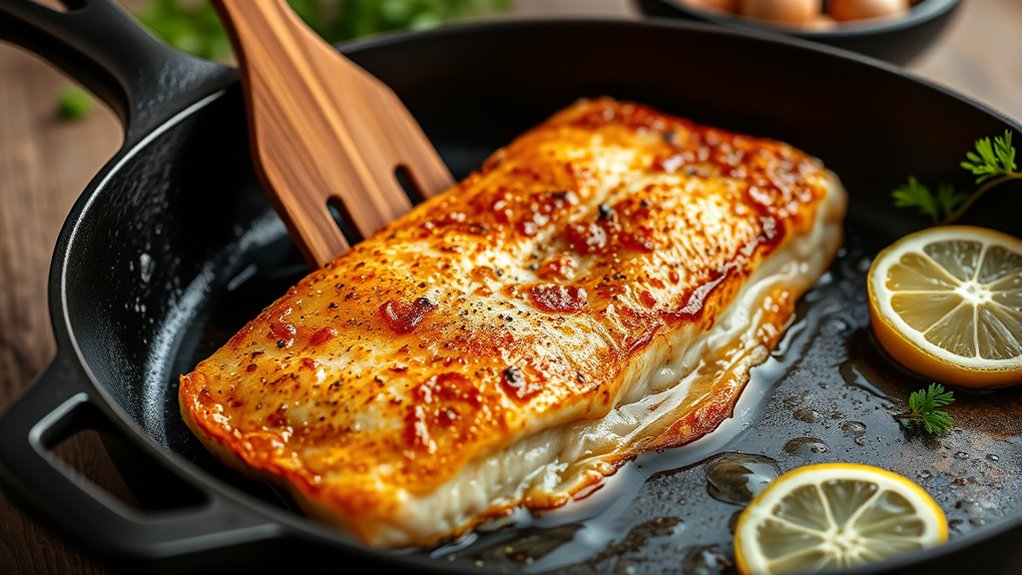
Heat a skillet with about ¼ inch of high smoke point oil until hot. Cook the fillets for 3 to 4 minutes per side until golden and flaky. The internal temperature should reach 145°F for safe consumption.
Keep the heat steady throughout cooking to maintain a crispy crust. These steps will help you pan fry catfish with a delicious, crunchy exterior and tender inside.
Stick around to discover tips for perfect results every time.
Key Takeaways
- Preheat pan on medium-high heat for 2-3 minutes before adding oil.
- Use ¼ inch of high smoke point oil like vegetable or canola in the pan.
- Cook catfish fillets for 3-4 minutes per side until golden brown and opaque.
- Adjust cooking time based on fillet thickness and maintain medium to medium-high heat.
- Confirm doneness by flaky texture, opaque white flesh, and internal temperature of 145°F (63°C).
Picking the Best Catfish Fillets
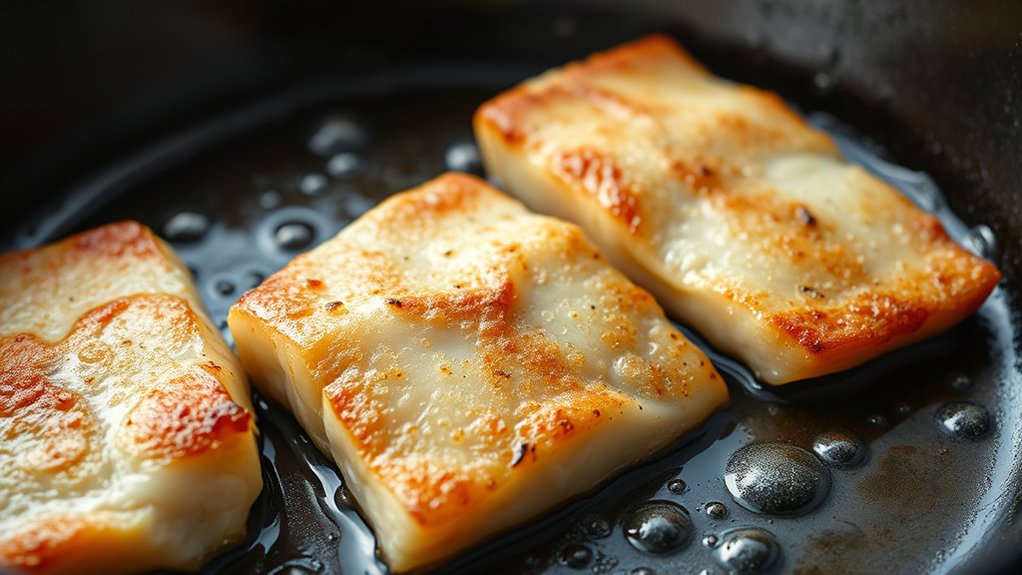
When choosing catfish fillets, you want to look for pieces that are firm, moist, and have a mild scent. Avoid fillets that appear slimy or have a strong fishy odor, as these indicate they’re not fresh. Check the color—fresh catfish should have a translucent, white to pale pink hue without any discoloration or dark spots.
Opt for fillets that feel slightly cool to the touch but not cold or frozen. If you’re buying from a market, ask the fishmonger when the catfish arrived to confirm freshness. Also, pick fillets with an even thickness to promote uniform cooking.
How to Season and Coat Your Catfish
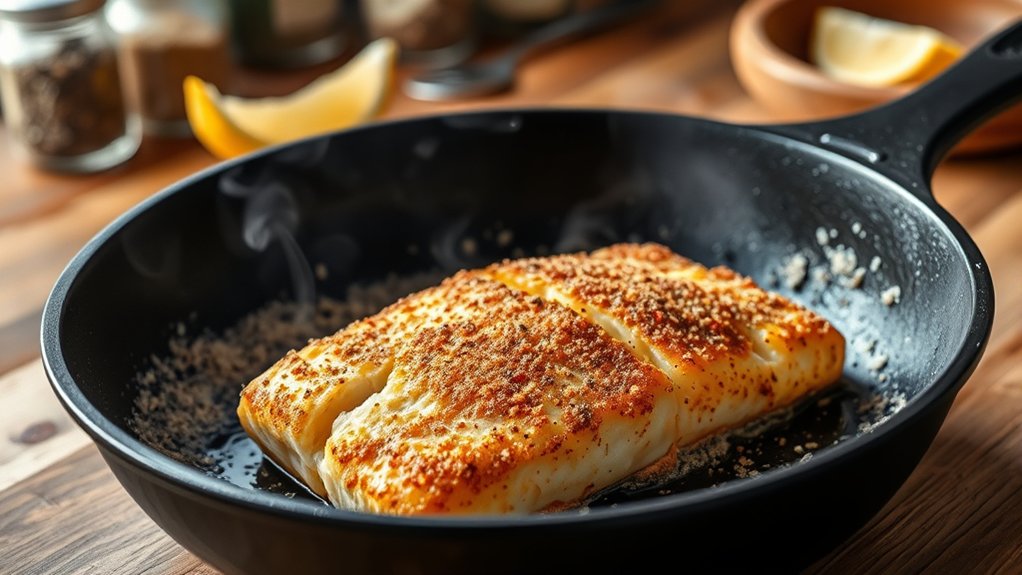
Although catfish has a naturally mild flavor, seasoning and coating it properly can elevate your dish to the next level. Start by patting the fillets dry to help the seasoning stick. Sprinkle salt, pepper, and a pinch of paprika or cayenne for a subtle kick.
You can also add garlic powder or onion powder for extra depth. For coating, prepare a mixture of cornmeal and flour in equal parts. This combo creates a crispy, golden crust while keeping the fish moist.
Lightly dredge each fillet in the dry mix, pressing gently so it adheres well. Avoid soaking the fish in wet batter, as pan frying favors a dry coating for even crispiness. Now, your catfish is perfectly seasoned and ready for frying.
Heating Your Pan and Choosing the Right Oil
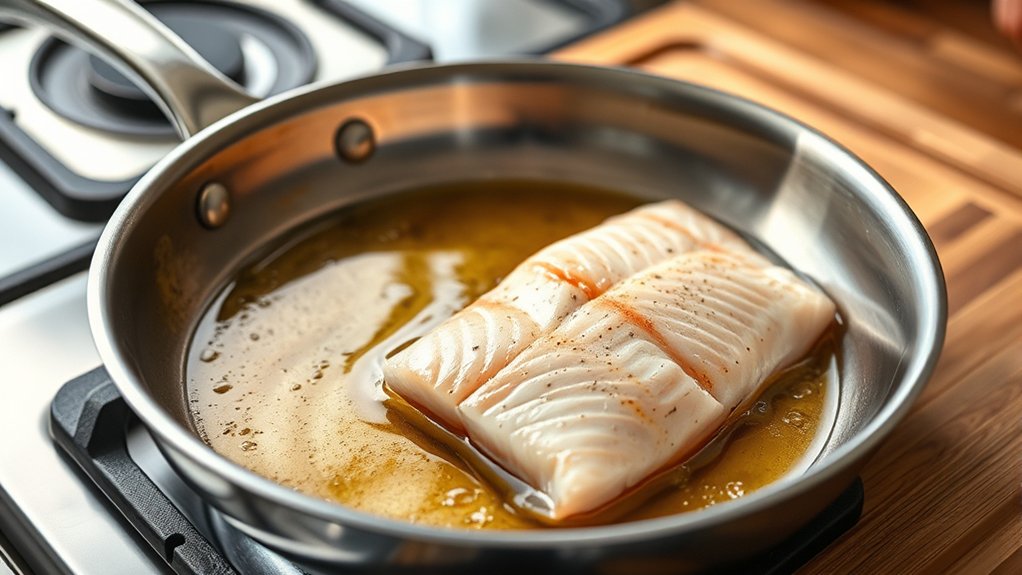
Now that your catfish is seasoned and coated, it’s time to prepare your pan and select the right oil for frying. Getting these steps right guarantees a crispy, flavorful result. Follow these tips:
- Preheat your pan over medium-high heat for 2-3 minutes to reach the ideal frying temperature.
- Choose an oil with a high smoke point like vegetable, canola, or peanut oil to prevent burning.
- Add enough oil to cover the bottom of the pan about 1/4 inch deep for even cooking.
- Test the oil’s readiness by dropping a small bit of coating in—if it sizzles immediately, you’re set to fry.
Proper heating and oil selection maintain your catfish crispy without becoming greasy or burnt.
Cooking Time for Catfish Fillets
You’ll want to pan fry catfish fillets for about 3 to 4 minutes per side until they’re golden brown and cooked through. Keep in mind that thickness, temperature, and the type of fillet can affect cooking time.
Paying attention to these factors will help you get perfectly cooked catfish every time.
Ideal Cooking Duration
When pan frying catfish fillets, timing is essential to achieve a crispy exterior and tender interior. You want to cook them just right—overcooking leads to dryness, undercooking leaves a raw center. Here’s a simple guide to nail the ideal cooking duration:
- Preheat your pan over medium heat to guarantee even cooking.
- Place the fillets in the pan and cook for about 3-4 minutes on the first side without moving them.
- Flip the fillets carefully and cook for another 3-4 minutes on the other side.
- Check for an internal temperature of 145°F or ensure the fish flakes easily with a fork.
Stick to this timing, and you’ll enjoy perfectly pan-fried catfish every time.
Factors Affecting Time
Perfectly timing your pan-fried catfish depends on more than just the minutes you cook it. The thickness of your fillets plays a major role; thinner pieces cook faster, usually in 3-4 minutes per side, while thicker fillets might need up to 6 minutes per side. The heat level matters too—medium to medium-high heat gives you that golden crust without burning.
Don’t forget the type of pan; a heavy skillet retains heat better, ensuring even cooking. Also, whether your catfish is fresh or frozen affects cooking time, as frozen fillets need to be fully thawed and patted dry to avoid excess moisture that prolongs cooking. By considering these factors, you’ll nail the perfect cook every time.
How to Tell When Catfish Is Done
Although catfish can look done on the outside, you’ll want to check for a few key signs to make sure it’s fully cooked.
Here’s how to tell when your catfish is done:
- Color: The flesh should turn opaque and white, no longer translucent.
- Texture: It should flake easily with a fork but still feel moist, not mushy.
- Internal Temperature: Use a meat thermometer; the internal temp should reach 145°F (63°C).
- Juices: Clear juices running from the fish are a good indicator it’s cooked through.
Tips for a Crispy Golden-Brown Catfish Crust
Ensuring your catfish is cooked through is just the start; achieving a crispy, golden-brown crust takes a few extra steps. First, pat the fillets dry before you dredge them in your seasoning and cornmeal mixture—moisture prevents crispiness. Use a cast iron or heavy skillet to maintain even heat and add enough oil to cover the bottom about ¼ inch deep.
Heat the oil until shimmering but not smoking before adding the fish; this seals the crust quickly. Avoid overcrowding the pan to keep the temperature steady. Fry each side for about 3-4 minutes without moving the fillets around, allowing a crust to form.
Finally, drain on a wire rack instead of paper towels to keep the crust crisp.
Serving and Storing Your Pan Fried Catfish
Now that your catfish is perfectly pan fried, it’s time to focus on serving it just right and storing any leftovers properly. You’ll want to know the best ways to keep it fresh and how to reheat it without losing that crispy texture.
Let’s explore simple tips to enjoy your catfish at its best.
Proper Serving Suggestions
When you finish pan frying catfish, serving it immediately brings out its best flavor and texture. To enhance your meal, try these proper serving suggestions:
- Plate your catfish with a wedge of lemon to add a fresh, zesty touch.
- Pair it with classic sides like coleslaw or hush puppies for a Southern-inspired meal.
- Drizzle a bit of tartar sauce or a spicy remoulade on the side for added flavor.
- Garnish with chopped parsley or green onions to brighten the presentation.
Serving right away guarantees the crust stays crispy and the fish remains juicy. Enjoy your perfectly pan-fried catfish with these simple, delicious accompaniments that complement its mild, flaky taste.
Best Storage Methods
Serving your pan-fried catfish fresh is ideal, but if you have leftovers, proper storage maintains its flavor and texture intact. First, let the catfish cool to room temperature—don’t leave it out for more than two hours to avoid bacteria growth.
Wrap each piece tightly in aluminum foil or plastic wrap to prevent moisture loss. Then, place the wrapped catfish in an airtight container or resealable plastic bag. Store it in the refrigerator, where it’ll stay fresh for up to three days.
If you want to keep it longer, freeze the fish using freezer-safe packaging, which extends its shelf life to about one month. Label your package with the date so you can track freshness easily. Proper storage guarantees your catfish tastes great when you’re ready to enjoy it again.
Reheating Tips
Although pan-fried catfish tastes best fresh, you can easily revive its crispiness and flavor when reheating. To get the best results, follow these simple tips:
- Preheat your oven or toaster oven to 375°F (190°C) for even heating.
- Place catfish on a wire rack over a baking sheet to let air circulate and keep the crust crispy.
- Heat for about 10-15 minutes, checking occasionally to avoid drying out the fish.
- Avoid microwaving, as it softens the crispy coating and makes the fish rubbery.
Frequently Asked Questions
Can I Pan Fry Catfish With the Skin On?
Yes, you can pan fry catfish with the skin on. It adds extra flavor and helps hold the fish together.
Just make sure to crisp the skin over medium heat for the best texture and taste.
What Side Dishes Pair Best With Pan Fried Catfish?
You’ll love pairing pan-fried catfish with coleslaw, hush puppies, and cornbread. Add some sautéed greens or a fresh salad for balance. These sides complement the crispy, flavorful fish perfectly every time.
Is It Better to Use Fresh or Frozen Catfish Fillets?
You’ll get better flavor and texture with fresh catfish fillets, but frozen works fine if thawed properly. Just avoid refreezing and cook promptly to maintain taste and moisture, ensuring a delicious meal every time.
Can I Reuse the Oil After Pan Frying Catfish?
You can reuse the oil after pan frying catfish, but don’t let it sit like a forgotten treasure.
Strain it well, store it in a cool place, and use it soon before it spoils or smokes.
How Do I Prevent Catfish From Sticking to the Pan?
To prevent catfish from sticking, make sure your pan is hot before adding oil. Pat the fish dry, coat it lightly with flour, and don’t move it too soon—let it form a crust first.
Conclusion
Now that you’ve mastered pan-frying catfish, you’re ready to serve up a crispy, golden masterpiece that’s sure to make taste buds dance. Remember, timing and heat are your best friends in the kitchen—too long, and you’ll overcook; too short, and you’ll miss that perfect crunch.
With these simple steps, cooking catfish becomes as easy as a Sunday morning. So go ahead, plunge right in, and enjoy your delicious catch!
By following this guide on how long to pan fry catfish, you’ll consistently achieve that perfect balance of flavor and texture every time.