Do You Need Special Cookware for Induction Cooktops?
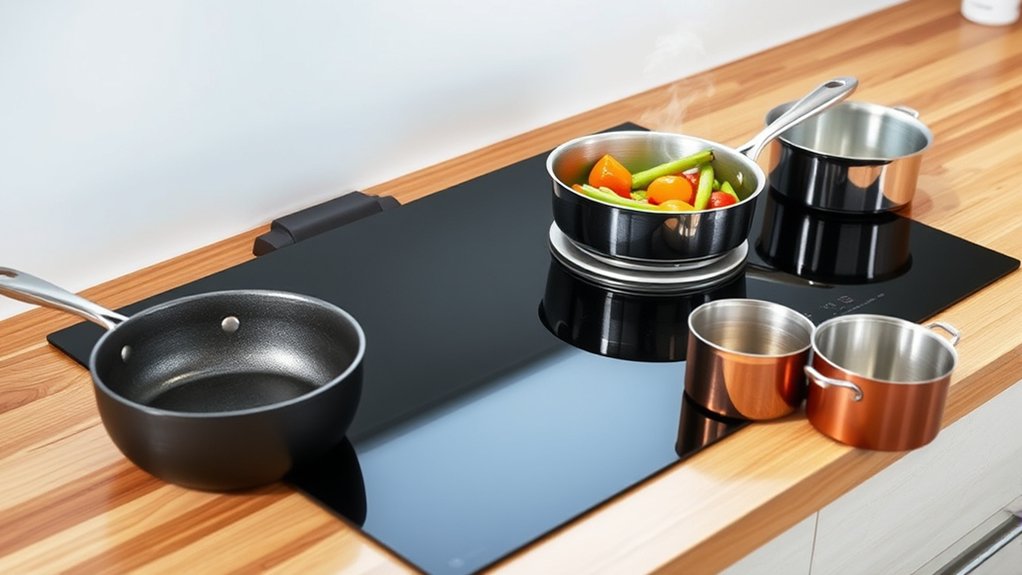
Yes, you do need special cookware for induction cooktops because these appliances rely on a magnetic field to generate heat.
Induction cooktops work by heating only ferrous materials, which means your pots and pans must be compatible to ensure efficient cooking. Using the right induction cookware can significantly improve your cooking performance.
You’ll want pots and pans made of cast iron or magnetic stainless steel to guarantee efficient and fast cooking.
If your current cookware isn’t compatible, you can use an interface disk as a workaround. However, this may reduce the overall heating efficiency.
Choosing the right materials and taking proper care of your cookware can boost both your cooking experience and the lifespan of your pots and pans.
There’s much more to explore when it comes to making the most of induction technology.
Key Takeaways
- Induction cooktops require cookware made of ferrous metals like cast iron or magnetic stainless steel for proper heating.
- Cookware must have magnetic properties to work efficiently on induction cooktops, regardless of appearance or material.
- A magnet test can confirm if cookware is compatible by sticking firmly to its base.
- Non-compatible cookware can be used with an interface disk, but this reduces efficiency and increases cooking time.
- Cookware with flat, smooth bottoms and appropriate size ensures optimal energy transfer and cooking performance on induction cooktops.
How Does Induction Cooking Work and Why Cookware Matters
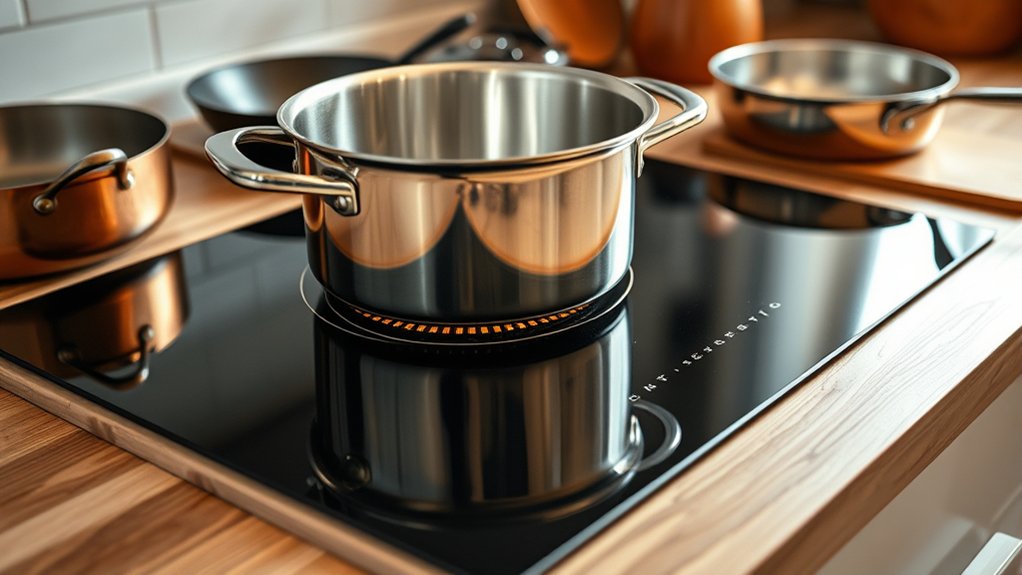
Although induction cooktops may look similar to traditional stovetops, they use a completely different heating method that directly warms your cookware through magnetic induction. When you turn on the cooktop, an electromagnetic field forms beneath the glass surface, generating heat only when it interacts with magnetic materials. This means your cookware needs to be made of ferrous metals like cast iron or certain stainless steels to work effectively.
If your pots and pans aren’t compatible, they simply won’t heat up. Using the right cookware guarantees efficient energy transfer, faster cooking times, and precise temperature control. So, understanding how induction cooking functions helps you realize why choosing suitable cookware isn’t just a preference—it’s vital for getting the best results from your induction cooktop.
How to Test if Your Cookware Works With Induction
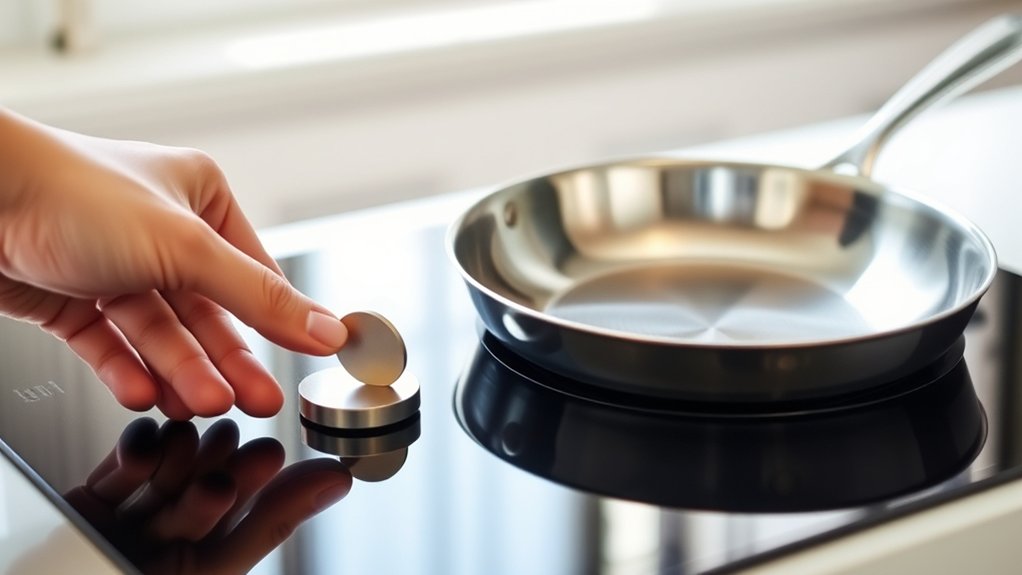
Wondering how to quickly find out if your cookware will work with your induction cooktop? The simplest way is to grab a magnet. Induction cooking relies on magnetic fields, so if a magnet sticks firmly to the bottom of your pot or pan, it’s compatible.
If it doesn’t, your cookware likely won’t heat up on an induction surface. Check the entire base since some cookware has mixed materials that might not work well. Also, look for an induction-compatible symbol—often a coil or a series of loops—on the packaging or bottom of your cookware.
Testing your pots and pans this way guarantees you can cook efficiently without guessing or buying unnecessary new cookware.
Using Non-Induction Pots With an Interface Disk
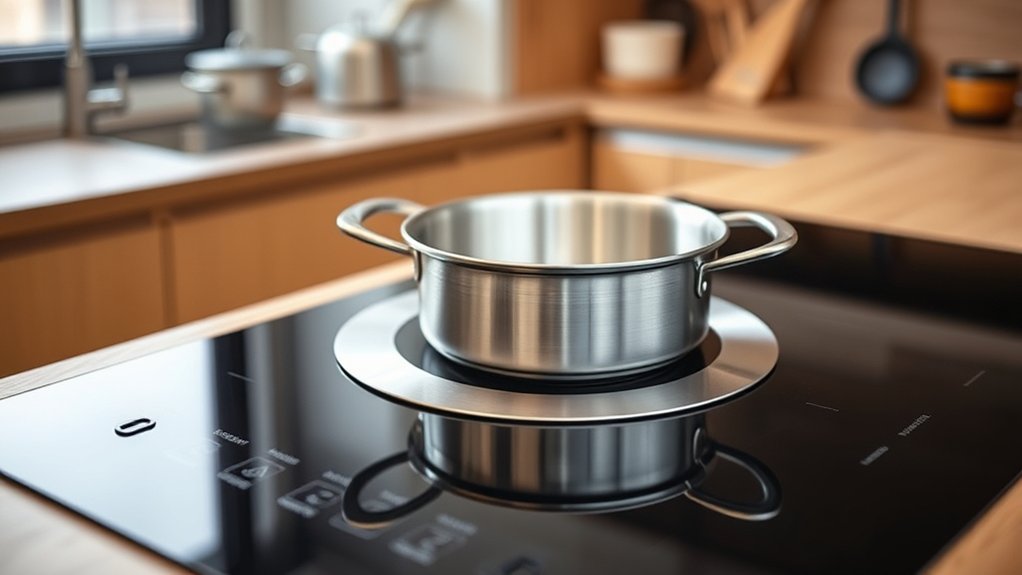
If you have pots that aren’t induction-compatible, you can use an interface disk to make them work on your cooktop. This disk acts as a magnetic bridge between your cookware and the induction surface.
While it lets you use more pots, keep in mind it may reduce heating efficiency and increase cooking time.
How Interface Disks Work
When your non-induction cookware won’t heat on an induction cooktop, you can use an interface disk to bridge the gap. This disk is a thin, ferromagnetic plate that sits between the cooktop and your pot, allowing the induction surface to generate heat indirectly.
Here’s how it works:
- The cooktop’s magnetic field heats the interface disk instead of the pot directly.
- The disk then transfers heat to your non-induction cookware through conduction.
- Your pot heats up as if it were induction-compatible, letting you cook without special cookware.
Benefits and Limitations
Although using an interface disk lets you cook with non-induction pots on an induction cooktop, it comes with both benefits and limitations you should consider before relying on it regularly. On the plus side, it expands your cookware options, so you don’t have to buy new pots immediately. It’s also easy to use and affordable, making it a practical short-term solution.
However, interface disks can reduce cooking efficiency because they add an extra layer between the heat source and your pot. This often means longer cooking times and uneven heating. Plus, they might get very hot, posing a burn risk and requiring careful handling.
If you want consistent performance and safety, investing in induction-compatible cookware is still your best bet.
Best Materials for Induction Cookware Performance
When choosing cookware for induction cooktops, you need materials with strong magnetic properties to guarantee proper heating. You’ll also want something durable that can handle high temperatures without warping. Plus, good heat conductivity helps your food cook evenly and efficiently.
Magnetic Properties Matter
Why does the magnetic property of cookware play such an essential role in induction cooking? Because induction cooktops use magnetic fields to generate heat directly in the pan. If your cookware isn’t magnetic, the cooktop can’t transfer energy efficiently, leaving you frustrated.
Here are three key reasons magnetic properties matter:
- Energy Transfer Efficiency – Magnetic cookware heats quickly and evenly, maximizing your cooktop’s power.
- Compatibility Check – Only pans with ferromagnetic materials like cast iron or certain stainless steels work on induction.
- Cooking Control – Magnetic cookware responds instantly to temperature changes, giving you precise heat control.
Durable and Heat Conductive
Because your cookware needs to withstand daily use while distributing heat evenly, durability and heat conductivity are essential factors for induction performance. You want materials that won’t warp or degrade quickly under high heat. Cast iron and stainless steel with an aluminum or copper core are excellent choices.
Cast iron offers incredible durability and retains heat well, but heats slowly. Stainless steel combined with aluminum or copper layers heats quickly and distributes heat evenly, preventing hot spots. Avoid pure aluminum or copper cookware alone—they lack the magnetic properties induction requires and may warp.
Choosing cookware that balances toughness with efficient heat conduction ensures your meals cook evenly and your pots last longer on your induction cooktop. This way, you get the best performance without sacrificing longevity or cooking quality.
Stainless Steel and Cast Iron Cookware for Induction
Although not all stainless steel cookware works on induction cooktops, many types are designed with magnetic bases that let you cook efficiently and evenly. When choosing stainless steel or cast iron for your induction cooktop, consider these key points:
- Magnetic Compatibility: Make sure the cookware’s base is magnetic by testing it with a magnet before buying.
- Even Heating: Cast iron excels at retaining heat, while quality stainless steel with a layered base distributes heat evenly.
- Durability and Maintenance: Cast iron requires seasoning but lasts forever, whereas stainless steel is low maintenance and resists rust.
Why Aluminum and Copper Need a Magnetic Base
How can aluminum and copper cookware work on induction cooktops when they’re not naturally magnetic? The answer lies in adding a magnetic base. Induction cooktops generate heat through magnetic fields, which only interact with ferrous metals.
Since aluminum and copper don’t contain iron, they won’t heat up on their own. To make them compatible, manufacturers bond a magnetic layer—usually stainless steel or another ferrous metal—to the bottom of these pans. This magnetic base allows the cooktop’s magnetic field to induce heat directly in the cookware.
Without this base, your aluminum or copper pots would simply sit cold on the induction surface. So, if you want to enjoy the benefits of aluminum or copper cookware on an induction cooktop, look for models with a magnetic base.
Choosing the Right Induction Cookware for Your Kitchen
When selecting induction cookware, you’ll want to focus on materials that respond well to magnetic fields and suit your cooking style. First, pick cookware made of magnetic stainless steel or cast iron, as they heat efficiently on induction cooktops.
Second, consider the cookware’s weight and balance; heavier pans distribute heat evenly and feel sturdy in your hands. Third, look for a flat, smooth bottom to guarantee maximum contact with the cooktop surface, which prevents uneven cooking and surface scratches.
You’ll also want to check the cookware’s size to match your burner sizes, ensuring peak performance. By prioritizing these factors, you’ll find induction cookware that not only works perfectly but also enhances your overall cooking experience.
Induction Cookware Price Ranges and What to Expect
When shopping for induction cookware, you’ll find options that fit every budget, from affordable basics to more advanced mid-range sets. Mid-range cookware often offers better materials and durability, while premium sets provide superior performance and design.
Knowing what to expect at each price point helps you choose the right cookware for your needs and kitchen.
Budget-Friendly Options
Wondering what you can get without breaking the bank? Budget-friendly induction cookware is definitely within reach, and it doesn’t mean sacrificing quality.
Here’s what to expect when shopping on a budget:
- Price Range: Most affordable induction sets range from $50 to $150, perfect for beginners or those upgrading a few pieces.
- Material Options: You’ll often find stainless steel with an induction-compatible base or aluminum pans with magnetic layers, offering decent heat conduction.
- Durability & Features: Budget options usually have simpler designs, fewer lids, and may lack some premium finishes, but they still handle everyday cooking well.
With these points in mind, you can confidently choose cookware that suits your induction cooktop without overspending.
Mid-Range Cookware Features
Although mid-range induction cookware sets cost more than budget options, they offer significant improvements in quality and performance that you’ll appreciate in daily cooking. These sets typically feature thicker, multi-ply bases that guarantee even heat distribution, reducing hot spots and improving cooking consistency. You’ll find durable stainless steel with magnetic properties that work efficiently on induction surfaces.
Handles are usually riveted for added strength and heat resistance, making them safer to use. While these sets may not have the premium finishes or advanced features of high-end cookware, they strike a solid balance between affordability and durability. If you’re upgrading from budget cookware, mid-range options provide better heat control and longer-lasting materials, making them a smart investment for everyday use without breaking the bank.
Premium Induction Sets
If you’re ready to invest in top-tier cookware, premium induction sets deliver exceptional performance and durability that justify their higher price tags. These sets typically range from $500 to over $1,000, reflecting superior materials and craftsmanship.
When choosing a premium set, expect:
- High-grade materials: Look for stainless steel with aluminum or copper cores for even heat distribution and long-lasting use.
- Advanced features: Non-reactive surfaces, ergonomic handles, and compatibility with dishwasher and oven add convenience.
- Comprehensive collections: Sets often include multiple pots, pans, and specialty pieces tailored for induction cooking.
How to Care for Your Induction Cookware
Because induction cookware relies on magnetic fields and smooth surfaces, you’ll want to handle it with care to maintain its performance and appearance. Avoid dragging pots on the cooktop to prevent scratches, and always use gentle cleaning methods.
Here’s a quick guide to caring for your induction cookware:
| Care Tip | What to Do | What to Avoid |
|---|---|---|
| Cleaning | Use mild soap and soft sponge | Abrasive cleaners/scrubbers |
| Handling | Lift, don’t slide pots | Dragging on cooktop |
| Storage | Stack with protective layers | Piling without protection |
| Heating | Preheat gradually | Rapid temperature changes |
| Drying | Wipe dry immediately after wash | Air drying with spots left |
Tips for Maintaining Induction Cookware Longevity
To keep your induction cookware performing at its best for years, you need to follow a few key maintenance practices. First, always use wooden or silicone utensils to prevent scratching the cookware’s surface. Second, avoid overheating your pans; high heat can warp the metal and reduce efficiency.
Third, hand wash your induction cookware with mild detergent and a soft sponge instead of using abrasive cleaners or dishwashers, which can damage the finish. Additionally, store your pots and pans carefully by placing a cloth or paper towel between them to avoid scratches.
Frequently Asked Questions
Can Induction Cooktops Cause Damage to Pacemakers?
Induction cooktops generally don’t cause damage to pacemakers, but you should consult your doctor to be safe. The magnetic fields are low, but individual sensitivity varies, so getting professional advice is important before use.
Are Induction Cooktops Safe for Children to Use?
Yes, induction cooktops are generally safe for children since they stay cool except under the cookware. You should still supervise kids closely to prevent burns or accidents and teach them proper safety habits around the stove.
How Energy-Efficient Are Induction Cooktops Compared to Gas Stoves?
You’ll find induction cooktops about 84% energy-efficient, compared to gas stoves around 40%. That means you’ll save energy and cook faster since induction heats cookware directly with minimal heat loss.
Do Induction Cooktops Require Special Cleaning Products?
You don’t need special cleaning products for induction cooktops. Just use a soft cloth, mild detergent, and non-abrasive cleaner to avoid scratches.
Avoid harsh chemicals or steel wool to keep the surface smooth and shiny.
Can Induction Cooktops Be Used Outdoors or in RVS?
Think of your induction cooktop like a delicate watch—it’s precise but sensitive. You can use it outdoors or in RVs if you protect it from moisture and rough surfaces, ensuring it stays safe and works perfectly.
Conclusion
You don’t always need special cookware for induction cooktops, but having the right pots makes a big difference—like having the perfect key for a lock. Test your current pans or use an interface disk to confirm compatibility. Opt for stainless steel or cast iron for the best results.
With proper care, your induction cookware will last long and cook efficiently. This turns your kitchen into a smooth-running machine you’ll love using every day. Choosing the right cookware ensures optimal performance on your induction cooktop.