How Can You Grill Safely With Aluminum Foil?
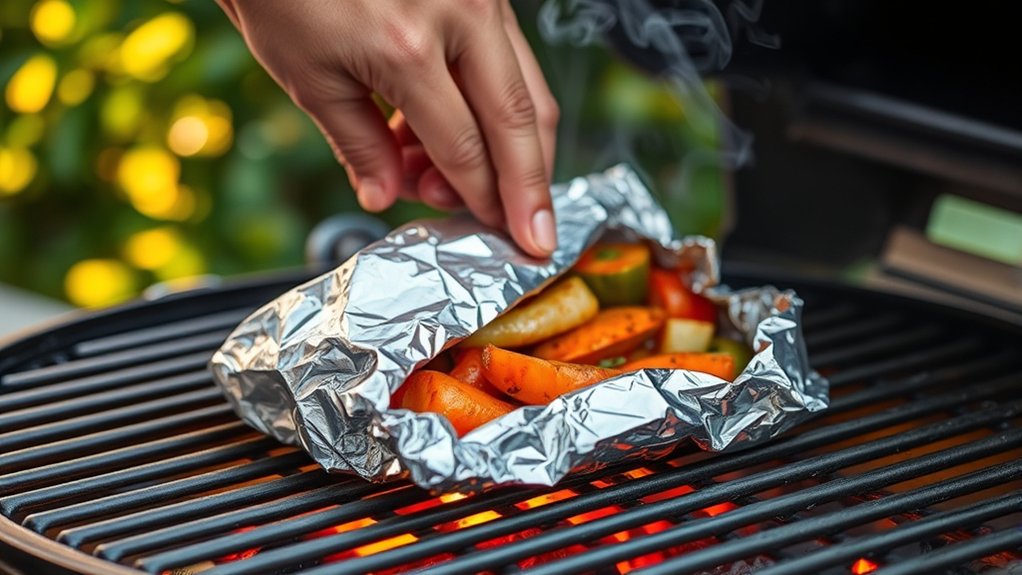
To grill safely with aluminum foil, it’s important to use heavy-duty foil to prevent tears and spills while cooking. Proper foil grilling techniques help avoid leaks and keep your food secure. Aluminum foil grilling is a convenient method that enhances flavor and makes cleanup easier.
Wrap your food tightly to avoid leaks, and always keep the foil away from direct flames to prevent burning or melting. Handle hot foil with tongs or gloves to avoid burns and injuries.
Use indirect moderate heat for grilling and create small vents in foil packets to release steam. This prevents sogginess and ensures your food cooks evenly.
Follow these tips to enjoy delicious, safely grilled meals, and explore more techniques to perfect your foil grilling skills.
Key Takeaways
- Use heavy-duty foil without tears to prevent grease drips and flare-ups during grilling.
- Wrap food securely with tight seals and avoid overfilling to prevent leaks and spills.
- Handle hot foil with tongs or heat-resistant gloves to avoid burns and accidents.
- Grill at moderate temperatures (300-350°F) using indirect heat and create vents for steam release.
- Clean and dispose of foil properly after cooling, following local recycling guidelines when possible.
Key Safety Tips for Grilling With Aluminum Foil
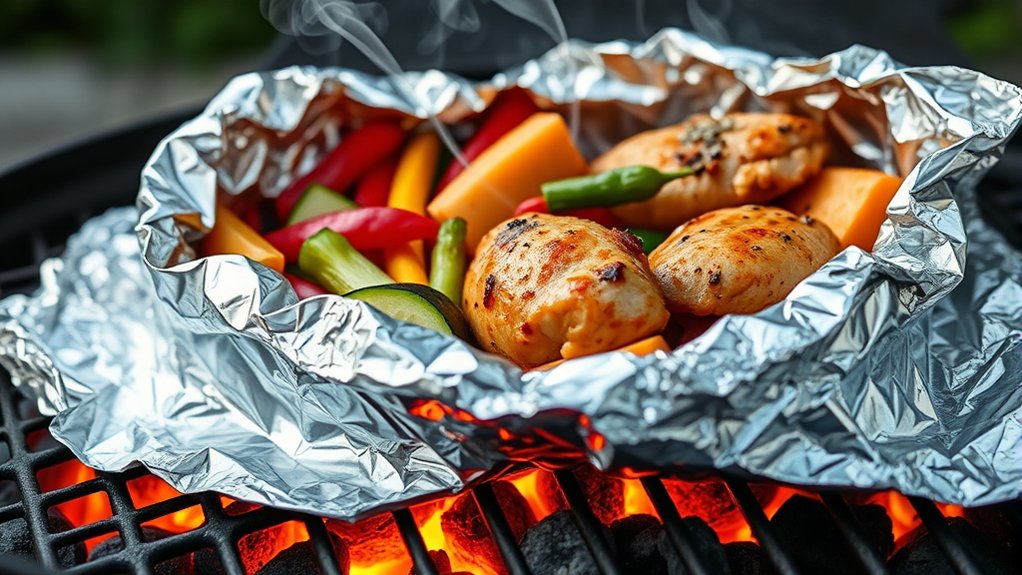
When you grill with aluminum foil, you need to handle it carefully to avoid flare-ups and food contamination. First, always make sure the foil doesn’t tear or have holes, as this can cause grease to drip onto the flames, sparking flare-ups. Use heavy-duty foil when possible, since it holds up better under heat.
Avoid placing foil directly on grill grates if your grill’s instructions advise against it. Also, don’t wrap acidic foods like tomatoes or citrus in foil for too long, as the acid can react with the foil and affect taste. Keep the foil away from direct flames to prevent burning.
Finally, always wash your hands and surfaces after handling raw foods wrapped in foil to reduce contamination risks.
Which Aluminum Foil Types Work Best for Grilling?
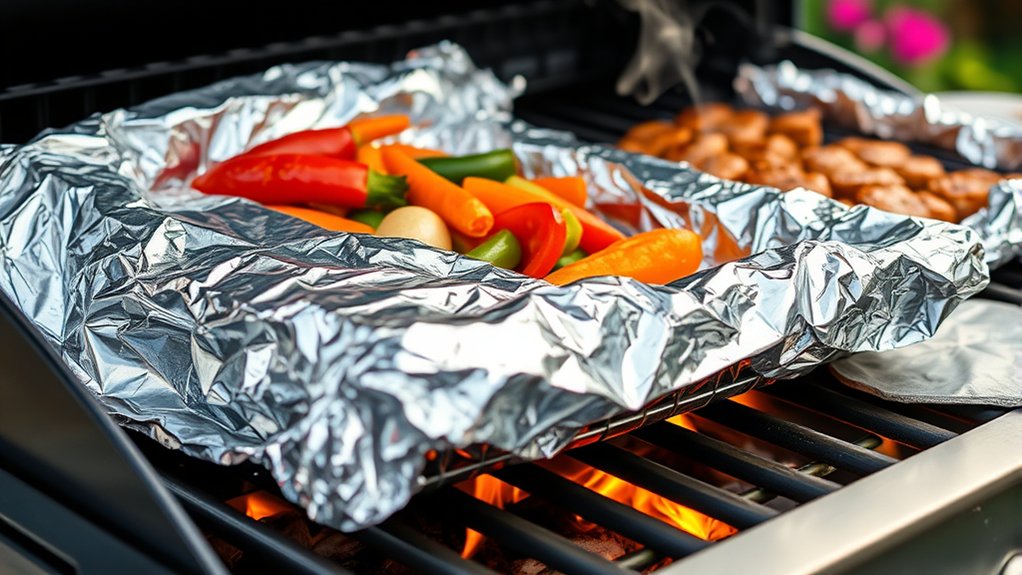
When grilling, choosing the right type of aluminum foil can make a big difference in your cooking results. You’ll want to think about heavy-duty foil for durability, non-stick foil for easy cleanup, and how standard foil compares to thicker options.
Let’s break down which foil works best for your grilling needs.
Heavy-Duty Foil Benefits
Why choose heavy-duty aluminum foil for grilling? Because it offers superior strength and durability, heavy-duty foil resists tearing and punctures better than standard foil. When you’re handling juicy meats or marinated veggies, this foil keeps everything contained, preventing leaks and flare-ups from dripping fats.
It also holds up well under high heat, so you won’t worry about it burning or crumbling during longer cook times. Heavy-duty foil is thicker, which means it provides better heat retention and even cooking, helping your food grill more consistently. Plus, it’s ideal for wrapping larger or heavier items without worrying about holes.
When grilling, choosing heavy-duty foil means you get a safer, cleaner, and more reliable cooking experience every time.
Non-Stick Foil Advantages
How can non-stick aluminum foil make your grilling experience smoother? It prevents food from sticking, so you won’t lose those perfectly grilled veggies or delicate fish fillets. You’ll spend less time scrubbing stuck-on bits, making cleanup faster and easier.
Non-stick foil also helps maintain the food’s appearance and texture since it reduces tearing when you lift or flip items. When choosing foil, pick the non-stick variety designed specifically for grilling, as it withstands high heat without peeling off. This type works great for marinated foods or recipes with sauces, ensuring flavors stay locked in.
Using non-stick foil means you can grill confidently, avoid frustrating messes, and enjoy better-tasting meals with less hassle. It’s a simple upgrade that makes a big difference.
Standard vs. Thick Foil
Non-stick foil certainly improves your grilling, but choosing the right thickness can make an even bigger difference. Standard foil, which is thinner, works well for light grilling tasks like wrapping vegetables or covering delicate fish. However, it tears easily and might not hold up to longer cooking times or heavier foods.
Thick foil, often labeled as heavy-duty, offers better durability and heat resistance. It’s less likely to puncture or burn through, making it ideal for grilling meats or creating foil packets that need to hold juices. When you want to avoid flare-ups and maintain food integrity, thick foil is your best bet.
How to Prepare Food for Grilling With Aluminum Foil
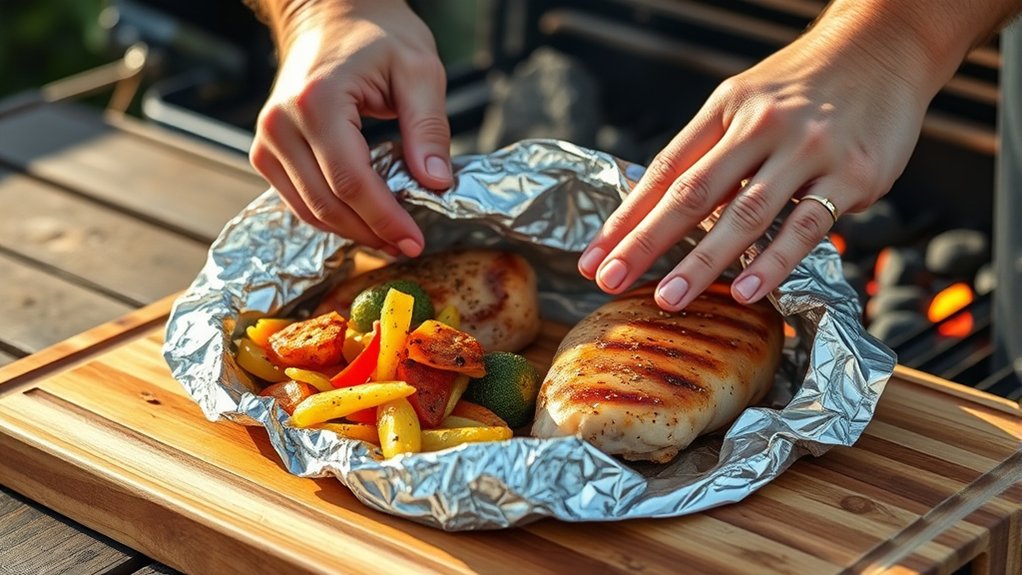
Before wrapping your food in aluminum foil, make sure you choose fresh ingredients and cut them into even pieces for consistent cooking. You’ll want to season everything well to boost flavors before sealing it up.
These simple steps help you get the best results on the grill.
Choosing Fresh Ingredients
When selecting ingredients for grilling with aluminum foil, you’ll want to prioritize freshness to guarantee the best flavor and texture. Choose meats with a bright color and firm texture, avoiding any that look dull or slimy. For vegetables, pick ones that are crisp and vibrant, steering clear of those with wilted leaves or soft spots.
Fresh herbs and spices will enhance your dish without overpowering it, so grab them just before cooking. Fresh ingredients not only improve taste but also reduce the risk of foodborne illness when grilling. By starting with quality produce and proteins, you set yourself up for success, ensuring your foil-wrapped meals come out juicy, flavorful, and perfectly cooked every time.
Cutting Food Evenly
Although it might seem simple, cutting your food evenly is crucial for grilling with aluminum foil because it guarantees everything cooks at the same rate. When pieces vary in size, smaller ones can burn while larger pieces remain undercooked. Use a sharp knife and focus on uniform thickness and size.
This makes grilling safer by preventing uneven heat exposure and guarantees your meal is deliciously cooked throughout.
| Food Type | Recommended Cut Size |
|---|---|
| Vegetables | 1/2-inch thick slices |
| Chicken | 1-inch cubes or strips |
| Fish | 1-inch fillets |
| Potatoes | 1/4-inch thin slices |
| Sausages | Whole or halved, consistent |
Stick to these sizes to help your food cook evenly inside the foil packets.
Seasoning Before Wrapping
Cutting your food evenly sets the stage for proper seasoning, which plays a big role in enhancing flavor when grilling with aluminum foil. Before you wrap your food, make certain to season it thoroughly. Use a mix of salt, pepper, herbs, and spices that complement your dish.
Don’t forget to add a little oil or marinade to keep your food moist and prevent it from sticking to the foil. Apply the seasoning evenly on all sides, so every bite tastes great. If you’re grilling vegetables or fish, a light brush of olive oil and a sprinkle of your favorite herbs works wonders.
Proper seasoning before wrapping guarantees your food cooks evenly and absorbs flavors well inside the foil packet.
Best Techniques to Wrap Food and Prevent Foil Tears
To wrap food securely and avoid foil tears, you’ll want to use a few simple techniques that keep the foil intact and your meal protected. Start by using heavy-duty foil for better durability. Place the food in the center and fold the foil edges over tightly, creating a sealed packet.
Avoid stretching the foil too thin, and don’t overfill the packet to prevent punctures.
| Technique | Benefit |
|---|---|
| Use heavy-duty foil | Resists tearing and punctures |
| Fold edges tightly | Prevents leaks and steam loss |
| Avoid overfilling | Reduces risk of foil puncture |
What Foods Are Best for Grilling in Aluminum Foil?
Once you’ve mastered wrapping techniques to keep foil intact, choosing the right foods for grilling in aluminum foil becomes easier. Foil works best with foods that benefit from steaming and retaining moisture, such as fish fillets, chicken breasts, and shrimp.
Vegetables like bell peppers, zucchini, mushrooms, and asparagus also grill wonderfully when wrapped, locking in flavors and preventing burning. You can toss in herbs, garlic, or lemon slices for added taste. Foil packets are perfect for delicate foods that might fall apart on direct grill grates.
Avoid thick cuts of meat that need direct searing, since foil traps steam and won’t give you a crispy crust. By selecting foods that thrive in a moist, enclosed environment, you’ll get delicious, evenly cooked results every time.
How to Control Heat and Avoid Overcooking With Foil
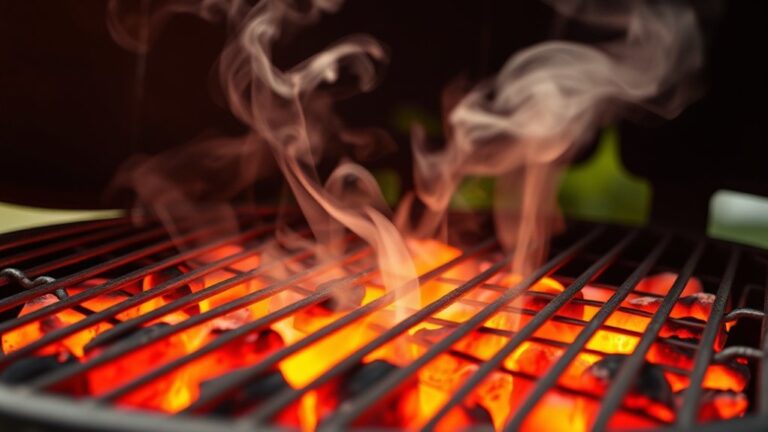
Although aluminum foil helps retain moisture and heat, you’ll need to manage your grill’s temperature carefully to prevent overcooking. Start by using indirect heat when wrapping food in foil, as direct flames can cause burning and uneven cooking. Keep your grill’s temperature moderate—around 300-350°F—to allow food to cook gently inside the foil packet.
Check your food periodically to avoid overheating, especially with delicate items like fish or vegetables. You can also create vents by slightly opening the foil to release steam, preventing sogginess and overcooking. Remember, thicker foil packets require longer cooking times, so adjust accordingly.
Essential Safety Precautions for Grilling With Aluminum Foil
When handling aluminum foil on your grill, you need to prioritize safety to prevent accidents and guarantee your food cooks properly. Always use heavy-duty foil to avoid tears and keep food contained. Avoid placing foil directly on flames to prevent melting or fire hazards.
Use tongs or heat-resistant gloves when adjusting foil packets to protect your hands. Finally, ensure the foil is securely wrapped to avoid spills that can cause flare-ups.
| Safety Precaution | Why It Matters |
|---|---|
| Use heavy-duty foil | Prevents tearing and spills |
| Avoid direct flame | Stops melting and fire risks |
| Handle with gloves | Protects hands from burns |
| Securely wrap food | Prevents flare-ups and messes |
Tips to Stop Foil Tears and Keep Food Inside
To keep your food secure and prevent foil tears while grilling, you should handle the foil carefully and choose the right techniques for wrapping. Start with a sturdy, heavy-duty aluminum foil to reduce the chance of ripping. Avoid creating sharp folds that can weaken the foil’s structure.
When wrapping your food, follow these three tips:
- Double layer the foil for extra strength, especially with juicy or heavy items.
- Leave some space inside the foil pack to allow steam circulation without stretching the foil too tight.
- Seal edges tightly by folding them over twice, creating a secure barrier that keeps food inside and prevents leaks.
How to Clean Up After Grilling With Aluminum Foil
After you finish grilling, cleaning up aluminum foil properly can save you time and reduce waste. First, let the foil cool completely to avoid burns. If the foil is heavily soiled with food residue or grease, scrape off excess debris before disposal.
For lightly soiled foil, consider rinsing it to remove stuck-on bits, then let it dry. If you plan to recycle, check your local guidelines—some facilities accept clean or lightly soiled foil. Avoid throwing torn or greasy foil in recycling bins to prevent contamination.
Roll up or fold the foil into a compact ball to make handling easier. By following these steps, you’ll keep your cleanup efficient while reducing environmental impact after every grilling session.
Frequently Asked Questions
Can Aluminum Foil Be Reused After Grilling?
You can reuse aluminum foil after grilling if it’s clean and not torn. Just rinse off food residue and check for holes.
If it’s damaged or heavily soiled, it’s better to use a fresh sheet.
Is It Safe to Grill Acidic Foods in Aluminum Foil?
When acidic foods meet aluminum foil, a gentle dance begins, but you shouldn’t let it linger too long. The acids can wear down the foil, so it’s best to limit grilling time to keep flavors safe and bright.
How Does Aluminum Foil Affect the Flavor of Grilled Food?
Aluminum foil can slightly mute your grilled food’s smoky flavor since it traps steam and juices. But it also keeps moisture in, making your food tender and juicy. Just don’t overwrap to preserve that charred taste.
Can You Grill Vegetables Directly on Foil Without Oil?
You can grill vegetables directly on foil without oil, like a daring explorer braving the wild. Just be sure to watch closely—they might stick or dry out, so flip often to keep them tender and tasty.
Does Aluminum Foil Cause Flare-Ups on the Grill?
Aluminum foil itself doesn’t cause flare-ups, but if grease or juices collect and drip onto flames, flare-ups can happen. You can prevent this by folding foil carefully and avoiding excess oil or marinades that drip onto the coals.
Properly managing the use of foil helps minimize the risk of unexpected flames. Keeping the grill clean and monitoring drip points also reduces flare-up chances. This way, you can enjoy safe and controlled grilling.
Conclusion
Grilling safely with aluminum foil lets you lock in luscious flavors while limiting mess. By choosing the right foil, wrapping with care, and controlling heat cleverly, you’ll avoid foil tears and keep your food fresh and flavorful.
Remember to rinse and recycle to reduce waste. With these simple steps, you’ll savor smoky, sizzling sensations safely every time you fire up your grill.
Stay smart, stay safe, and savor the sizzling success of grilling safely with aluminum foil for the best flavor and easy cleanup!