7 Ways to Identify What Weber Grill You Have
You can identify your Weber grill by first locating its model and serial numbers—usually found on a sticker or plate near the control panel or inside the cabinet door. These numbers are essential for accurately determining the exact Weber grill you own.
Next, compare its size, shape, lid design, and features like burner layout or grate material to known models. Using Weber’s official website and visual guides can help confirm these details quickly and reliably.
Don’t forget to tap into online communities and forums for expert tips and insights from experienced grill owners.
Keep exploring, and you’ll uncover even more ways to pinpoint your grill’s identity with confidence.
Key Takeaways
- Locate and decode the model number or serial code found on the grill’s frame or inside cabinet doors to identify the model and manufacturing year.
- Measure cooking grate size and note grill shape, lid style, and burner layout to distinguish specific Weber grill models.
- Compare physical features like handle design, control knobs, and side tables against images on Weber’s official website.
- Post clear photos and grill details in Weber online communities for expert identification and advice.
- Research vintage or rare models through forums and community-shared resources for authentic identification and parts sourcing.
Check Your Weber Grill’s Model Number
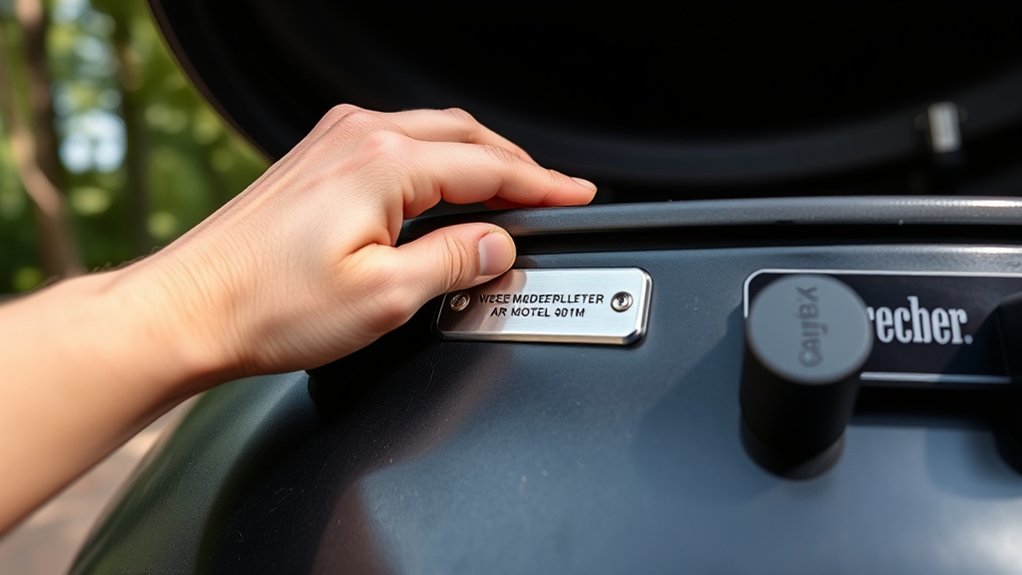
One of the quickest ways to identify your Weber grill is by checking its model number. You’ll usually find this number on a sticker or metal plate located on the grill’s frame, often inside the cabinet door or near the control panel.
Once you locate the model number, you can easily search online or visit Weber’s official website to get detailed information about your specific grill. This number tells you the exact model, helping you understand its features, year of manufacture, and compatible parts.
Find Serial Numbers and Date Codes on Your Grill
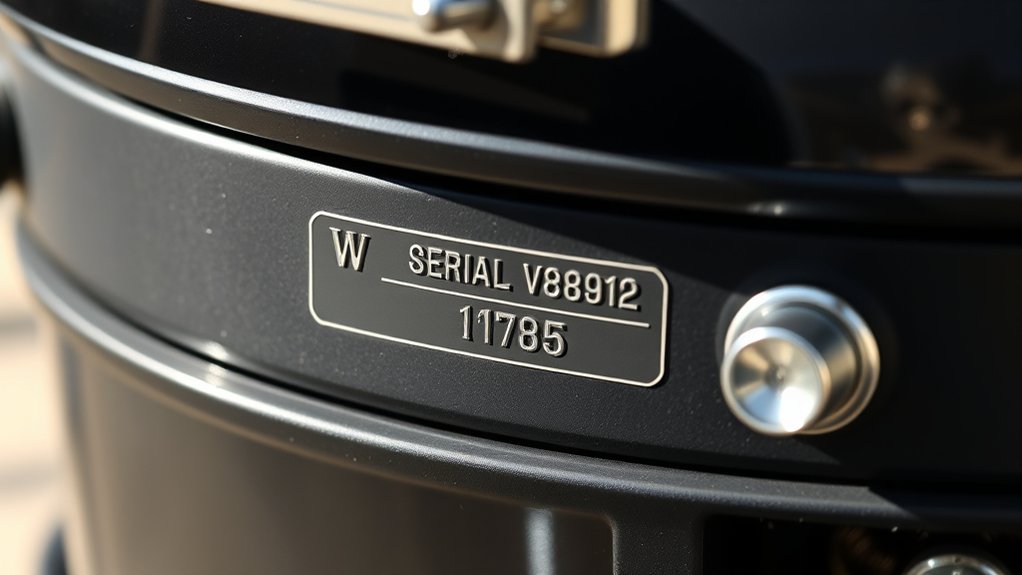
You’ll find your grill’s serial number plate usually on the frame or inside the cabinet door. Once located, you can decode the date code to determine when your Weber grill was made.
This info helps you identify the exact model and its production year.
Locating Serial Number Plates
Although locating the serial number plates on your Weber grill might seem tricky at first, knowing exactly where to look will help you quickly find the information you need. Start by checking the back or underside of the grill’s main body—serial number plates are often attached there. On kettle grills, look around the bottom rim or near the ash catcher.
For gas models, inspect the side or back panels, sometimes inside the cabinet doors. If you have a portable grill, check the base or the frame near the leg joints. The plate is a small metal tag or sticker displaying the serial number and other identifying details.
Once you locate it, you can easily confirm your grill’s model and production date without hassle.
Decoding Date Code Formats
Several common date code formats appear on Weber grills, and understanding how to decode them helps you identify your grill’s exact manufacturing date. Usually, the date codes are part of the serial number or a separate stamp on the grill’s frame or burner tube. To decode the date, look for patterns like numbers or letters that indicate the year and week of production.
Here are three typical formats you might find:
- YYWW: The first two digits represent the year, and the last two show the week of manufacture.
- MM/DD/YY: A straightforward date format showing month, day, and year.
- Letter + Number: A letter for the month (A=Jan, B=Feb, etc.) followed by a two-digit year.
Knowing these helps pinpoint your grill’s age accurately.
Check Your Grill’s Shape and Size for Identification
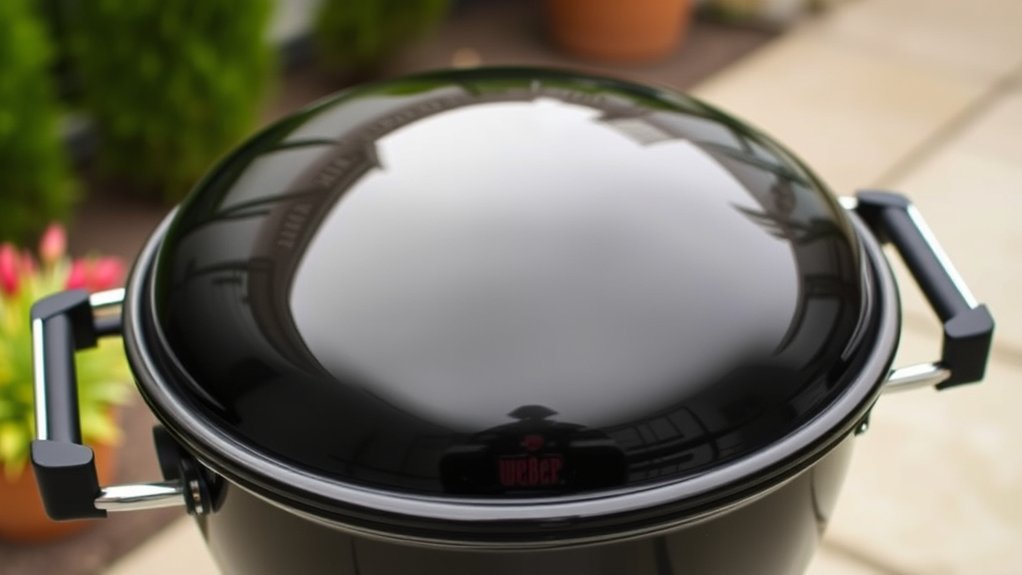
When trying to identify your Weber grill, paying close attention to its shape and size can provide valuable clues. Start by measuring the cooking area’s diameter or width—Weber’s kettle grills, for example, often come in 18.5, 22, or 26.75-inch sizes. Note whether the grill is round, rectangular, or has a unique design like the Performer series’ cart-style with side tables.
Consider the height and overall footprint, too, as portable models are typically smaller and lighter. Also, check if the lid is domed or flat; this detail helps distinguish between classic charcoal models and gas grills. By carefully observing these physical features, you’ll narrow down your options and get closer to identifying the exact Weber grill you own.
Match Your Weber Grill’s Features to Known Models
You’ll want to identify the unique features on your Weber grill, like burner layout or lid design. Compare these elements to known models to narrow down your options. Don’t forget to check for a model number, usually found on a tag or sticker.
This step helps you match your grill accurately. Knowing the model number can speed up finding parts or manuals. It also confirms the specific features your grill includes.
Identify Unique Grill Features
Matching your Weber grill’s unique features to known models helps you quickly pinpoint exactly which grill you own. Focus on distinctive elements that set your grill apart, such as specialized burners or unique attachments.
Look closely at components that aren’t standard across all models to narrow down your options efficiently.
Check for these unique features:
- Ignition system: Does your grill have a push-button electronic ignition or a rotary igniter?
- Grate material: Identify if the cooking grates are stainless steel, porcelain-enameled, or cast iron.
- Side tables and storage: Note if your grill includes foldable side tables, built-in tool hooks, or cabinet storage.
Compare Design Elements
How can you tell which Weber grill model you own just by looking at its design? Start by comparing key design elements like lid shape, handle style, and side tables. These features often align with specific Weber models, making identification easier.
For example, the classic kettle lid versus the sleek Genesis hood can instantly narrow down your options.
| Feature | Classic Kettle | Genesis Series |
|---|---|---|
| Lid Shape | Round, dome-shaped | Rectangular, curved |
| Handle Style | Simple metal loop | Ergonomic bar handle |
| Side Tables | None or foldable | Fixed, spacious |
Match your grill’s design to these traits, and you’re one step closer to pinpointing the exact model you have.
Check Model Numbers
Although design clues can guide you, checking the model number offers the most accurate way to identify your Weber grill. You’ll find this number stamped on a metal tag or sticker, usually near the frame, under the side tables, or inside the cart. Once you have it, compare the number against Weber’s official resources or trusted databases online.
This helps you confirm the exact model and year.
To efficiently match your grill’s features to known models, consider:
- Noting the model number location specific to your grill type
- Using online tools or Weber’s customer support for verification
- Comparing included features like burners, ignition type, and size with model specs
This method removes guesswork and ensures you get precise information about your Weber grill.
Find Your Grill Model on Weber’s Website
One of the easiest ways to identify your Weber grill model is by visiting Weber’s official website. Once there, you can navigate to their support or product section, where they offer tools to help you pinpoint your exact grill model. You’ll often find a search feature where entering your grill’s serial or model number quickly reveals detailed information.
If you don’t have those numbers handy, the site provides guides and descriptions of different models, making it easier to match your grill based on features and specifications. Weber’s website also offers downloadable manuals and parts lists, which can confirm your grill’s identity.
Using the official site guarantees you get accurate, up-to-date info straight from the manufacturer to identify your grill confidently.
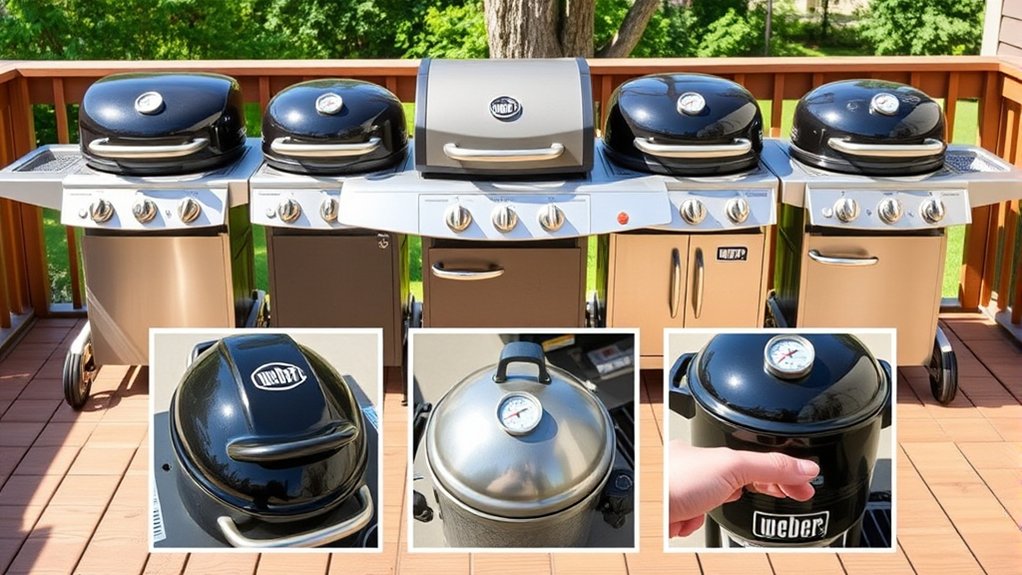
Compare Photos From Popular Weber Grill Series
Comparing photos from popular Weber grill series can quickly narrow down which model you own. By visually matching your grill with images from trusted sources, you’ll spot distinct features that set each series apart. This method saves time and reduces guesswork.
Comparing photos of Weber grills helps quickly identify your model by highlighting unique visual features.
Focus on these key visual elements:
- Grill Shape and Size: Kettle grills have a round shape, while Genesis models are rectangular and larger.
- Control Knobs and Layout: Spirit series usually feature a simple, straightforward knob design; Summit models include more advanced controls.
- Lid and Handle Design: Check for unique lid shapes and handle styles, as they vary between series.
Use these photo clues to confidently identify your Weber grill without frustration.
Get Help From the Weber Grill Community and Forums
When you’re unsure about your Weber grill model, tapping into the knowledge of the Weber grill community and online forums can be incredibly helpful. You can join dedicated Weber grilling groups on Facebook or Reddit, where experienced owners and experts share photos, tips, and advice. Post clear pictures and any details you’ve gathered, and you’ll often get quick, accurate responses.
Forums like Weber’s official community or BBQ-focused sites are goldmines for identifying rare or older models. Plus, community members can guide you on parts, accessories, and maintenance specific to your grill. Don’t hesitate to ask questions or browse existing threads; chances are someone’s faced the same challenge.
Engaging with fellow grill enthusiasts makes identifying your Weber model faster and more reliable.
Frequently Asked Questions
How Do I Clean and Maintain My Weber Grill?
You should clean your Weber grill by brushing grates after each use, emptying the ash catcher, and wiping down surfaces.
Regularly check and replace parts, season cast iron, and cover the grill to maintain it properly.
What Accessories Are Compatible With Different Weber Grill Models?
You’ll find that most Weber grills fit popular accessories like rotisserie kits, smoker boxes, and grill covers. Just like a knight’s sword fits its sheath, check your model’s specs to guarantee perfect compatibility before buying.
How Can I Troubleshoot Ignition Problems on My Weber Grill?
You can troubleshoot ignition problems by checking the battery, cleaning the electrode and burner tubes, ensuring the igniter wire is connected properly, and removing any grease or debris blocking the spark.
Replace faulty parts if needed.
What Are the Warranty Terms for Weber Grills?
Weber grills usually come with a 10-year warranty covering parts like burners and cooking grates.
You’ll want to register your grill and keep your receipt to guarantee your warranty stays valid and you’re covered for repairs.
Where Can I Buy Replacement Parts for My Weber Grill?
Looking for replacement parts for your Weber grill? Why not check the official Weber website first? You’ll find genuine parts there, plus authorized dealers and trusted online retailers that guarantee quality and compatibility for your grill.
Conclusion
Now that you know the key steps to identify your Weber grill, you’re ready to uncover its true identity—like a detective solving a sizzling mystery. Don’t just guess; check the model number, serial codes, and compare features carefully.
Use Weber’s website and community forums to confirm your findings. With these tools, you’ll grill with confidence, knowing exactly what you’ve got.
So, why wait? Fire up your knowledge and master your Weber today! Identifying your Weber grill model ensures you get the best maintenance tips, replacement parts, and grilling accessories tailored just for you.