7 Ways Broiling and Grilling Are Not the Same
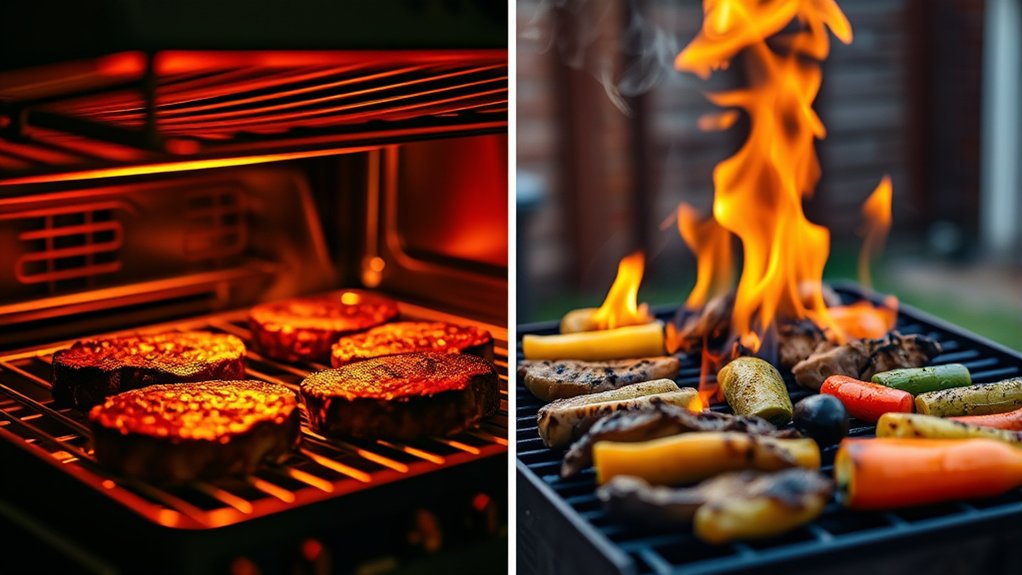
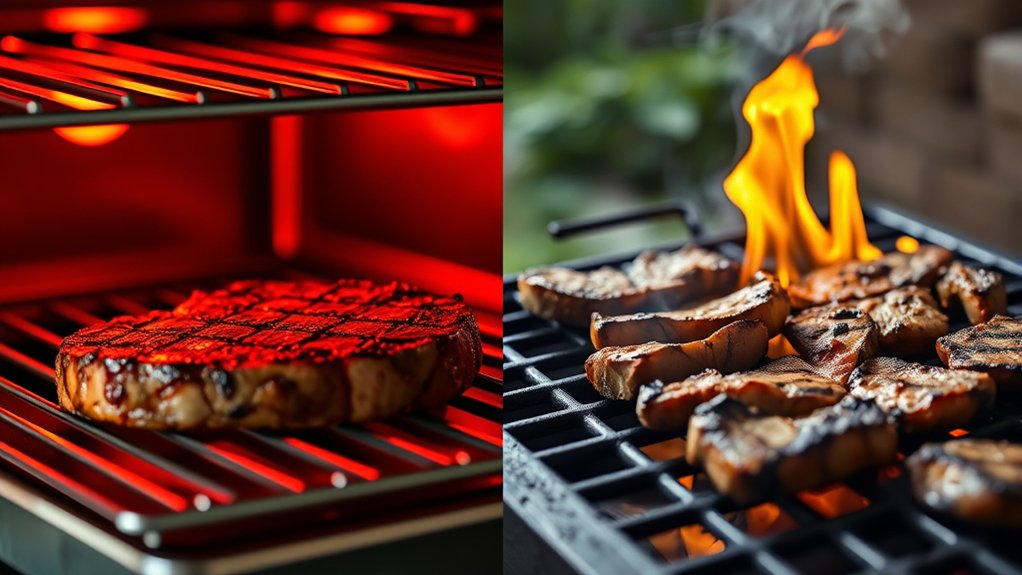
You’ll notice seven key differences between broiling and grilling, two popular cooking methods that use high heat to cook food quickly. Broiling uses intense, direct heat from above indoors, while grilling cooks with flames below outdoors.
Both methods bring out unique flavors and textures, but understanding their differences can help you choose the best technique for your meal.
Broiling is faster and ideal for thin cuts of meat or vegetables, as it cooks food quickly and evenly.
Grilling usually takes longer and imparts a smoky flavor from the flames.
Your equipment varies too—broiling requires an oven and broiler pan, while grilling calls for a grill and specific tools.
Safety precautions and suitable food choices also differ between the two.
Keep exploring to master which method suits your food and setting best.
Key Takeaways
- Broiling uses intense heat from above inside an oven, while grilling applies heat from below over open flames outdoors.
- Broiling cooks food faster with direct top-down heat, whereas grilling takes longer with slower, surrounding heat.
- Grilling imparts smoky, charred flavors; broiling creates a clean, seared crust without smoke.
- Broiling suits thin, delicate cuts; grilling is better for thicker meats and foods benefiting from smoky flavor.
- Broiling requires indoor equipment like a broiler pan, while grilling needs outdoor tools such as long-handled tongs and a grill.
Heat Application in Broiling vs Grilling
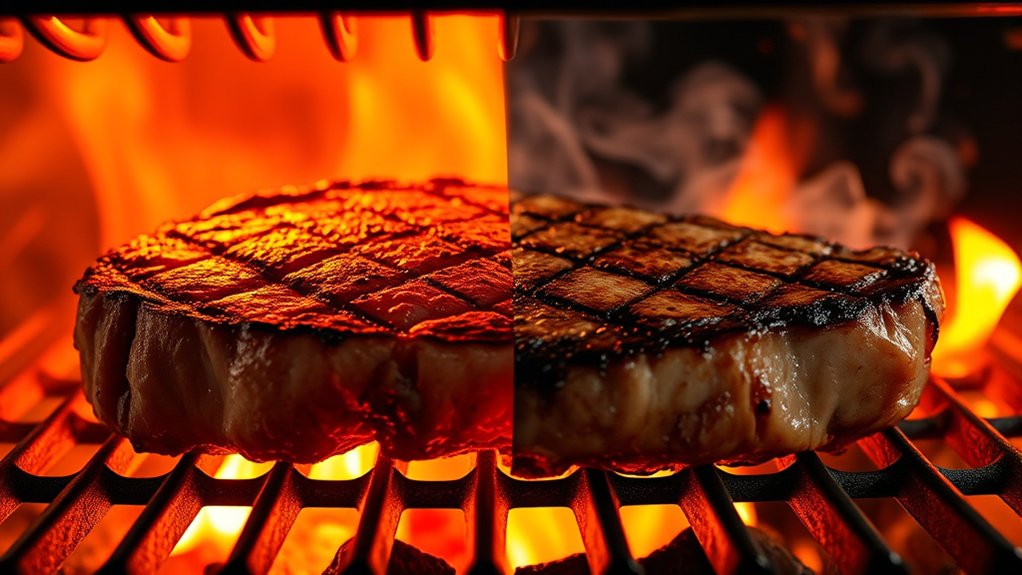
How does heat work differently when you broil versus grill? When you broil, the heat comes directly from above, usually from an electric or gas element inside your oven. You place food close to this intense heat source, which cooks it quickly and creates a crisp, caramelized surface.
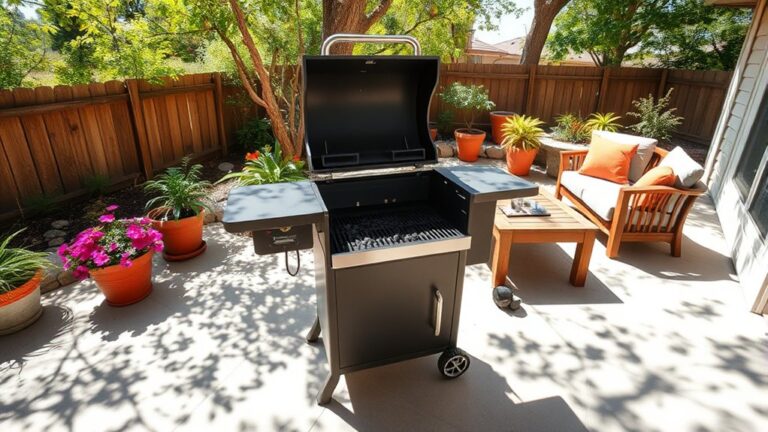
On the other hand, grilling exposes your food to heat from below, typically over open flames or hot coals. This method not only cooks your food but also imparts a smoky flavor as the juices drip and vaporize. With broiling, you control the distance between food and heat precisely, while grilling cooks from underneath, often at a slightly lower temperature but with a unique char you can’t get from broiling.
Equipment Differences Between Broiling and Grilling
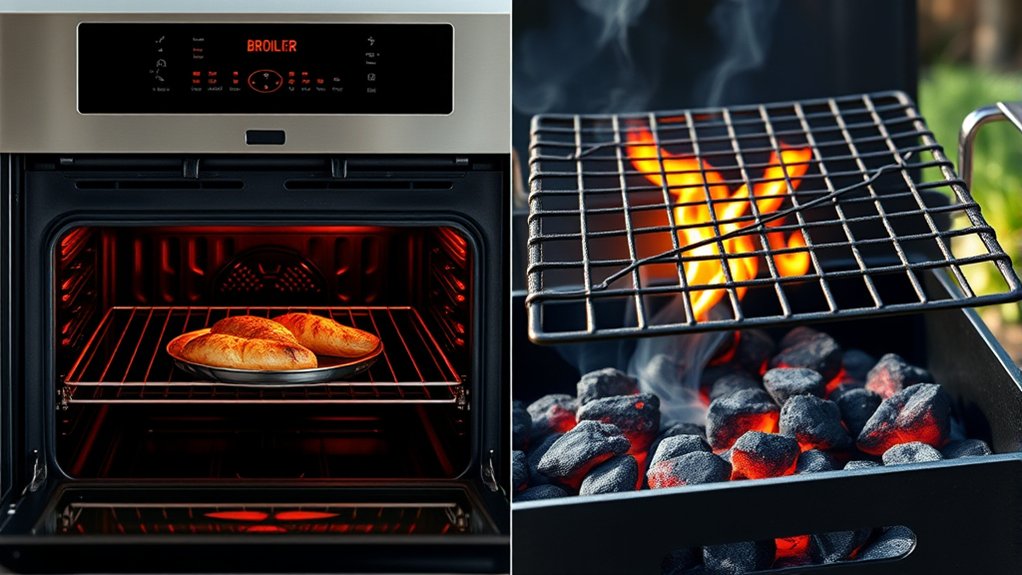
What tools do you need to broil versus grill effectively? For broiling, you’ll rely on your oven’s broiler function, which uses a top heating element. You’ll need a broiler pan or a rimmed baking sheet with a wire rack to let fat drip away.
A sturdy oven mitt and a timer are essential, too. Grilling, on the other hand, requires an outdoor grill, either gas or charcoal, with grates designed to hold food above open flames or hot coals.
You’ll want long-handled tongs, a grill brush for cleaning, and possibly a chimney starter if you’re using charcoal. Unlike broiling, grilling often involves accessories like skewers or a grill basket to manage smaller foods.
Both methods need different gear, so pick your tools based on the cooking style you want.
Cooking Time Differences in Broiling and Grilling
Choosing the right equipment sets the stage, but the timing of your cooking plays a big role in the final result. When broiling, you’ll notice it cooks food faster since heat radiates intensely from above, usually within 5 to 10 minutes. This means you need to watch closely to prevent burning.
Grilling typically takes longer, anywhere from 10 to 20 minutes or more, depending on the thickness and type of food. Because the heat comes from below and often surrounds the food, it cooks more evenly but at a gentler pace. You’ll want to adjust your cooking time accordingly—broiling demands quick attention, while grilling lets you manage slower, more gradual cooking.
Understanding these differences helps you nail your dish every time.
How Heat Direction Affects Broiling and Grilling Flavor
Because heat comes from different directions in broiling and grilling, the flavor profiles you get will vary considerably. When you broil, heat comes from above, searing the surface quickly and locking in juices.
Grilling applies heat from below, allowing fat to drip and create smoky, charred flavors. Understanding this helps you choose the right method for your desired taste.
| Cooking Method | Heat Direction | Flavor Impact |
|---|---|---|
| Broiling | Top-down | Quick sear, juicy interior |
| Grilling | Bottom-up | Smoky, charred, caramelized |
| Combination | Both | Balanced crust and smokiness |
Food Safety Tips for Broiling and Grilling
You’ll want to keep a close eye on temperature to guarantee your food cooks safely and evenly. Avoid cross contamination by using separate utensils and plates for raw and cooked items.
Also, stick to recommended cooking times to kill harmful bacteria and enjoy your meal without worry.
Proper Temperature Control
How can you guarantee your food is both delicious and safe when broiling or grilling? Proper temperature control is key. You need to know the right heat levels and cooking times to kill harmful bacteria without drying out your food.
Since broiling uses intense direct heat from above and grilling applies heat from below, adjusting your approach is essential.
Here’s how to manage temperature effectively:
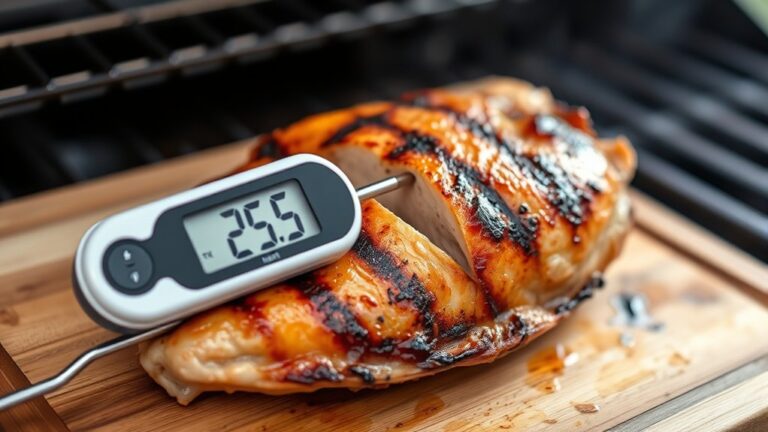
- Use a reliable food thermometer to check internal temperatures.
- Preheat your broiler or grill to the recommended temperature before cooking.
- Keep hot foods hot and cold foods cold to prevent bacterial growth.
- Adjust cooking time based on the thickness and type of food to avoid undercooking or burning.
Mastering temperature control ensures safety and perfect results every time.
Avoid Cross Contamination
While grilling and broiling, you must keep raw and cooked foods separate to prevent cross contamination. Use different plates and utensils for handling raw meat and cooked food. Never place cooked items back on the same surface that held raw meat without cleaning it thoroughly first.
Wash your hands with soap and water after touching raw proteins. If you marinate meat, do so in the refrigerator and discard any leftover marinade that’s touched raw meat. Avoid using the same brush or tongs for raw and cooked foods unless you wash them in between.
These steps help stop harmful bacteria from spreading, keeping your food safe. By staying mindful and organized, you’ll reduce the risk of foodborne illness when broiling or grilling.
Safe Cooking Times
Keeping raw and cooked foods separate is only part of the safety equation. You also need to guarantee your food reaches safe internal temperatures to kill harmful bacteria. Broiling and grilling cook differently, so timing matters.
Use a reliable food thermometer to check doneness, not just color or texture. Here are some key safe cooking times and temperatures to keep in mind:
- Poultry (chicken, turkey): 165°F (74°C)
- Ground meats (beef, pork, lamb): 160°F (71°C)
- Steaks, chops, roasts: 145°F (63°C) with a 3-minute rest
- Fish and shellfish: 145°F (63°C) or until opaque
Best Foods for Broiling vs Grilling
Which cooking method suits your favorite foods best? Broiling works wonders with thinner cuts like fish fillets, chicken breasts, or tender vegetables. Its intense, direct heat quickly cooks these items, creating a nice crust without drying them out.
Broiling is perfect for thin cuts and tender veggies, cooking them quickly with a delicious crust.
You’ll also love broiling for melting cheese or toasting breadcrumbs on casseroles.
Grilling shines with thicker meats like steaks, burgers, and sausages. The open flame imparts that smoky flavor and perfect sear you crave. It’s great for hearty vegetables like corn or bell peppers, too.
You can even grill fruits like pineapple for a caramelized treat.
How to Choose Between Broiling and Grilling
When deciding between broiling and grilling, consider where your heat source is and how it affects cooking. Think about the flavor you want—broiling offers a quick, intense heat, while grilling adds smoky char.
Also, match your method to the food for the best results.
Heat Source Differences
How do you decide whether to broil or grill your food? Understanding the heat source is key. Broiling uses intense, direct heat from above, typically inside your oven.
This top-down heat quickly cooks food, ideal for thinner cuts. Grilling, however, applies heat from below, either from charcoal, gas, or electric grills, creating that signature smoky flavor.
Consider these heat source differences:
- Broilers use radiant heat from an electric or gas element above your food.
- Grills rely on open flames or hot coals beneath the cooking surface.
- Broiling heats food rapidly on one side; grilling cooks with radiant and convective heat.
- Grilling allows for flame contact and smoke infusion; broiling doesn’t.
Knowing these will help you pick the right method for your meal.
Flavor Profiles Explained
Because flavor plays a huge role in your cooking choices, understanding the differences between broiling and grilling can help you decide which method suits your dish best. Grilling exposes your food to open flames and smoke, creating a distinct smoky, charred flavor with caramelized crusts that many find irresistible.
Broiling, on the other hand, uses intense radiant heat from above, which sears food quickly but doesn’t add smoky notes. This method highlights the natural flavors more cleanly and is great when you want a crisp exterior without overpowering smoke.
When choosing between the two, consider whether you want that smoky char or a straightforward sear. Both methods add delicious textures, but their flavor outcomes vary enough to influence your cooking approach.
Ideal Food Choices
Which cooking method fits your ingredients best depends largely on the type of food you’re preparing. Broiling works great for thinner, tender cuts and vegetables that cook quickly under intense, direct heat. Grilling shines with thicker cuts and foods that benefit from smoky flavors and char marks.
When deciding, consider these points:
- Use broiling for delicate fish fillets, thin steaks, or sliced vegetables.
- Opt for grilling with larger cuts like burgers, chicken breasts, or ribs.
- Choose broiling when indoor cooking is necessary or weather limits outdoor grilling.
- Go for grilling to infuse a smoky aroma and achieve that classic outdoor-cooked texture.
Frequently Asked Questions
Can Broiling and Grilling Be Combined in One Recipe?
Yes, you can combine broiling and grilling in one recipe. You’ll start by grilling for smoky flavor, then finish under the broiler to caramelize and crisp the top, giving your dish a perfect texture and taste.
What Is the History Behind Broiling and Grilling?
You’ll find grilling dates back to ancient times when humans cooked over open flames, while broiling developed later as indoor cooking evolved using direct heat from above. Both methods shaped culinary traditions worldwide.
Are There Health Benefits Unique to Broiling or Grilling?
You’ll find broiling reduces fat by letting it drip away, while grilling adds a smoky flavor with antioxidants. Both methods cut fat compared to frying, but grilling’s char can produce harmful compounds if overdone.
How Do Broiling and Grilling Affect Food Texture Differently?
You might think broiling and grilling create the same texture, but they don’t. Broiling gives a crisp, even crust, while grilling adds charred, smoky marks and a juicier inside, enhancing flavor and mouthfeel differently.
Can You Use the Same Marinade for Broiling and Grilling?
Yes, you can use the same marinade for broiling and grilling, but adjust timing since broiling cooks faster.
Just be careful with sugary marinades—they can burn quickly under broilers compared to grills.
Conclusion
Now that you know how broiling and grilling differ—like two sides of the same sizzling coin—you can choose the best method for your meal. Whether you want quick, intense heat from above or that smoky kiss from open flames, each technique brings its own magic.
So next time you fire up your kitchen or backyard, remember these tips and let your cooking shine like a star on a summer night. Understanding the differences between broiling and grilling helps you master heat control, flavor, and texture.
With this knowledge, you can confidently select the perfect method to enhance your dishes and enjoy delicious results every time.