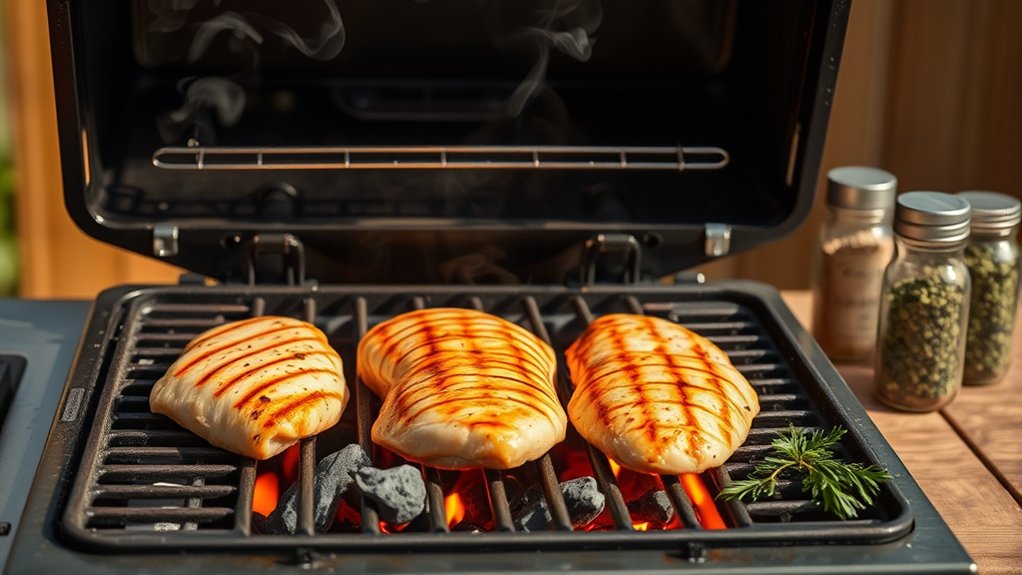
How to Grill Frozen Chicken Breast in 7 Easy Steps
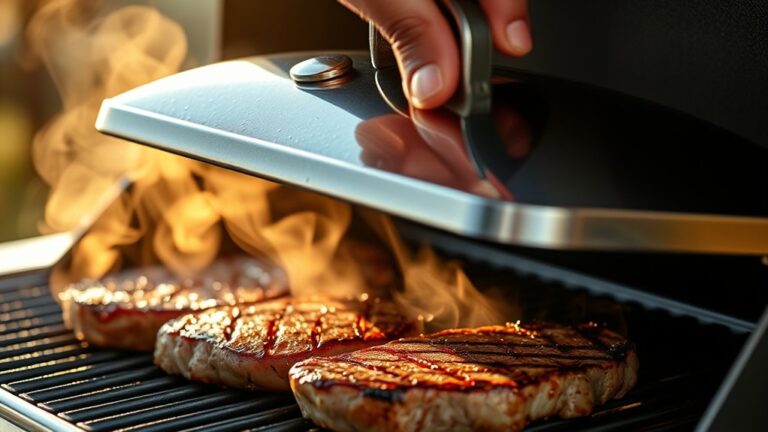
Choose a grill with good heat control and clean the grates well. Grilling frozen chicken breast can be simple and delicious when you have the right setup.
Season your frozen chicken breast with dry spices, pressing them in for better flavor.
Set up a two-zone fire, placing the chicken on the cooler side to cook slowly with the lid closed. Using indirect heat ensures the chicken cooks evenly without burning.
Use a thermometer to check for 165°F, then finish with a quick sear on direct heat.
Let it rest before slicing.
Keep following to uncover detailed tips and tricks for perfect results. With these steps, you’ll master how to grill frozen chicken breast easily and safely.
Key Takeaways
- Preheat grill to medium heat (350°F/175°C) and set up a two-zone fire with direct and indirect heat areas.
- Season frozen chicken breasts with dry rubs like salt, pepper, garlic powder, and paprika, pressing gently to adhere.
- Start cooking chicken on the cooler, indirect heat side to ensure even cooking and prevent burning.
- Cover grill and cook slowly at 275-300°F, turning occasionally until internal temperature nears 165°F (74°C).
- Move chicken to direct heat for a quick sear, then rest for 5-10 minutes before slicing against the grain.
Choose and Prepare Your Grill for Frozen Chicken
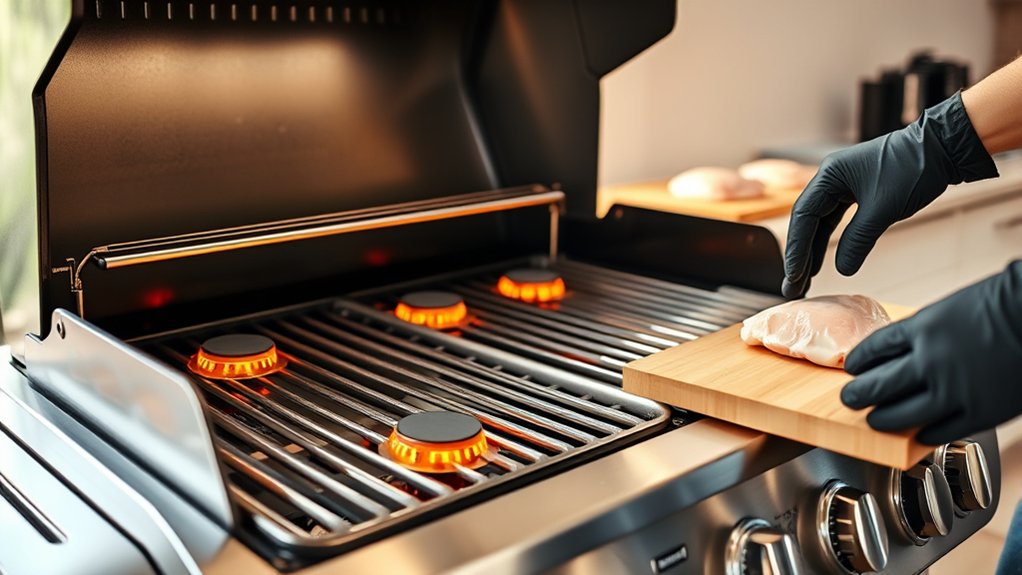
How do you guarantee your grill is ready for cooking frozen chicken breast? Start by choosing a grill with consistent heat control, like a gas or charcoal grill with adjustable vents. You want even heat distribution to cook frozen chicken thoroughly without burning the outside.
Before grilling, clean your grates thoroughly to prevent sticking and flare-ups. Preheat the grill to medium heat, around 350°F (175°C), ensuring it reaches a steady temperature before placing the chicken on it. If you’re using charcoal, arrange coals for indirect heat to avoid direct flames.
Finally, oil the grates lightly to create a non-stick surface. Preparing your grill this way helps you cook frozen chicken breast safely and evenly every time.
Season Frozen Chicken Breast for Maximum Flavor
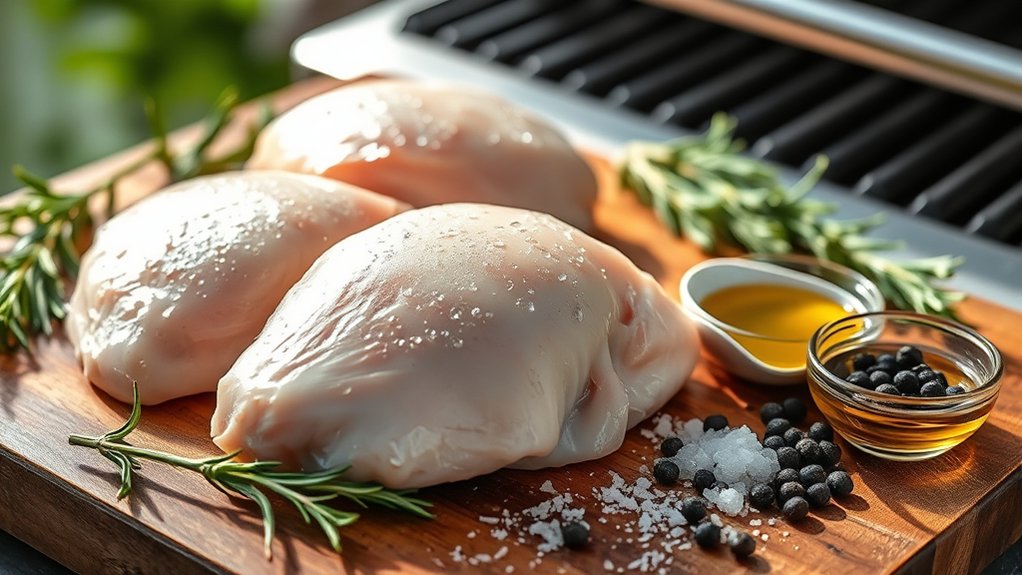
Once your grill is heated and ready, the next step is to boost the flavor of your frozen chicken breast with the right seasonings. Since the chicken is frozen, you’ll want to use a dry rub or seasoning blend that sticks well without needing oil or marination time.
Sprinkle salt, pepper, garlic powder, paprika, and a bit of cayenne for a balanced kick. You can also add dried herbs like thyme or oregano for extra aroma. Avoid wet marinades at this stage because the chicken won’t absorb flavors properly while frozen.
Press the seasoning gently onto the surface to help it adhere. This simple seasoning approach ensures your chicken will develop a tasty crust as it grills, maximizing flavor without extra prep.
How to Set Up a Two-Zone Fire for Grilling Frozen Chicken
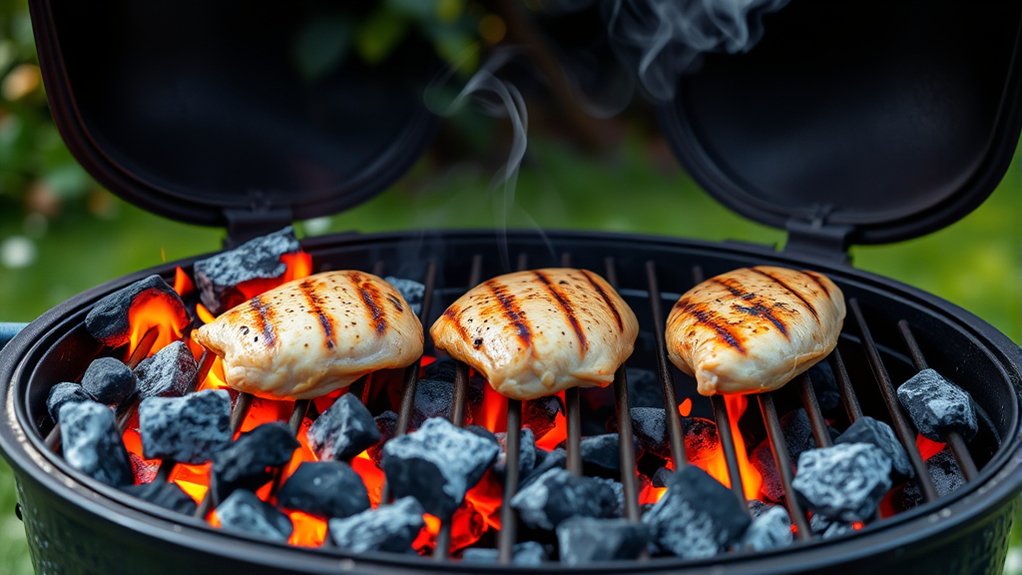
Setting up a two-zone fire lets you control the heat more effectively when grilling frozen chicken. You create one side with direct high heat and the other with indirect low heat, giving you flexibility to cook evenly and avoid burning.
Here’s how to set it up:
- Light the charcoal or gas burners on one side of the grill only.
- Leave the opposite side unlit for indirect cooking.
- Arrange the coals or burners so the hot zone is concentrated on one side.
- Preheat the grill with the lid closed for 10-15 minutes before placing your chicken.
This method lets you start frozen chicken over indirect heat, then finish it on the direct heat side for a perfect sear.
Grill Frozen Chicken on the Cooler Side First
Start grilling your frozen chicken on the cooler side to cook it evenly without burning the outside. You’ll have better temperature control, which helps the chicken thaw and cook through properly.
This method prevents the outer layer from charring while the inside stays frozen.
Benefits Of Cooler Side
Grilling frozen chicken breast on the cooler side of your grill offers several key benefits that improve cooking results. By starting on the cooler side, you avoid burning the outside while the inside cooks through. This method helps you:
- Cook the chicken evenly without drying out the edges.
- Maintain juiciness by allowing the heat to penetrate gradually.
- Reduce flare-ups caused by fat dripping onto high flames.
- Prevent the chicken from sticking or charring prematurely.
Using the cooler side first gives you more control over the cooking process, ensuring tender, flavorful chicken. It’s a smart strategy that sets you up for success before moving the chicken to direct heat for finishing.
Temperature Control Tips
Although cooking frozen chicken on the cooler side requires patience, controlling the grill’s temperature carefully guarantees even cooking without burning. Start by preheating your grill, then set one zone to medium-low heat, around 275-300°F. Place the frozen chicken breasts there first, allowing them to cook gently.
Use a reliable grill thermometer to monitor the temperature closely, adjusting vents or heat as needed to maintain consistency. Avoid sudden temperature spikes; gradual warming helps thaw and cook the chicken evenly. After the chicken has cooked through on the cooler side, you can move it to the hotter zone briefly if you want grill marks or a bit of crispiness.
Keeping the heat managed from the start ensures juicy, well-cooked chicken every time.
Preventing Outer Burn
When you cook frozen chicken breasts over high heat right away, the outside can burn before the inside is fully cooked. To *guarantee* this, start grilling on the cooler side of your grill first. This method lets the chicken thaw and cook evenly without charring.
Here’s how to do it effectively:
- Preheat your grill, creating a two-zone setup—one side hot, the other cooler.
- Place the frozen chicken on the cooler side to cook gently.
- Cover the grill and let the chicken cook slowly, turning occasionally.
- Once the chicken is nearly cooked through, move it to the hotter side for a quick sear to get a nice crust.
This approach ensures juicy, evenly cooked chicken without burnt edges.
Check Doneness With a Meat Thermometer
Since frozen chicken breast can cook unevenly, you’ll want to use a meat thermometer to guarantee it reaches a safe internal temperature. Insert the thermometer into the thickest part of the breast, avoiding bone or fatty areas, to get an accurate reading. The USDA recommends cooking chicken to an internal temperature of 165°F (74°C) to ensure it’s safe to eat.
Keep checking every few minutes, especially as you near the end of your estimated cooking time. Once the thermometer hits 165°F, remove the chicken from the grill to prevent overcooking. Using a meat thermometer takes the guesswork out of grilling frozen chicken breast, helping you serve juicy, perfectly cooked meat every time.
Don’t skip this step—it’s vital for safety and quality.
Give Your Chicken a Quick Sear Over Direct Heat
You’ll want to start by heating your grill to high for a quick sear that locks in juices and flavor. Keep the chicken moving slightly to make certain of even browning on both sides.
This step sets the stage for a juicy, well-cooked breast every time.
Importance Of High Heat
Why does high heat matter so much when grilling frozen chicken breast? High heat is essential because it quickly sears the outside, locking in moisture and flavor despite the chicken starting frozen.
When you use high heat, you:
- Create a flavorful crust that seals in juices.
- Reduce cooking time, preventing dryness.
- Kill surface bacteria quickly for safety.
- Enhance the chicken’s texture with a satisfying char.
Techniques For Even Searing
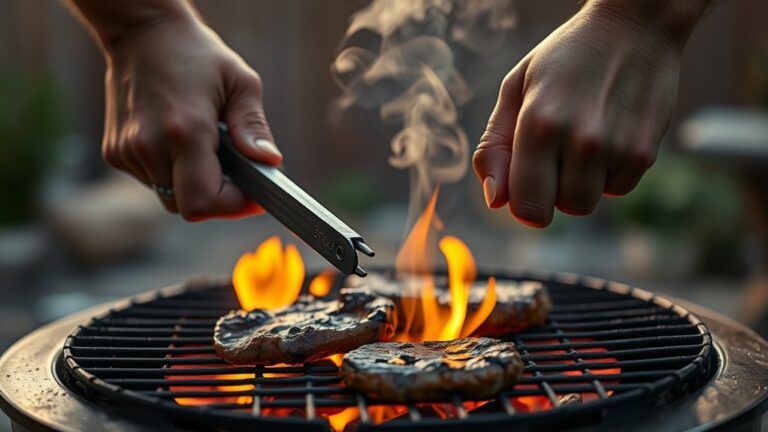
How do you guarantee your frozen chicken breasts get an even sear without burning? Start by preheating your grill to high heat, then place the chicken directly over the flames for about 2-3 minutes per side. Keep a close eye and resist moving the chicken too soon; letting it sit undisturbed helps develop that golden crust.
Use tongs to flip the chicken gently, ensuring each side gets equal exposure to the heat. If flare-ups occur, move the chicken briefly to indirect heat to avoid charring. After searing, transfer the breasts to a cooler part of the grill to finish cooking through.
This quick sear locks in juices and gives you a flavorful exterior while maintaining tender meat inside.
Let Chicken Rest for Juicy, Tender Results
Although the chicken looks ready off the grill, letting it rest for a few minutes seals in the juices and keeps the meat tender. When you skip this step, the juices escape as soon as you cut into the chicken, leaving it dry.
To rest chicken properly:
- Remove it from the grill and place it on a clean plate.
- Tent it loosely with aluminum foil to retain warmth.
- Let it rest for 5 to 10 minutes—don’t rush this.
- After resting, slice against the grain for maximum tenderness.
Frequently Asked Questions
Can I Marinate Frozen Chicken Breast Before Grilling?
You can marinate frozen chicken breast, but it’s best to thaw it first so the marinade penetrates properly.
Marinating frozen chicken might not flavor the meat well and could extend grilling time unexpectedly.
Is It Safe to Grill Frozen Chicken Without Thawing?
Sure, you can toss frozen chicken on the grill and hope it cooks evenly—like juggling flaming torches blindfolded. But it’s safer to thaw first; grilling frozen risks uneven cooking and foodborne illness.
Don’t risk it!
How Long Does Frozen Chicken Take to Grill Compared to Thawed?
Grilling frozen chicken takes about 50% longer than thawed chicken, usually around 20-30 minutes.
You’ll want to cook it slowly over medium heat to guarantee it cooks evenly without burning the outside.
What Side Dishes Pair Well With Grilled Frozen Chicken?
You can’t go wrong with classic sides like grilled veggies, corn on the cob, or a fresh salad. They complement grilled chicken perfectly, making your meal a home run and keeping flavors bright and satisfying.
Can I Use Frozen Chicken Thighs Instead of Breasts for Grilling?
Yes, you can grill frozen chicken thighs instead of breasts. They’re juicier and more forgiving on the grill. Just make sure to cook them thoroughly, and consider adjusting cooking times since thighs might take a bit longer.
Conclusion
Who knew that grilling frozen chicken breast could be this simple and delicious? By choosing the right grill setup and seasoning well, you’ll nail juicy, flavorful chicken every time. It’s funny how starting on the cooler side and finishing with a quick sear not only saves the day but also locks in all those tasty juices.
With just a thermometer and a little patience, you’ll turn frozen into feast—grilling success is never out of reach! Mastering how to grill frozen chicken breast means you can enjoy a quick, easy, and flavorful meal anytime. Follow these simple steps for perfectly grilled chicken every time.