What Is Induction Compatible Cookware and How to Choose It
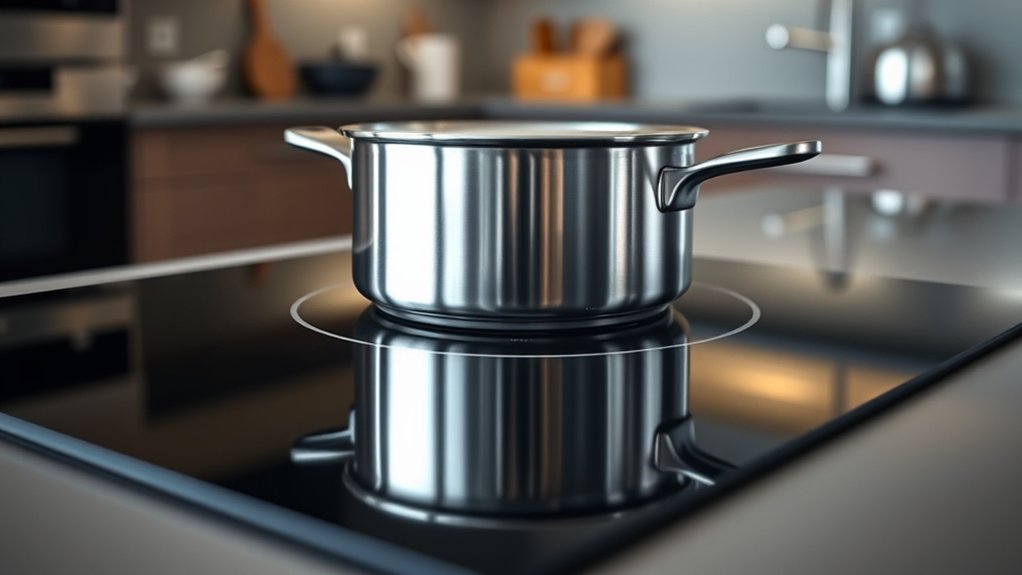
Induction compatible cookware is essential for efficient cooking on induction cooktops. These pots and pans are made from magnetic materials like cast iron or certain types of stainless steel, ensuring proper heat transfer.
Choosing cookware with a flat bottom and a magnetic base guarantees compatibility with your induction stove.
To test if your cookware works with induction, simply use a magnet—if it sticks firmly, the cookware is compatible.
Matching the pan size to your burner also enhances heating performance and energy efficiency.
Selecting the right induction cookware not only improves cooking speed but also promotes safety in the kitchen.
When choosing induction-compatible cookware, consider your cooking style, maintenance preferences, and durability.
These factors will help you find the best pots and pans to suit your needs and ensure long-lasting use.
Key Takeaways
- Induction compatible cookware is made from magnetic materials like cast iron or stainless steel, enabling direct heating via electromagnetic fields.
- Use a magnet test or look for labels indicating induction compatibility to verify if cookware works with induction cooktops.
- Match cookware base size to burner size for efficient heating and ensure a flat, smooth bottom for full contact with the cooktop.
- Choose materials like multi-ply stainless steel for durability and even heating, or cast iron for excellent heat retention and longevity.
- Prioritize cookware with a magnetic base, layered construction, and heat-resistant handles for safety, performance, and ease of use.
What Is Induction Compatible Cookware?
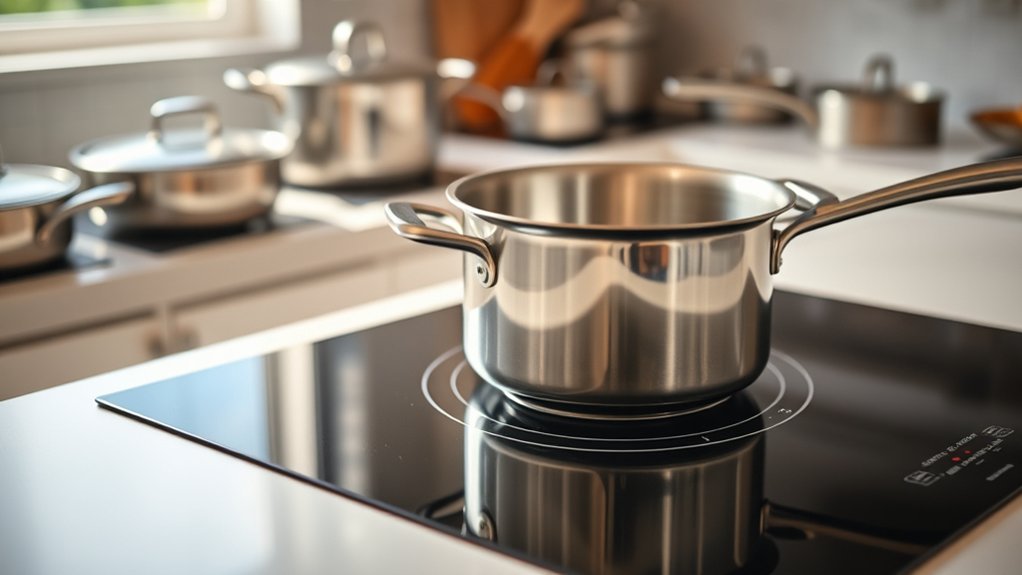
Although it might seem confusing at first, induction compatible cookware simply refers to pots and pans that work with induction cooktops. You’ll want to use cookware made from magnetic materials like cast iron or certain types of stainless steel. If a magnet sticks firmly to the bottom, your cookware is likely induction compatible.
Non-magnetic materials such as aluminum, copper, or glass won’t work unless they have a magnetic base layer. Choosing the right cookware guarantees your induction cooktop heats efficiently and evenly. Using the wrong pots or pans won’t activate the cooktop, so your meal won’t cook properly.
When shopping, look for labels or symbols indicating induction compatibility. This way, you’ll avoid frustration and enjoy the benefits of fast, precise cooking on your induction stove.
How Induction Cooking Heats Your Cookware
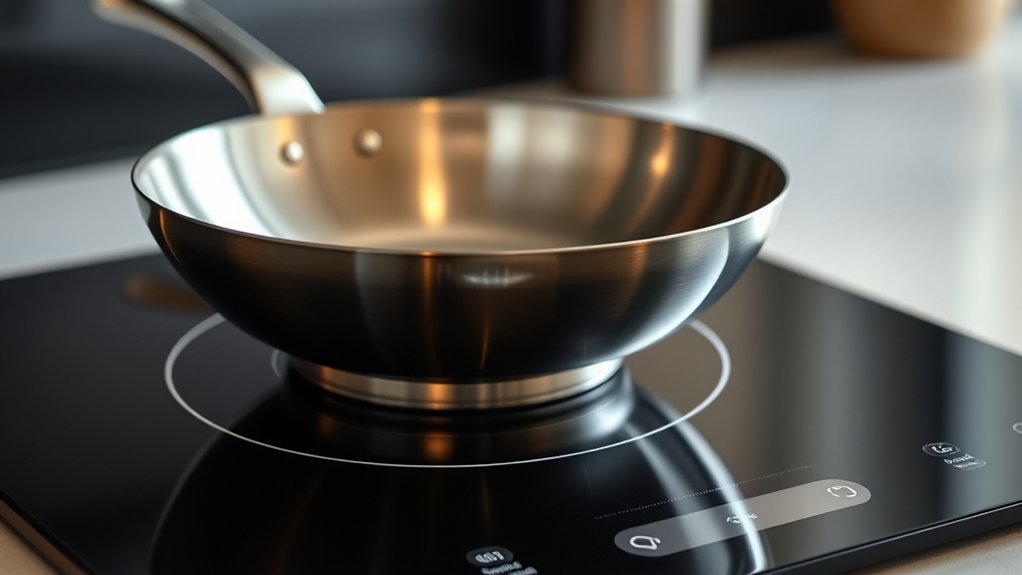
Because induction cooking relies on electromagnetic energy, it heats your cookware differently than traditional methods. Instead of using direct heat from flames or electric coils, induction cooktops generate a magnetic field that directly excites the metal in your pot or pan. This means the cookware itself becomes the heat source, warming up quickly and evenly.
Induction cooking uses magnetic fields to heat cookware directly, ensuring faster and more even warmth.
When you use induction cooking, you’ll notice:
- Faster heating times since energy transfers directly to the cookware
- Precise temperature control for consistent cooking results
- The cooktop surface stays cooler, reducing the risk of burns or spills
This efficient heating method saves energy and makes cooking safer, giving you more control over your kitchen experience.
Which Materials Work Best for Induction Cookware?
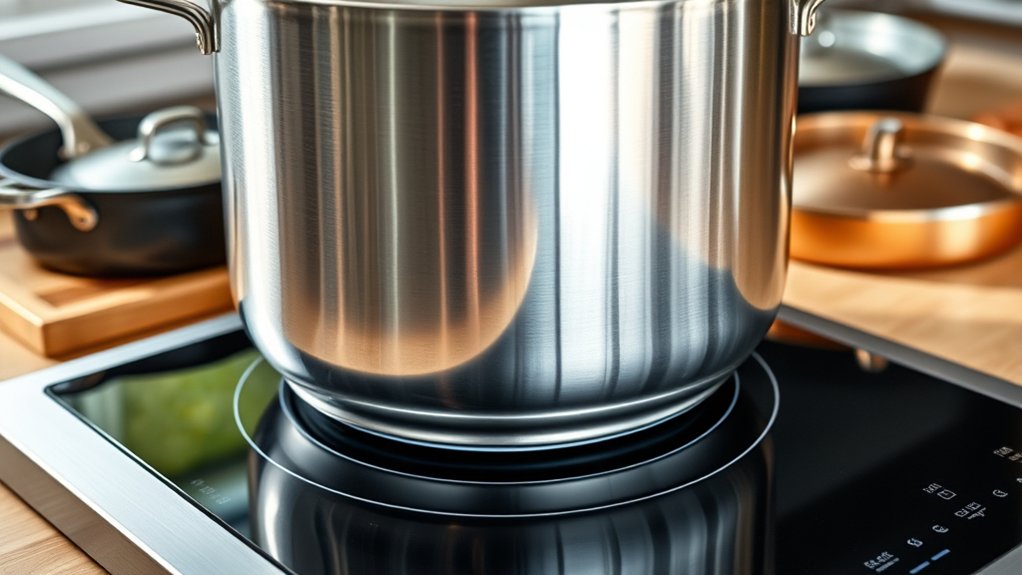
When choosing cookware for your induction cooktop, you’ll want to focus on materials that respond well to magnetic fields. Cast iron and magnetic stainless steel are top choices because they heat quickly and evenly on induction burners. You can test your current cookware by seeing if a magnet sticks to the base—if it does, the pot or pan will work.
Avoid pure aluminum, copper, or glass cookware unless they have a magnetic layer added to the bottom. Some cookware brands offer multi-ply constructions that combine magnetic stainless steel with aluminum or copper cores, giving you excellent heat distribution while remaining induction-compatible.
Size and Shape: Why They Matter on Induction Burners
You need to match your cookware’s base diameter to the induction burner for efficient heating. The shape of your pots and pans also affects how evenly heat spreads across the surface. Understanding these factors helps you get the most from your induction cooktop.
Burner Compatibility Considerations
Although induction burners offer rapid heating and precise control, their performance heavily depends on the size and shape of your cookware. To get the best results, you need to take into account how well your pots and pans match the burner’s design. Using cookware that doesn’t fit properly can lead to uneven heating or inefficient energy use.
Keep these burner compatibility considerations in mind:
- Match your pan’s shape to the burner’s surface for ideal heat distribution.
- Avoid cookware that’s too small or too large for the burner to prevent energy loss.
- Choose pans with flat bottoms to ensure full contact with the induction surface.
Cookware Base Diameter
Why does the diameter of your cookware’s base matter on an induction burner? The burner works by creating a magnetic field that heats the cookware directly. If the base is too small, the burner won’t activate effectively, wasting energy.
Too large, and heat may spread unevenly or the burner won’t handle it properly. Matching the base diameter to your induction burner guarantees ideal heat transfer and cooking performance.
| Base Diameter (inches) | Burner Size Compatibility |
|---|---|
| 4-6 | Small burners (1000-1500W) |
| 6-8 | Medium burners (1500-2000W) |
| 8-10 | Large burners (2000-2500W) |
| 10+ | Extra-large burners (2500W+) |
Choose the right base size to maximize efficiency and avoid uneven heating.
Shape Impact on Heating
Matching your cookware’s base diameter to the induction burner sets the stage for efficient heating, but the shape of the cookware also plays a significant role. When choosing cookware, you want a shape that maximizes contact with the induction surface to guarantee even heat distribution.
Round and flat bases work best because they sit flush against the burner, promoting consistent cooking. Irregular or warped shapes can create hot spots or reduce the efficiency of heat transfer.
Consider these shape factors:
- Flat-bottomed cookware provides uniform contact and stable heating.
- Wide, shallow pans spread heat evenly, ideal for frying and sautéing.
- Tall, narrow pots may heat unevenly, requiring more attention during cooking.
Picking the right shape helps you cook smarter, not harder.
Pros and Cons of Stainless Steel Cookware
When you choose stainless steel cookware, you get durability and a sleek appearance that suits any kitchen. Stainless steel resists rust, corrosion, and staining, so your pots and pans stay looking new for years. It’s also non-reactive, meaning you can cook acidic foods without altering flavors or damaging the cookware.
Plus, it’s easy to clean and often dishwasher safe. On the downside, stainless steel alone doesn’t conduct heat well, so many pieces have an aluminum or copper core to improve heating performance. Also, food can stick if you’re not careful with temperature or oil, which may require more attention while cooking.
Despite these drawbacks, stainless steel remains a versatile and reliable choice for induction-compatible cookware.
Cast Iron and Enamel-Coated Cookware: Which Is Best?
Although both cast iron and enamel-coated cookware excel on induction cooktops, choosing the right one depends on how you cook and care for your pans. Cast iron offers exceptional heat retention and durability but requires seasoning and careful maintenance to prevent rust. Enamel-coated cookware, on the other hand, provides a non-reactive, easy-to-clean surface without the need for seasoning, making it ideal if you want less upkeep.
However, enamel can chip if dropped or handled roughly. Consider these points to decide:
- Do you prefer low-maintenance cookware? Enamel-coated is better.
- Want superior heat retention and don’t mind seasoning? Go with cast iron.
- Concerned about durability and chipping? Cast iron is tougher, but enamel offers more color options.
Choose based on your cooking style and care routine.
Can You Use Nonstick Pans on Induction Stovetops?
You can use nonstick pans on induction stovetops, but they need a magnetic base to work properly. Not all nonstick cookware has this, since many are made from aluminum or other non-magnetic materials.
Understanding how your pan’s material affects performance will help you get the best results on induction.
Magnetic Base Requirement
Since induction stovetops rely on magnetic fields to generate heat, your cookware must have a magnetic base to work properly. Without this, the pan won’t heat up, making cooking inefficient or impossible.
You might wonder if your nonstick pans fit this requirement. Many do, but only if they have a magnetic layer built into the base. To check, you can use a simple magnet test at home—if a magnet sticks firmly, the cookware is induction compatible.
Keep in mind:
- Stainless steel pans often need a magnetic base layer.
- Aluminum or copper pans require a special magnetic disk.
- Cookware labeled “induction compatible” guarantees a magnetic base.
This magnetic base is essential for safe and effective induction cooking.
Nonstick Cookware Materials
When choosing nonstick cookware for induction stovetops, the key factor is whether the pan’s base contains a magnetic material. Most nonstick pans have aluminum or stainless steel bodies, but only those with a magnetic layer or base will work on induction. You can easily test this by placing a magnet on the bottom; if it sticks firmly, the pan is induction-compatible.
Some manufacturers add a ferromagnetic disc to the base to guarantee compatibility. Keep in mind that pure aluminum nonstick pans won’t work unless modified. So, when shopping, look for labels stating “induction compatible” or confirm the material composition.
This way, you’ll enjoy the convenience of nonstick cooking without worrying about compatibility issues with your induction stovetop.
Performance on Induction
Understanding whether nonstick pans perform well on induction stovetops comes down to their magnetic properties and heat distribution. Since induction cooktops rely on magnetic fields to generate heat, your nonstick pan must have a magnetic base to work effectively. Many nonstick pans come with a stainless steel or iron base, making them compatible.
However, some nonstick cookware lacks this feature and won’t heat properly on induction.
When choosing nonstick pans for induction, consider these factors:
- Magnetic base: Confirm the pan’s bottom reacts to a magnet.
- Even heat distribution: Look for pans with layered construction for consistent cooking.
- Thickness and weight: Heavier pans usually offer better stability and heat retention.
Testing Your Cookware for Induction Compatibility
Although not all cookware works with induction cooktops, you can quickly test your pots and pans at home to see if they’re compatible. Grab a simple magnet and hold it against the base of your cookware. If the magnet sticks firmly, your cookware contains the magnetic material needed to work with induction.
If it doesn’t, the cookware likely won’t heat properly on an induction surface. Test multiple spots on the base to ensure consistency, especially if the pan has a layered or non-uniform bottom. This quick magnet test saves you time and guesswork before investing in new cookware.
Keep in mind, even if your cookware passes the magnet test, it’s important to check for a flat bottom to maintain good contact with the cooktop.
Key Features When Buying Induction Cookware
Since induction cooktops rely on magnetic fields to generate heat, you’ll want to look for cookware made with ferrous metals like cast iron or certain stainless steels. Besides magnetic compatibility, you should consider other essential features to guarantee optimal performance and durability.
Look for cookware with a flat, smooth base that maximizes contact with the cooktop surface, improving heat transfer. Also, check the weight; heavier pans often indicate better quality and stability.
Finally, consider the handle design—heat-resistant and securely attached handles boost safety and comfort during cooking.
- Flat, smooth base for efficient heat transfer
- Durable construction with appropriate weight
- Heat-resistant, ergonomic handles for safe handling
Caring for Your Induction Cookware
To keep your induction cookware performing at its best, you need to clean and maintain it properly after each use. Always hand wash your pots and pans with warm, soapy water, avoiding abrasive sponges that can scratch the surface. Dry them thoroughly to prevent water spots and rust, especially on stainless steel.
Avoid using harsh chemical cleaners or metal utensils that might damage the cookware. If food sticks, soak your cookware gently before cleaning to loosen residue. Store your induction cookware carefully, stacking with protective layers or using pan protectors to avoid scratches.
Regularly check the bottoms for warping or damage, as a flat base ensures proper heat transfer. By following these steps, you’ll extend your cookware’s life and preserve ideal cooking performance on your induction stove.
Where to Find Quality Induction Cookware Brands and Sets
When you’re ready to invest in induction cookware, knowing where to find reliable brands and sets can save you time and frustration. Start by exploring well-known kitchenware retailers that specialize in induction options, ensuring quality and warranty support.
Knowing where to find reliable induction cookware brands saves you time and ensures quality with proper warranty support.
Online marketplaces also offer a wide range of brands, but make sure to check customer reviews and ratings before purchasing. Additionally, visit local specialty stores where you can test cookware firsthand and get expert advice.
Here are three places to find quality induction cookware:
- Trusted kitchenware stores like Williams Sonoma or Sur La Table
- Reputable online platforms such as Amazon or Wayfair with verified reviews
- Specialty cookware shops that focus on induction-compatible products
These options help you select durable, efficient cookware suited to your needs.
Matching Induction Cookware to Your Cooking Style
Finding the right induction cookware goes beyond brand reputation and availability; it also depends on how you cook. Whether you’re a quick stir-fry pro or a slow-simmer lover, your cookware should match your style to enhance your experience and results. Choosing the right materials and sizes means less frustration and more delicious meals.
| Cooking Style | Ideal Cookware Features |
|---|---|
| Fast, high-heat cooking | Heavy-bottomed pans, quick response |
| Slow, precise cooking | Thick, heat-retentive cookware |
| Versatile everyday use | Durable, multi-purpose sets |
Frequently Asked Questions
Can Induction Cookware Be Used on Gas or Electric Stoves?
Yes, you can use induction cookware on gas or electric stoves without any problem. Just remember, induction pots work fine on other heat sources, but non-induction cookware won’t work on induction cooktops.
Does Induction Cooking Affect the Taste of Food?
No, induction cooking doesn’t affect your food’s taste. It heats cookware quickly and evenly, preserving flavors better.
You’ll enjoy consistent cooking results without any metallic or off-flavors from the induction process itself.
Are Induction Cooktops Safe for People With Pacemakers?
You’re in good hands—induction cooktops are generally safe for people with pacemakers. Still, it’s wise to chat with your doctor and keep a respectful distance while cooking, just to play it safe and sound.
How Energy-Efficient Is Induction Cooking Compared to Other Methods?
You’ll find induction cooking highly energy-efficient, using about 80-90% of its energy directly on the cookware.
That’s much better than gas or electric, which lose more heat to the surrounding air.
Can Induction Cookware Be Used in the Oven or Dishwasher?
You can use most induction cookware in the oven if it’s oven-safe, but check the manufacturer’s guidelines. Many are dishwasher-safe, but handwashing often preserves their finish and magnetic base better over time.
Conclusion
Choosing induction compatible cookware is like finding the perfect key for a finely crafted lock—it *unlocks* efficiency, precision, and ease in your kitchen. By understanding materials, size, and care, you *guarantee* your cookware not only works but thrives on induction burners.
Embrace this harmony, and your cooking will flow as smoothly as a well-conducted symphony, turning everyday meals into culinary masterpieces that resonate with both style and substance.
When selecting induction compatible cookware, prioritize magnetic materials like cast iron or stainless steel for optimal performance. Ensure the size matches your induction burner for even heating. Proper care will extend the life and effectiveness of your cookware.
In conclusion, choosing the right induction compatible cookware transforms your cooking experience, enhancing efficiency and precision on your induction stove. This choice ensures durability, performance, and the joy of cooking with induction technology.