Skillet vs. Frying Pan: How to Choose the Right Cookware
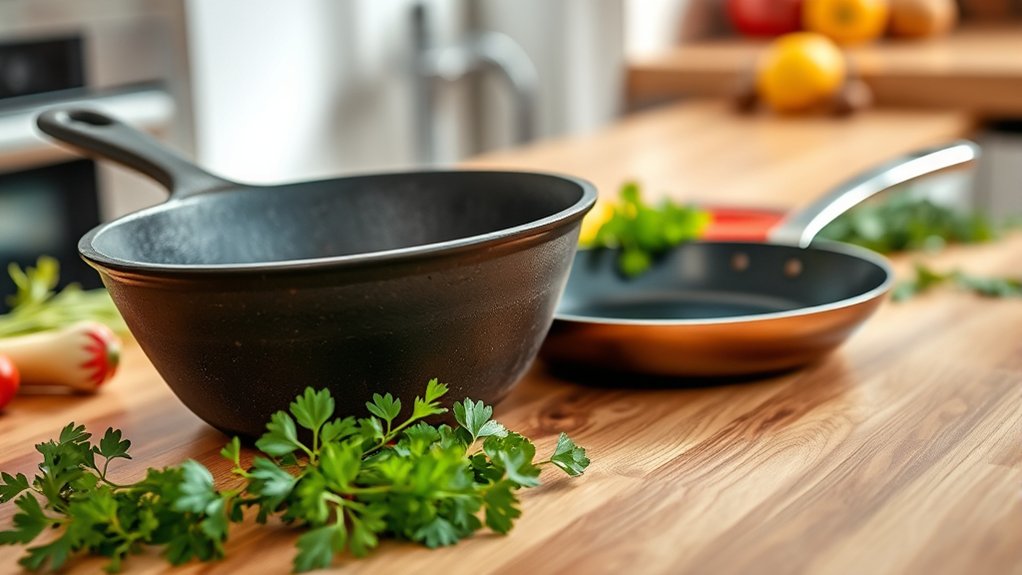
When choosing between a skillet and a frying pan, it’s important to understand the differences in design and functionality to pick the right cookware for your kitchen.
Skillets and frying pans may seem similar, but their shape, material, and intended use vary significantly. Knowing these distinctions helps you match your cookware to your cooking style and needs.
If you want even heat distribution for searing, slow-cooking, or using your pan in the oven, opt for a heavy skillet with curved sides. This type of pan retains heat well and is ideal for recipes requiring consistent temperature.
For quick sautéing, flipping, and easy cleanup, a lighter frying pan with sloped edges and a nonstick coating is your best bet.
The shape and handle design also impact cooking performance and maintenance. Keep exploring to uncover which one truly fits your kitchen routine.
Key Takeaways
- Skillets have thicker, heavier construction ideal for even heat retention and searing, while frying pans are lighter with sloped sides for quick cooking and flipping.
- Cast iron skillets provide superior heat retention and durability, whereas frying pans often feature nonstick coatings for easy cooking and cleaning.
- Choose skillets for slow-cooking, searing, and oven use; frying pans excel at sautéing, frying eggs, and quick high-heat tasks.
- Handle design and pan size affect comfort, control, and meal portion suitability, so select based on cooking style and storage needs.
- Consider cleaning and maintenance: cast iron requires seasoning and careful care, while nonstick frying pans are easier to clean but less durable.
What Makes a Skillet Unique?
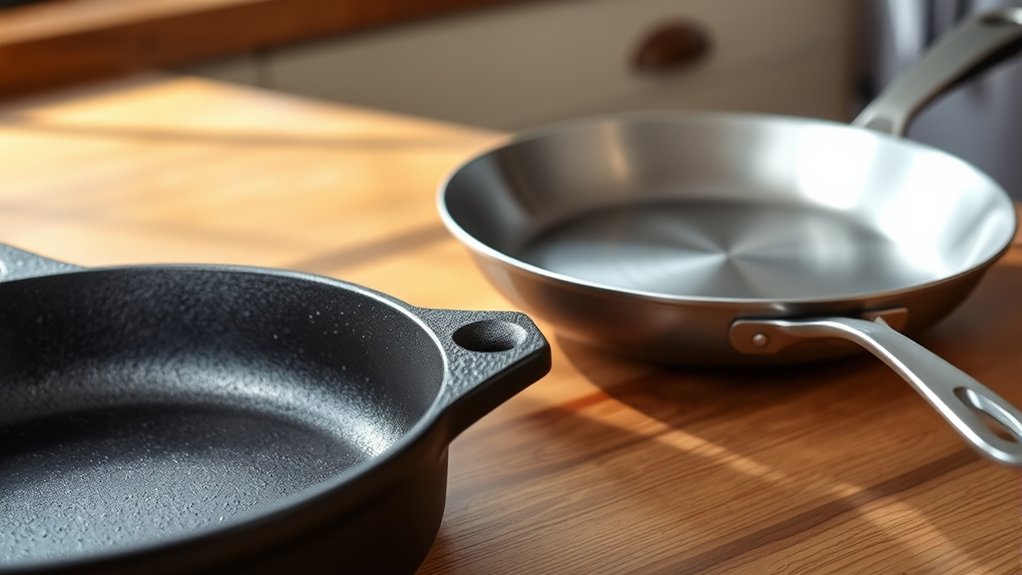
Although skillets and frying pans look similar, skillets stand out because of their thick, heavy construction and slightly curved sides. When you use a skillet, you’ll notice it holds heat evenly and retains it longer, making it ideal for searing meats or slow-cooking dishes. The weight might feel substantial, but that’s exactly what gives you better control over cooking temperature.
You can also transfer your skillet from stovetop to oven without worrying about damage, thanks to its sturdy build. Plus, the curved sides make it easier to stir and flip food without spilling. By choosing a skillet, you’re picking cookware that combines durability with versatility, helping you tackle a variety of recipes with confidence and consistency.
How Is a Frying Pan Different?
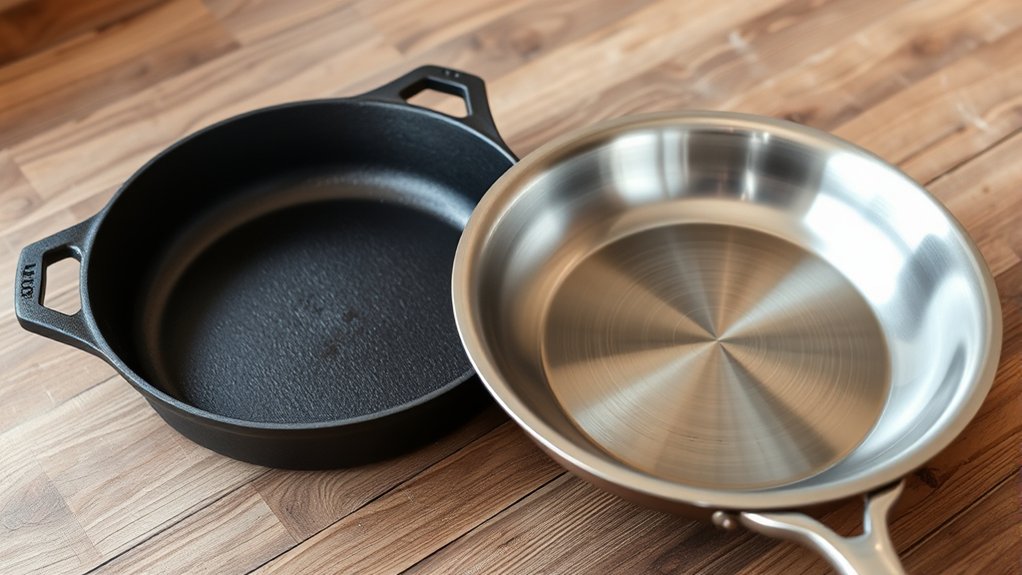
How does a frying pan differ from a skillet in everyday cooking? While both are versatile, frying pans usually have lower, flared sides, making it easier for you to flip and stir foods like eggs or pancakes. This design promotes quick evaporation, perfect for sautéing.
Frying pans often come with a non-stick coating, helping you cook with less oil and clean up faster.
| Feature | Frying Pan |
|---|---|
| Sides | Lower and flared |
| Best for | Quick cooking, flipping, sautéing |
| Typical material | Non-stick or lightweight metals |
Knowing these differences helps you reach for the right tool and cook more efficiently every time.
How Skillet Shape Affects Cooking
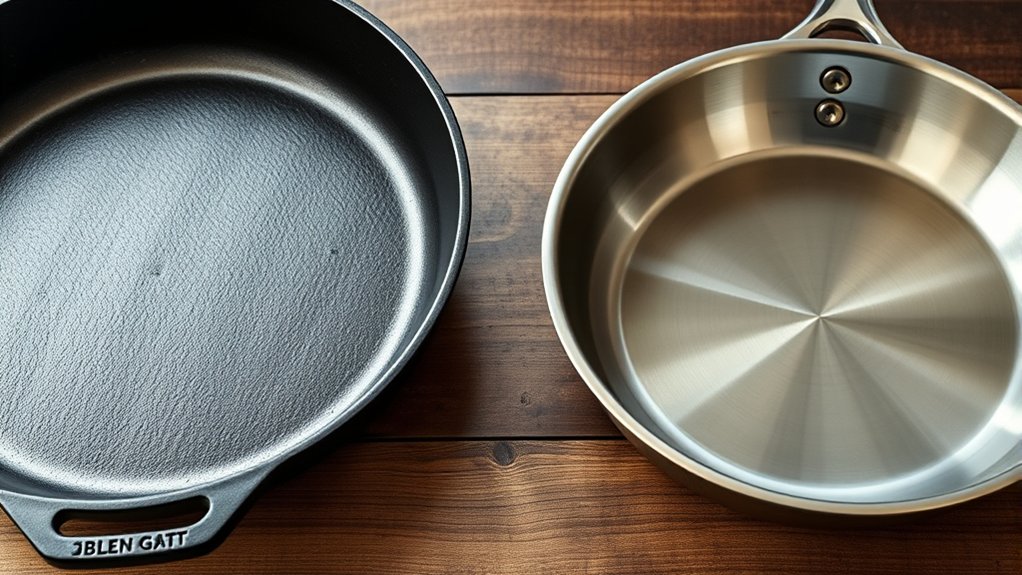
You’ll notice how a skillet’s shape changes the way heat spreads across its surface, affecting your cooking results. The design of its edges can influence how easily you flip or stir food.
Plus, the cooking surface area determines how much you can prepare at once without overcrowding.
Heat Distribution Patterns
Because the shape of a skillet directly influences how heat spreads across its surface, understanding this can help you cook more evenly. Skillets with a wider, flatter base provide more direct contact with your heat source, promoting uniform heat distribution. This means your food cooks consistently without hot spots.
On the other hand, deeper, rounder skillets may concentrate heat in the center, which can cause uneven cooking if you’re not careful. When you choose a skillet, consider how its shape matches your cooking style. If you need even searing or browning, a flatter skillet will serve you better.
But if you’re simmering or cooking dishes that benefit from heat pooling in the middle, a deeper shape might suit you. Knowing this helps you pick the best tool for the job.
Edge Design Impact
Although edge design might seem like a minor detail, it plays an essential role in how you handle and cook with a skillet. The shape and height of the edges influence how easily you can toss, flip, or stir your food.
For example, sloped edges help you slide food onto a spatula smoothly, while straight edges contain liquids better, making them ideal for simmering sauces.
| Edge Type | Best For | Handling Tip |
|---|---|---|
| Sloped | Stir-frying, flipping | Use a wide spatula |
| Straight | Sauces, braising | Tilt skillet carefully |
| Rolled Rim | Pouring liquids | Pour slowly to avoid spills |
Choosing the right edge design makes cooking more efficient and enjoyable.
Cooking Surface Area
When you choose a skillet, its shape considerably affects the cooking surface area and how evenly your food cooks. Skillets typically have sloped sides, which reduce the flat cooking surface compared to frying pans with straight edges. This means you might have less room to spread out your ingredients, potentially causing uneven cooking if overcrowded.
On the other hand, the sloped sides make it easier to toss and flip food, improving heat distribution. Frying pans offer a wider, flat surface, great for searing and browning evenly. If you often cook large batches or want uniform heat, a frying pan’s shape might suit you better.
But if you prioritize versatility and tossing, a skillet’s design could be more your style. Consider what you cook most to choose wisely.
Frying Pan Features That Affect Cooking
When choosing a frying pan, you’ll want to take into account the material it’s made from, as that affects heat distribution and durability. The handle design also plays a big role in comfort and safety while cooking.
Plus, a high-quality nonstick surface can make your cooking and cleanup much easier.
Material Composition Impact
Because the material composition of a frying pan directly influences heat distribution and cooking performance, understanding these differences can help you choose the right pan for your kitchen. Aluminum pans heat quickly and evenly but can warp under high heat unless reinforced. Cast iron offers excellent heat retention, making it ideal for searing and frying, but it takes longer to heat and requires seasoning to maintain a non-stick surface.
Stainless steel pans are durable, resist corrosion, and deliver even heat, though they might develop hotspots without a layered base. Non-stick coatings reduce food sticking and simplify cleanup, but they can degrade over time, especially at high temperatures. Knowing these material traits lets you pick a frying pan tailored to your cooking style and maintenance preferences.
Handle Design Benefits
Material choices affect how your pan cooks, but the handle design plays a big role in how comfortable and safe it feels during use. When you pick a frying pan, look for handles that stay cool, especially if you often cook on high heat. Ergonomic shapes fit your hand better, reducing fatigue during long cooking sessions.
Some handles have textured grips or silicone covers to prevent slipping, giving you more control when flipping or tossing food. Also, consider the handle length—longer handles keep your hand farther from heat, while shorter ones offer better balance. If you plan to use the pan in the oven, check if the handle is oven-safe.
A well-designed handle makes your cooking safer and more enjoyable every time.
Nonstick Surface Quality
Although a pan’s structure matters, its nonstick surface quality directly impacts your cooking experience the most. When you choose a frying pan, look for a durable coating that resists scratches and peeling. High-quality nonstick surfaces ensure your food releases easily, making flipping and cleaning effortless.
Keep in mind, not all nonstick coatings are equal—some wear out faster, affecting performance. You’ll want a pan with a surface that withstands regular use and high heat without degrading. Also, consider if the coating is PFOA-free, as that’s safer for your health.
Ultimately, a reliable nonstick surface saves you time, reduces oil usage, and helps you cook evenly. Prioritize this feature to enjoy hassle-free meals every time you step into the kitchen.
Heat Distribution in Skillets vs Frying Pans
When you cook with a skillet or frying pan, how evenly heat spreads can make all the difference in your dish. Skillets generally offer more consistent heat distribution, thanks to their thicker, heavier construction. This means your food cooks more evenly, reducing hot spots that can burn or undercook parts of your meal.
Frying pans, often lighter with thinner bases, may heat up faster but can develop uneven spots where food sticks or cooks unevenly. If you want reliable, steady heat for tasks like searing or browning, a skillet’s even heat is a big advantage. On the other hand, if you need quick heating and don’t mind adjusting your technique, a frying pan still works well.
Understanding this difference helps you choose cookware that fits your cooking style perfectly.
Material Differences in Skillets and Frying Pans
The way heat moves through your cookware depends heavily on what it’s made of. Skillets often use cast iron, which holds heat well and provides even cooking, but it takes longer to heat up. Frying pans typically come in lighter materials like aluminum or stainless steel, heating quickly but sometimes unevenly.
Nonstick coatings are common on frying pans, making them great for delicate foods and easy cleanup, but they can’t handle high heat like bare metal skillets. If you want durability and heat retention, a cast iron skillet is your go-to. For quick meals and less maintenance, an aluminum or stainless steel frying pan works better.
Knowing these material differences helps you pick cookware that suits your cooking style and needs.
Which Cookware Is Best for Searing Meat?
How do you achieve the perfect sear on meat? You need cookware that holds and distributes heat evenly, and that’s where a skillet shines. Skillets, especially cast iron ones, retain high heat longer, creating that ideal crust on steaks, chops, or burgers.
Their deeper sides also help contain juices, reducing splatters. While frying pans heat quickly, they often don’t maintain consistent heat under high temperatures, which can prevent a proper sear. Plus, the heavier construction of skillets ensures the meat cooks evenly without sudden temperature drops.
Sautéing Vegetables: Skillet or Frying Pan?
When sautéing vegetables, you want even heat distribution to cook them perfectly without burning. The texture of the cooking surface also affects how your veggies brown and release from the pan.
Let’s see how skillets and frying pans compare on these points.
Heat Distribution Efficiency
Why does heat distribution matter so much when sautéing vegetables? Even heat ensures your veggies cook uniformly without burning or sticking. When you pick between a skillet and a frying pan, consider how each handles heat.
Skillets often have thicker, heavier bases, which spread heat evenly and hold temperature well. Frying pans, especially lighter ones, might have hot spots, causing uneven cooking.
Here’s why even heat distribution is crucial:
- Prevents scorching or undercooking of vegetables.
- Maintains consistent temperature for better texture.
- Saves cooking time by avoiding constant temperature adjustments.
- Enhances flavor by promoting uniform caramelization.
Choosing cookware with efficient heat distribution lets you sauté vegetables perfectly every time.
Cooking Surface Texture
Even heat distribution sets the stage, but the texture of the cooking surface plays a big role in how your vegetables turn out. A skillet usually has a slightly rougher surface, which helps create a nice sear and caramelization, locking in flavors and adding a pleasant crispness.
On the other hand, frying pans often feature a smoother, sometimes non-stick surface that prevents sticking and makes flipping easier but can limit browning. When you want vibrant, sautéed veggies with a bit of char, go for a skillet.
If you prefer gentle cooking with less chance of burning or sticking, a frying pan is your best bet. Choosing the right texture means you control the final taste and texture of your dish more effectively.
Frying Eggs and Other Breakfast Dishes: Best Pan?
Although both skillets and frying pans can handle breakfast tasks, you’ll find that the choice affects how evenly your eggs cook and how easy they are to flip or slide onto a plate. Skillets often have thicker bottoms, which distribute heat more evenly—perfect for delicate eggs or pancakes.
Frying pans usually have a lighter build and sloped sides, making it easier to maneuver spatulas under your food.
Frying pans’ lighter build and sloped sides make flipping and sliding food simple and smooth.
Here’s what to contemplate when choosing the best pan for breakfast:
- Heat distribution – thicker pans prevent hot spots.
- Side shape – sloped sides aid flipping and sliding.
- Weight – lighter pans are easier to handle.
- Nonstick surface – reduces sticking, making eggs effortless.
Choose the pan that fits your cooking style for perfect breakfast every time.
Which Cookware Is Easier to Clean?
After deciding which pan suits your breakfast cooking style, you’ll want to think about how easy it is to clean up afterward. Generally, frying pans with non-stick coatings are simpler to clean since food doesn’t stick as much, whereas cast iron skillets require more care but can be seasoned to improve release.
Here’s a quick comparison to help you decide:
| Cookware Type | Cleaning Ease |
|---|---|
| Non-stick Frying Pan | Wipes clean easily, hand wash recommended |
| Cast Iron Skillet | Needs seasoning, avoid soap, dry immediately |
| Stainless Steel Skillet | Requires scrubbing, dishwasher safe but may discolor |
Keep in mind, using the right cleaning method extends your cookware’s life and keeps your kitchen routine hassle-free.
Choosing the Right Size Skillet or Frying Pan
When selecting a skillet or frying pan, choosing the right size can make a big difference in your cooking experience. A pan that’s too small might overcrowd your food, while one that’s too large can waste heat and energy.
To pick the perfect size, consider these points:
To pick the perfect size, keep meal size, storage, heat, and dish type in mind.
- Meal Size: For singles or couples, an 8- to 10-inch pan usually works well. Larger families benefit from 12-inch or bigger pans.
- Storage Space: Larger pans take up more room, so think about your kitchen storage.
- Heat Distribution: Smaller pans heat up faster; bigger pans offer more surface area for even cooking.
- Dish Types: Some recipes require more space, like stir-fries, while others, like frying eggs, need less.
Choosing wisely ensures better cooking results and less hassle.
Matching Your Cookware Choice to Your Cooking Style
Choosing the right size skillet or frying pan sets the foundation, but matching your cookware to how you cook makes all the difference. If you love searing steaks or sautéing vegetables quickly, a heavy-duty skillet with excellent heat retention is your best bet.
Prefer making pancakes or omelets? A frying pan with a non-stick surface and sloped sides helps you flip and slide food with ease. If you often cook for a crowd, a larger pan offers the space you need, while a smaller pan suits single servings.
Think about your stove type too—cast iron works great on gas, while lighter pans might be better for electric or induction. By aligning your cookware with your cooking habits, you’ll get better results every time.
Frequently Asked Questions
Can I Use a Skillet or Frying Pan on Induction Cooktops?
You can use a skillet or frying pan on induction cooktops, but they must have a magnetic base. To check, try a magnet—if it sticks, your cookware will work perfectly with induction heat.
Are Skillets or Frying Pans Dishwasher Safe?
You shouldn’t put most skillets or frying pans in the dishwasher, as it can damage the coating or cause rust.
It’s best if you hand wash them with warm, soapy water to keep them lasting longer.
What Is the Average Lifespan of Skillets Versus Frying Pans?
You can expect skillets to last 10-15 years with proper care, while frying pans usually last 3-5 years due to nonstick coatings wearing out faster.
Regular maintenance will definitely extend their lifespan.
Can I Use Metal Utensils With Non-Stick Skillets or Frying Pans?
You shouldn’t use metal utensils with non-stick skillets or frying pans because they can scratch and damage the coating.
Instead, stick to wooden, silicone, or plastic utensils to keep your cookware in great shape.
How Do I Properly Season a Cast Iron Skillet?
You season a cast iron skillet by coating it with a thin layer of oil, then baking it upside down at 450°F for an hour. Let it cool in the oven, and repeat for a strong, non-stick surface.
Conclusion
Choosing between a skillet and a frying pan is like picking the right tool for your favorite hobby—it all depends on what you want to create. Skillets offer deep, even heat, perfect for hearty meals, while frying pans give you quick flips and sizzles for breakfast favorites.
Keep your cooking style and dish in mind, and you’ll always have the perfect partner on your stovetop. Whether you choose a skillet or a frying pan, using the right cookware ensures better results. This way, every meal becomes a delicious masterpiece with your ideal cookware.