How to Cook Bratwurst in a Frying Pan in 7 Easy Steps
Choose fresh bratwurst with natural casing for the best flavor and texture. Let the sausages sit at room temperature for 15 minutes before cooking to ensure even cooking throughout.
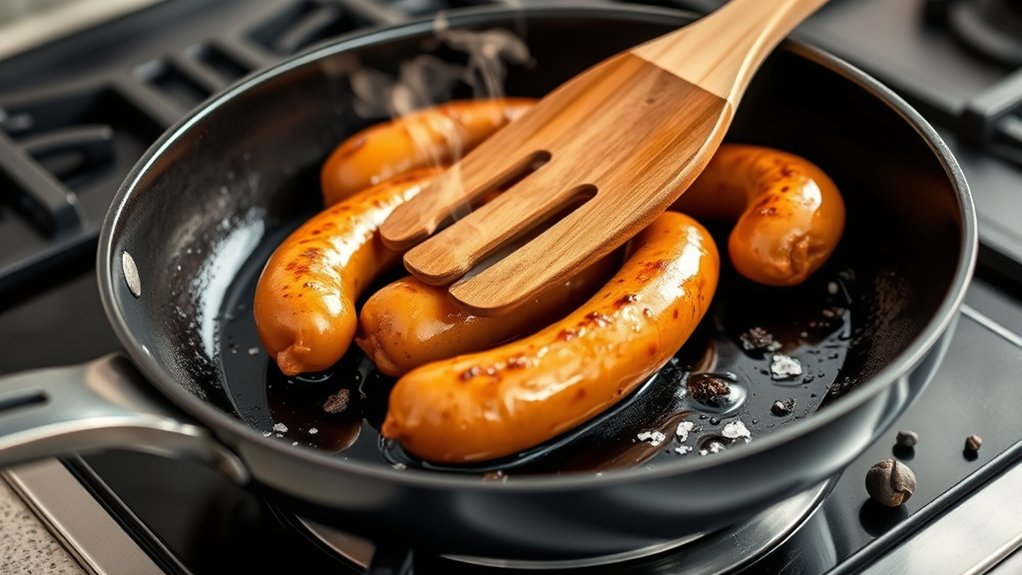
Heat a pan to medium and add a high smoke point fat like vegetable oil. Sear the bratwurst on all sides until they turn golden brown and develop a nice crust.
Lower the heat, then add water or beer to the pan. Cover and simmer the bratwurst for 8-10 minutes to cook them thoroughly.
Once cooked, let the sausages rest briefly before serving. Pair them with your favorite sides for a delicious meal.
Keep going to discover tips that make your bratwurst even juicier and more flavorful.
Key Takeaways
- Let bratwurst sit at room temperature for 15 minutes and pat dry before cooking to ensure even browning.
- Heat a frying pan to medium and add 1-2 tablespoons of oil with a high smoke point for proper searing.
- Brown bratwurst on all sides over medium-high heat without overcrowding, turning only when each side is golden-brown.
- Lower heat, add water or beer, and simmer bratwurst for 8-10 minutes to cook thoroughly and retain juiciness.
- Rest cooked bratwurst covered loosely with foil for a few minutes to redistribute juices before serving.
Choose the Right Bratwurst for Pan-Frying
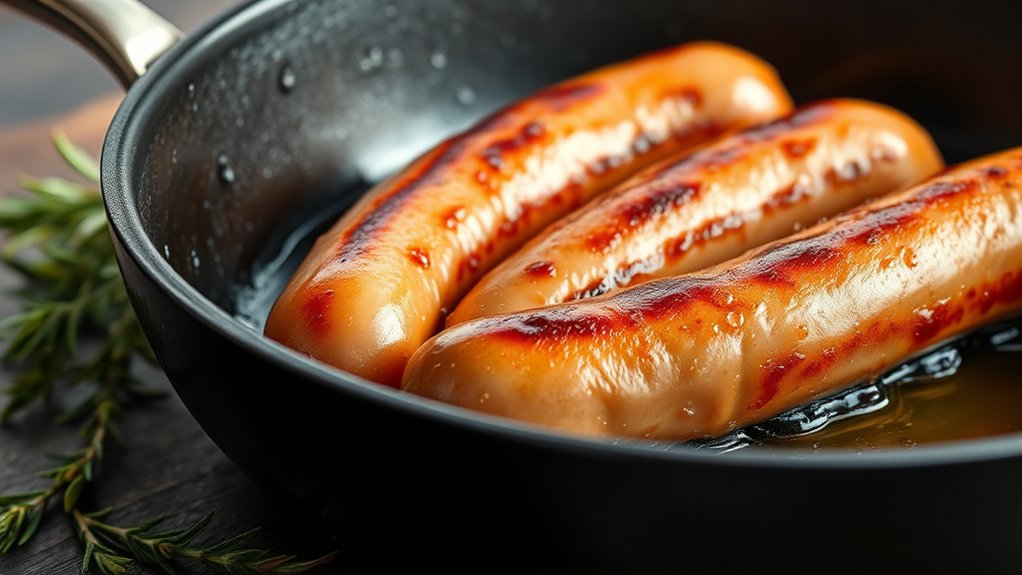
How do you pick the best bratwurst for pan-frying? Start by choosing fresh bratwurst with a natural casing, which crisps nicely in the pan. Look for sausages made from pork or a pork-beef blend, as they offer great flavor and fat content that keeps the brat juicy.
Avoid overly lean options since they can dry out during cooking. Check the color—fresh bratwurst should have a pale pink hue without any gray spots. Also, consider the seasoning; classic bratwurst usually includes garlic, nutmeg, and white pepper, which complement pan-frying well.
If you prefer a spicier kick, look for varieties with added chili or paprika. Finally, buy from a reputable butcher or brand to ensure quality and proper handling.
Get Your Bratwurst Ready for Cooking
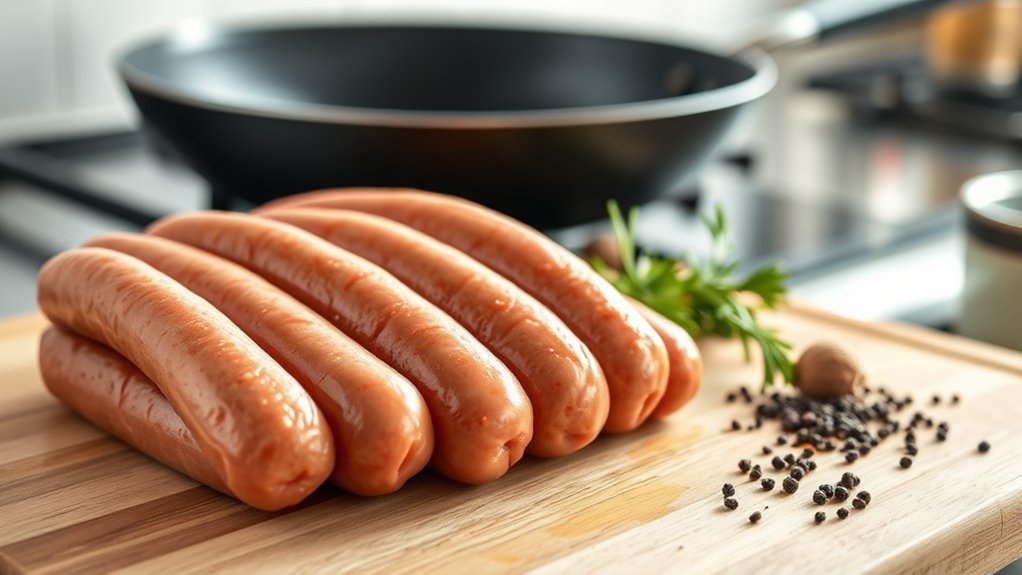
Once you’ve selected the perfect bratwurst, it’s time to prepare it properly before cooking. First, take the bratwurst out of the fridge and let it sit at room temperature for about 15 minutes. This helps it cook evenly.
Next, check the casing for any tears or holes; if you find any, gently prick them with a fork to prevent bursting during cooking. Avoid over-piercing, as this will let the juices escape. If you prefer, you can score the bratwurst lightly with a knife to enhance browning, but keep the cuts shallow.
Finally, pat the bratwurst dry with a paper towel to remove excess moisture, ensuring a better sear when it hits the pan. Now, your bratwurst is perfectly prepped and ready for the next step.
Heat the Pan and Add Fat for Bratwurst
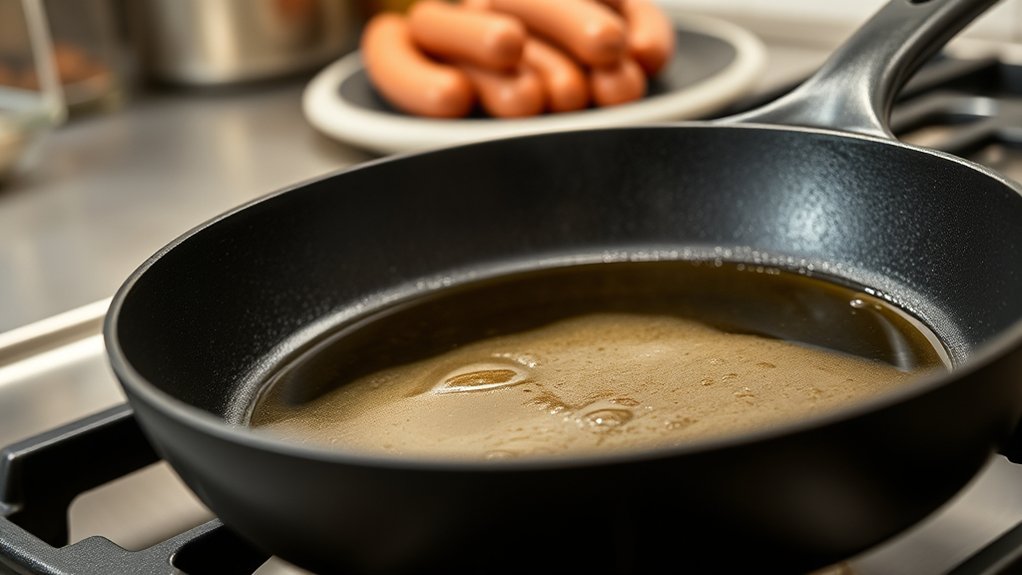
You’ll want to pick the right fat to cook your bratwurst, like butter or oil, to get the best flavor and prevent sticking. Heat your pan to the right temperature—medium heat usually works well—to guarantee even cooking without burning.
Before adding the bratwurst, make sure the pan surface is properly coated and hot enough to sizzle.
Choosing The Right Fat
Before adding bratwurst to the pan, choose a fat that complements their rich flavor and guarantees even cooking. Opt for fats with a high smoke point like vegetable oil, canola oil, or clarified butter to avoid burning. These fats provide a neutral base, letting the bratwurst’s taste shine without overpowering it.
If you want extra flavor, a bit of bacon fat or rendered pork fat works wonders, enhancing the sausage’s savory notes. Avoid using olive oil, as its lower smoke point can cause it to burn and impart a bitter taste. Measure about one to two tablespoons of fat—enough to coat the pan thinly.
This helps the bratwurst brown evenly and prevents sticking, ensuring a delicious, juicy result every time.
Optimal Pan Temperature
Although heating the pan properly might seem simple, getting the temperature right is essential for cooking bratwurst evenly and achieving a perfect sear. You want your pan hot enough to brown the sausages without burning the casing or undercooking the inside. Aim for medium heat—too high, and the bratwurst will char outside but remain raw inside; too low, and they’ll stew rather than fry.
Here’s what to keep in mind:
- The pan should feel hot when you hold your hand above it for a few seconds.
- Add your chosen fat only after the pan reaches the right temperature to prevent smoking.
- Listen for a steady sizzle once the bratwurst hits the pan—this signals the perfect temp.
Mastering this balance guarantees juicy, flavorful bratwurst every time.
Preparing Pan Surface
Once the pan reaches the right temperature, add your fat of choice to make certain the bratwurst cooks evenly and develops a flavorful crust. Use fats that tolerate heat well and add taste. Let the fat melt and spread across the pan surface, ensuring no spots are left dry.
This step prevents sticking and promotes even browning.
Here’s a quick guide to fat options:
| Fat Type | Best For |
|---|---|
| Vegetable Oil | Neutral flavor, high heat |
| Butter | Rich taste, moderate heat |
| Olive Oil | Fruity flavor, medium heat |
| Lard | Traditional, high smoke point |
Choose your fat based on flavor preference and heat tolerance to get perfect bratwurst every time.
Sear Bratwurst for a Crispy Brown Crust
To achieve a crispy brown crust on your bratwurst, you’ll want to sear them over medium-high heat. Place the bratwurst in the hot pan without overcrowding, allowing each link plenty of space to brown evenly. Resist the urge to move them too often—let the heat work its magic.
As you sear, you’ll notice the irresistible sizzle that signals the start of deliciousness. The mouthwatering aroma that fills your kitchen. The satisfying golden-brown crust forming on the bratwurst’s surface.
This initial searing step locks in juices and adds a delightful texture contrast. Keep an eye on the color, turning the bratwurst once each side develops that perfect crust. This technique sets the stage for juicy, flavorful brats you’ll love.
Cook Bratwurst Slowly Over Low Heat
To get juicy bratwurst with even cooking, you’ll want to cook them slowly over low heat. This method helps you control the temperature and prevents the sausages from drying out or burning.
Let’s go over some tips to keep the heat just right and avoid overcooking.
Benefits Of Low Heat
Although it might be tempting to crank up the heat for a faster cook, using low heat to cook bratwurst guarantees even cooking and preserves the sausage’s juicy texture. When you take your time, the bratwurst heats through gently, preventing the casing from bursting and keeping the flavors intact.
Slow cooking also allows the fat inside to render perfectly, enriching each bite. Here’s why you’ll love using low heat:
- Enjoy bratwurst that’s tender and juicy, not dry or tough
- Avoid the frustration of split casings ruining your meal
- Savor deeper, more developed flavors with every bite
Trust me, patience here pays off with a bratwurst that’s cooked just right and bursting with flavor.
Temperature Control Tips
When you control the temperature carefully, you guarantee your bratwurst cooks evenly without drying out or bursting. Start by setting your frying pan to low heat. This gentle warmth allows the sausages to cook through slowly, preserving their juiciness.
Avoid cranking the heat up; high temperatures cause the casing to split and juices to escape. Use a thermometer if you have one—aim for a consistent medium-low setting around 250°F to 300°F. Turn the bratwurst regularly to prevent hot spots and assure uniform browning.
If your pan starts to smoke or sizzle aggressively, lower the heat immediately. Patience is key here: slow and steady heat creates the best texture and flavor, so resist the urge to rush the process.
Avoiding Overcooking
Since bratwurst cooks best at a gentle pace, you’ll want to avoid overcooking by keeping the heat low and steady. Cooking it slowly guarantees the inside cooks through without the outside burning or drying out.
When you rush, you risk tough, rubbery sausage instead of juicy, flavorful bites.
To keep your bratwurst perfect, remember to:
- Cook on low heat, giving the sausage time to warm evenly
- Turn often, so each side gets that golden-brown finish without charring
- Use a lid occasionally to trap heat and cook through gently
Finish Cooking With Water or Beer
To finish cooking bratwurst perfectly, you’ll want to simmer them in water or beer, which helps them cook evenly and stay juicy. After browning the sausages in your frying pan, pour enough water or beer to cover about half of the bratwurst. Then, reduce the heat to low and let them simmer gently.
This method guarantees the inside cooks through without drying out or bursting the casing. Simmer for about 8-10 minutes, checking occasionally to keep the liquid from evaporating completely. Using beer adds a subtle, rich flavor, while water keeps the taste neutral.
Either way, this step locks in moisture and enhances tenderness, giving you bratwurst that’s cooked thoroughly and bursting with juiciness.
Rest and Serve Your Bratwurst Perfectly
Although your bratwurst is cooked through, letting them rest for a few minutes allows the juices to redistribute, making each bite more flavorful and moist. After you take them off the pan, place the bratwurst on a warm plate and cover loosely with foil. This short resting period helps the meat stay juicy and tender.
When you’re ready to serve, consider these tips to elevate the experience:
- Serve with warm, soft buns to complement the bratwurst’s texture.
- Add your favorite condiments like mustard, sauerkraut, or grilled onions for extra zest.
- Pair with a cold beer or crisp cider to enhance the flavors.
Taking these steps guarantees every bite delights your taste buds perfectly.
Frequently Asked Questions
Can I Freeze Bratwurst Before Cooking?
Yes, you can freeze bratwurst before cooking. Just make sure to wrap them tightly in plastic wrap or place them in a freezer bag to prevent freezer burn.
Thaw them in the fridge before cooking for best results.
What Side Dishes Pair Well With Bratwurst?
You’ll love pairing bratwurst with tangy sauerkraut, buttery mashed potatoes, or crispy roasted veggies. Freshly baked pretzels or a zesty mustard dip also bring bold flavors that’ll make every bite pop with savory satisfaction.
How Do I Store Leftover Cooked Bratwurst?
You should let leftover bratwurst cool, then wrap it tightly in foil or place it in an airtight container. Store it in the refrigerator and eat it within 3-4 days for the best taste and safety.
Are There Vegetarian Alternatives to Bratwurst?
You’ll find vegetarian bratwurst alternatives that taste like a million bucks! Brands like Beyond Meat and Tofurky offer flavorful, plant-based sausages you can cook just like the real thing, satisfying your cravings without meat.
Can I Use a Non-Stick Pan for Cooking Bratwurst?
Yes, you can definitely use a non-stick pan for cooking bratwurst. It helps prevent sticking and makes cleanup easier. Just cook on medium heat, turning occasionally,
to guarantee they brown evenly without burning.
Conclusion
Now that you’ve mastered the art of cooking bratwurst in a frying pan, you’re ready to enjoy juicy, flavorful sausages with a crispy crust every time. Like a painter with a brush, your careful steps bring each bratwurst to life on the skillet.
Remember, patience and the right technique turn simple ingredients into a delicious masterpiece. Cooking bratwurst in a frying pan allows you to control the heat and achieve that perfect golden-brown finish.
So go ahead, savor your creation, and share the joy of a perfectly cooked bratwurst with friends and family. Enjoy the rich taste and crispy texture that only frying pan bratwurst can deliver.