How to Tell If a Microwave Oven and Microwave Are the Same
You can usually tell a microwave oven and a microwave refer to the same kitchen appliance that uses invisible electromagnetic waves to heat food quickly. These devices have become essential in modern kitchens for their convenience and speed. Understanding the terms can help clarify their usage in everyday language.
When you say “microwave,” people often mean the appliance itself, while technically, microwaves are the energy inside it. The microwave oven is the physical device generating those waves to cook your food safely and efficiently.
Both terms are closely linked but highlight different aspects of the same technology.
If you want to understand their differences and features better, keep exploring this topic. This will help you appreciate how microwave ovens function and why the terminology sometimes varies.
Knowing this can improve your kitchen knowledge and appliance use.
Key Takeaways
- “Microwave oven” refers to the physical appliance, while “microwave” can mean the appliance or the electromagnetic waves it produces.
- Microwaves are invisible energy waves that heat food by vibrating water molecules, not a tangible object you can touch.
- The microwave oven is a metal and plastic device that safely generates and contains microwaves for cooking.
- Understanding the distinction helps avoid confusion when buying, using, or discussing the appliance or the radiation itself.
- Commonly, “microwave” is shorthand for “microwave oven,” so both terms often mean the same cooking appliance in everyday use.
Defining “Microwave Oven
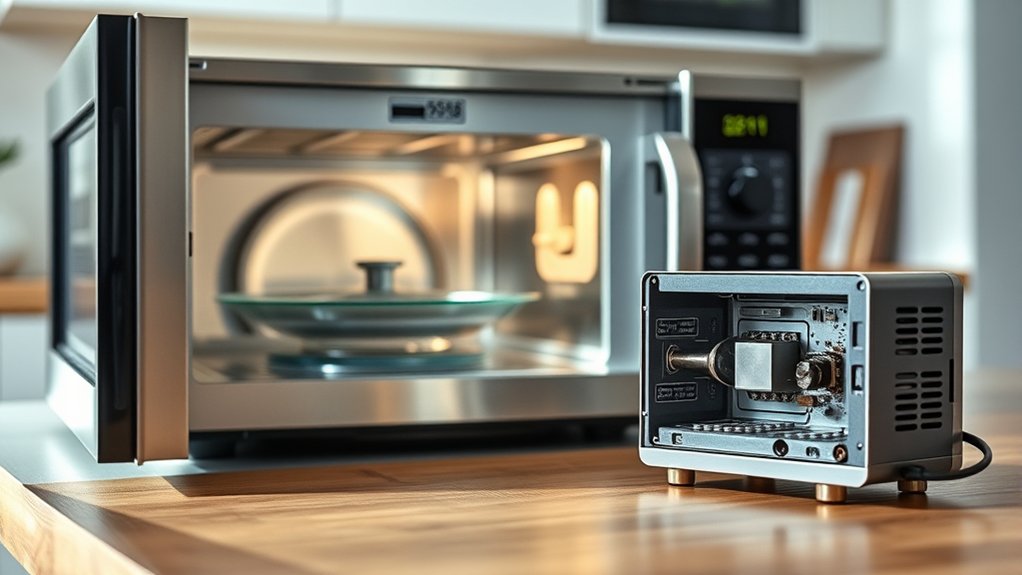
Although you might hear the terms used interchangeably, a microwave oven specifically refers to an electric kitchen appliance that cooks food by exposing it to electromagnetic waves called microwaves. When you use this appliance, the microwaves penetrate the food, causing water molecules to vibrate rapidly and generate heat. This process heats and cooks your food quickly and efficiently.
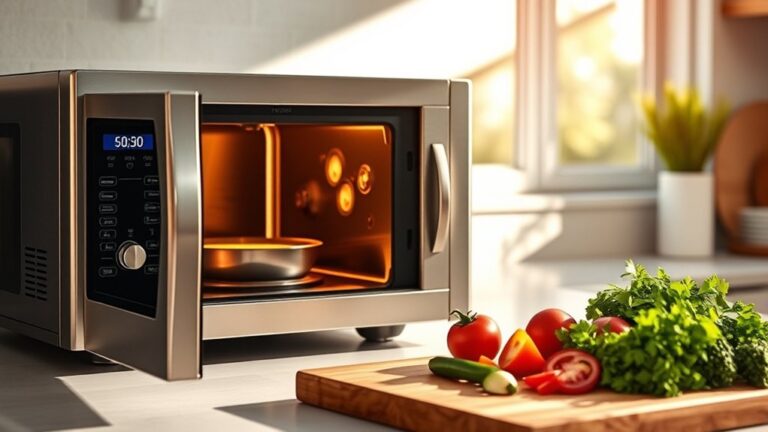
The microwave oven usually features a metal interior, a turntable, and control buttons or dials to set cooking time and power levels. It’s designed for convenience, allowing you to reheat leftovers, cook meals, and defrost frozen items without much fuss. Understanding this definition helps you distinguish the actual appliance from other uses of the word “microwave,” focusing on its function and purpose in your kitchen.
How People Use the Term “Microwave

When you hear someone mention a “microwave,” they’re often referring to the microwave oven without realizing it. In everyday conversation, people tend to shorten “microwave oven” to just “microwave” because it’s quicker and easier. You’ll notice this especially in kitchens, advertisements, or recipes where the context is clear.
Most of the time, when someone says “microwave,” they mean the appliance used to heat or cook food rapidly using microwave radiation. Rarely do they mean the actual electromagnetic waves themselves. Understanding this common usage helps you communicate more effectively and avoid confusion when discussing cooking methods or kitchen tools.
Are Microwaves and Microwave Ovens the Same Appliance?
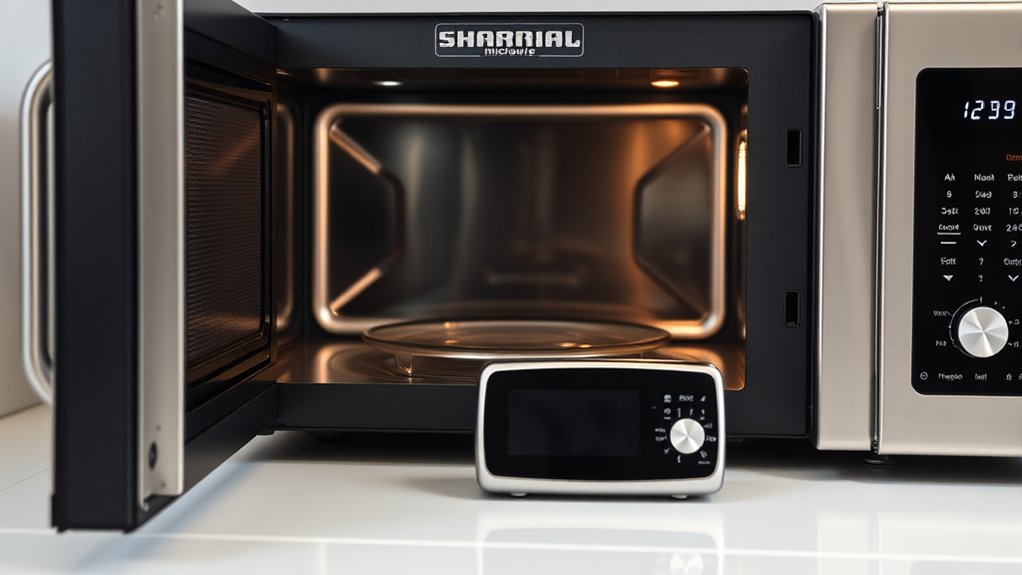
If you’re wondering whether microwaves and microwave ovens are the same, it’s important to know they’re related but not identical. A microwave refers to the electromagnetic waves used to heat food, while a microwave oven is the appliance that produces those waves to cook or warm your meals.
You interact with the microwave oven, but the microwave is the invisible energy inside it.
Here’s a quick emotional snapshot:
| Term | What You See | What You Feel |
|---|---|---|
| Microwave | Invisible waves | Curiosity, mystery |
| Microwave Oven | Kitchen appliance | Convenience, comfort |
| Both Together | Warm meals quickly | Satisfaction, relief |
Understanding this helps you appreciate the tech behind your favorite cooking tool.
Physical Differences Between Microwaves and Microwave Ovens
Because microwaves are invisible waves and microwave ovens are physical devices, you can easily spot the differences between them just by looking. Microwaves themselves have no shape or size—you can’t hold or see them. They’re a form of electromagnetic energy traveling through space, much like radio waves or light.
On the other hand, a microwave oven is a tangible appliance made of metal and plastic, usually box-shaped with a door, control panel, and a turntable inside. When you look at a microwave oven, you’re seeing the machine designed to generate and contain microwaves safely for cooking.
Key Features of Microwave Ovens
Understanding the basic differences between microwaves as energy and microwave ovens as devices sets the stage to explore what makes these appliances so useful in your kitchen. Microwave ovens come with features designed for convenience and efficiency. You’ll find preset cooking modes that simplify heating specific foods like popcorn or vegetables.
Most models include adjustable power levels, allowing you to cook or defrost items gently when needed. A timer and digital display help you monitor cooking times precisely. Safety features, such as child locks and automatic shut-off, give you peace of mind.
Additionally, the turntable inside ensures even heating by rotating your food. These key features work together to make microwave ovens an indispensable, user-friendly tool for quick meal preparation.
How Microwave Ovens Work
How exactly does a microwave oven heat your food so quickly? It uses microwave radiation, a form of electromagnetic energy, to excite water molecules inside your food. When these molecules vibrate rapidly, they generate heat, which cooks your food from the inside out.
Unlike conventional ovens that rely on hot air, microwaves penetrate the food, heating it faster and more evenly. Inside the oven, a component called a magnetron produces these microwaves, which bounce around the metal interior until they’re absorbed by your food. This process means your food heats up efficiently without warming the oven cavity itself.
Common Misconceptions About Microwaves and Microwave Ovens
Microwave ovens often get mixed up with the microwaves themselves, leading to plenty of confusion. You might think they’re the same, but microwaves are actually the electromagnetic waves used to heat your food inside the oven. People often assume microwave ovens produce harmful radiation, but the waves only heat food by agitating water molecules—they don’t make your meal radioactive.
Another misconception is that microwave ovens cook from the inside out, but they really heat food unevenly, starting where the microwaves penetrate. Some also believe that all microwaves are unsafe or low quality, but modern microwave ovens undergo strict safety testing and are perfectly safe when used correctly. Understanding these points helps you see the clear difference between microwaves and microwave ovens.
Which Term Is More Accurate to Use?
Although people often use the terms interchangeably, you should call the appliance a “microwave oven” to be accurate. This term clearly describes the device’s primary function: it’s an oven that uses microwaves to heat food. Saying just “microwave” can be vague since microwaves are a type of electromagnetic wave, not the appliance itself.
Using “microwave oven” prevents confusion and guarantees you’re specifically referring to the kitchen appliance. When you want to be precise, especially in writing or technical discussions, “microwave oven” is the better choice. However, in casual conversation, “microwave” is widely understood and accepted.
Still, if accuracy matters to you, sticking with “microwave oven” is the best way to communicate clearly and avoid any misunderstanding.
How Product Descriptions Use “Microwave” vs. “Microwave Oven
When shopping for kitchen appliances, you’ll notice that product descriptions often use “microwave” and “microwave oven” interchangeably, but there are subtle differences in how each term is applied. Generally, “microwave” serves as a shorthand, especially in casual or space-limited contexts. It’s common in marketing materials, quick specs, or user reviews.
On the other hand, “microwave oven” appears more frequently in formal descriptions, manuals, or technical specs where clarity is key. Retailers might use “microwave” to catch your attention quickly, while “microwave oven” emphasizes the appliance’s cooking function. Understanding this helps you interpret product details better, ensuring you know exactly what’s being referred to without confusion.
Both terms point to the same appliance, but their use depends on context and tone.
What to Look for When Shopping: Microwave or Microwave Oven?
Understanding the terminology helps, but what really matters is knowing what features to focus on during your purchase. Whether you call it a microwave or microwave oven, you want a unit that fits your needs and kitchen space.
Knowing the key features to consider is more important than the name you use for your microwave.
Here’s what to look for:
- Size and Capacity – Make sure it fits your countertop and holds enough food for your meals.
- Power Level (Watts) – Higher wattage means faster, more even cooking.
- Preset Functions – Look for cooking modes like defrost, popcorn, or reheating for convenience.
- Ease of Use – Check the control panel for intuitive buttons or a digital display that you can navigate quickly.
Keep these factors in mind, and you’ll find a microwave that works perfectly for you.
Choosing the Right Appliance Based on Terminology
When you’re choosing between a microwave and a microwave oven, understanding the terminology can save you time and confusion. The names often refer to the same appliance, but some brands and models use one term more than the other.
Knowing these differences helps you pick the right product without second-guessing.
Terminology Differences Explained
Although the terms “microwave oven” and “microwave” are often used interchangeably, they can mean different things depending on the context. When choosing an appliance, comprehending these subtle differences helps you pick exactly what you need.
Here’s how the terminology breaks down:
- Microwave Oven – The full appliance used for cooking and reheating food using microwave radiation.
- Microwave – Often shorthand for the microwave oven but can also refer to the technology or the microwave radiation itself.
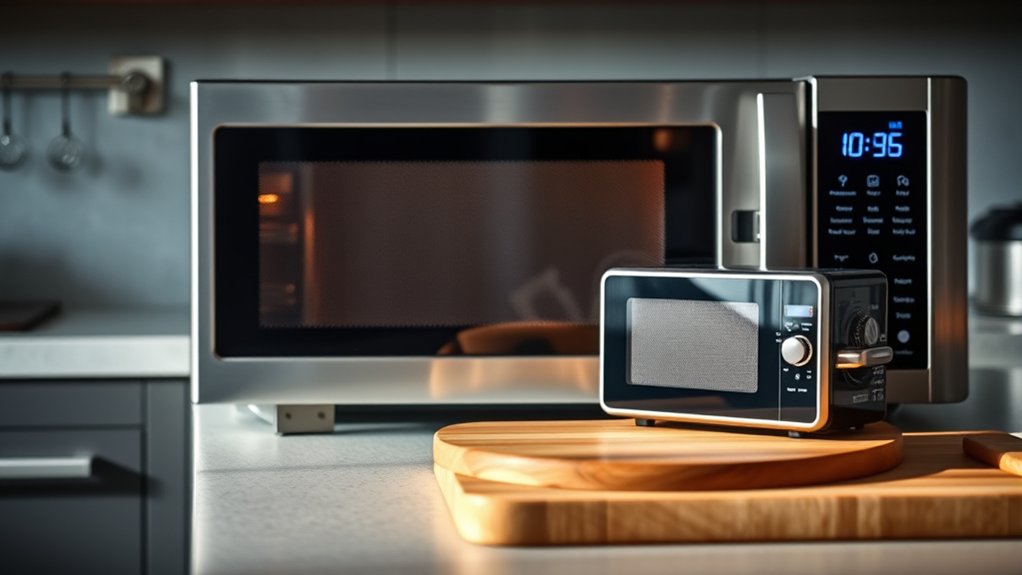
- Countertop Microwave – A portable microwave oven placed on your kitchen counter.
- Built-in Microwave Oven – Integrated into cabinetry, often with additional features beyond basic microwaving.
Knowing these distinctions ensures you select the right product without confusion.
Selecting Appliances By Names
Now that you know the subtle differences between terms like “microwave oven” and “microwave,” you can make smarter choices when shopping. When you see “microwave oven,” expect a full appliance designed for cooking or reheating with microwaves. If the label says just “microwave,” it often refers to the same appliance but might be a shorter, casual term.
Always check the product description to avoid confusion. If you want something compact or multifunctional, look for specific features rather than relying solely on names. Knowing these distinctions helps you avoid buying the wrong item and assures you get the appliance that fits your kitchen and cooking needs perfectly.
Why Understanding the Difference Matters for Use and Care
Why does knowing the difference between a microwave oven and a microwave matter for you? It helps you use and care for your appliance properly, ensuring safety and efficiency. When you understand what each device is designed for, you avoid misusing it or damaging it.
Here’s why it matters:
- You’ll choose the right appliance for your cooking needs.
- You can follow specific cleaning and maintenance instructions.
- You’ll prevent overheating or electrical issues by using the correct power settings.
- You’ll extend the lifespan of your appliance by treating it according to its function.
Knowing the difference means you handle your microwave or microwave oven confidently, saving time, money, and hassle.
Frequently Asked Questions
Can Microwaves Cause Health Issues With Long-Term Use?
You won’t face health issues from long-term microwave use if you follow safety guidelines. Microwaves heat food using radiation that’s non-ionizing, so it doesn’t damage your cells like harmful radiation does.
Are There Energy Efficiency Differences Between Microwaves and Microwave Ovens?
You won’t believe it, but microwaves and microwave ovens have nearly identical energy efficiency since they use the same technology.
You can trust both to save energy, so pick whichever fits your kitchen style best!
How Do Microwave Ovens Affect the Nutritional Value of Food?
Microwave ovens preserve most nutrients because they cook quickly with minimal water. You won’t lose much nutrition compared to other methods, but some sensitive vitamins, like vitamin C, might decrease slightly during microwaving.
Can Microwave Ovens Be Used for Sterilizing Kitchen Items?
You can use microwave ovens for sterilizing kitchen items, like how sunlight disinfects surfaces. Just heat a damp cloth or water-filled container inside for a few minutes to kill most bacteria and germs effectively.
This method uses the heat generated by microwaves to reduce microbial presence. However, it may not eliminate all types of pathogens completely.
For thorough sterilization, consider additional cleaning methods alongside microwaving. Always ensure items are microwave-safe to avoid damage or hazards.
What Safety Precautions Should Be Taken When Repairing a Microwave Oven?
You should unplug the microwave before repairing it, avoid touching the high-voltage capacitor, wear insulated gloves.
Work in a dry area, and consult the manual. If unsure, don’t hesitate to contact a professional technician for safety.
Conclusion
Think of a microwave and a microwave oven like calling a soda “pop” or “soda”—different words, same idea.
When I first bought a “microwave,” I realized the term was broad, but the “microwave oven” meant a specific appliance with features I needed.
Knowing the difference helps you pick the right device and care for it properly.
So, trust the label—it’s your shortcut to smart shopping and better kitchen use.
Understanding whether a microwave and a microwave oven are the same ensures you choose the right appliance for your needs and maintain it correctly.