What Is an Inverter Microwave Oven and How to Use It
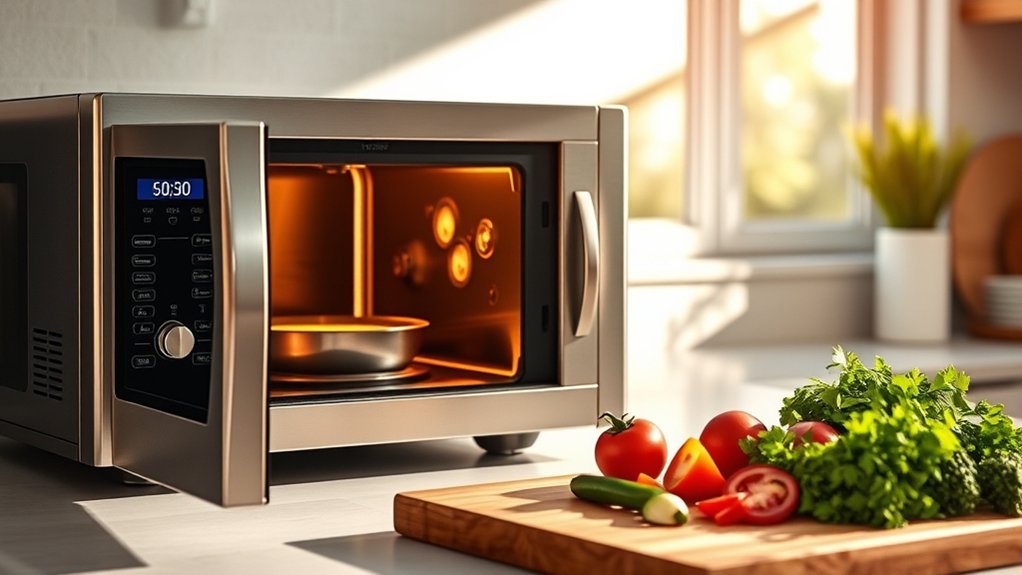
An inverter microwave oven is a modern kitchen appliance that uses advanced inverter technology to provide steady, precise power output. Unlike traditional microwaves that cycle full power on and off, an inverter microwave delivers consistent energy, ensuring even cooking, defrosting, and reheating.
This technology helps maintain better texture and flavor in your food while improving overall efficiency.
To use an inverter microwave oven, simply select the desired power level or preset function tailored to your food. This allows for gentle, gradual heating or quicker cooking as needed.
Explore further to discover tips on maximizing the benefits of your inverter microwave oven in everyday cooking.
Key Takeaways
- An inverter microwave uses electronic controls to deliver steady, precise power instead of cycling full power on and off. This technology allows for accurate power level adjustment, improving even cooking, defrosting, and texture.
- Unlike traditional microwaves, inverter models provide continuous, variable power for better handling of delicate foods.
- To use, select appropriate power settings manually or via presets based on food type and cooking needs. For defrosting, use the inverter defrost setting to ensure gentle, even thawing without partially cooking the food.
What Is an Inverter Microwave Oven and How It Works
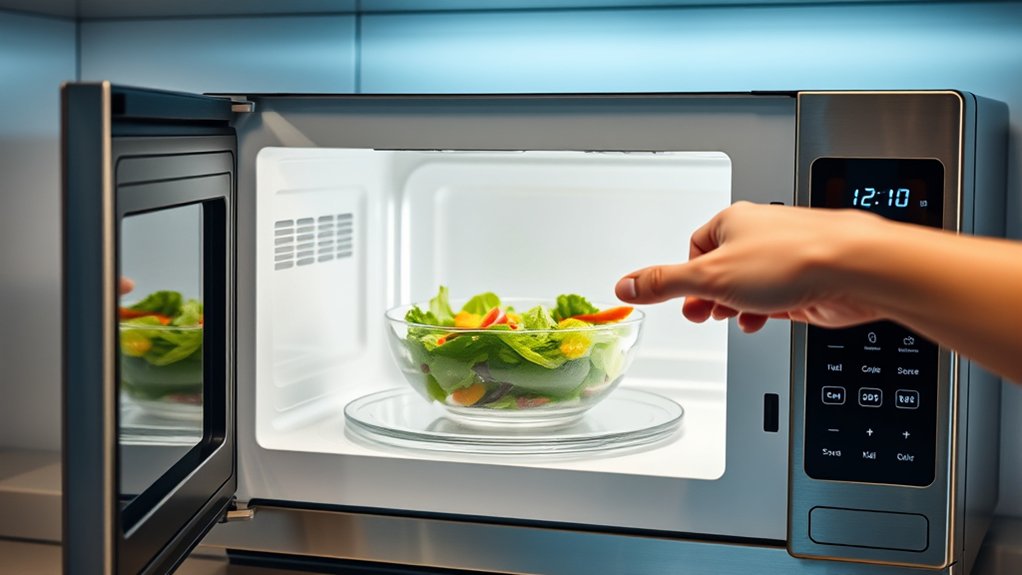
Although traditional microwaves use a transformer to supply power in fixed bursts, an inverter microwave oven delivers a consistent and precise amount of energy by controlling the microwave generator electronically. This means you can heat food more evenly without overcooking edges while leaving the center cold.
Instead of cycling full power on and off, the inverter adjusts power levels smoothly, giving you better control over cooking. When you set the microwave, you’re telling it exactly how much energy to provide, not just how long to run at full power.
This technology lets you defrost delicate items gently or cook meals evenly, improving texture and taste. Using an inverter microwave means you get more consistent results with less guesswork.
How Inverter Microwaves Differ From Traditional Models
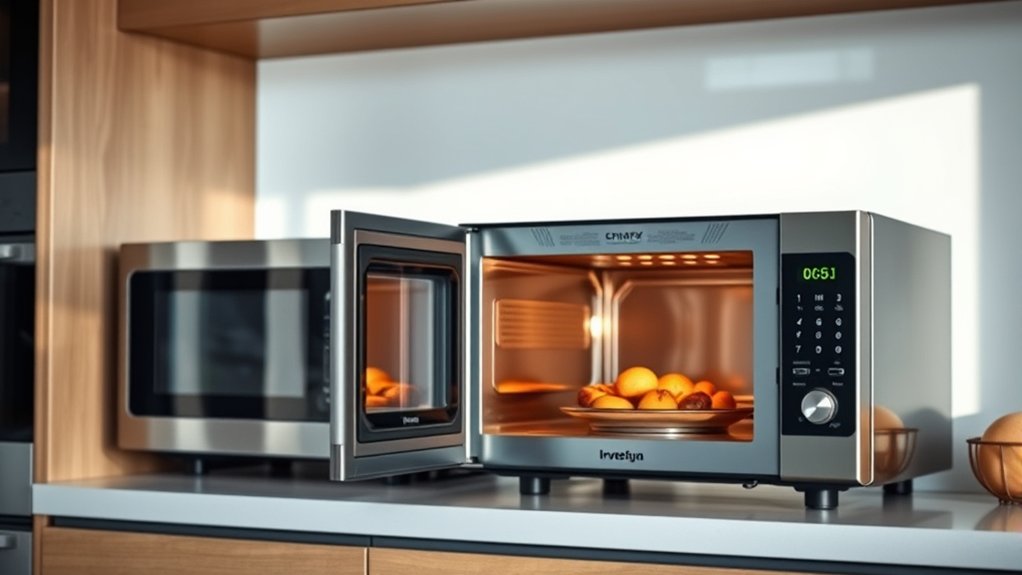
When you compare inverter microwaves to traditional models, you’ll notice they deliver power in fundamentally different ways. Traditional microwaves operate by cycling the magnetron on and off to simulate lower power levels, causing uneven heating.
In contrast, inverter microwaves provide a continuous, variable stream of power, allowing precise control over cooking intensity. This means you can cook food more evenly and gently since the power doesn’t fluctuate. You’ll also find that inverter models handle delicate tasks like defrosting or simmering better because they don’t rely on abrupt power bursts.
While traditional microwaves switch between full power and no power, inverter technology adjusts output seamlessly, giving you greater control over cooking results. This fundamental difference changes how your food cooks inside the microwave.
Benefits of Using an Inverter Microwave Oven in Your Kitchen
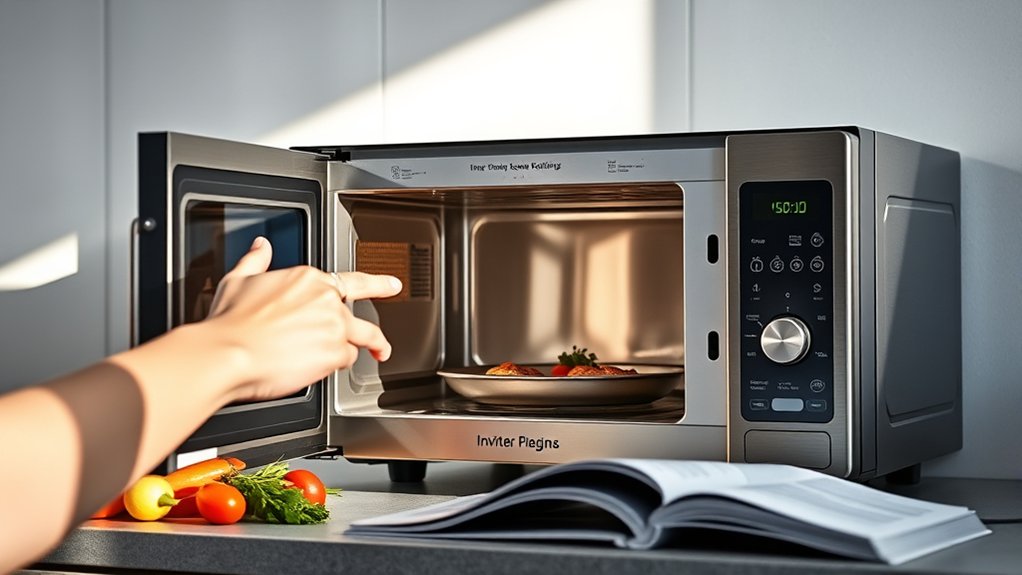
You’ll save energy and enjoy more consistent cooking results with an inverter microwave oven. It delivers precise power levels, so your meals heat evenly every time.
Plus, its compact design helps you maximize your kitchen space without sacrificing performance.
Energy Efficiency Advantages
How does an inverter microwave oven save energy compared to traditional models? It regulates power more efficiently, avoiding the on-off cycling that wastes electricity. When you use one, you’ll notice it consumes less energy while cooking your meals evenly.
Here’s why that matters to you:
- Lower electricity bills: You’ll spend less each month because the microwave uses only the energy needed.
- Environmentally friendly: Reducing energy consumption means you’re cutting your carbon footprint.
- Less heat waste: The microwave generates less excess heat, keeping your kitchen cooler and your air conditioning from working overtime.
Consistent Cooking Performance
Although traditional microwaves often cook unevenly, inverter microwave ovens deliver consistent cooking performance by maintaining a steady power level throughout the cooking process. This means your food heats evenly, avoiding hot spots or cold patches. You’ll notice that delicate dishes, like sauces or steamed vegetables, come out perfectly cooked without overcooking edges or undercooking centers.
With an inverter microwave, you can defrost frozen items more uniformly, reducing the risk of partially cooked edges. This precise temperature control also helps retain your food’s texture and flavor better than traditional microwaves. By using this technology, you’ll spend less time adjusting cooking times or stirring your food mid-cycle, making your kitchen routine smoother and more efficient every time you heat or cook a meal.
Space-Saving Kitchen Design
Where can you find a high-performance kitchen appliance that doesn’t take up much space? An inverter microwave oven is your answer. It combines powerful cooking capabilities with a compact design, perfect for kitchens where every inch counts.
By choosing an inverter microwave, you’ll enjoy:
- More Counter Space – Its sleek and compact size frees up room for meal prep or other appliances.
- Clutter-Free Kitchen – With fewer bulky gadgets, your kitchen looks cleaner and more organized.
- Versatile Placement – You can easily fit it on shelves, built-ins, or small countertops without sacrificing functionality.
This space-saving design makes your kitchen feel open and efficient, helping you cook smarter, not harder.
How to Adjust Power Levels on Your Inverter Microwave
You can easily adjust the power levels on your inverter microwave by selecting specific settings to match your cooking needs. Many models offer preset functions that simplify this process for common tasks.
If you prefer more control, you can manually adjust the power to get precise results every time.
Selecting Power Settings
How do you adjust the power levels on your inverter microwave to get the best cooking results? It’s simple—selecting the right power setting lets you control the cooking intensity and avoid overcooking. Here’s how to choose the perfect power level:
- Match food type: Use lower power for delicate foods like defrosting or softening butter, and higher power for quick heating or cooking dense meals.
- Adjust cooking time: Lower power means slower cooking; adjust the time to ensure even heating without drying out your food.
- Experiment and learn: Start with recommended settings, then tweak power levels to suit your taste and microwave model.
Using Preset Functions
Although preset functions simplify cooking, they still allow you to adjust power levels to suit your needs. When you select a preset, such as “Popcorn” or “Reheat,” your inverter microwave automatically sets the ideal power and time.
However, if you want to tweak the power, look for a power level button or setting within the preset menu. Some models let you press the preset button twice or hold it down to access power adjustments.
Once you find this option, use the number pad or power level dial to increase or decrease the wattage. This flexibility helps you avoid overcooking or underheating by tailoring the preset to your specific food or preferences without losing convenience.
Manual Power Adjustment
When adjusting power levels manually on your inverter microwave, you’ll find it’s a straightforward process that gives you full control over cooking intensity. This flexibility lets you tailor heat precisely, ensuring your food cooks evenly and tastes perfect every time.
To adjust power levels:
- Press the “Power Level” button on your microwave’s control panel.
- Use the number pad to select a power percentage (like 50% for gentle simmering or 80% for faster cooking).
- Start the microwave, and it will maintain the chosen power consistently thanks to inverter technology.
Cooking Tips for Different Foods in an Inverter Microwave
Since inverter microwaves provide consistent and precise power levels, you can cook a wide range of foods more evenly and efficiently. When reheating leftovers, use medium power to avoid overcooking edges while warming the center thoroughly.
For vegetables, steam them on a lower power setting to retain their texture and nutrients. When cooking delicate foods like fish or eggs, opt for gentle power levels to prevent toughening or rubbery textures.
If you’re heating dense items like casseroles or baked goods, use medium-high power and stir or rotate halfway through cooking to promote even heat distribution. Remember, inverter microwaves let you tailor power precisely, so adjusting settings based on food type helps you achieve the best results every time.
How to Defrost Food Safely With an Inverter Microwave
You’ll appreciate how inverter technology defrosts food evenly, preventing partially cooked edges. Follow a simple step-by-step guide to thaw your meals safely without losing flavor or texture.
Avoid common mistakes like using high power or skipping rest times to keep your food safe and delicious.
Benefits Of Inverter Defrost
Although defrosting food can be tricky, an inverter microwave makes the process safer and more efficient. You’ll appreciate how the inverter technology delivers consistent, gentle power, preventing partial cooking and uneven thawing.
This means your food retains its texture and flavor better than with traditional microwaves.
Here are three benefits you’ll love about inverter defrost:
- Even thawing – No more hot spots or partially cooked edges ruining your meal.
- Faster defrosting – Saves you time without sacrificing food quality.
- Improved food safety – Reduces the risk of bacteria growth by thawing food evenly and thoroughly.
With inverter defrost, you can confidently prepare meals without worrying about compromised quality or safety.
Step-By-Step Defrost Guide
Understanding the benefits of inverter defrost sets the stage for using your microwave effectively. To defrost food safely with an inverter microwave, start by placing your frozen item on a microwave-safe plate. Select the inverter defrost setting on your microwave, which gently thaws food by delivering consistent, low power.
Enter the weight of the food to allow the microwave to calculate the best defrosting time. Press start and check the food periodically to avoid partial cooking. If needed, pause and turn or separate pieces to guarantee even thawing.
Once defrosted, cook the food immediately to prevent bacterial growth. Using this method helps maintain texture and flavor while keeping your food safe.
Common Defrosting Mistakes
When defrosting with an inverter microwave, common mistakes can compromise food safety and quality. You might think defrosting is simple, but skipping key steps can lead to uneven thawing or bacterial growth. Avoid these pitfalls:
- Using high power settings: It cooks the edges while leaving the center frozen, ruining texture and safety.
- Not rotating or stirring: Without movement, some parts stay frozen, increasing the risk of bacteria.
- Leaving food out too long after defrosting: Bacteria multiply quickly at room temperature, so cook or refrigerate immediately.
Avoid These Common Mistakes When Using an Inverter Microwave
Because inverter microwaves operate differently than traditional models, you might make some common mistakes that affect cooking results or damage the appliance. First, don’t assume cooking times are the same as with conventional microwaves; inverter technology uses steady power, so adjust times accordingly. Avoid using metal containers or foil, as they can spark and harm the microwave.
Also, don’t overcrowd dishes—proper heat distribution depends on space for the microwaves to penetrate evenly. Avoid repeatedly stopping and starting the microwave, which can confuse the inverter’s power delivery system. Finally, don’t ignore the user manual’s specific instructions for inverter cooking modes.
Cleaning and Maintaining Your Inverter Microwave Oven
Although inverter microwaves are designed for efficiency and durability, regular cleaning and maintenance are essential to keep them performing at their best.
Inverter microwaves last longer and cook better with consistent cleaning and upkeep.
You want your microwave to last and cook evenly every time, so here’s how to care for it:
- Wipe spills immediately – Don’t let food splatters harden. Use a damp cloth with mild soap to clean the interior after each use. It prevents odors and keeps sensors working well.
- Clean the turntable and accessories – Remove and wash them regularly to avoid buildup that can cause uneven heating.
- Check the door seal – Make sure it’s free of debris and damage. A good seal keeps microwaves safe and efficient.
With these simple steps, your inverter microwave will stay reliable and fresh.
Troubleshooting Common Inverter Microwave Problems
Keeping your inverter microwave clean and well-maintained helps prevent many common issues, but you might still run into occasional problems. If your microwave isn’t heating properly, check if the door seals are intact and the power settings are correct. A blinking display often signals a power interruption or a faulty control board—try unplugging it for a minute and plugging it back in.
Strange noises could mean a misaligned turntable or a worn-out magnetron, so inspect and adjust the turntable first. If the microwave stops mid-cycle, it might be overheating; verify ventilation isn’t blocked. For persistent issues, consult the user manual or contact customer support.
Regularly addressing these problems keeps your inverter microwave running smoothly and extends its lifespan.
Top Features to Choose Your Inverter Microwave
When selecting an inverter microwave, you’ll want to focus on features that enhance cooking precision, energy efficiency, and ease of use. These aspects guarantee your meals turn out perfectly every time and save you hassle in the kitchen.
Here are the top features to look for:
- Variable Power Settings: This lets you cook delicate foods evenly without overcooking, giving you full control over every dish.
- Sensor Cooking Technology: It automatically adjusts time and power, so you never worry about undercooked or burnt meals.
- User-Friendly Controls: Intuitive touchpads or dials make operation simple, even when you’re in a rush.
Choosing a microwave with these features means you’ll enjoy smarter, more convenient cooking every day.
How to Maximize Energy Efficiency With an Inverter Microwave
By choosing an inverter microwave with smart features like variable power settings and sensor cooking, you’re already on the path to saving energy. To maximize efficiency, always match the power level to the food type instead of cooking at full power unnecessarily. Use sensor cooking to automatically adjust time and power, preventing overcooking and wasted energy.
Keep the microwave clean and well-maintained to guarantee it operates at its best. When reheating, cover your food to retain moisture and heat it faster, reducing cooking time. Avoid opening the door during cooking, as it disrupts the cycle and wastes energy.
Finally, select the right-sized container to evenly distribute heat and minimize energy use. These simple steps help you get the most out of your inverter microwave while lowering your electricity bill.
Best Recipes to Try First With Your Inverter Microwave
Although inverter microwaves handle cooking more evenly and precisely, you might wonder which recipes showcase their advantages best. The technology shines brightest with dishes that require gentle, consistent heat to maintain texture and flavor.
Here are three recipes to get you started:
- Steamed Vegetables – Retain vibrant colors and crispness without overcooking.
- Rice and Grains – Achieve fluffy, perfectly cooked results every time.
- Delicate Sauces – Warm or prepare creamy sauces without curdling or scorching.
Trying these recipes first lets you experience how your inverter microwave preserves taste and texture, making everyday cooking easier and more satisfying.
Frequently Asked Questions
Can Inverter Microwaves Be Used for Commercial Purposes?
Yes, you can use inverter microwaves for commercial purposes, especially in small food businesses. They offer precise cooking control and energy efficiency.
However, make sure the model suits your volume and durability needs before relying on it commercially.
Are Inverter Microwaves Safe for Children to Operate?
Sure, you can totally trust kids with an inverter microwave—because who doesn’t want their little chef mastering complex electronics unsupervised? But seriously, you should supervise them to keep things safe and avoid mini kitchen disasters.
What Is the Average Lifespan of an Inverter Microwave Oven?
You can expect an inverter microwave oven to last about 7 to 10 years with proper care. Regular cleaning and avoiding overuse will help you get the most out of its lifespan.
Taking simple maintenance steps can extend its performance and reliability. Be sure to keep the interior and exterior clean.
Also, avoid running it empty or using inappropriate containers. These habits contribute to a longer-lasting appliance.
Do Inverter Microwaves Emit More Radiation Than Traditional Microwaves?
Think of both microwaves as suns in your kitchen—they emit similar radiation levels, safe and contained. You won’t get extra rays from an inverter microwave, so you can cook without worries or glowing fears.
Can I Use Metal Containers in an Inverter Microwave?
You shouldn’t use metal containers in an inverter microwave because they can cause sparks or damage. Stick to microwave-safe glass, ceramic, or plastic containers to guarantee safe and effective cooking without any risks.
Conclusion
You might think all microwaves work the same, but an inverter microwave oven proves otherwise—coincidentally blending power and precision for better cooking. Once you get the hang of adjusting its power levels, you’ll find your meals cook evenly and taste better.
So, whether you’re reheating leftovers or trying new recipes, this smart appliance can transform your kitchen experience. Give it a try—you’ll wonder how you ever cooked without it!
Using an inverter microwave oven allows for more consistent heating and greater control over cooking times. This technology ensures your food is cooked thoroughly without overcooking or drying out. Experience the benefits of an inverter microwave oven in your daily cooking routine for delicious and perfectly cooked meals every time.