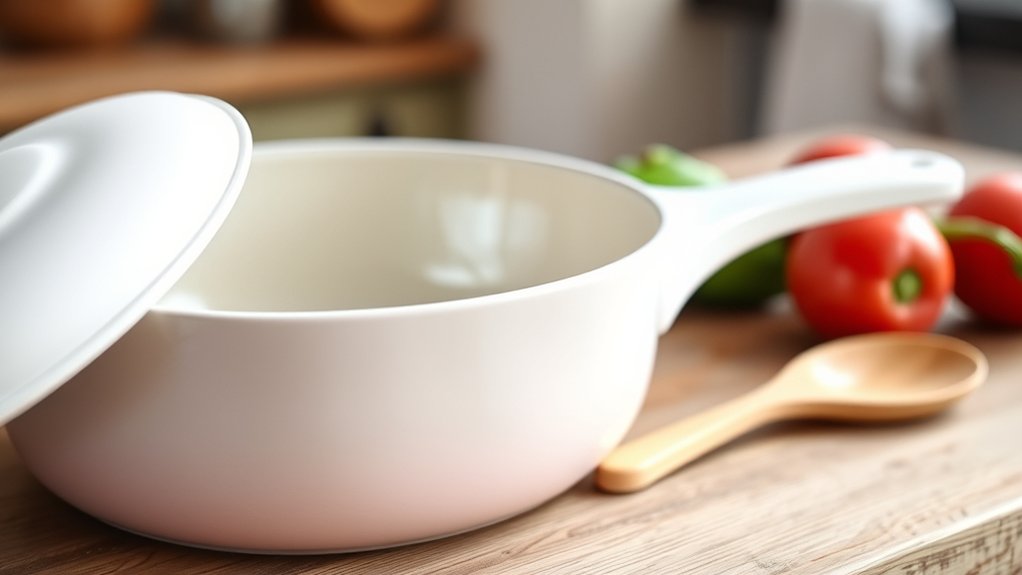
What Is Ceramic Cookware and How to Use It
Ceramic cookware is a popular choice for many kitchens due to its natural composition and excellent cooking performance. Made from natural materials like clay and minerals, ceramic cookware is fired at high heat and often coated with a silica-based layer for durability and safety.
This combination provides a smooth, non-stick surface that enhances cooking and cleaning.
To use ceramic cookware effectively, heat it gradually on low to medium settings. Avoid using metal utensils to protect the surface from scratches.
The cookware distributes heat evenly, cooks food gently, and cleans easily with mild soap.
With proper care, ceramic cookware offers great, long-lasting results. There’s much more to discover about its benefits and maintenance to keep it performing at its best.
Key Takeaways
- Ceramic cookware is made from natural materials with a durable ceramic coating, offering eco-friendly and chemical-free cooking surfaces.
- It provides even heat distribution and retention for consistent cooking and better temperature control.
- Use low to medium heat and preheat gradually to avoid thermal shock and maintain non-stick performance.
- Clean with mild soap and soft sponges, avoid abrasive tools, and occasionally season with oil to preserve the surface.
- Replace cookware when it shows scratches, chips, discoloration, or warping to ensure safety and cooking quality.
What Is Ceramic Cookware Made Of
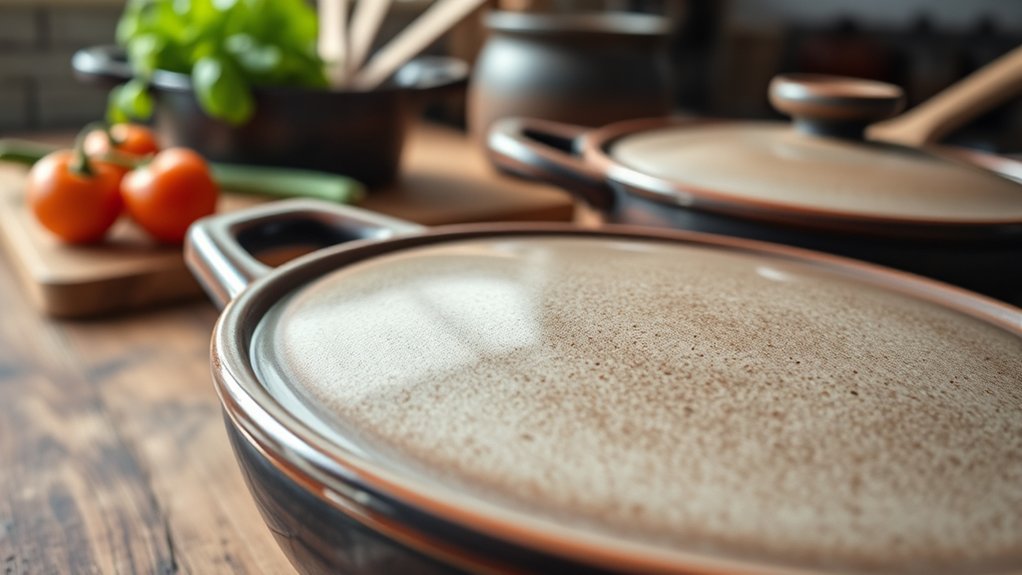
Although ceramic cookware looks simple, it’s made from a unique blend of natural materials like clay, minerals, and water. When you use ceramic cookware, you’re handling a product that starts as shaped clay mixed with various minerals, which provide durability and heat resistance. This mixture is then fired at high temperatures, which hardens the cookware and creates a solid, sturdy base.
After firing, a ceramic coating is applied, often made from silica or quartz, which gives the cookware its smooth, non-stick surface. This coating is free from harmful chemicals like PTFE or PFOA, making it a safer choice for cooking. Understanding these components helps you appreciate the natural and eco-friendly nature of ceramic cookware.
How Does Ceramic Cookware Work
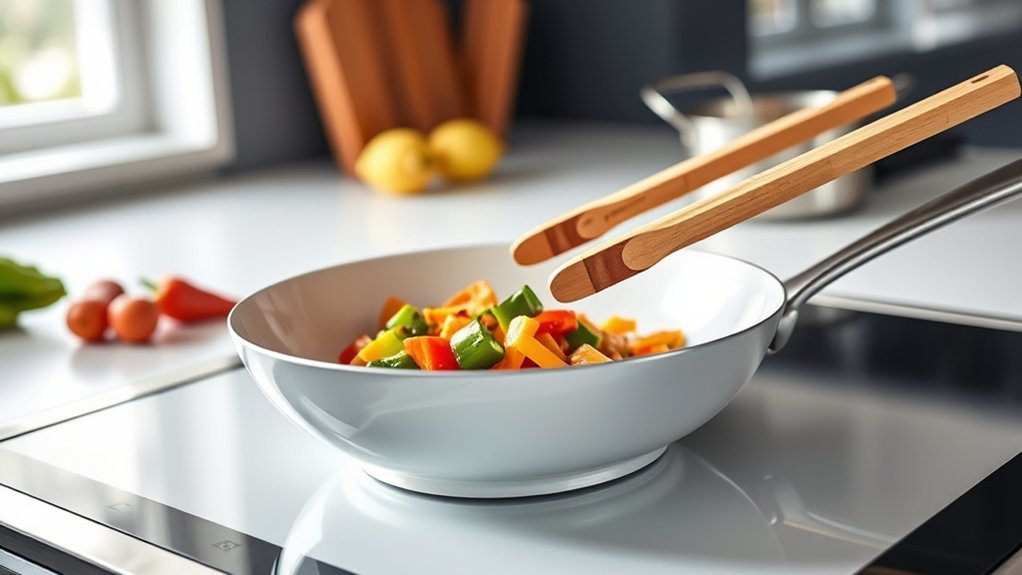
When you cook with ceramic cookware, heat distributes evenly across its surface, preventing hot spots that can burn your food. This even heating is thanks to the ceramic material’s ability to retain and spread heat efficiently. The smooth, non-porous surface also plays a key role.
Here’s how ceramic cookware works:
- The ceramic coating provides a smooth, non-stick surface, reducing the need for excess oil.
- It transfers heat steadily, ensuring your food cooks uniformly.
- The material’s heat retention keeps your dishes warm longer after cooking.
- The cookware reacts slowly to temperature changes, giving you more control when adjusting heat.
Understanding these points helps you get the most from your ceramic pots and pans every time you cook.
Benefits of Cooking With Ceramic Cookware
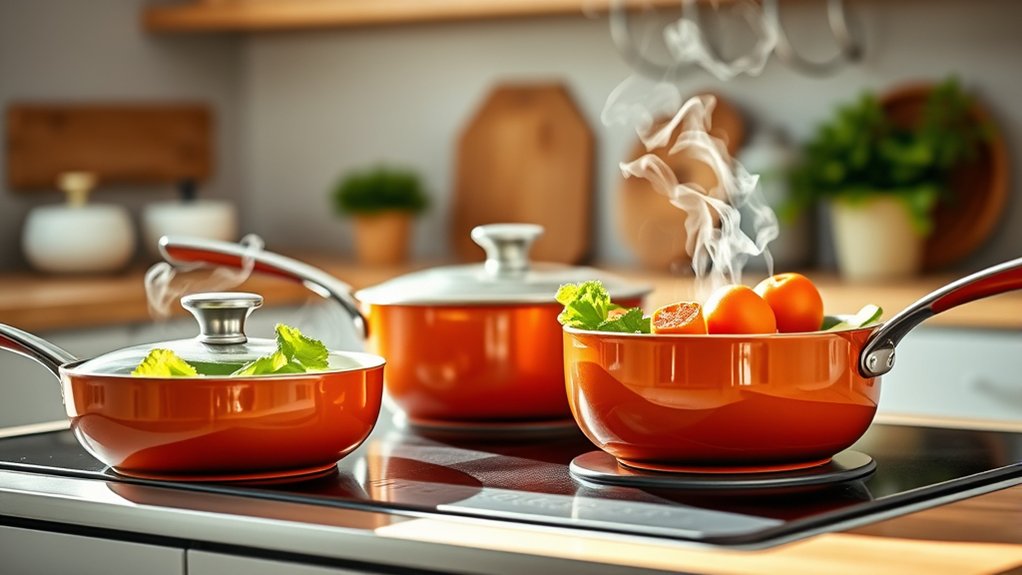
Why choose ceramic cookware for your kitchen? It offers several benefits that make cooking easier and healthier. First, ceramic cookware heats evenly, so your food cooks uniformly without hot spots.
You’ll appreciate the natural non-stick surface, which means you can use less oil or butter, helping you prepare lighter meals. Cleaning up is a breeze since food rarely sticks. Ceramic cookware is also free of harmful chemicals like PTFE and PFOA, making it a safer option for you and your family.
Plus, it’s versatile—you can use it on various stovetops and even in the oven. With its durability and aesthetic appeal, ceramic cookware not only performs well but also adds a fresh look to your kitchen.
Ceramic Cookware vs. Traditional Non-Stick Pans
When choosing between ceramic cookware and traditional non-stick pans, you’ll want to take into account durability and the safety of the coating. You’ll also notice differences in how evenly they distribute heat during cooking.
Let’s compare these key factors to help you decide which suits your kitchen best.
Durability And Coating Safety
Although both ceramic cookware and traditional non-stick pans offer convenience, their durability and coating safety differ markedly. You’ll find ceramic cookware generally holds up better over time since it resists scratches and chips more effectively. Traditional non-stick pans, often coated with PTFE, can wear down quickly, especially if you use metal utensils.
Plus, when overheated, those coatings might release harmful fumes.
Here’s what you should know:
- Ceramic coatings are free from PTFE and PFOA, making them safer at high temperatures.
- Traditional non-stick surfaces can degrade faster under frequent use.
- Ceramic pans can handle abrasive cleaning better, preserving their surface.
- Avoid overheating traditional non-stick pans to prevent toxic fumes.
Choosing ceramic means you get durability and peace of mind about your cookware’s safety.
Heat Distribution Efficiency
Because even heat is key to great cooking, understanding how ceramic cookware and traditional non-stick pans distribute heat can help you choose the best option for your kitchen. Ceramic cookware generally provides more consistent heat distribution due to its solid construction and heat-retaining properties.
On the other hand, traditional non-stick pans often heat up faster but can have hot spots, leading to uneven cooking.
| Feature | Ceramic Cookware |
|---|---|
| Heat Retention | Excellent; maintains warmth longer |
| Heating Speed | Moderate; heats evenly over time |
| Hot Spots | Minimal; distributes heat uniformly |
Choosing ceramic means you’ll enjoy steady heat, while non-stick pans favor quick heating but require careful temperature control.
Types of Ceramic Cookware and Their Uses
You’ll find several types of ceramic cookware, including pots, pans, and baking dishes, each designed for specific cooking tasks. Knowing which type to use helps you get the best results and prolongs your cookware’s life.
Let’s explore the common varieties and how you can use them effectively.
Common Ceramic Cookware Types
When selecting ceramic cookware, understanding the different types can help you choose the right pieces for your kitchen. Each type offers unique benefits and suits specific cooking needs.
Here are four common ceramic cookware types you’ll encounter:
- Fully Ceramic Pots and Pans: Made entirely from ceramic material, these provide even heat distribution and are great for slow cooking.
- Ceramic-Coated Cookware: Metal pans coated with a ceramic layer offer non-stick properties without synthetic chemicals.
- Clay Ceramic Cookware: Traditional and porous, perfect for baking and simmering to retain moisture.
- Enamel-Coated Ceramic: Cast iron or steel covered with ceramic enamel combines heat retention with easy cleaning.
Knowing these options helps you pick cookware that matches your cooking style and maintenance preferences.
Best Uses For Ceramic
Although ceramic cookware comes in various forms, each type excels in specific cooking tasks that can enhance your kitchen experience. For example, ceramic-coated frying pans are perfect for sautéing vegetables or frying eggs without sticking, making cleanup a breeze. Ceramic baking dishes excel at evenly roasting casseroles or baking desserts, thanks to their heat retention.
You’ll find ceramic pots ideal for slow cooking soups or stews, as they distribute heat gently and keep flavors locked in. When you use ceramic grill pans, you’ll get great sear marks on meats while cooking evenly. By choosing the right ceramic cookware for your meal, you can enjoy healthier cooking with less oil and better results every time.
How to Choose the Right Ceramic Cookware for Your Kitchen
Since ceramic cookware comes in various styles and qualities, choosing the right set for your kitchen can feel overwhelming. To make a smart choice, focus on what fits your cooking habits and kitchen needs. First, consider the cookware’s durability—look for high-quality ceramic coatings that resist chipping.
Next, check the size and shape to match your typical recipes and storage space. Also, think about compatibility with your stovetop, especially if you use induction. Ultimately, evaluate the handle design for comfort and heat resistance.
- Choose durable, chip-resistant ceramic coatings
- Match sizes to your cooking routines and storage
- Ensure stovetop compatibility, like induction readiness
- Pick comfortable, heat-resistant handles for safety
This way, you’ll get cookware that’s practical and long-lasting.
How to Season and Prepare Ceramic Cookware for First Use
Before you start cooking, give your ceramic cookware a thorough cleaning to remove any residues. Next, apply a thin layer of oil to protect the surface and enhance non-stick properties.
Finally, heat the cookware gently to help the oil bond and prepare it for everyday use.
Cleaning Before Seasoning
When you get your new ceramic cookware, you’ll want to give it a thorough cleaning to remove any dust, oils, or residues from manufacturing and packaging. Start by washing it with warm, soapy water using a soft sponge or cloth to avoid scratching the surface. Rinse it well to guarantee no soap remains.
After washing, dry your cookware completely with a clean towel or let it air dry. This step prevents water spots and prepares the surface for seasoning. Remember, never use abrasive cleaners or steel wool, as they can damage the ceramic coating.
Here’s a quick checklist to follow:
- Use mild dish soap and warm water
- Clean with a soft sponge or cloth
- Rinse thoroughly to remove all soap
- Dry completely before seasoning
Applying Oil Layer
Once your ceramic cookware is clean and dry, you can move on to applying a thin layer of oil to season it. Pour a small amount of cooking oil—like vegetable, canola, or olive oil—onto a soft cloth or paper towel. Gently rub the oil all over the interior surface, ensuring you cover every part evenly without leaving excess oil pooling.
This light coating helps create a protective barrier that enhances non-stick properties and prevents food from sticking during cooking. Avoid using too much oil, as it can become sticky or gummy. After applying the oil, let the cookware sit at room temperature for a few minutes to absorb the oil.
This simple step prepares your ceramic cookware for better performance and longevity.
Heating Techniques Explained
Although applying oil is essential, heating your ceramic cookware properly seals that protective layer and maximizes its non-stick performance. To season your cookware for the first time, start by heating it gently and evenly. Avoid sudden temperature spikes that could damage the ceramic coating.
Here’s how you can do it:
- Place the oiled ceramic pan on low heat for 3-5 minutes.
- Gradually increase the heat to medium for another 5 minutes.
- Let the pan cool naturally before wiping off any excess oil with a soft cloth.
- Repeat this process once or twice to build a strong, durable layer.
Following these steps helps your ceramic cookware maintain its non-stick quality and extends its lifespan.
Best Cooking Techniques for Ceramic Cookware
Because ceramic cookware heats evenly and retains warmth well, you’ll want to adjust your cooking techniques to maximize these benefits. Start by using medium to low heat settings to prevent overheating, which can damage the ceramic surface. Preheat your pan gradually to avoid thermal shock.
When sautéing or frying, use a small amount of oil or butter to enhance the natural non-stick properties without excess grease. Avoid sudden temperature changes, like adding cold liquids to a hot pan, to preserve the ceramic coating. Since ceramic distributes heat uniformly, your dishes will cook more consistently, so you can reduce cooking times slightly.
Stir gently to keep the surface intact, and use silicone or wooden utensils to prevent scratching. With these techniques, you’ll get the most out of your ceramic cookware.
How to Clean and Maintain Ceramic Cookware
To keep your ceramic cookware in top shape, you’ll need to clean it carefully after each use. Start by letting the cookware cool down before washing to prevent thermal shock. Use warm water and a mild dish soap with a soft sponge to avoid scratching the ceramic surface.
For stubborn stains, soak the cookware in warm soapy water for 15-20 minutes before gently scrubbing. Avoid harsh abrasives or metal scrubbers.
Here are some quick tips to maintain your ceramic cookware:
- Hand wash only; avoid the dishwasher.
- Dry thoroughly to prevent water spots.
- Store with care to avoid chipping the ceramic coating.
- Occasionally season with a small amount of oil to keep the surface smooth.
Following these steps will help your cookware last longer and perform better.
Common Mistakes to Avoid With Ceramic Cookware
Proper cleaning and care go a long way in preserving your ceramic cookware, but avoiding common mistakes is just as important to keep it in great condition. Don’t overheat your pans; ceramic coatings can degrade if exposed to excessive heat. Always use medium or low heat settings.
Avoid using metal utensils, which can scratch and damage the surface—opt for wooden, silicone, or plastic tools instead. Don’t put ceramic cookware in the dishwasher unless the manufacturer explicitly says it’s safe; hand washing is gentler.
Also, avoid sudden temperature changes, like rinsing a hot pan with cold water, which can cause cracking. Finally, don’t use abrasive sponges or harsh cleaners that can wear down the ceramic coating over time. Following these tips will help maintain your cookware’s performance and appearance.
Ceramic Cookware Lifespan and Replacement Tips
While ceramic cookware is known for its durability and non-stick properties, it doesn’t last forever. Over time, the ceramic coating can wear down, chip, or lose its effectiveness. To get the most from your cookware, watch for signs that it’s time to replace it.
Here are some tips to help you know when to switch out your ceramic cookware:
- Scratches or chips appear on the surface, affecting cooking performance.
- Food starts sticking despite proper use and care.
- You notice discoloration or cracks in the ceramic coating.
- The cookware warps or the base becomes uneven, causing unstable cooking.
Where to Buy the Best Ceramic Cookware
Although ceramic cookware has become increasingly popular, finding the best quality pieces can be challenging if you don’t know where to look. Start by exploring reputable kitchenware stores, both in-person and online. Stores like Williams Sonoma, Sur La Table, and Crate & Barrel offer high-quality ceramic cookware with warranties and customer support.
Online marketplaces such as Amazon also provide a wide range but pay close attention to reviews and ratings to avoid low-quality products. Don’t overlook specialty brands dedicated to ceramic cookware, as they often use superior materials and coatings. Additionally, check out manufacturer websites directly for exclusive deals and detailed product information.
Frequently Asked Questions
Can Ceramic Cookware Be Used on Induction Cooktops?
Ceramic cookware alone won’t work on induction cooktops because it lacks magnetic properties. You’ll need ceramic cookware with a magnetic base or use an induction interface disk to cook effectively on induction surfaces.
Is Ceramic Cookware Safe for Oven Use?
When push comes to shove, ceramic cookware is generally safe for oven use, as long as you don’t exceed the manufacturer’s temperature limits.
You’ll want to avoid sudden temperature changes to keep it in tip-top shape.
Are Ceramic Pots Microwave Safe?
Yes, ceramic pots are generally microwave safe, but you should check the manufacturer’s label first. Avoid sudden temperature changes to prevent cracking, and don’t use pots with metallic trims, as they can cause sparks in the microwave.
Can Ceramic Cookware Cause Aluminum or Metal Allergies?
No, ceramic cookware itself won’t cause aluminum or metal allergies since it’s typically free of metals. However, if your ceramic cookware has metal parts or coatings, those might trigger allergies, so always check product details carefully.
How Does Ceramic Cookware Affect Food Flavor?
Ceramic cookware lets your food’s true flavors shine like a spotlight on stage. It won’t add any metallic taste, so you’ll enjoy pure, clean flavors every time you cook.
It’s like a flavor guardian.
Conclusion
When you choose ceramic cookware, you’re not just picking pots and pans—you’re choosing health, ease, and style all at once. You’ll cook with less oil, clean with less effort, and enjoy meals that taste better without sticking around.
And just when you think you’ve mastered it, ceramic’s durability surprises you, lasting longer than you expect.
So, why wait? Start cooking smarter, cleaner, and tastier today, and let ceramic cookware change the way you cook forever. Embrace the benefits of ceramic cookware for a healthier kitchen and more enjoyable cooking experience.