How Does a Wood Pellet Grill Work Step by Step
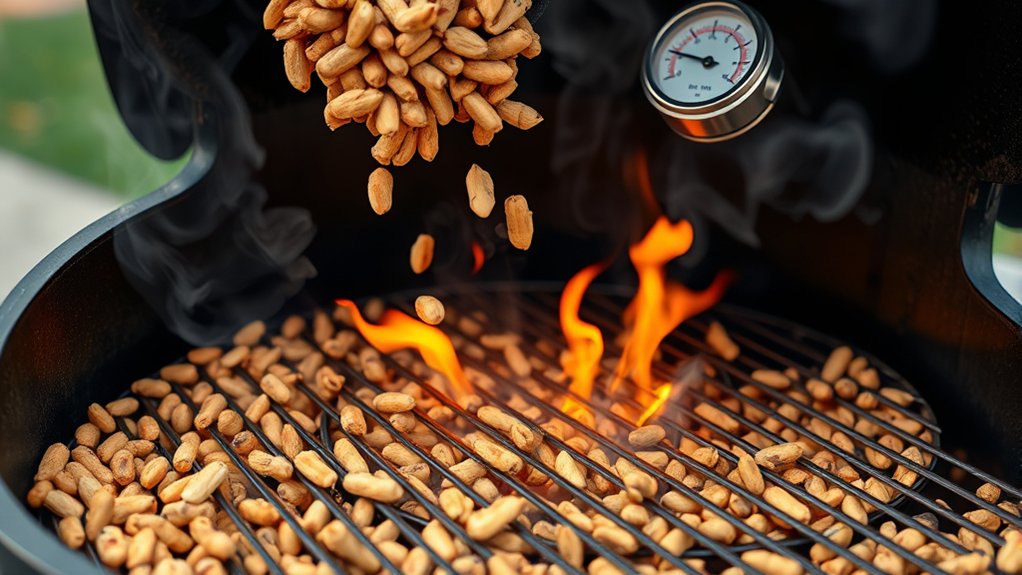
You start by filling the hopper with hardwood pellets and plugging in the grill. Wood pellet grills work by using these pellets as fuel, delivering a unique combination of heat and smoke. Turn it on, set your desired temperature on the digital controller, and let it preheat fully.
The auger feeds pellets automatically to the fire pot, where they’re ignited, creating steady heat and smoke. Fans manage airflow, ensuring consistent combustion and temperature control. This setup delivers even cooking and rich smoky flavor.
Keep exploring to discover how each part keeps your grill running smoothly. Understanding the process helps you make the most of your wood pellet grill for delicious results every time.
Key Takeaways
- Fill the hopper with hardwood pellets and plug in the grill to begin the ignition and preheating process.
- The auger feeds pellets to the fire pot, where an electric igniter sparks combustion, producing heat and smoke.
- Fans regulate airflow by pushing oxygen to the fire pot and circulating hot air inside the grill for even cooking.
- A digital controller monitors temperature and adjusts pellet feeding to maintain consistent heat and prevent overheating.
- Steady smoke and heat during cooking infuse food with flavor, enhanced by proper airflow and pellet type.
What Is a Wood Pellet Grill and How Does It Work?
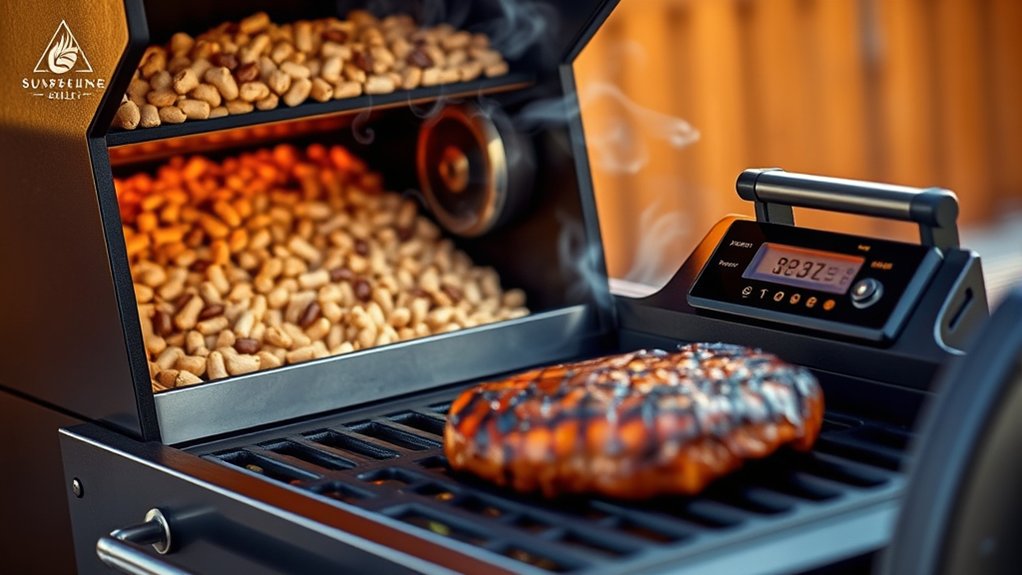
Although you might be familiar with traditional grills, a wood pellet grill offers a unique cooking experience by combining technology and wood-fired flavor. You load hardwood pellets into a hopper, and an automated auger feeds them into a fire pot. An electric ignition then lights the pellets, creating consistent heat and smoke.
A built-in fan controls airflow, maintaining the temperature you set on the digital controller. This system allows you to cook with precise temperature control, whether you’re smoking, grilling, or baking. The pellets burn efficiently, producing flavorful smoke that enhances your food.
You don’t have to fuss with charcoal or propane; the grill manages combustion for you, making it easier to focus on cooking delicious meals with minimal effort.
How to Start and Monitor Your Pellet Grill
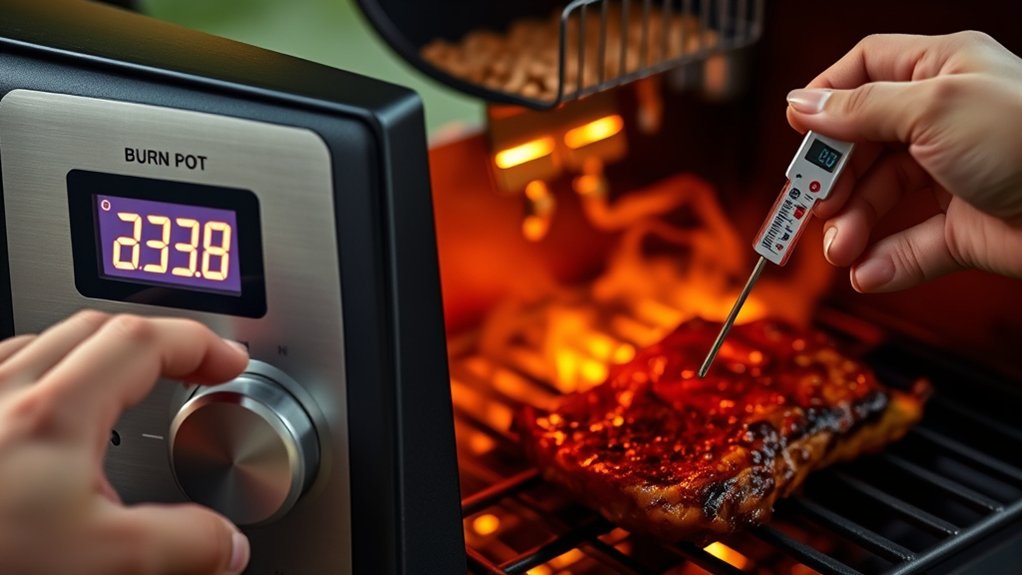
Wondering how to get your pellet grill up and running? First, fill the hopper with high-quality wood pellets. Make sure the grill is plugged in and the fire pot is clean.
Turn on the grill by pressing the power button and set your desired temperature using the digital controller. The grill will ignite the pellets automatically, creating consistent heat.
While it’s heating up, keep the lid closed to maintain temperature stability. Once it reaches the set temperature, you’re ready to start cooking.
Monitor the grill’s temperature on the display to guarantee it stays steady. If needed, adjust the temperature settings. Always keep an eye on the hopper’s pellet level and refill it as necessary to avoid interruptions during grilling.
How the Pellet Hopper and Auger Feed Pellets Automatically
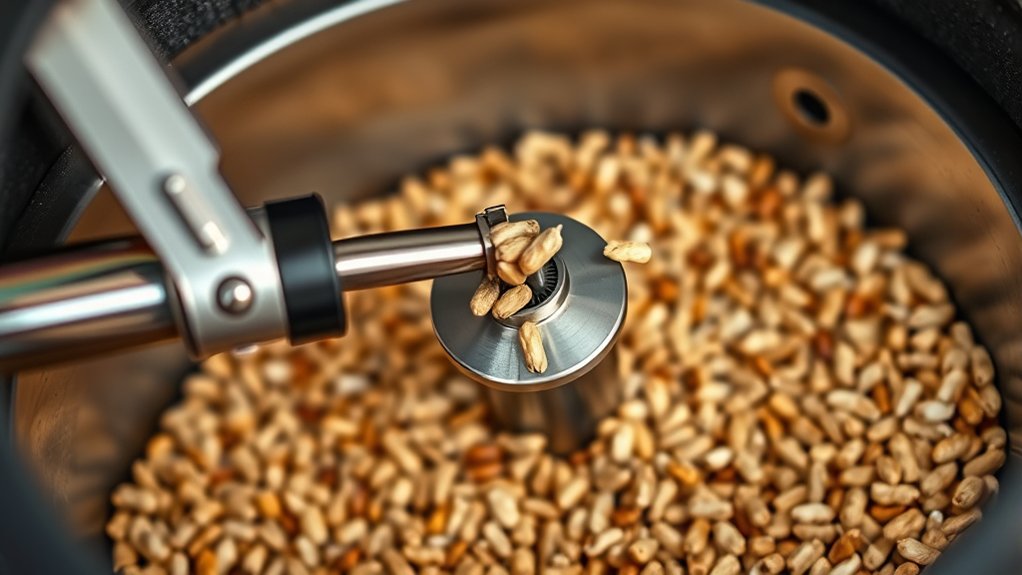
When you load wood pellets into the hopper, an auger automatically feeds them into the fire pot at a controlled rate to maintain your grill’s temperature. The hopper acts as a reservoir that holds a steady supply of pellets, preventing frequent refills. The auger, powered by an electric motor, turns slowly to push pellets through a tube, ensuring consistent fuel delivery.
The hopper stores pellets while the auger feeds them steadily to maintain consistent grill temperature.
This system allows you to:
- Maintain a precise temperature without manual adjustments
- Enjoy longer cooking sessions with minimal supervision
- Prevent pellet jams with steady, controlled feeding
Step-by-Step Process Inside the Fire Pot
Once the pellets reach the fire pot, an electric igniter sparks to ignite them quickly, creating a steady flame. As the pellets burn, they generate consistent heat essential for cooking. You’ll notice an internal fan blows air into the fire pot, which helps maintain the fire by supplying oxygen.
This airflow also pushes the heat and smoke up into the grill chamber, distributing it evenly around your food. Ash from burned pellets falls through a grate into an ash cup below, making cleanup easier. The burning process continues as the auger feeds more pellets automatically, keeping the fire pot fueled.
This controlled combustion guarantees a stable, efficient heat source for grilling, smoking, or roasting your meals.
How Your Grill’s Digital Controller Controls Temperature
Your grill’s digital controller keeps the temperature steady by using sensors to monitor the heat inside the cooking chamber. When it detects a drop, it automatically feeds more pellets into the fire pot to maintain the set temperature.
This precise control lets you cook your food evenly without constantly adjusting the grill.
Temperature Monitoring Sensors
Although wood pellet grills rely on fire and smoke to cook, they use temperature monitoring sensors to keep everything under precise control. These sensors constantly track the grill’s internal temperature and send real-time data to the digital controller. This way, the grill maintains your desired cooking temperature without you having to guess or adjust manually.
Here’s how temperature monitoring sensors help your grill:
- Detect heat fluctuations quickly for consistent cooking
- Communicate with the controller to adjust pellet burn rates
- Prevent overheating or undercooking by providing accurate feedback
Automated Pellet Feeding
Because the digital controller receives constant temperature data, it adjusts the pellet feeding automatically to maintain your set heat level. When the temperature drops below the target, the controller activates the auger to add more pellets, increasing the fire’s intensity.
If the temperature rises too high, it slows or stops pellet feeding to cool down. This precise control keeps your cooking consistent without manual adjustments.
| Temperature Status | Pellet Feeding Response |
|---|---|
| Below set temperature | Increase pellet feed rate |
| At set temperature | Maintain pellet feed rate |
| Above set temperature | Decrease or pause pellet feed |
This system guarantees your grill runs efficiently, delivering steady heat and perfect cooking results every time.
How Airflow and Fans Keep Your Pellet Grill Fire Burning
When you fire up a wood pellet grill, airflow and fans play a critical role in maintaining a steady burn. The fans control the oxygen flow to the fire, ensuring the pellets combust evenly and efficiently. Without proper airflow, the fire can smolder or go out.
Here’s how they work together:
- Induction Fan: Pushes fresh air into the fire pot, feeding oxygen to the pellets.
- Exhaust Fan: Pulls smoke and gases out, preventing buildup and promoting consistent burning.
- Convection Fan: Circulates hot air inside the grill, distributing heat evenly around your food.
How Wood Pellets Create Smoke and Flavor
As wood pellets burn inside your grill, they release smoke that infuses your food with rich, smoky flavors. These pellets, made from compressed sawdust and natural wood fibers, ignite in the firepot, producing a steady stream of smoke. The type of wood—like hickory, mesquite, or apple—directly influences the flavor profile, so choosing the right pellet lets you customize your taste.
As the pellets smolder, they create smoke filled with aromatic compounds that penetrate your food, enhancing its flavor and aroma. The controlled burn guarantees consistent smoke production without overwhelming bitterness, giving your meals that signature wood-fired taste.
Common Pellet Grill Problems and How to Fix Them
Though pellet grills offer convenience and great flavor, they can sometimes run into issues that disrupt your cooking. You might face problems like pellets not feeding properly, temperature fluctuations, or smoke output issues.
Pellet grills deliver great flavor but can encounter issues like feeding problems, temperature swings, or low smoke output.
Here’s how to fix them:
- Pellets not feeding: Check for jams in the auger or hopper. Clear any blockages and ensure pellets are dry.
- Temperature fluctuations: Inspect the temperature probe for dirt or damage and clean or replace it if needed. Also, avoid opening the lid frequently.
- Low smoke output: Confirm the fire pot is clean and free of ash buildup. Use quality pellets for better smoke production.
Tips for Maintaining Consistent Heat on Your Pellet Grill
Keeping your pellet grill running smoothly involves more than just fixing problems when they arise. To maintain consistent heat, start by regularly cleaning the fire pot and grease tray to prevent ash buildup, which can choke airflow and cause temperature fluctuations. Use quality pellets that match your grill’s specifications, as low-grade pellets burn unevenly.
Calibrate your grill’s temperature settings occasionally to ensure accuracy. Avoid opening the lid frequently; each time you do, you lose heat and prolong cooking time. Also, check the auger and fan for proper operation—they control pellet feed and airflow, directly affecting heat consistency.
Finally, preheat your grill fully before cooking, allowing the system to stabilize. These steps help you keep steady temperatures for perfect grilling results every time.
Frequently Asked Questions
Can I Use Different Types of Wood Pellets for Varied Flavors?
Yes, you can use different types of wood pellets to create varied flavors. Just swap pellets between cooks or even mix them to customize your smoke profile and enhance the taste of your grilled food exactly how you like it.
How Do Pellet Grills Compare to Traditional Charcoal Grills?
You’ll find pellet grills offer more temperature control and convenience, while charcoal grills deliver a classic smoky flavor and open-flame experience. Pellet grills automate cooking, but charcoal lets you manage heat and smoke more manually.
What Safety Precautions Should I Take When Using a Pellet Grill?
You might worry pellet grills are tricky, but just keep the grill clean, never leave it unattended, use it outdoors in a well-ventilated area, and check for pellet jams regularly to stay safe and enjoy great food.
Are Pellet Grills Suitable for Indoor Use or Only Outdoor?
You shouldn’t use pellet grills indoors because they produce smoke and carbon monoxide, which can be dangerous in enclosed spaces. Always operate them outdoors in well-ventilated areas to guarantee your safety and proper airflow.
How Long Do Wood Pellets Typically Last During Cooking?
Your wood pellets typically last between one to four hours during cooking, depending on temperature and grill size. Higher heat uses pellets faster, so you’ll want to keep extra on hand for longer cooks.
Conclusion
Now that you know how your wood pellet grill works step by step, you’re ready to master it. Imagine you’re smoking ribs for a family gathering—you set your digital controller, the auger feeds pellets automatically, and the fans maintain airflow, creating perfect smoke and heat.
With a little practice and maintenance, you’ll consistently serve up flavorful, tender meals that impress everyone at your table. Keep grilling and enjoy those delicious results! Mastering your wood pellet grill ensures you get the best flavor and cooking performance every time.