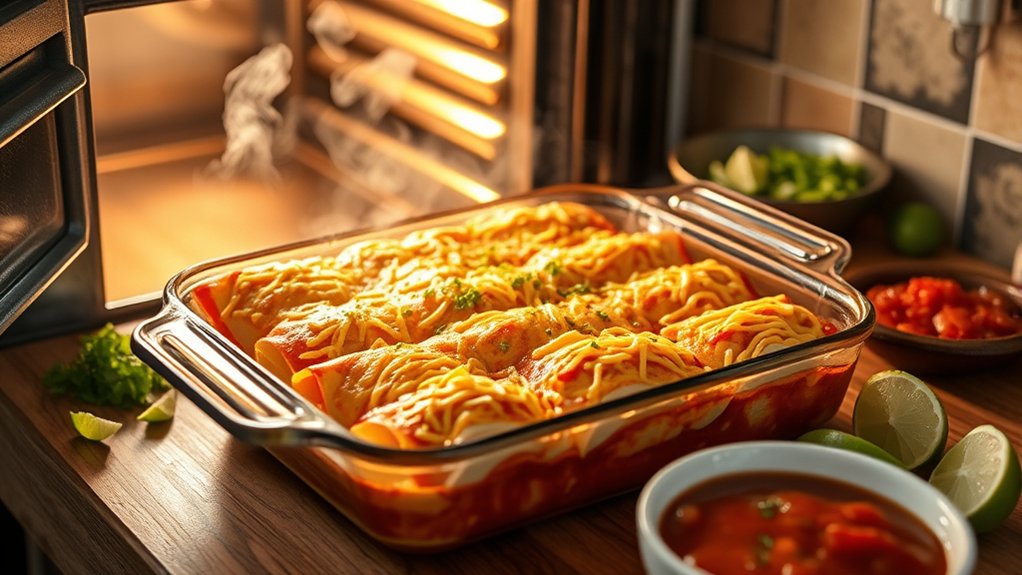
How Do You Reheat Enchiladas in the Oven in 7 Easy Steps?
To reheat enchiladas in the oven and enjoy a delicious, warm meal, follow these simple steps for perfect results every time. Properly reheating enchiladas helps retain their flavor and moisture, ensuring they stay juicy and satisfying. Using the oven is one of the best methods to achieve even heating without drying them out.
First, arrange the enchiladas evenly on a baking dish, leaving space around each for heat flow. Preheat your oven to 350°F (175°C). Cover the enchiladas with foil to lock in moisture and avoid drying out.
Reheat for about 20 minutes, checking for hot spots and reheating if needed. Optional: add extra cheese before serving. Let them rest briefly to enhance texture.
Keep going to uncover tips for perfect, juicy enchiladas every time.
Key Takeaways
- Arrange enchiladas evenly on a baking dish with space around each for heat circulation.
- Preheat oven to 350°F (175°C) before reheating for consistent temperature.
- Cover enchiladas loosely with foil to retain moisture and prevent drying out.
- Reheat enchiladas for 20-35 minutes depending on portion size, checking for even warming.
- Test multiple spots for hotness and reheat covered in 3-5 minute intervals if needed.
Prepare Your Enchiladas for Even Heating
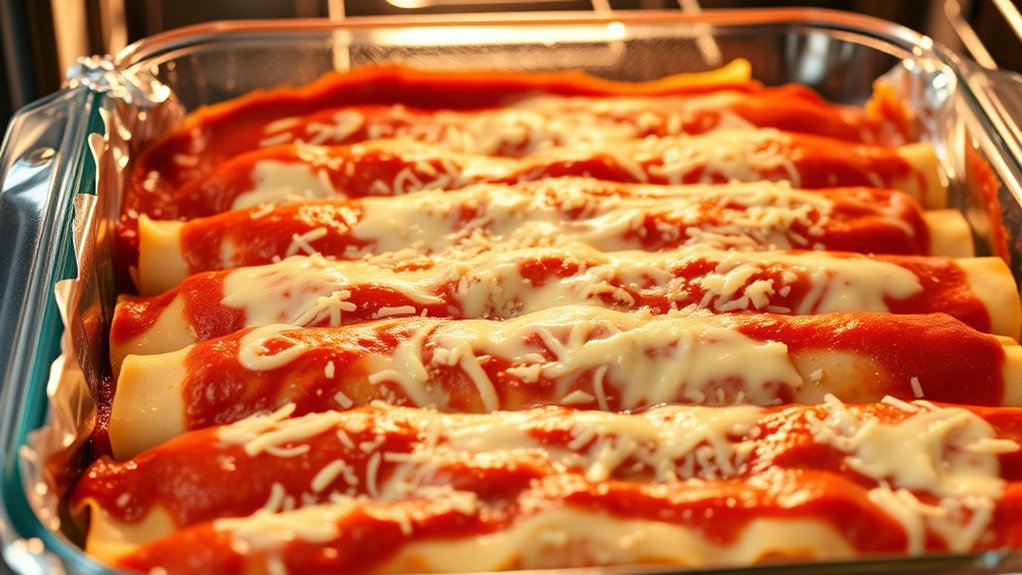
Before reheating your enchiladas, make sure to arrange them evenly on a baking dish or tray. Spread them out so each enchilada has space around it, which helps heat circulate and prevents sogginess. If they’re stacked or overlapping, some parts will heat unevenly, leaving cold spots.
Cover the dish loosely with foil to retain moisture without making the enchiladas soggy. If your enchiladas have extra sauce or cheese, add a little more on top to keep them from drying out during reheating. For frozen enchiladas, thaw them in the fridge first to guarantee even warming.
Taking these steps sets you up for perfectly warmed enchiladas with consistent texture and flavor throughout, making your leftovers just as enjoyable as fresh.
Preheat Your Oven to Reheat Enchiladas Perfectly
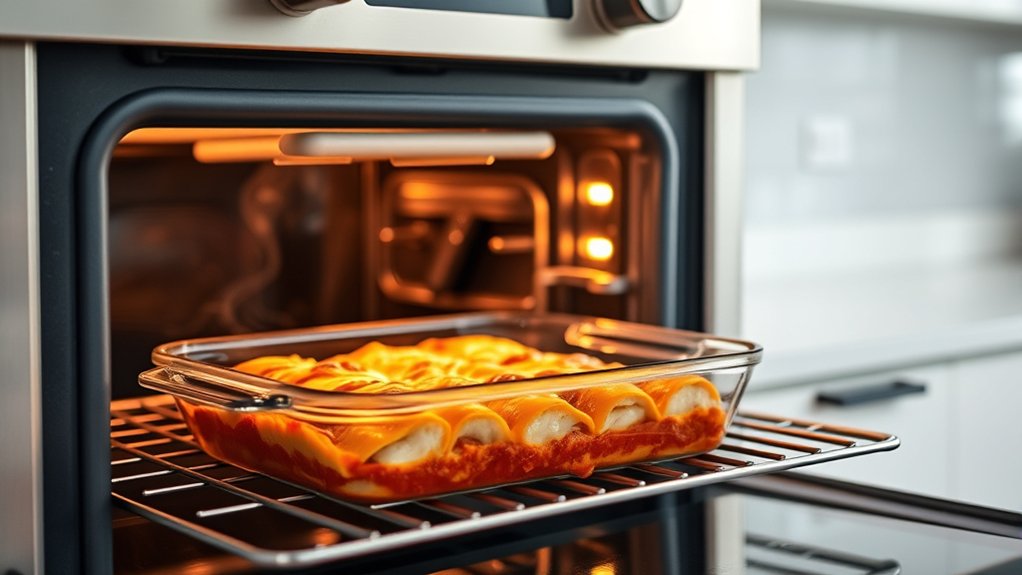
Once your enchiladas are arranged and ready, setting your oven to the right temperature guarantees they reheat evenly without drying out. Preheating your oven ensures consistent heat distribution, which helps maintain the enchiladas’ texture and flavor. Aim for a moderate temperature that allows the filling to warm through without burning the tortillas.
Consider these key points when preheating your oven:
- Set the oven to 350°F (175°C) for ideal reheating.
- Avoid higher temperatures to prevent drying or burning.
- Allow the oven to fully preheat before placing your dish inside.
- Use an oven thermometer if your oven’s calibration is uncertain.
Following these tips will help you reheat your enchiladas perfectly every time.
Cover Enchiladas to Lock in Moisture
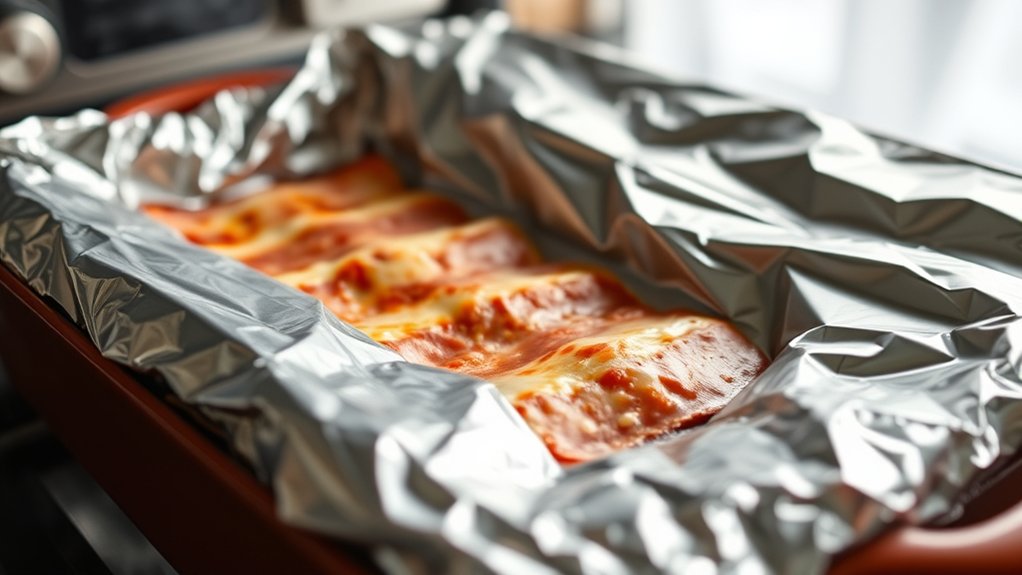
You’ll want to cover your enchiladas before reheating to keep them moist and prevent a dry crust. Using foil or a microwave-safe lid works best for locking in steam.
This simple step guarantees your enchiladas stay tender and delicious.
Benefits Of Covering Enchiladas
Although reheating enchiladas, you might be tempted to skip covering them, doing so plays a key role in locking in moisture. When you cover enchiladas, you create a mini steam environment that keeps the filling juicy and the tortillas soft. This prevents dryness and helps maintain the original taste and texture.
Plus, covering speeds up the reheating process by distributing heat evenly. Without a cover, you risk uneven warming and a tough, chewy exterior.
Here’s why covering enchiladas benefits you:
- Keeps the filling moist and flavorful
- Prevents tortillas from drying out or becoming too crispy
- Helps heat food evenly throughout
- Reduces reheating time, saving energy and effort
Covering enchiladas guarantees they taste just as delicious as when freshly made.
Best Materials To Use
When reheating enchiladas, choosing the right material to cover them is essential for locking in moisture and ensuring even heat distribution. You want something that traps steam without sogging the dish. Aluminum foil is a classic choice—it’s great at reflecting heat and keeps moisture in.
Parchment paper works well if you want to avoid sticking but might not seal as tightly. A tight-fitting oven-safe lid is perfect if you have one, providing an even seal. Avoid plastic wrap since it’s not oven-safe.
| Material | Moisture Retention | Ease of Use |
|---|---|---|
| Aluminum Foil | High | Easy |
| Parchment Paper | Medium | Moderate |
| Oven-safe Lid | High | Very Easy |
| Silicone Cover | Medium-High | Easy |
| Baking Sheet | Low | Easy but less ideal |
Preventing Dryness And Crust
To keep your enchiladas from drying out or developing an unwanted crust, always cover them while reheating. Covering traps steam, locking in moisture and guaranteeing your enchiladas stay soft and flavorful. Use aluminum foil or an oven-safe lid to shield the dish.
Avoid leaving them uncovered, as the dry heat will toughen the tortillas and make the cheese rubbery.
Here’s how covering helps you:
- Retains steam, keeping fillings juicy
- Prevents the tortilla from hardening
- Stops cheese from over-browning or burning
- Ensures even heat distribution for thorough warming
Set Oven Temperature and Time for Reheating Enchiladas
Since enchiladas are best enjoyed hot and fresh, setting the right oven temperature and reheating time is essential to preserve their flavor and texture. Preheat your oven to 350°F (175°C), a moderate heat that warms the enchiladas thoroughly without drying them out.
Place the enchiladas in an oven-safe dish, cover them with foil to trap moisture, and heat them for about 20 minutes. If you’re reheating a larger portion or frozen enchiladas, increase the time to 30-35 minutes, checking occasionally.
This temperature and timing help melt the cheese evenly and warm the filling without overcooking the tortillas. Avoid raising the temperature too high, as it can toughen the edges and dry out the dish, diminishing the delicious experience you’re aiming to enjoy.
Check for Hot Spots and Reheat as Needed
Although the oven heats your enchiladas evenly most of the time, you should still check for hot spots after the initial reheating period. Hot spots can cause some areas to be overcooked while others remain cold. To guarantee your enchiladas are perfectly warmed throughout, carefully test the temperature in several places.
Even ovens can create hot spots—check multiple areas to ensure your enchiladas heat evenly every time.
Here’s how to check and reheat as needed:
- Use a fork or toothpick to test the center and edges for warmth.
- If any spot feels cold, cover the dish with foil to retain moisture.
- Return the dish to the oven for additional 3-5 minute intervals.
- Recheck after each interval until the entire dish is hot.
This method helps you avoid uneven heating and keeps your enchiladas delicious.
Add Extra Cheese or Toppings Before Serving (Optional)
If you want to elevate your reheated enchiladas, adding extra cheese or toppings right before serving can make a big difference.
Sprinkle shredded cheese on top and let it melt for a gooey finish. Fresh toppings add vibrant flavor and texture, enhancing your dish instantly.
Here’s a quick guide for toppings you might consider:
| Topping | Flavor Profile | Best When Added |
|---|---|---|
| Shredded Cheese | Creamy, mild | Before serving |
| Chopped Cilantro | Fresh, herbaceous | After reheating |
| Sliced Avocado | Creamy, rich | After reheating |
| Sour Cream | Tangy, smooth | After reheating |
Feel free to mix and match these to suit your taste and make your enchiladas even more delicious.
Let Enchiladas Rest Before Serving for Best Texture
While it’s tempting to dig in right away, letting your enchiladas rest for a few minutes after reheating helps the flavors meld and the texture set. This brief pause allows the heat to distribute evenly, preventing any hot spots or sogginess. You’ll notice the cheese firms up slightly, and the sauce thickens just enough to enhance each bite.
Letting enchiladas rest after reheating melds flavors, firms cheese, and thickens sauce for the perfect bite.
Resting also makes the enchiladas easier to cut and serve without falling apart.
Here’s why you should let them rest:
- Enhances flavor blending for a richer taste
- Prevents overly runny sauce or soggy tortillas
- Allows cheese to solidify for better texture
- Makes serving cleaner and less messy
Give your enchiladas this simple step for the best eating experience.
Frequently Asked Questions
Can I Reheat Enchiladas in a Microwave Instead of an Oven?
Yes, you can reheat enchiladas in the microwave. Just cover them with a damp paper towel to keep them moist, heat on medium for 1-2 minutes, and check frequently to avoid drying out or overheating.
This method is quick and convenient for reheating. However, microwaving may result in slightly softer tortillas compared to oven reheating.
For best results, let the enchiladas sit for a minute after microwaving to allow the heat to distribute evenly.
How Long Can Leftover Enchiladas Be Stored Safely Before Reheating?
You’ve got about 3 to 4 days to enjoy those enchiladas safely. After that, bacteria can sneak in, and your meal won’t be as tasty—or safe.
Is It Better to Reheat Enchiladas Covered or Uncovered?
You’re better off reheating enchiladas covered to keep them moist and prevent drying out. Use foil to trap steam, ensuring the cheese melts evenly and the filling stays juicy while the tortilla stays tender.
Can I Freeze Enchiladas Before Reheating Them in the Oven?
You can tuck your enchiladas away in the chilly embrace of the freezer. Just wrap them tight, then when hunger calls, thaw gently before reheating for a deliciously warm, comforting meal you’ll love.
What Type of Oven-Safe Dish Is Best for Reheating Enchiladas?
You’ll want to use a glass or ceramic oven-safe dish for reheating enchiladas. These materials distribute heat evenly, prevent sticking, and retain moisture, helping your enchiladas reheat thoroughly without drying out or burning.
Conclusion
Reheating your enchiladas is like giving them a warm hug—they’ll come back tender and bursting with flavor. By prepping them right, covering to keep moisture in, and heating at the perfect temperature, you’ll avoid dryness and enjoy every bite.
Don’t forget to add extra cheese or toppings for that fresh-out-of-the-oven feel. Let them rest a bit before digging in, and you’ll savor enchiladas that taste just as good as the first time. Following these simple steps ensures perfectly reheated enchiladas every time.
With these tips, reheating enchiladas in the oven becomes easy and effective, delivering delicious results that keep the flavors vibrant and the texture just right.