7 Easy Tips to Lower Temp on Charcoal Grill
You can easily lower your charcoal grill’s temperature by using fewer briquettes or larger charcoal pieces that burn slower. Managing heat on a charcoal grill is essential for perfect cooking, and controlling temperature is a key skill every griller should master.
By adjusting your charcoal and airflow, you can achieve the ideal cooking environment for your favorite dishes. Control airflow by partially closing bottom and lid vents to reduce oxygen and cool your grill.
Spread out coals for even heat, and try a two-zone fire setup with water pans to stabilize temperature. Adjusting these elements helps prevent flare-ups and keeps your cooking steady.
Keep going to uncover more simple ways to perfect your grilling heat. These easy tips ensure you maintain control and consistency every time you fire up your charcoal grill.
Key Takeaways
- Use fewer or larger charcoal pieces to reduce heat and prolong burn time for better temperature control.
- Partially close bottom and lid vents to restrict airflow and lower the grill temperature without extinguishing coals.
- Spread coals evenly in a single layer or loose ring to create uniform, moderate heat and avoid hot spots.
- Set up a two-zone fire by piling coals on one side for direct heat and leaving the other side cooler for indirect cooking.
- Place water pans inside the grill to stabilize temperature and add moisture during longer cooking sessions.
Adjust Charcoal Amount to Lower Heat
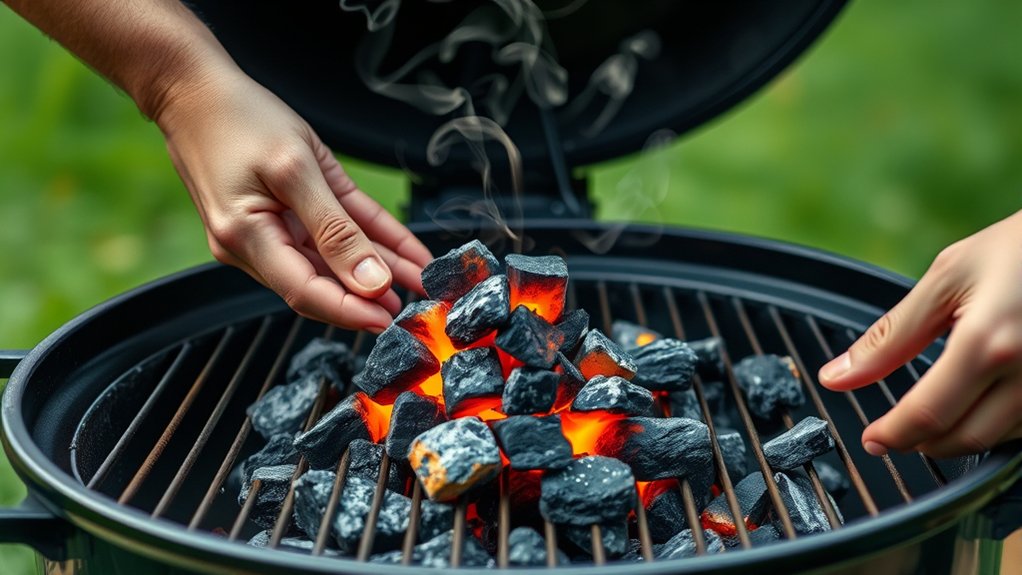
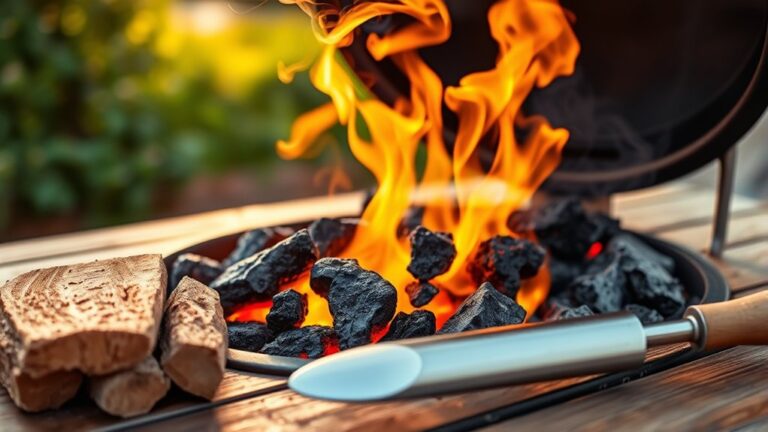
When you want to lower the temperature on your charcoal grill, reducing the amount of charcoal you use is one of the simplest and most effective methods. Start by using fewer briquettes or lump charcoal, as less fuel means less heat. You don’t need to eliminate all the charcoal—just cut down to a manageable amount that still provides steady heat without overheating.
Spread the coals evenly to prevent hot spots and maintain consistent cooking temperatures. If you’re grilling for longer periods, add charcoal gradually rather than all at once to avoid sudden temperature spikes. Remember, controlling your charcoal amount gives you direct influence over the heat level, so experiment with smaller piles until you find the perfect balance for your grilling needs.
Control Airflow to Manage Grill Temperature
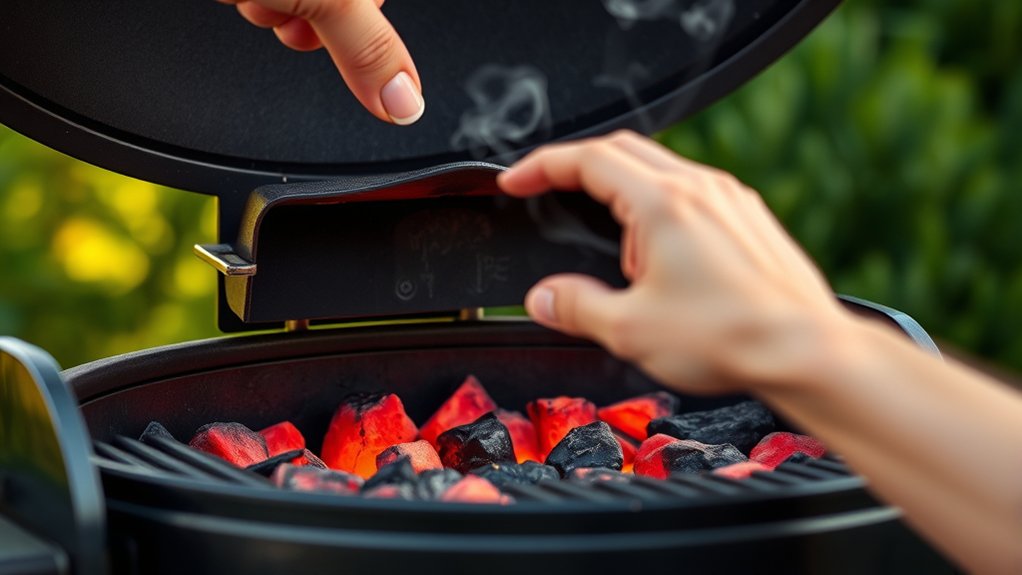
Although adjusting the charcoal amount helps control heat, managing airflow is equally essential for regulating your grill’s temperature. Your grill needs oxygen to keep the coals burning hot. By controlling the air intake and exhaust, you can effectively raise or lower the temperature.
Opening the bottom vents allows more oxygen to flow in, intensifying the heat. Closing them restricts oxygen, cooling the fire down. Make sure to monitor these vents closely to maintain steady temperatures.
Partially Close Lid Vents to Cool the Grill
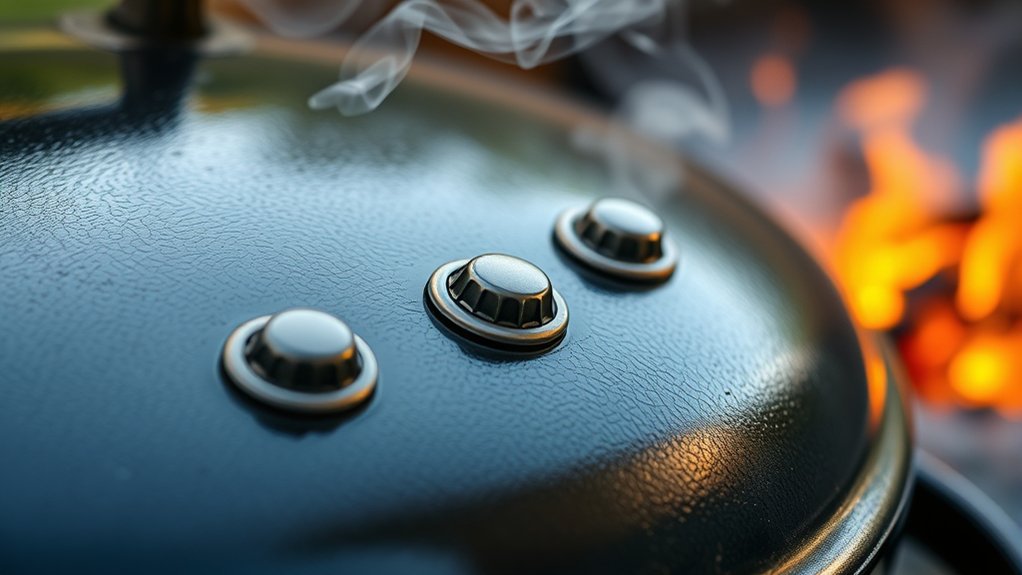
Besides adjusting the bottom vents to control airflow, you can also manage the temperature by partially closing the lid vents. These vents allow hot air and smoke to escape, so limiting their opening reduces oxygen flow and slows the fire’s intensity. When you partially close the lid vents, you create a balance that cools the grill without suffocating the coals completely.
Be careful not to shut them fully, as this might extinguish the fire. Instead, close them just enough to lower the heat gradually. Keep an eye on the temperature gauge and adjust the vents as needed to maintain your desired cooking temperature.
This simple vent control helps you fine-tune the grill’s heat for better cooking results.
Spread Out Coals to Reduce Heat Concentration
To lower your grill’s temperature, spread out the coals instead of piling them up. This creates even heat across the cooking surface, preventing hot spots and flare-ups.
Try arranging the coals in a single layer or a loose ring to control heat better.
Benefits of Even Heat
When you spread out your coals, you create a more even heat that prevents hot spots from burning your food. This consistency helps you cook your meals thoroughly without constantly moving items around. Even heat means less risk of flare-ups, which can char your food or cause uneven cooking.
It also makes temperature control easier, so you can maintain a steady cooking environment. When heat is balanced, you avoid undercooked centers or burnt exteriors. Plus, it allows you to grill multiple items at once without worrying about some parts cooking faster than others.
Techniques for Coal Arrangement
Although it might seem natural to pile your coals together for maximum heat, spreading them out actually helps you lower the temperature on your charcoal grill. When you distribute the coals evenly, you reduce hot spots and create a gentler cooking environment.
Here’s how to arrange your coals for better temperature control:
- Single Layer Spread: Lay the coals in a single, even layer to prevent intense heat concentration.
- Two-Zone Setup: Push coals to one side for direct heat and leave the other side empty for indirect cooking.
- Ring Formation: Arrange coals in a circle around the grill’s edge, leaving the center cooler for slow cooking.
Using these techniques, you’ll manage your grill’s heat more effectively and avoid burning your food.
Use Larger Charcoal Pieces to Slow Burning
You’ll notice that larger charcoal pieces burn slower, helping you keep the grill temperature down. Using bigger chunks means less frequent flare-ups and more controlled heat.
Aim for charcoal pieces about the size of a golf ball to get the best results.
Benefits Of Larger Charcoal
Choosing larger charcoal pieces slows down the burning process, giving you better control over your grill’s temperature. When you use bigger chunks, you benefit in several ways:
- Longer Cooking Times – Larger pieces burn steadily, so you won’t need to add charcoal as often, perfect for slow-cooking or smoking.
- Consistent Heat – They provide a more even heat distribution, reducing hot spots and helping your food cook uniformly.
- Less Ash Production – Bigger pieces produce less ash compared to smaller ones, keeping airflow steady and your grill cleaner.
Impact On Burn Rate
When you use larger charcoal pieces, they burn more slowly, giving you greater control over your grill’s temperature. Larger chunks have less surface area exposed to oxygen compared to smaller pieces, which means they don’t ignite as quickly or burn as fast. This slower burn rate helps maintain a steadier heat, reducing the risk of sudden temperature spikes that can overcook your food.
Ideal Charcoal Sizes
Larger charcoal pieces naturally slow down the burning process, giving you better control over your grill’s temperature. When you want to keep your heat low and steady, choosing the right charcoal size is key. Here’s why larger pieces work best:
- Slower Burn Rate – Bigger chunks take longer to ignite and burn, preventing quick temperature spikes.
- Longer Cooking Time – They maintain heat over extended periods, perfect for low-and-slow grilling.
- Consistent Heat Output – Larger pieces produce a steadier heat, reducing the need for constant adjustments.
Set Up a Two-Zone Fire for Flexible Cooking
Although managing heat on a charcoal grill can be tricky, setting up a two-zone fire lets you control cooking temperatures more easily. Start by piling your lit charcoal on one side of the grill, creating a hot direct heat zone. Leave the other side empty for indirect heat.
This setup gives you flexibility—you can sear your food over the hot coals, then move it to the cooler side to finish cooking without burning. You also avoid flare-ups by keeping fatty foods away from direct flames. Adjust the air vents to regulate airflow and maintain steady temperatures.
Add Water Pans to Stabilize and Cool Heat
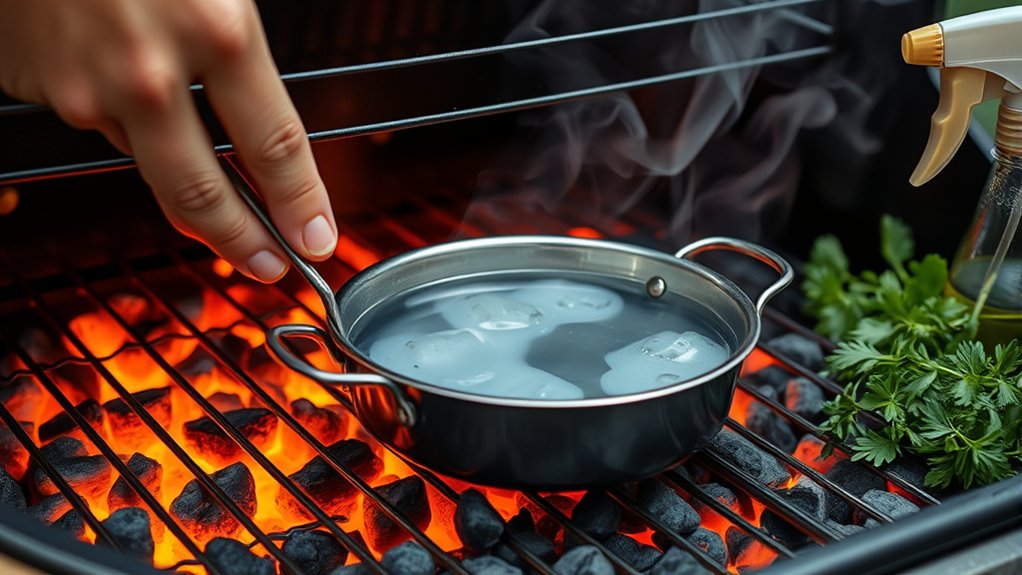
If you want to keep your charcoal grill’s temperature steady and prevent flare-ups, adding a water pan is a simple and effective solution. The water pan acts as a heat buffer, absorbing and distributing heat evenly while adding moisture to the cooking environment.
Here’s how to use one effectively:
- Place a shallow pan filled with water directly above the coals, beneath the cooking grate.
- Refill the water as needed during long cooking sessions to maintain consistent temperature and humidity.
- Adjust the size and placement of the pan to control heat zones, giving you more precise temperature management.
Frequently Asked Questions
Can I Use a Charcoal Grill in Cold Weather?
Yes, you can use a charcoal grill in cold weather. Just make sure to keep the lid closed, add extra charcoal, and preheat longer to maintain temperature.
Dress warmly and monitor the grill closely for best results.
How Do I Clean My Grill After Cooking?
You’ll want to scrape off every stubborn scrap like it’s a treasure hunt! Use a stiff brush on the hot grate, then wipe with a damp cloth.
Don’t forget to empty ashes—they hate lounging around!
What Safety Precautions Should I Take When Lighting Charcoal?
You should wear heat-resistant gloves, keep a fire extinguisher nearby, and light charcoal in a well-ventilated area.
Never use gasoline, and always use proper charcoal starter fluid or chimney starters to avoid dangerous flare-ups.
How Long Does Charcoal Typically Last During Grilling?
You’ll find charcoal lasts about 1 to 2 hours during grilling. Remember, “a watched pot never boils,” so keep an eye on it and add more charcoal as needed to maintain your desired temperature.
Is It Better to Use Lump Charcoal or Briquettes?
You’ll find lump charcoal burns hotter and lights faster, great for high heat. Briquettes burn longer and more evenly, making them better for slow cooking.
Choose based on whether you want quick heat or steady temperature.
Conclusion
So, if you’re tired of your charcoal grill feeling like a mini volcano, just dial it down a notch. Adjust the coals, flirt with those vents, or spread the heat like you’re buttering toast. Bigger charcoal pieces? Yes, please—slow and steady wins the grill race.
Two-zone fires and water pans are your secret agents in this heat battle. Follow these tips, and you’ll be the cool grill master, not the one melting beside the flames. Lowering the temperature on your charcoal grill is easier than you think.
By mastering these easy tips to lower temp on charcoal grill, you’ll enjoy perfectly cooked meals every time without the stress of overheating. Keep your grill temperature in check and become the ultimate backyard chef!