How Do You Clean Stained Cookware in 10 Easy Steps?
To clean stained cookware effectively, it’s important to understand the nature of the stains, whether they are burnt, greasy, or discolored.
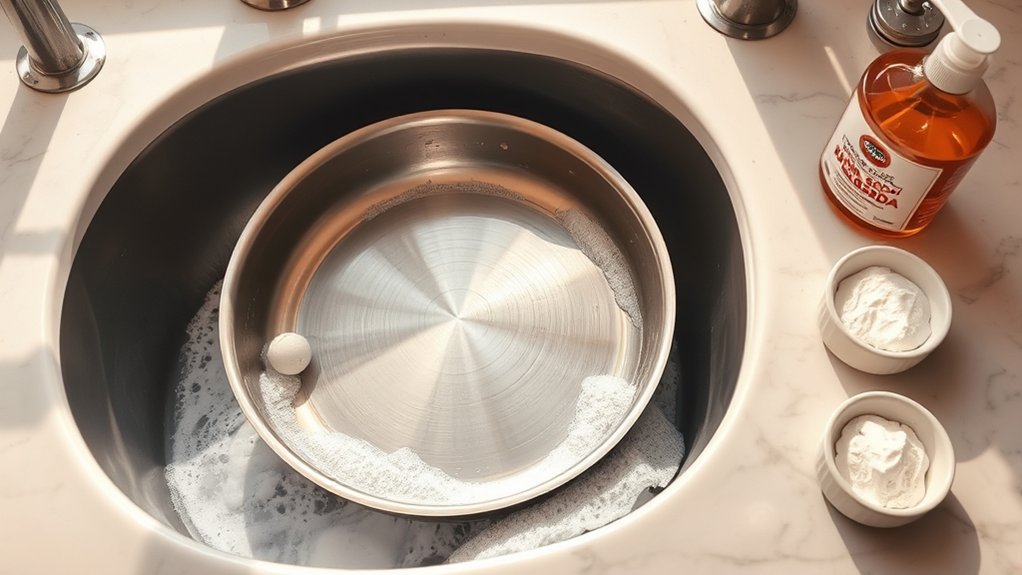
Using common household ingredients like baking soda, vinegar, lemon, and cream of tartar can make the cleaning process easier and more natural. These ingredients help break down grime and restore your cookware’s shine without harsh chemicals.
Start by soaking your cookware in warm water mixed with these agents to loosen stubborn residue.
Gently scrub using soft tools, avoiding abrasive materials that could damage the surface.
For tougher spots, apply a combination of baking soda and vinegar.
For discoloration, create a paste with cream of tartar and use it to brighten the cookware.
After cleaning, rinse thoroughly and dry your items completely.
Regular maintenance will keep your cookware looking its best.
Keep reading to discover expert tips tailored to different cookware types.
Key Takeaways
- Identify the stain type (burnt, grease, or discoloration) to choose the proper cleaning method.
- Soak cookware in warm water with baking soda, vinegar, or lemon juice for 30+ minutes to loosen stains.
- Use gentle tools like sponges or nylon brushes to scrub without scratching the surface.
- Apply natural agents such as baking soda and vinegar fizz, lemon juice, or cream of tartar paste for tough stains.
- Rinse thoroughly, dry immediately with a soft cloth, and store cookware in a dry place to maintain its finish.
Identify Burnt, Grease, or Discoloration Stains on Cookware
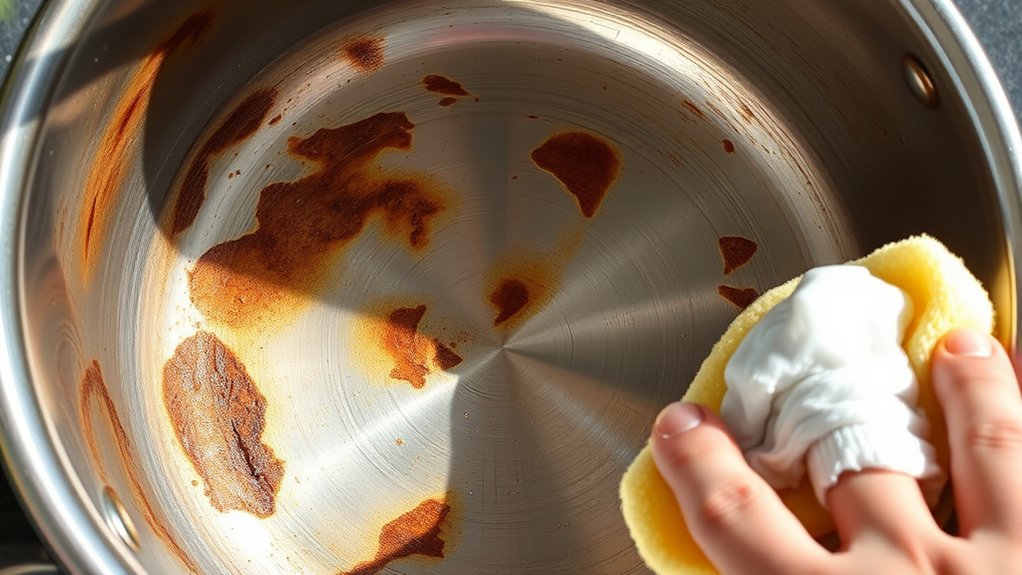
Before you start cleaning, you need to identify the type of stain on your cookware. Burnt stains usually appear as dark, stubborn patches that cling tightly to the surface, often from overheated food. Grease stains look oily and shiny, leaving a slick residue that’s tough to wipe away with just soap and water.
Discoloration, on the other hand, often shows as dull, rainbow-like hues or cloudy spots caused by mineral buildup or heat exposure. Recognizing the stain type helps you choose the right cleaning method. For instance, burnt stains need scrubbing with abrasive agents, while grease requires degreasing solutions.
Discoloration might respond well to mild acidic cleansers. Knowing exactly what you’re dealing with saves time and prevents damage during cleaning.
Gather Baking Soda, Vinegar, Lemon, and Cream of Tartar
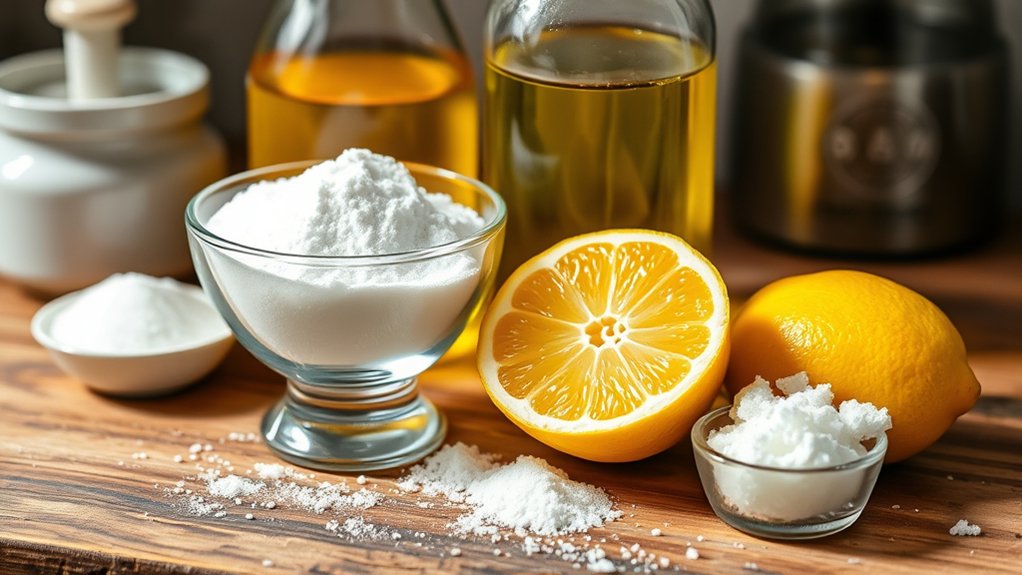
Since different stains require specific treatments, gathering baking soda, vinegar, lemon, and cream of tartar gives you versatile, natural options to tackle burnt, greasy, or discolored cookware effectively. Each ingredient has unique cleaning powers that work well alone or combined.
Here’s a quick overview:
| Ingredient | Cleaning Benefit |
|---|---|
| Baking Soda | Gently abrases and deodorizes |
| Vinegar | Dissolves mineral deposits and grease |
| Lemon | Brightens and removes stains with acidity |
| Cream of Tartar | Whitens and lifts stubborn marks |
Having these four items handy makes it easier to customize your approach based on the stain type. You’ll save time and avoid harsh chemicals by choosing natural cleaners tailored to your cookware’s needs.
Soak Cookware to Loosen Burnt Stains for Cleaning
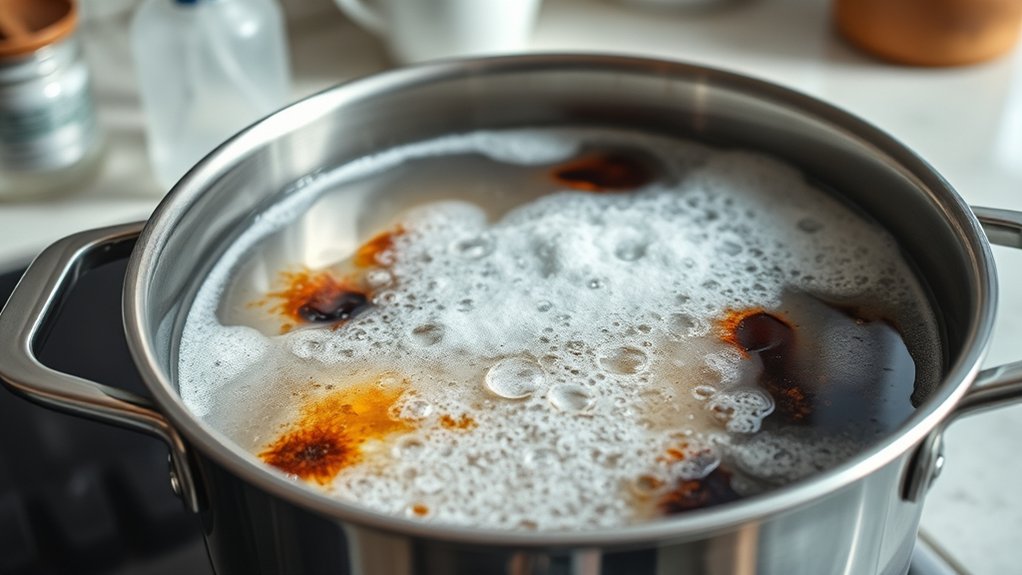
When burnt stains cling stubbornly to your cookware, soaking it can make all the difference by loosening residue and easing cleanup. Begin by filling the cookware with warm water, enough to cover the burnt areas completely. Add a few tablespoons of your chosen cleaning agent—baking soda, vinegar, or lemon juice work wonders here.
Let the cookware sit for at least 30 minutes, or longer if the stains are particularly tough. The soaking process softens the burnt-on grime, making it less resistant to removal. Avoid using boiling water directly, as it might damage certain materials.
After soaking, you’ll find that the burnt stains have loosened considerably, making the next steps in your cleaning routine much easier and more effective.
Scrub Cookware Gently With Non-Abrasive Tools
You’ll want to use soft cleaning tools like sponges or cloths to scrub your cookware gently. Avoid harsh scrubbing pads that can damage the surface and make stains worse.
Protecting your cookware means treating it with care during every cleaning.
Choose Soft Cleaning Tools
Although it might be tempting to scrub stubborn stains aggressively, choosing soft, non-abrasive tools protects your cookware’s surface and extends its lifespan. Using gentle cleaning tools helps you remove stains without scratching or damaging the finish.
Here are some soft cleaning tools you should use:
- Soft sponges or dishcloths
- Silicone scrubbers
- Nylon brushes with soft bristles
- Microfiber cloths for polishing
- Cotton pads for delicate areas
These options let you clean effectively while preserving your cookware’s quality. Avoid anything too rough that might cause permanent marks.
With the right tools, you’ll keep your pots and pans looking great and ready for your next meal.
Avoid Harsh Scrubbing Pads
Soft cleaning tools help protect your cookware, but pairing them with harsh scrubbing pads can undo that effort quickly. When you scrub aggressively with rough pads or steel wool, you risk scratching and damaging the surface, making stains harder to remove later.
Instead, stick to non-abrasive tools like soft sponges, microfiber cloths, or nylon scrubbers. These gently lift stains without compromising the cookware’s finish. If you encounter stubborn spots, let the cookware soak in warm, soapy water first to loosen grime, then scrub gently.
Avoid using metal or abrasive scrubbing pads, even on tough stains, since they wear down coatings and cause discoloration. By scrubbing carefully with the right tools, you’ll keep your cookware looking cleaner and lasting longer.
Protect Cookware Surfaces
When cleaning your cookware, make sure to use gentle, non-abrasive tools that protect the surface from scratches and wear. Harsh scrubbing can damage coatings and ruin your pots and pans over time.
Instead, choose tools that clean effectively but treat your cookware with care. Here are some great options to keep your cookware looking new:
- Soft sponges or dishcloths
- Nylon scrub brushes
- Silicone scrubbers
- Microfiber cloths
- Non-scratch scrub pads
Using these tools, you’ll avoid unnecessary damage while still removing stains and food residue. Always avoid metal scouring pads or abrasive powders, as they can leave scratches or dull finishes.
Treat your cookware gently, and it will maintain its performance and appearance for years to come.
Tackle Tough Stains With Baking Soda and Vinegar
You can tackle stubborn stains by combining baking soda’s gentle abrasiveness with vinegar’s natural cleaning power. This duo creates a fizzing reaction that helps break down grime without harsh chemicals.
Give it a try to restore your cookware’s shine effectively and safely.
Benefits of Baking Soda
Although tough stains can be stubborn, baking soda offers a powerful yet gentle solution for cleaning cookware. It’s a natural, non-toxic cleaner that won’t damage your pots or pans. When you sprinkle baking soda on stains, it acts as a mild abrasive, scrubbing away residue without scratching surfaces.
Plus, it neutralizes odors, leaving your cookware fresh.
Here’s why baking soda works so well:
- Breaks down grease and grime effectively
- Gently removes burnt-on food without harsh chemicals
- Safe for most cookware materials, including non-stick
- Helps eliminate lingering odors from cooking
- Easy to use and widely available in your pantry
Using baking soda makes tackling tough stains simple and safe.
Vinegar’s Cleaning Power
Baking soda tackles stains gently, but pairing it with vinegar boosts your cleaning power even more. Vinegar’s natural acidity breaks down mineral deposits and dissolves grease, making it perfect for stubborn cookware stains. When you apply vinegar to stained spots, it loosens residue that soap alone can’t handle.
Plus, vinegar’s antibacterial properties help sanitize your pots and pans while cleaning. You can pour a little vinegar directly onto the stain or soak your cookware in a vinegar solution for a few minutes. Just be sure to rinse thoroughly afterward to remove the vinegar smell.
Using vinegar as part of your cleaning routine will save you time and effort, bringing your cookware back to life without harsh chemicals.
Combining Both Ingredients
When stubborn stains refuse to budge, combining baking soda and vinegar creates a powerful reaction that lifts grime effortlessly. You start by sprinkling baking soda over the stained area, then slowly pour vinegar on top. The fizzing action breaks down tough residue, making it easier to scrub away.
Here’s how to tackle those stubborn spots:
- Sprinkle baking soda generously on the cookware.
- Pour vinegar slowly to activate the fizz.
- Let the mixture sit for 10-15 minutes.
- Use a non-abrasive scrubber to scrub the stains.
- Rinse thoroughly with warm water and dry.
This combo works wonders on burnt-on food, discoloration, and grease, saving you time and elbow grease. Give it a try next time you face tough cookware stains!
Use Lemon Juice to Remove Stains Naturally
If you want a natural and effective way to tackle stains on your cookware, lemon juice is a great choice. Its acidity breaks down stubborn stains and removes discoloration without harsh chemicals. Simply cut a lemon in half and rub it directly onto the stained areas.
Let the juice sit for 10–15 minutes to work its magic. For tougher stains, sprinkle a little salt on the lemon half before scrubbing to add gentle abrasion. Afterward, rinse your cookware with warm water and dry it thoroughly.
This method not only cleans but also leaves a fresh, pleasant scent. Using lemon juice is an eco-friendly, affordable, and safe solution that keeps your cookware looking bright and stain-free with minimal effort.
Use Cream of Tartar Paste to Remove Discoloration
You can tackle discoloration on your cookware by making a simple cream of tartar paste, which works wonders as a gentle abrasive. Just mix cream of tartar with a bit of water until it forms a thick paste, then apply it to the stained areas.
Let it sit for a few minutes before scrubbing gently to see the stains lift away.
Cream Of Tartar Benefits
Although cream of tartar is commonly known as a baking ingredient, it also works wonders as a natural cleaner for stained cookware. When you use it, you’ll find it’s gentle yet effective, helping to remove stubborn discoloration without harsh chemicals. It’s especially handy for copper, stainless steel, and aluminum pots and pans.
Here’s why cream of tartar benefits your cleaning routine:
- Acts as a mild abrasive to lift stains
- Neutralizes odors lingering in cookware
- Safe for most cookware surfaces
- Affordable and easy to find
- Non-toxic and environmentally friendly
Using cream of tartar is a smart way to keep your cookware looking fresh without risking damage or exposure to harsh cleaners.
How To Make Paste
When dealing with stubborn discoloration, making a cream of tartar paste offers a simple and effective solution. To create the paste, mix two tablespoons of cream of tartar with just enough water to form a thick, spreadable consistency. You want it thick enough to cling to your cookware but not so watery that it runs off.
Stir the mixture well until it forms a smooth paste without lumps. This paste is gentle yet powerful, perfect for tackling stains without damaging your pots or pans. Once your paste is ready, you can move on to applying it to the stained areas.
Making the paste fresh guarantees maximum effectiveness and lets you control the texture for easy use.
Application Tips And Tricks
Once you’ve prepared your cream of tartar paste, apply it directly to the stained areas of your cookware using a soft cloth or sponge. Gently rub the paste in circular motions to break down discoloration without scratching the surface. Let it sit for 10 to 15 minutes to allow the paste to work its magic.
Then, rinse thoroughly with warm water and dry with a clean towel. For stubborn stains, repeat the process or leave the paste on a bit longer.
Here are some tips to maximize results:
- Use a non-abrasive cloth to protect your cookware’s finish
- Avoid applying paste to non-stick surfaces
- Test on a small area first to check for any reaction
- Don’t use metal scrubbers with the paste
- Store leftover paste in a sealed container for future use
Special Tips for Cleaning Stainless Steel Cookware
Because stainless steel cookware can develop stubborn stains and discoloration, you’ll need specific techniques to restore its shine without damaging the surface. Start by sprinkling baking soda on the stained area, then add a few drops of water to make a paste. Gently scrub with a soft sponge or cloth to lift stains.
For tougher discoloration, boil a mixture of vinegar and water in the pan for a few minutes, then rinse and dry thoroughly. Avoid using steel wool or harsh abrasives, as they can scratch the finish. If you encounter rainbow-like stains, a solution of diluted vinegar works wonders to remove them.
Regularly polishing with a stainless steel cleaner will keep your cookware looking brand new.
Rinse and Dry Cookware Properly to Avoid New Stains
If you want to keep your cookware free from new stains, you need to rinse and dry it properly right after cleaning. Any leftover soap or water can cause spots and dull the finish, so don’t skip this step. Rinse thoroughly under warm water to remove all cleaning residues.
Then, dry immediately with a soft cloth to prevent water marks.
Here are some quick tips to rinse and dry cookware effectively:
- Use warm water to dissolve soap better.
- Avoid air drying, which leaves water spots.
- Pat dry with a microfiber or cotton towel.
- Check handles and crevices for trapped water.
- Store cookware only when completely dry.
Following these steps helps your cookware stay looking new and stain-free longer.
Maintain Your Cookware to Stay Stain-Free Longer
Rinsing and drying your cookware properly sets the stage for long-lasting cleanliness, but maintaining it regularly will keep stains from settling in over time. You should clean your cookware soon after use to prevent residue buildup. Use gentle scrubbing tools and avoid harsh abrasives that can damage surfaces and make staining worse.
Periodically, give your cookware a deep clean with baking soda or vinegar to lift stubborn stains and restore shine. Also, avoid cooking on excessively high heat, which can cause discoloration and tough stains. Store your cookware in a dry place to prevent moisture-related marks.
Frequently Asked Questions
Can I Use Bleach to Clean Stained Cookware?
You shouldn’t use bleach to clean stained cookware because it can damage the surface and leave harmful residues.
Instead, try baking soda, vinegar, or lemon for a safer, effective clean without risking your cookware’s quality.
How Often Should I Clean My Cookware to Prevent Stains?
If you clean your cookware right after every use, like Sarah who rinses and soaks immediately, you’ll prevent stains and buildup.
Regular cleaning keeps your pots shiny and extends their life without extra scrubbing later.
Are Dishwasher Detergents Effective for Removing Stubborn Stains?
Dishwasher detergents can help remove some stubborn stains, but they aren’t always effective on tough, baked-on residue. You’ll often need to scrub manually or use specialized cleaners for the best results on stubborn cookware stains.
Is It Safe to Use Metal Scrubbers on Non-Stick Cookware?
You wouldn’t wield Excalibur against a delicate shield—so don’t use metal scrubbers on non-stick cookware. They’ll scratch and ruin the surface, stripping your pan’s magic.
Stick to soft sponges for safe, lasting use.
Can Stained Cookware Affect the Taste of My Food?
Yes, stained cookware can affect your food’s taste by harboring old residues or burnt flavors. You’ll want to clean it thoroughly to avoid any off flavors and keep your meals tasting fresh and delicious every time.
Conclusion
Just like a well-tended garden blooms beautifully, your cookware shines brightest when cared for regularly. By following these simple steps, you’ll banish stains and bring back that gleam, turning every cooking session into a masterpiece.
Remember, patience and gentle care are your best tools—much like a skilled artist restoring a cherished painting. Keep your pots and pans spotless, and they’ll reward you with years of delicious creations and memories.
Consistent cleaning and proper maintenance ensure your cookware remains in top condition. With these tips, cleaning stained cookware becomes easy and effective, helping you preserve the quality and appearance of your kitchen essentials.